Buying a baseball glove should be straightforward — but walk into any sporting goods store or scroll through an online retailer and the sheer number of options, sizes, leather types, web styles, and brand tiers makes what should be a simple decision feel overwhelming. The result is that players at every level frequently end up with gloves that are too large, wrong for their position, or made from materials that either never break in correctly or wear out before the season ends.
The right glove is not necessarily the most expensive one or the one with the most recognizable brand name. It is the one that fits the player's hand correctly, suits the defensive position they play, breaks in on a timeline that matches their season schedule, and is constructed from materials appropriate for their competition level and usage frequency. Get those four decisions right and the glove becomes an invisible tool that disappears during play — which is exactly what great equipment is supposed to do. For players who are also selecting youth-specific gloves, 🧤 Best Youth Baseball Gloves (2026) covers the sizing and construction decisions that are uniquely critical for developing players. Once you know what to look for, the 🧤 Best Baseball Gloves for Every Player (2026) puts the top models in one place to compare.
📏 Step 1 — Get the Size Right First
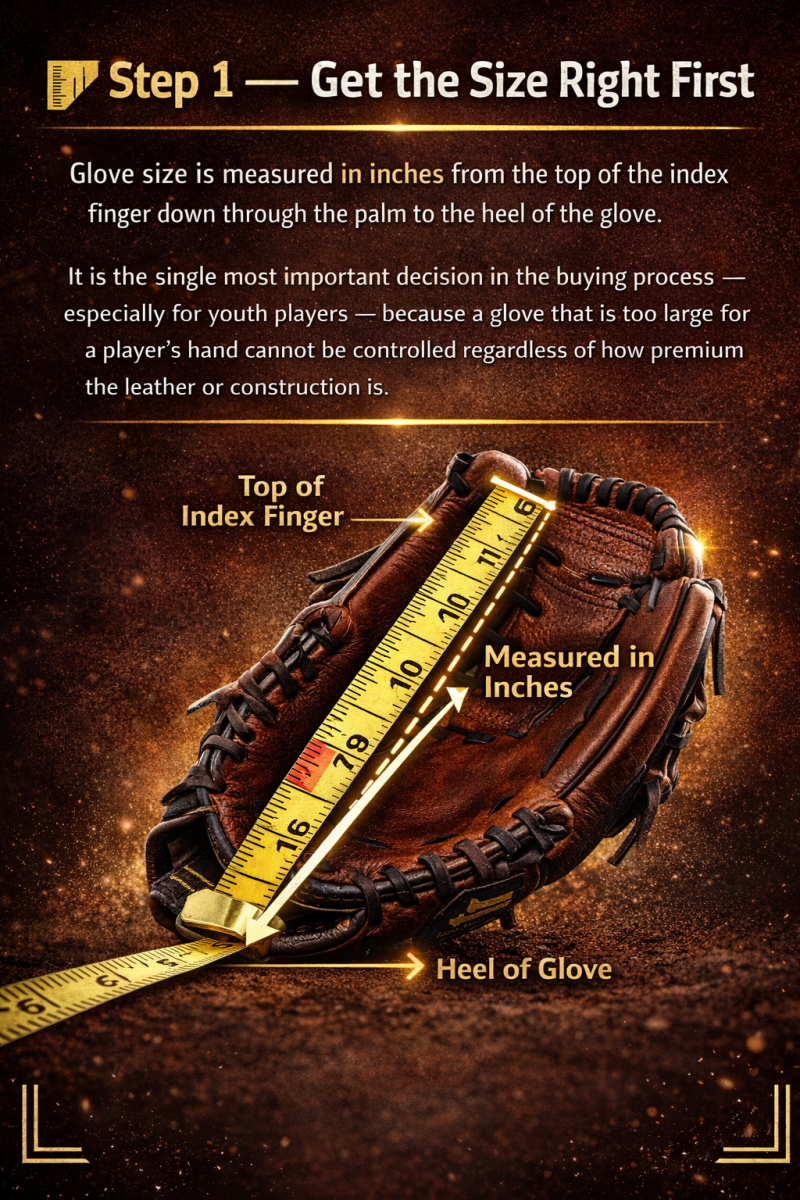
Glove size is measured in inches from the top of the index finger down through the palm to the heel of the glove. It is the single most important decision in the buying process — especially for youth players — because a glove that is too large for a player's hand cannot be controlled regardless of how premium the leather or construction is.
General sizing guidelines by age and position:
- Tee ball (ages 4–7): 9 to 10 inches
- Youth (ages 8–12): 10 to 11.5 inches depending on hand size
- Teen and adult infielders: 11 to 11.5 inches
- Teen and adult outfielders: 12 to 13 inches
- Teen and adult pitchers: 11.5 to 12 inches
- First basemen: 12 to 13 inches (dedicated first base mitt)
- Catchers: 32 to 34 inches (dedicated catcher's mitt)
The most common sizing mistake is buying a glove that is too large under the assumption that the player will grow into it. A correctly sized glove that the player can actually close reliably builds correct fielding technique from day one. An oversized glove creates compensatory habits that persist long after the player has moved on to a correctly sized alternative. Always size for now, not for later.
🕸️ Step 2 — Match the Web Style to the Position
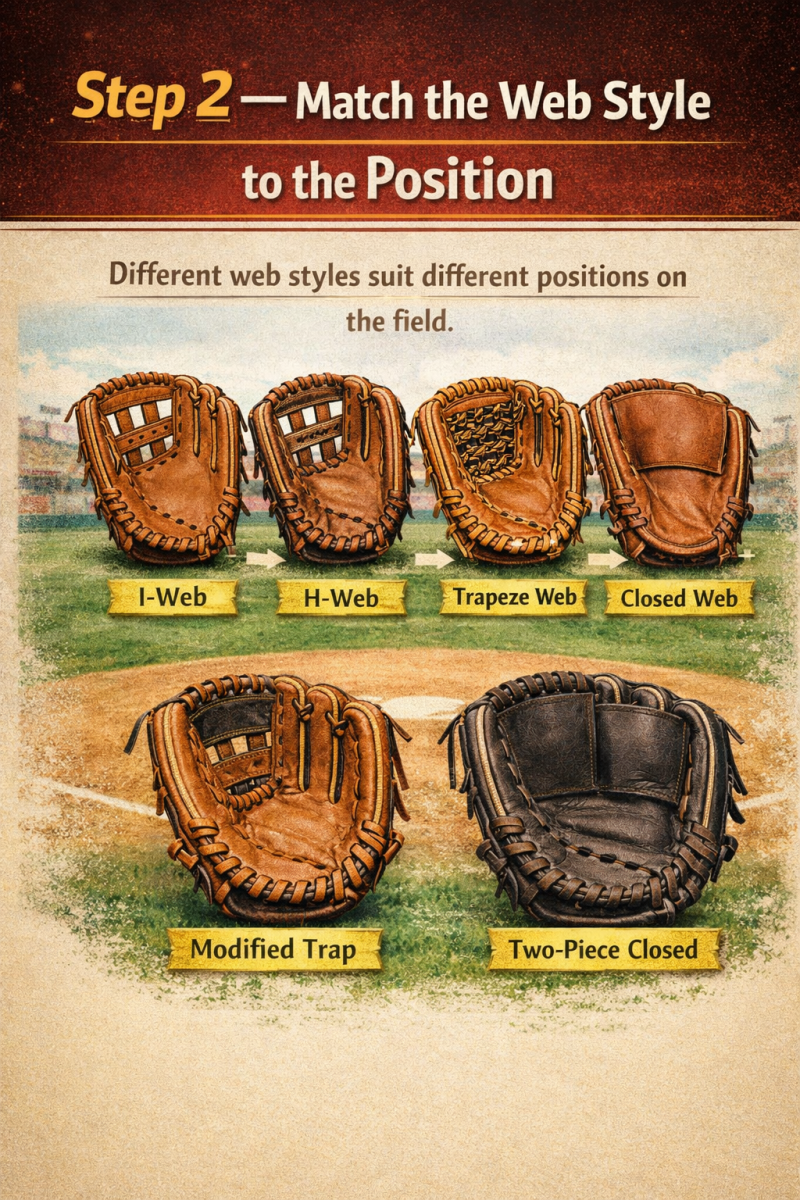
The web connects the thumb and index finger of the glove and determines how the pocket is shaped, how dirt drains during use, and how much visibility the player has when tracking balls overhead. Different positions use different web styles for functional reasons — not aesthetic ones.
- I-web — Open vertical and horizontal bars. Preferred by middle infielders for fast transfers and efficient dirt shedding on groundballs. The most common infield web choice.
- H-web — Two vertical bars connected by a horizontal bar. Provides slightly more pocket support than I-web. Popular with third basemen and some outfielders who want a balance of visibility and pocket depth.
- Trapeze web — Continuous leather strip across the top of the web. Creates the deepest possible pocket and maximum ball security. The standard outfield web choice.
- Closed web — Solid leather panel with no gaps. Required for pitchers to conceal their grip from hitters and baserunners during the windup. Not appropriate for infield or outfield use.
- Modified trap / two-piece closed — Partially closed web popular with outfielders who want pocket depth alongside slightly better sun visibility than a full trapeze provides.
🐄 Step 3 — Choose the Right Leather for Your Level
Leather quality is the most significant factor in long-term glove performance — and the most commonly mismatched to the player's actual competition level and usage frequency.
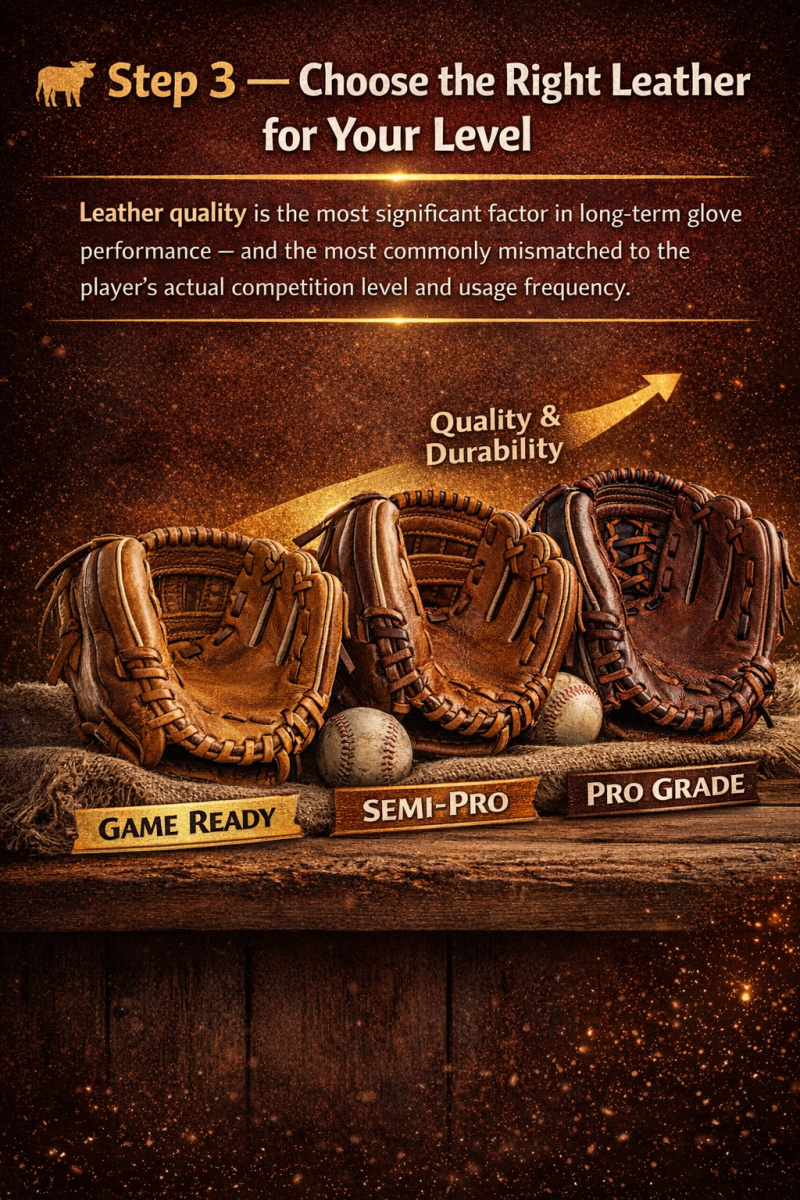
- Full grain leather — The strongest, most durable hide layer. Develops the most authentic personalized pocket over time. Requires intentional break-in. Best for competitive players who use their glove daily.
- Top grain leather — Slightly processed to remove imperfections. Good balance of durability and break-in accessibility. Appropriate for competitive recreational and travel ball players.
- Kip leather — Sourced from younger steers. Lighter and softer than standard cowhide with faster break-in and a more refined feel. Used in premium gloves like the Rawlings PRO Preferred.
- Pro Stock leather — Wilson's professional grade cowhide used in A2000 and above. Develops a precise personalized pocket over an extended break-in period. Best for serious competitive players willing to invest break-in time.
- Synthetic leather — Pre-broken and immediately game-ready. No real break-in required. Lower durability — typically one to two seasons of regular use before pocket structure degrades. Best for tee ball, recreational players, and young athletes not yet committed to a regular playing schedule.
Match the leather to the player. A synthetic glove for a tee ball player who picks up baseball three times a week is a better choice than a premium leather glove that never gets broken in because the player lacks the frequency and technique to condition it correctly.
❌ Common Glove Buying Mistakes
- Buying too large thinking the player will grow into it A glove that is too big cannot be controlled regardless of leather quality. Young players develop compensatory habits around oversized equipment that persist long after they switch to a correctly sized glove. Always size for now.
- Prioritizing brand over fit A correctly fitted mid-tier glove will outperform a premium brand glove that fits poorly every single time. Brand matters — but only after size and positional fit have been confirmed correct.
- Using the wrong glove for the position An outfield glove on an infielder creates slow transfers that cost runs. A shallow infield glove on an outfielder pops fly balls on aggressive catches. Position-specific design decisions exist for functional reasons — not cosmetic ones.
- Skipping break-in on a leather glove A leather glove used in competition before it is properly broken in performs worse than a synthetic alternative. Players who skip the break-in process and go straight into games with a stiff premium leather glove are wasting their investment.
- Over-conditioning the leather More oil is not better. Over-conditioning softens leather beyond its optimal firmness, degrades pocket structure, and adds unnecessary weight. Two to three light applications per season is sufficient for most competitive leather gloves.
Avoiding these mistakes at the buying stage saves players and parents from the frustration of discovering mid-season that their equipment is working against them rather than for them. For players who want to see exactly how these decisions play out across specific position-based options, 🧤 Best Infield Baseball Gloves (2026) and 🧤 Best Outfield Baseball Gloves (2026) cover the position-specific designs that put these principles into practice across the strongest gloves available in 2026.
🔨 Step 4 — Understand Break-In Requirements Before You Buy
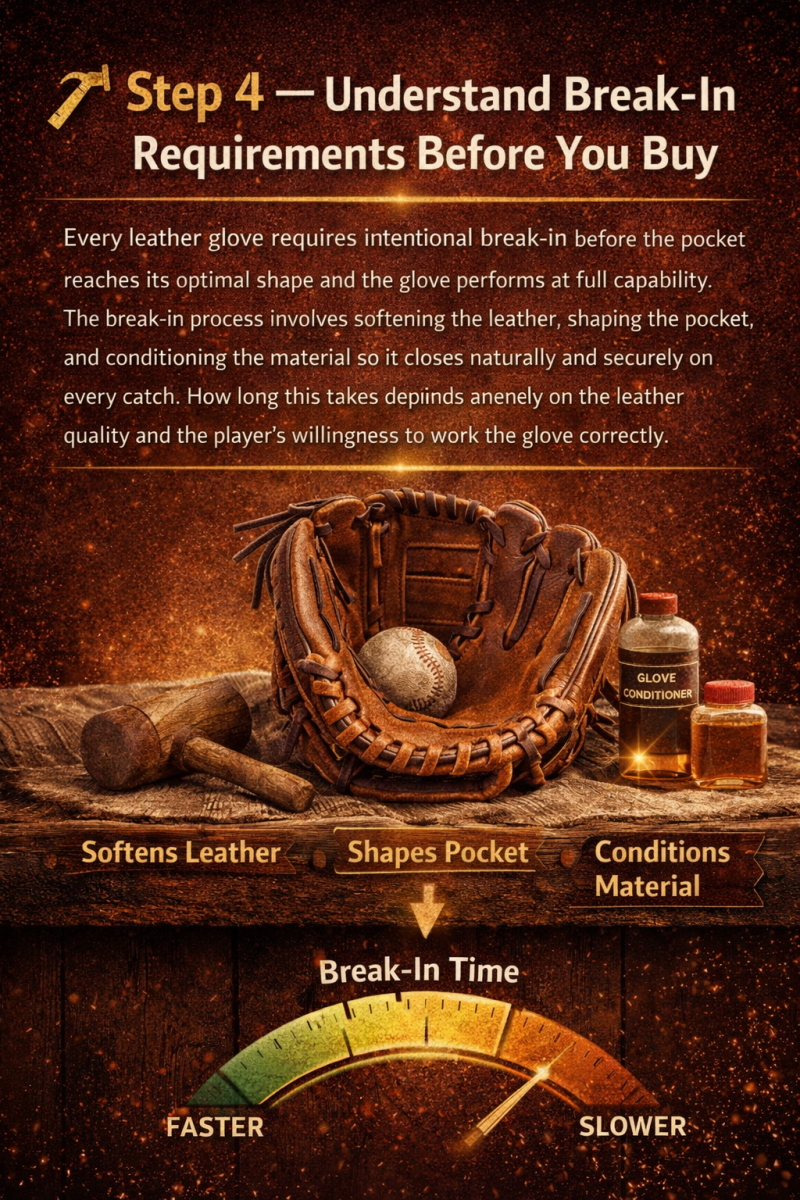
Every leather glove requires intentional break-in before the pocket reaches its optimal shape and the glove performs at full capability. The break-in process involves softening the leather, shaping the pocket, and conditioning the material so it closes naturally and securely on every catch. How long this takes depends entirely on the leather quality and the player's willingness to work the glove correctly.
- Fast break-in leathers — Mizuno's Bio Soft, standard top grain, and most mid-tier options reach optimal pocket shape within days to a couple of weeks of regular use and conditioning. Good for players who need a glove ready quickly mid-season.
- Standard break-in leathers — Wilson Pro Stock, Rawlings Heart of The Hide, and similar professional-grade leathers typically require two to four weeks of intentional break-in. Reward the process with a pocket that holds its shape for years.
- Kip leather — Breaks in faster than standard cowhide due to its softer initial texture. Usually reaches optimal shape in one to two weeks with proper conditioning.
The best break-in methods are consistent use — catching live throws, playing catch daily, and working the pocket by hand with a ball — combined with quality glove oil or conditioner applied sparingly to keep the leather supple without over-softening it. Never microwave or oven-bake a glove — the heat destroys the leather's structural integrity and shortens the glove's useful life significantly regardless of how quickly it softens the pocket.
🎯 Step 5 — Match Construction Tier to Competition Level
Not every player needs a Wilson A2K or Rawlings PRO Preferred. Matching the construction tier to the competition level and usage frequency makes economic sense and ensures the glove performs appropriately for the demands placed on it.
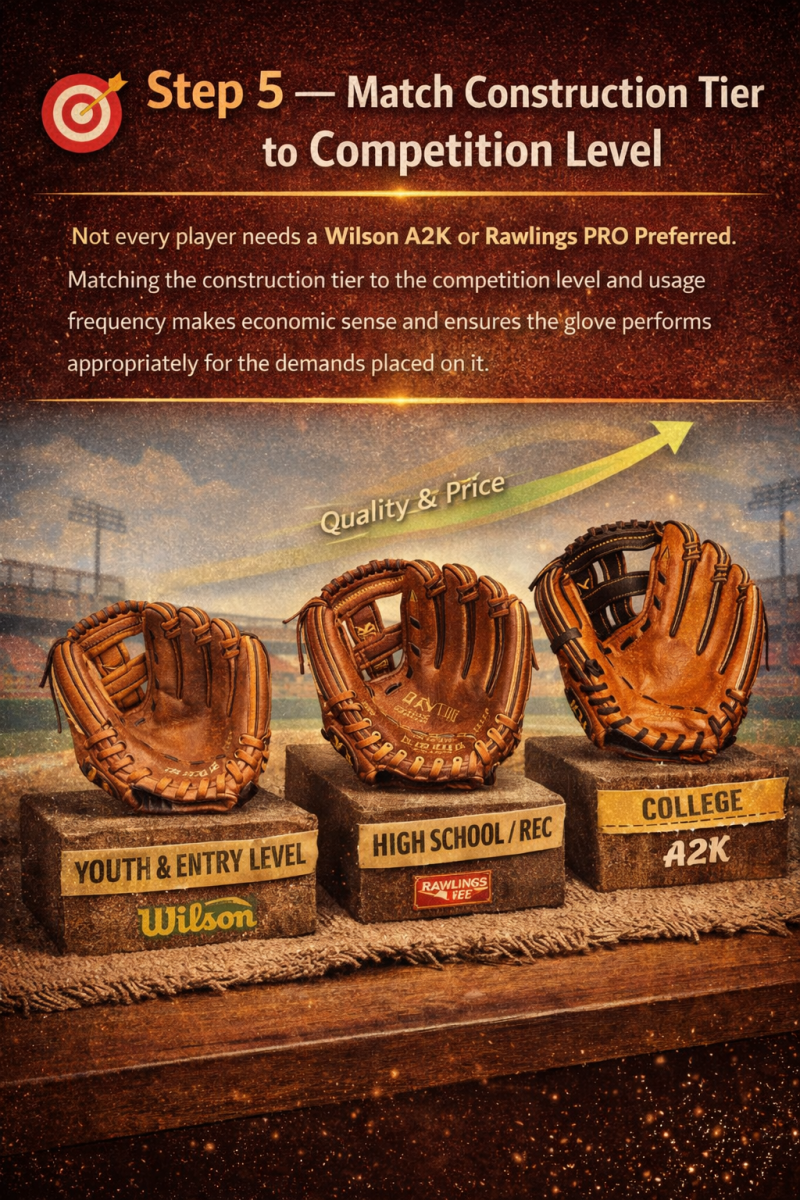
- Recreational and entry-level youth — Synthetic or entry-level leather options from Rawlings, Wilson, Mizuno, and Easton in the $30 to $80 range. Pre-broken and immediately usable. Appropriate for players who play once or twice a week in recreational leagues or tee ball.
- Competitive youth and high school — Mid-tier leather options like the Wilson A700, Mizuno Franchise, and Rawlings R9 in the $80 to $150 range. Real leather quality with manageable break-in. Appropriate for players who practice and play regularly through a competitive season.
- Serious competitive high school and travel ball — Premium platforms like the Wilson A2000, Rawlings Heart of The Hide, and Mizuno MVP Prime in the $150 to $250 range. Professional-grade leather that develops a personalized pocket and lasts multiple seasons with proper care. Appropriate for players who are in the glove daily through a full competitive schedule.
- Professional standard — Wilson A2K, Rawlings PRO Preferred, SSK Z9 Maestro in the $250 to $400+ range. The finest leather available developing the most precise personalized pockets through years of competitive use. Appropriate for elite high school, collegiate, and adult competitive players who will use the glove at the highest competitive levels for multiple seasons.
For players evaluating outfield versus infield position-specific designs alongside this general selection guide, 🧤 Best Outfield Baseball Gloves (2026) and ⚾ Best Baseball Pitcher's Gloves (2026) cover the position-specific design decisions that dedicated players should make once the general construction and sizing decisions covered in this guide have been resolved.
❓ FAQ
How do I measure my hand for a baseball glove?
- Measure from the tip of your index finger to the base of your palm and match to the manufacturer's size chart.
- Hand circumference measurements are more reliable than age-based sizing for getting the correct fit.
Should I buy a glove online or in a store?
- In store is better for first-time buyers — trying the glove on confirms fit and feel that photos cannot communicate.
- Experienced players who know their preferred brand, size, and construction can buy online confidently.
How do I know if a glove is too big?
- If the glove flops open without your hand actively holding it closed it is too large for your hand.
- A correctly sized glove stays roughly closed with a relaxed hand and closes fully with a light squeeze.
Can I use the same glove for multiple positions?
- Yes — an 11.5 to 12-inch glove with moderate pocket depth serves most positions adequately for recreational and developing players.
- Dedicated position-specific gloves deliver meaningfully better performance for serious competitive players committed to one position.
How often should I condition my leather glove?
- Apply glove oil or conditioner two to three times per season — once before the season to prepare the leather and once or twice during use to maintain suppleness.
- Over-conditioning softens leather beyond its optimal firmness and degrades pocket structure over time.
🧢 Final Thoughts
Choosing the right baseball glove comes down to five decisions made in the right order — size first, then web style, then leather quality, then break-in profile, then construction tier. Get those five decisions right for the specific player, position, and competition level and the glove becomes the invisible tool that great defensive players rely on without thinking about it from the first groundball of spring training through the final out of the championship game.
For players who are ready to shop specific options after working through this guide, 🧤 Best Baseball Gloves for Every Player (2026) covers the strongest options across every construction tier and position need in a single comprehensive guide. And for everything else across our baseball and softball coverage, visit 📝 Diamond Sports Equipment Blog & Gear Reviews for our full library of buying guides, product comparisons, and equipment reviews updated all season long.