Baseball gloves are not interchangeable tools. Every position on the field has specific defensive demands that determine what a glove needs to do — and the design differences between an infield glove and an outfield glove are not cosmetic variations on the same theme. They are functionally distinct tools built around completely opposite performance priorities. An infield glove optimizes for speed — getting the ball out of the pocket and into the throwing hand as fast as physically possible. An outfield glove optimizes for security — keeping the ball in the pocket regardless of how aggressively the catch was made or how awkward the contact angle was on a diving or wall play.
Using the wrong glove for your position does not just limit your performance on individual plays — it builds defensive habits around equipment limitations that persist even after you switch to the correct tool. An infielder using an outfield glove develops a slower transfer habit because the deep pocket rewards a digging motion rather than a quick release. An outfielder using an infield glove learns to cradle fly balls tentatively because the shallow pocket does not provide the security to attack the ball aggressively. Understanding what separates these two glove types at a design level is the foundation of making the right positional equipment decision. For players who are also working through the broader glove selection process, 🧤 How to Choose a Baseball Glove covers every selection decision from sizing through leather quality in the correct order. Once you know which type fits your position, the 🧤 Best Baseball Gloves for Every Player (2026) ranks the top picks for both.
⚾ What You Should Know About Glove Design
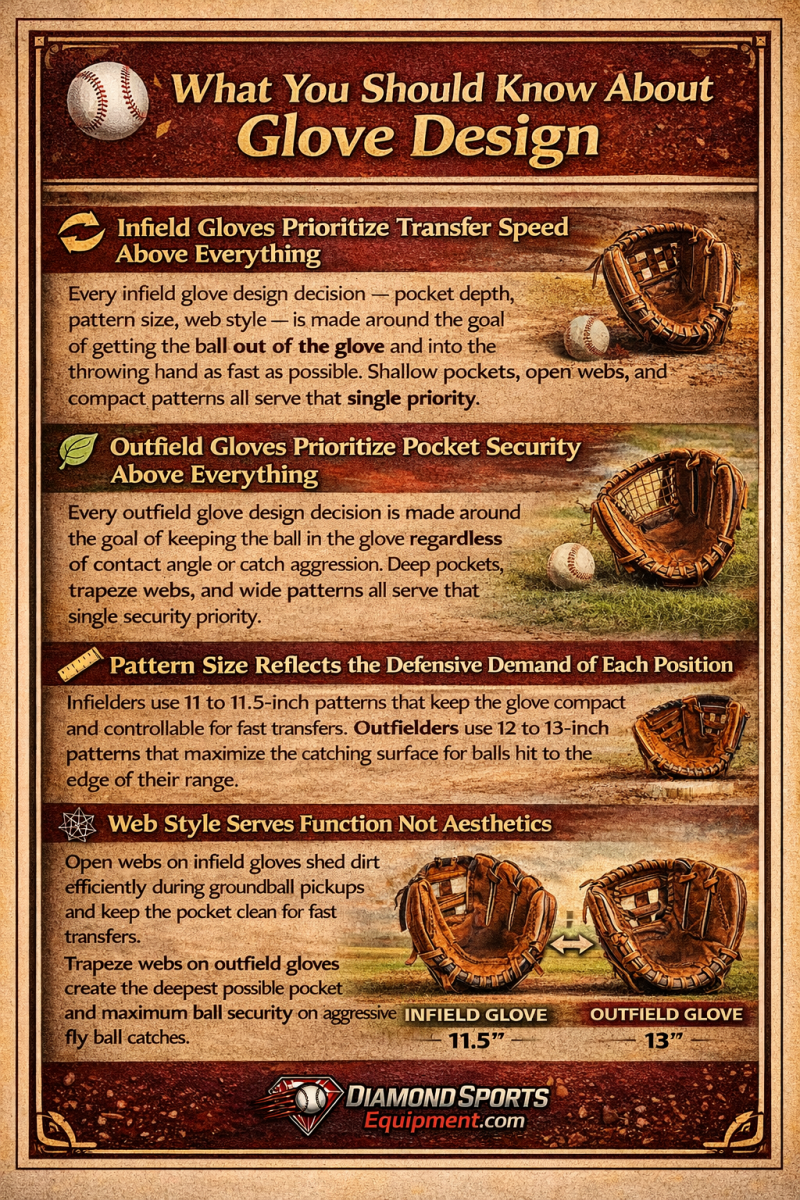
🔄 Infield Gloves Prioritize Transfer Speed Above Everything:
Every infield glove design decision — pocket depth, pattern size, web style — is made around the goal of getting the ball out of the glove and into the throwing hand as fast as possible. Shallow pockets, open webs, and compact patterns all serve that single priority.
🌿 Outfield Gloves Prioritize Pocket Security Above Everything:
Every outfield glove design decision is made around the goal of keeping the ball in the glove regardless of contact angle or catch aggression. Deep pockets, trapeze webs, and wide patterns all serve that single security priority.
📏 Pattern Size Changes Within Each Position Group
Infield gloves stay relatively compact to support quick transfers, but the ideal size still changes by position — middle infielders commonly favor smaller patterns while third basemen often use slightly more glove for hard-hit balls. Outfield gloves generally use larger patterns with more reach and deeper pockets, with the exact size depending on how much a player values maximum coverage versus easier glove control.
🕸️ Web Style Supports the Pocket Design
Web style works together with pocket depth and glove pattern rather than determining a glove’s position by itself. I-web and H-web designs are common on infield gloves because they support quick ball access and controlled transfers, while H-web, trapeze, and modified-trap designs are common in the outfield because they provide more support around a deeper pocket. The best web is the one that complements the glove’s overall positional design and the player’s preferred feel.
🔍 The Key Design Differences Explained
Pocket Depth
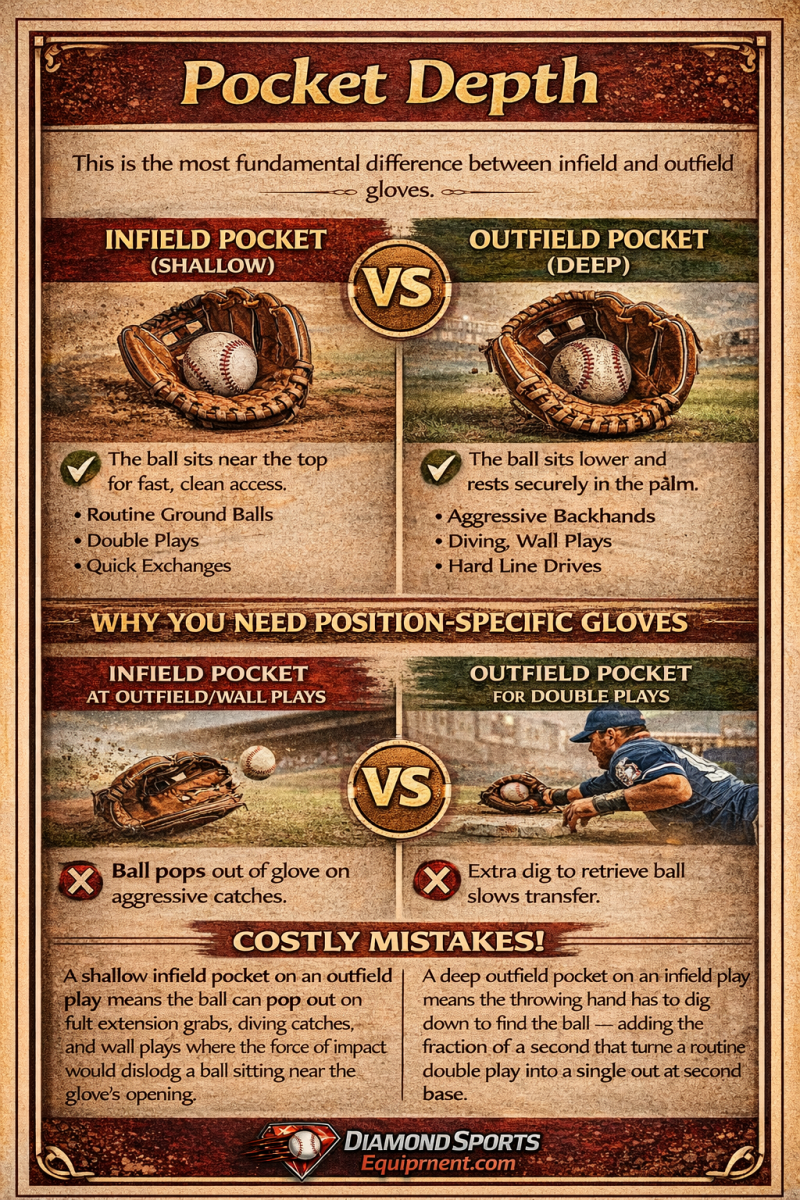
This is the most fundamental difference between infield and outfield gloves. Infield pockets are shallow — the ball sits near the top of the glove close to the fingers for fast, clean access by the throwing hand. Outfield pockets are deep — the ball sits lower in the palm where the pocket structure wraps around it and holds it securely through the momentum of aggressive catches.
A shallow infield pocket on an outfield play means the ball can pop out on full-extension grabs, diving catches, and wall plays where the impact force would dislodge a ball sitting near the glove's opening. A deep outfield pocket on an infield play means the throwing hand has to dig down into the glove to find the ball — adding the fraction of a second that turns a routine double play into a single out on a bang-bang play at second base.
Pattern Size and Shape
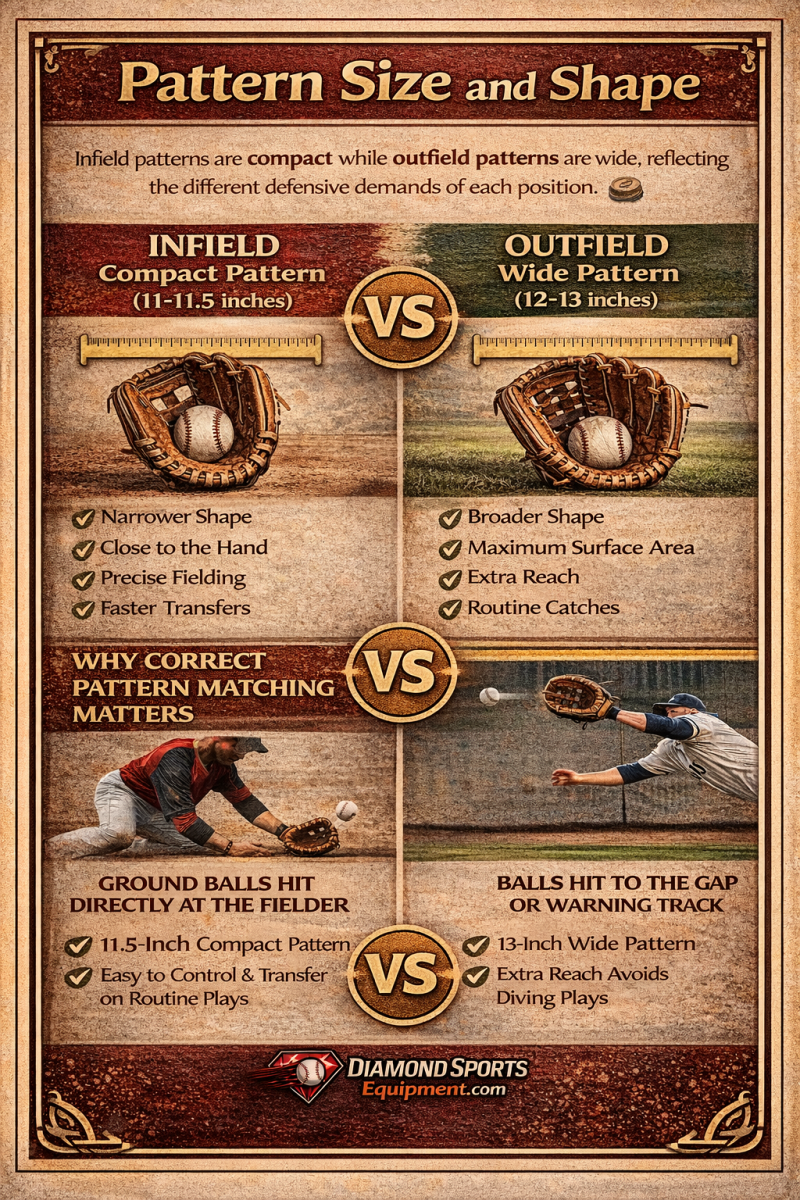
Infield patterns are compact — 11 to 11.5 inches with a narrower overall shape that keeps the glove close to the hand for precise fielding on grounders hit directly at the fielder. The compact size also makes the glove easier to control during the transfer motion when the throwing hand is reaching into the pocket at full speed.
Outfield patterns are wide — 12 to 13 inches with a broader overall shape that maximizes the catching surface when balls are hit to the gap or the warning track. The extra inch or two of pattern length adds meaningful reach on plays where the outfielder is at full extension — turning balls that would require a diving attempt into routine catches for players with the correct pattern size.
Web Style and Dirt Management
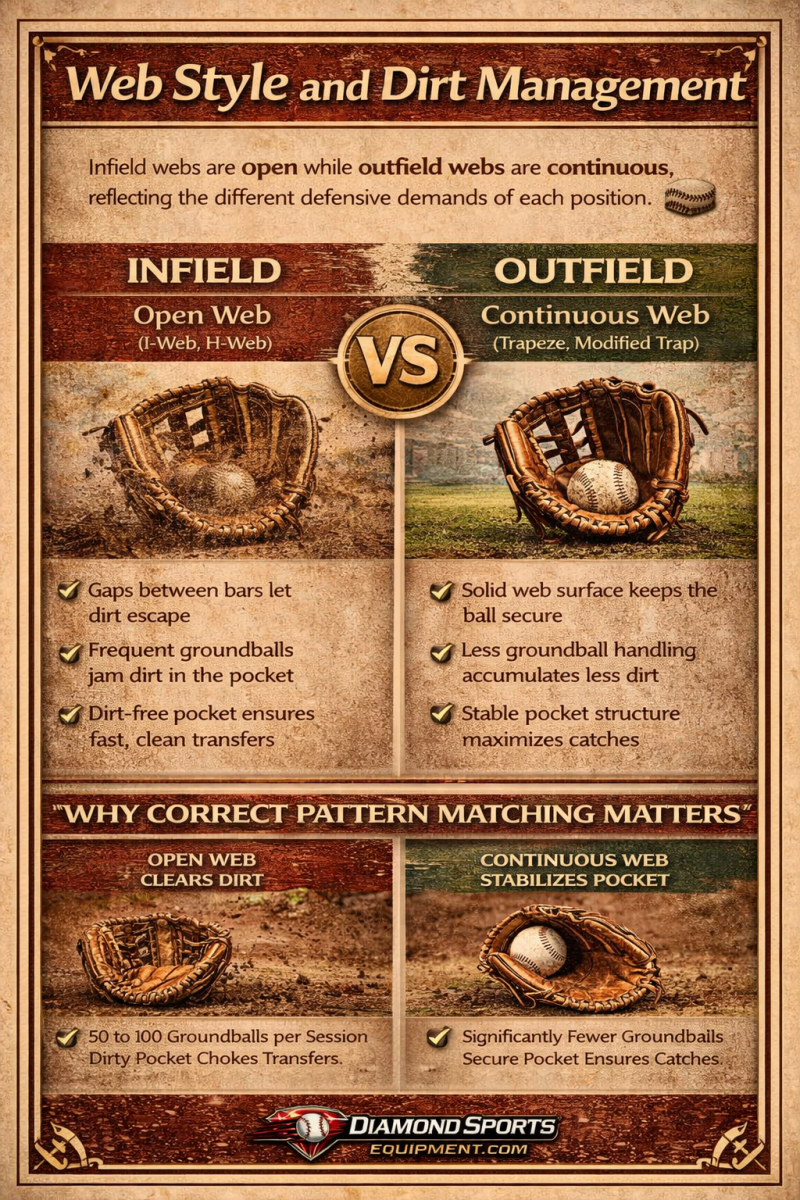
Infield webs use open construction — I-web and H-web designs with gaps between the structural bars that allow dirt to escape during groundball pickups. An infielder who fields 50 to 100 groundballs per practice session accumulates significant dirt in the pocket across a workout. Open web construction keeps the pocket clear so every transfer feels the same from the first groundball to the last.
Outfield webs use continuous construction — trapeze and modified trap designs that create a solid or near-solid surface across the top of the web. This continuous construction creates the structural support that pushes the ball down into the deep outfield pocket on every catch rather than allowing it to deflect off open web bars. Dirt accumulation is less of a concern for outfielders who handle significantly fewer groundballs per session.
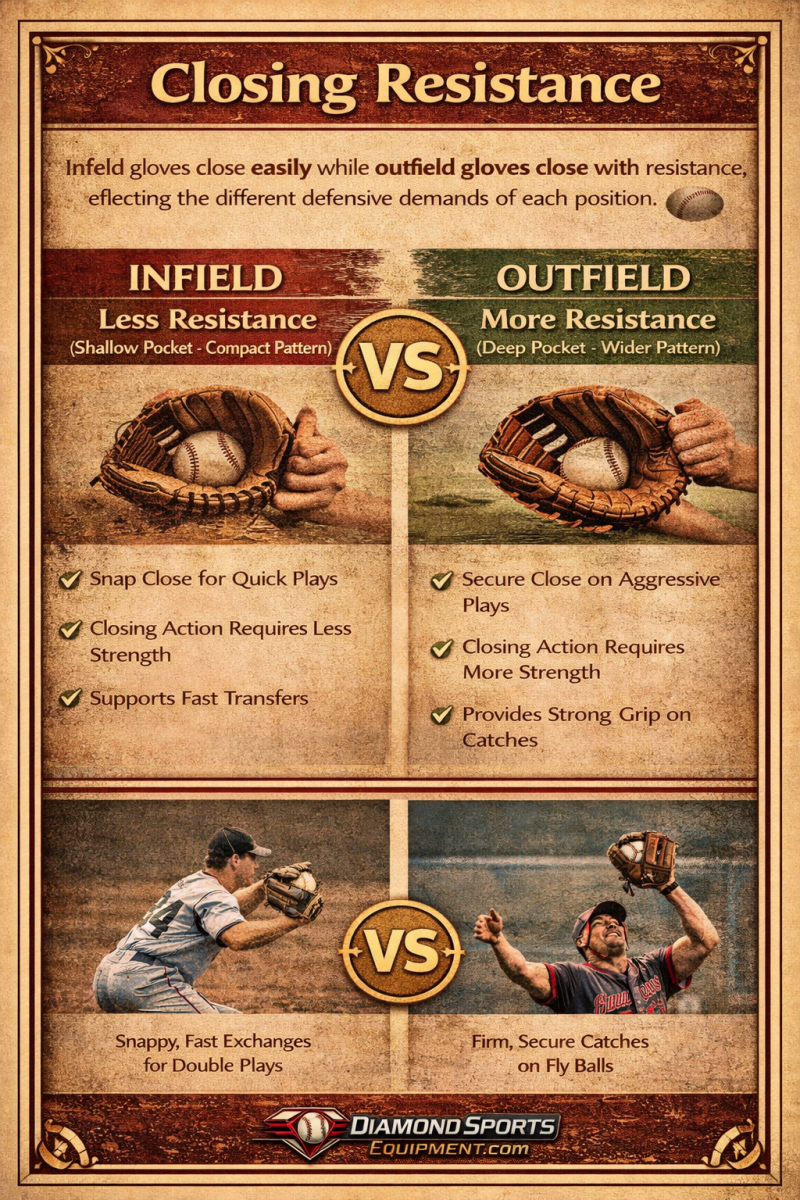
Closing Resistance
Infield gloves close with less resistance — the shallower pocket and compact pattern require less hand strength to close completely, which supports the fast, decisive snap-close that clean infield catches require. Outfield gloves close with more resistance — the deeper pocket and wider pattern require more deliberate closing action that provides the secure grip on fly ball catches that aggressive outfield play demands.
🏆 Putting It Into Practice
Understanding the design differences between infield and outfield gloves is only half the decision — the other half is matching the right leather quality and construction tier to your competition level and usage frequency. A correctly designed position-specific glove built from the wrong material for your playing schedule will underperform just as reliably as the wrong positional design. For players who want to see how these design principles translate into specific product recommendations, 🧤 Best Infield Baseball Gloves (2026) and 🧤 Best Outfield Baseball Gloves (2026) cover the strongest position-specific options across every construction tier available in 2026.
❌ Common Positional Glove Mistakes

Using an outfield glove at a middle infield position
The deep pocket slows transfers on double play attempts in ways that are immediately visible on film. Middle infielders who use outfield gloves develop a digging transfer habit that costs them on every bang-bang play at second base throughout their career.
Using an infield glove in the outfield
The shallow pocket pops fly balls on aggressive catches and diving plays. Outfielders who use infield gloves develop a tentative, cradling catch style that limits their range and willingness to attack balls aggressively because they subconsciously know their equipment cannot secure a ball on hard contact.
Buying a versatile middle-ground glove and expecting position-specific performance
A 12-inch moderate-pocket glove serves multi-position recreational players adequately but delivers neither the transfer speed of a true infield glove nor the security of a true outfield glove. Players who have identified their primary position should always invest in the position-specific design that matches their defensive role.
Ignoring web style when selecting a position-specific glove
A correctly sized infield glove with a trapeze web still accumulates dirt and slows transfers. A correctly sized outfield glove with an I-web still lacks the pocket support for aggressive fly ball security. Web style is a functional positional decision — not a cosmetic preference.
Avoiding these mistakes at the selection stage prevents the defensive habit formation that equipment limitations create over time. For players ready to shop specific options, 🧤 Best Infield Baseball Gloves (2026) covers the strongest infield-specific designs across every construction tier, and 🧤 Best Outfield Baseball Gloves (2026) covers the strongest outfield-specific options for competitive players at every level.
❓ FAQ
Can I use one glove for both infield and outfield?
- A versatile 11.5 to 12-inch moderate-pocket glove works adequately across positions for recreational and multi-position players.
- Dedicated position players at the competitive level will always benefit from a position-specific design that optimizes for their defensive demands.
What web style should an infielder use?
- I-web is the most common infield choice — open construction sheds dirt efficiently and keeps the pocket clean for fast transfers.
- H-web provides slightly more pocket support preferred by some third basemen on hard-hit shots down the line.
What size outfield glove should I buy?
- Most competitive outfielders use 12 to 12.5 inches with center fielders sometimes preferring slightly smaller for better control.
- Corner outfielders often go up to 12.75 to 13 inches for maximum range on balls hit to the warning track.
Does the glove brand matter more than the design?
- No — a correctly designed position-specific glove from a mid-tier brand outperforms a premium brand glove with the wrong pocket depth or web style.
- Get the positional design right first then evaluate brand and leather quality within the correct design specification.
When should a youth player start using a position-specific glove?
- When the player is committed to a primary position and playing competitively enough to benefit from position-specific performance — typically around ages 10 to 12.
- Before that age a versatile moderate-pocket glove serves developing players better than locking them into positional specialization too early.
🧢 Final Thoughts
The difference between an infield glove and an outfield glove is not a matter of preference or style — it is a matter of function. Shallow pockets and open webs serve infield transfer speed. Deep pockets and trapeze webs serve outfield fly ball security. Using the correct tool for your defensive position builds the right habits from the start and lets your athletic ability express itself without equipment working against you on the plays that decide games.
For players who want to go deeper on pitcher-specific glove design — the third major glove category with its own distinct functional requirements — check out ⚾ Best Baseball Pitcher's Gloves (2026) for the closed web construction and pattern considerations that pitchers evaluate differently from every other position. And for everything else across our baseball and softball coverage, visit 📝 Diamond Sports Equipment Blog & Gear Reviews for our full library of buying guides, product comparisons, and equipment reviews updated all season long.