Slowpitch softball places unique demands on defensive equipment that most glove buying guides fail to address specifically — and the result is that slowpitch players frequently end up with baseball gloves, fastpitch designs, or general-purpose alternatives that technically fit their hand but do not serve the specific defensive requirements of slowpitch play. The larger 12-inch softball requires more pocket depth than a baseball glove provides. The higher arc trajectory of slowpitch fly balls rewards wider patterns that maximize catching surface on balls dropped into deep outfield gaps. The recreational tournament format that defines most slowpitch competition demands durable construction that holds up through long days of back-to-back games rather than the single-game focus that competitive baseball and fastpitch gloves are optimized for.
The slowpitch glove buying decision in 2026 comes down to five choices made in the right order — size, leather type, pocket depth, position fit, and construction tier. Get those five decisions right and the glove becomes the invisible defensive tool that serious slowpitch players describe as part of their hand from the first catch of the season through the final out of the championship. Get them wrong and the equipment fights against the player on every routine play throughout the season. For players who are also finalizing their bat selection this season, 🥎 How to Choose a Slowpitch Bat covers the certification, construction, and weight decisions that complete a slowpitch player's offensive setup. Once you know what to look for, the 🧤 Top Slowpitch Softball Gloves (2026) ranks the top picks for every position.
🧤 What You Should Know About Slowpitch Gloves

📏 Slowpitch Requires Larger Patterns Than Baseball or Fastpitch
The 12-inch softball is significantly larger than a baseball — requiring 13 to 15-inch glove patterns that provide adequate pocket depth and catching surface for the ball size and fly ball arc of slowpitch play. Baseball and fastpitch gloves used in slowpitch create pocket limitations that cost defenders on routine catches.
🌿 Pocket Depth Affects Fly Ball Security
Slowpitch fly balls arrive on a higher arc with more downward momentum than fastpitch or baseball — requiring deeper pockets that wrap around the ball on contact rather than letting it bounce off a shallow surface. Outfield-style deep pockets serve most slowpitch defensive positions better than infield-style shallow alternatives.
🐄 Leather vs Pigskin Affects Feel and Longevity
Premium leather develops a personalized deep pocket through use and lasts multiple competitive seasons. Pigskin alternatives provide adequate initial feel at accessible price points but develop less defined pockets and typically need replacement sooner through regular competitive use.
⚡ Construction Tier Should Match Competition Level
Recreational slowpitch players who compete once or twice a week do not need premium SSK or Miken construction. Competitive tournament players who use their glove daily through a long season benefit meaningfully from premium leather that maintains its pocket through extended use.
🥎 How to Choose the Right Slowpitch Glove
📏 Step 1 — Get the Size Right for Slowpitch
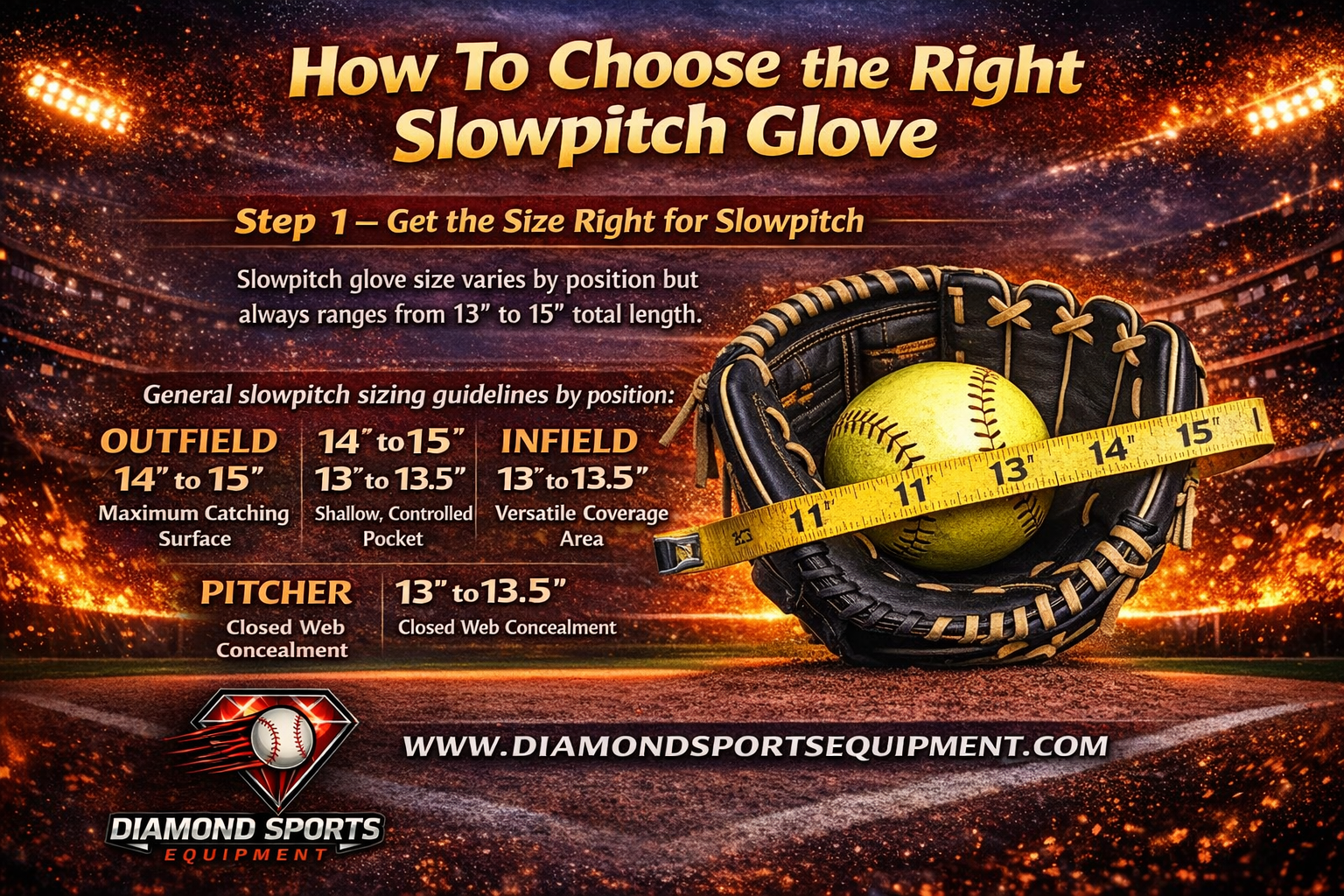
Slowpitch glove sizing starts at 13 inches and runs up to 15 inches for the largest outfield designs — significantly larger than the 11 to 12-inch patterns that dominate baseball and fastpitch. The larger size requirement exists for two specific reasons: the 12-inch softball is physically larger than a baseball and needs more pocket surface to be secured reliably, and the higher arc trajectory of slowpitch fly balls creates more downward momentum on catches that shallow baseball pockets cannot absorb without the ball popping loose.
General slowpitch sizing guidelines by position:
Outfield: 14 to 15 inches — maximum catching surface for gap coverage and fly ball security Infield: 13 to 13.5 inches — adequate pocket depth with enough control for groundball transfers Utility/Multi-position: 13 to 14 inches — versatile coverage across multiple positions Pitcher: 13 to 13.5 inches with closed web — adequate size for comebacker fielding with grip concealment
The most common slowpitch glove sizing mistake is using a baseball or fastpitch glove that fits the hand correctly but lacks the pocket depth and pattern size for the larger ball. A player whose hand fits perfectly in a 12-inch baseball glove still needs a 13 to 14-inch slowpitch design for the position-appropriate catching surface that slowpitch defensive play demands.
🕸️ Step 2 — Choose the Right Pocket Depth and Web Style
Slowpitch gloves almost universally use outfield-style deep pocket geometry — and for good reason. The higher arc of slowpitch fly balls, the larger ball size, and the recreational competition format that produces a wide range of contact angles all favor deep pocket security over the shallow transfer-speed geometry that infield baseball gloves prioritize.
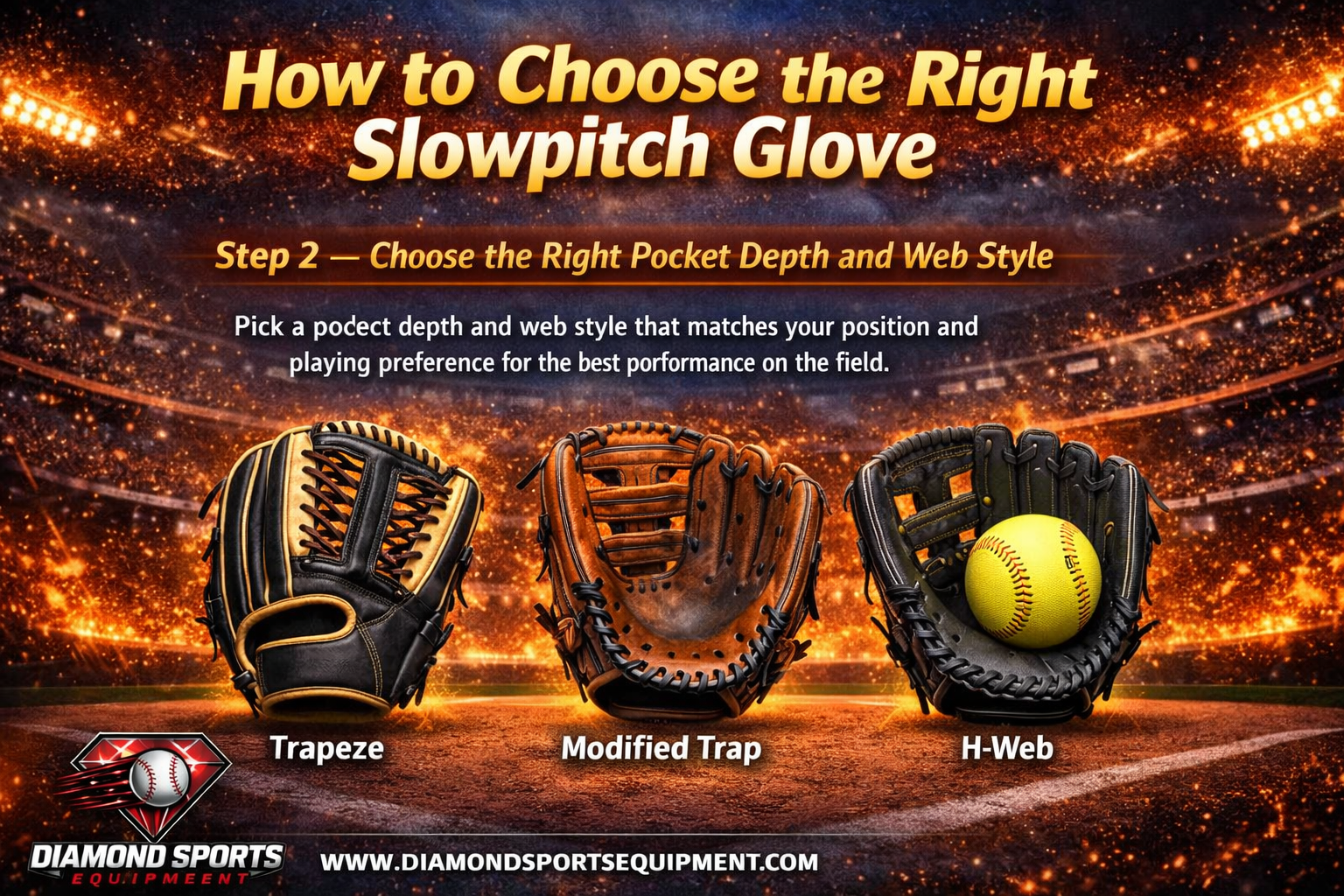
Trapeze web — The standard slowpitch choice for outfield positions. Continuous leather construction creates maximum pocket depth and ball security on aggressive fly ball catches. Dominant choice for 14 and 15-inch slowpitch outfield gloves.
Modified trap — Slightly more open than full trapeze. Provides adequate pocket depth alongside better sun visibility for outfielders who track fly balls into bright sky regularly. Popular middle-ground choice for slowpitch outfielders in sun-exposed fields.
H-web — Adequate for slowpitch utility and infield positions. Open construction allows some dirt shedding on groundballs while maintaining enough pocket support for the larger softball on moderate contact.
Closed web — Required for slowpitch pitchers who want to conceal their grip from hitters during the delivery arc. Not recommended for outfield or utility positions where pocket depth matters more than grip concealment.
🐄 Step 3 — Match Leather Quality to Competition Level
The leather quality decision in slowpitch follows the same logic as baseball glove selection — but the tournament format of competitive slowpitch puts a specific kind of stress on leather quality that recreational play does not. Competitive slowpitch players use their gloves through multiple back-to-back games per tournament day, accumulating usage volume that reveals the difference between premium leather that maintains its pocket through extended use and lower-quality alternatives that develop floppy, unreliable pockets by midseason.
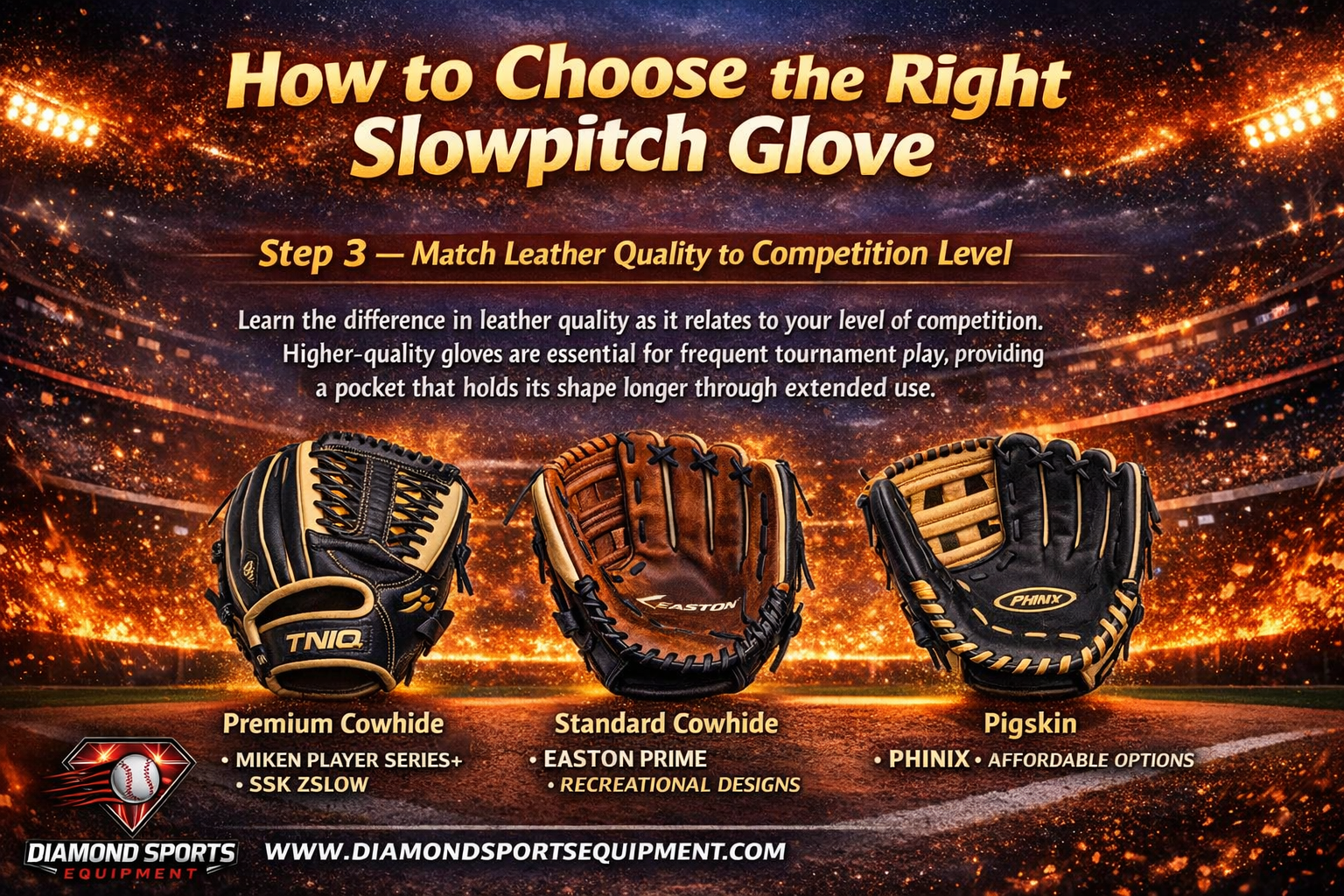
Premium cowhide — Miken Player Series+, SSK ZSLOW, and similar competitive options. Develops a deep, personalized pocket that holds its shape through multiple seasons of regular competitive use. Best for serious tournament players who use their glove in multiple games per week.
Standard cowhide — Easton Prime, standard recreational designs. Adequate for regular competitive play with proper conditioning. Pocket development is reliable but less precise than premium alternatives. Good match for recreational league players who compete once or twice weekly.
Pigskin — PHINIX and similar accessible options. Softer and more immediately accessible than cowhide without the break-in demands of premium leather. Shorter useful life through regular competitive use but adequate for recreational players who want genuine leather feel without premium investment.
Synthetic — Entry-level options not featured in this guide. Pre-broken and immediately game-ready but with the shortest useful life of any construction. Appropriate only for occasional recreational play where durability through extended competitive use is not a priority.
🎯 Putting It Into Practice
The right slowpitch glove selection comes down to matching the construction tier to how frequently the player competes — and sizing specifically for the larger softball and deeper pocket requirements that slowpitch play demands rather than defaulting to baseball or fastpitch sizing that fits the hand without serving the game. A 14-inch premium leather design is the most practical choice for the typical serious competitive slowpitch player who wants adequate catching surface, deep pocket security, and construction that holds up through a full tournament season without needing replacement. For players who want to compare specific options across the full range of slowpitch glove constructions available in 2026, 🏆 The Complete Slowpitch Glove Guide and 🧤 Best Softball Gloves for Every Position (2026) cover the strongest options across every construction tier and position need.
❌ Common Slowpitch Glove Buying Mistakes
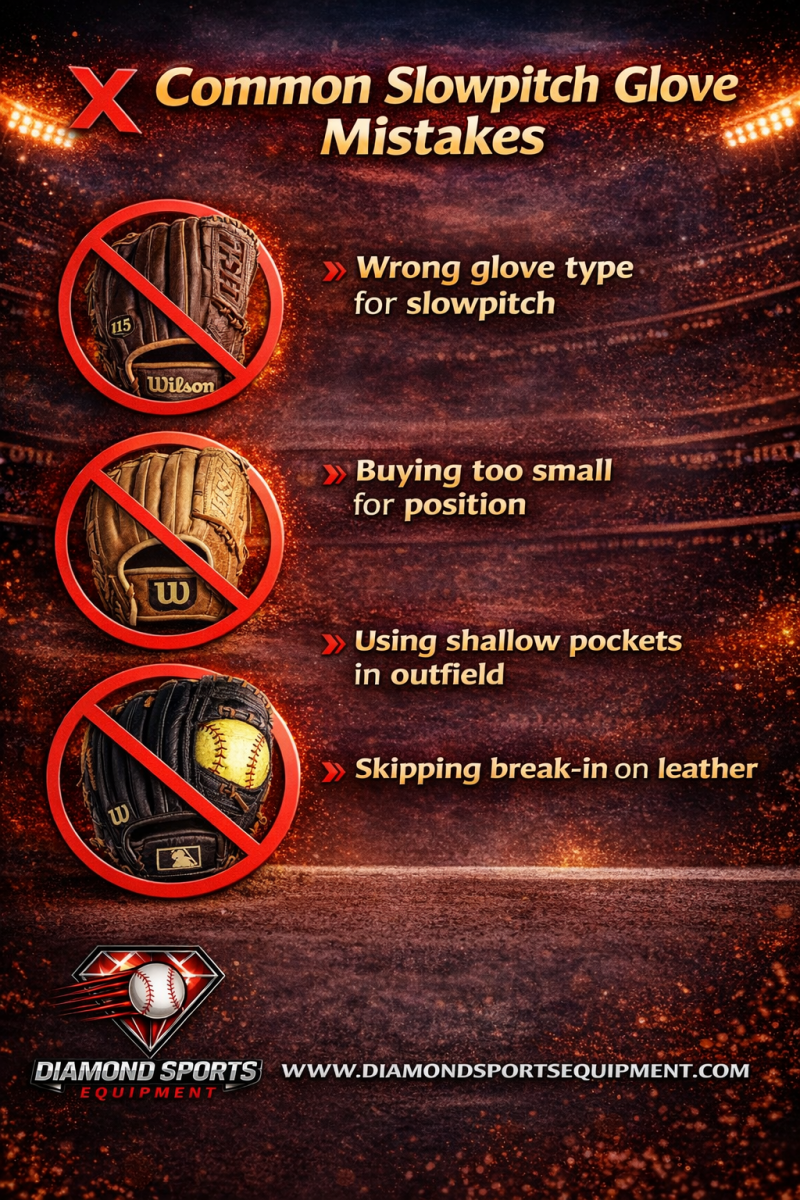
Using a baseball or fastpitch glove for slowpitch
The pocket depth and pattern size of baseball and fastpitch gloves are not adequate for the larger 12-inch softball and higher fly ball arc of slowpitch play. This is the single most common mistake in slowpitch glove selection and the one that creates the most obvious defensive limitations through a full season.
Buying too small because the glove fits the hand
A glove that fits the hand correctly but runs 12 inches is still too small for slowpitch outfield use. Always size for the position and ball size first — not for hand fit alone.
Choosing infield pocket depth for outfield positions
Shallow infield pockets pop the larger softball on aggressive fly ball catches. Slowpitch outfielders who use infield-style shallow pocket gloves develop tentative catching habits that limit their range and aggressiveness on balls hit into the gaps.
Skipping break-in on premium leather
Premium leather slowpitch gloves require intentional break-in to develop the deep pocket that slowpitch defensive play demands. Players who use a new premium leather glove in competition before completing break-in never experience the full pocket depth the glove is capable of.
Buying based on brand rather than slowpitch-specific construction
A 13-inch pigskin slowpitch glove outperforms a premium baseball brand glove used in slowpitch. Slowpitch-specific construction matters more than brand recognition when the design is calibrated for the ball size and fly ball demands of the specific game.
Avoiding these mistakes at the selection stage prevents the defensive habit formation that equipment limitations create when the wrong glove is used through a full competitive season. For players ready to shop specific options, 👟 Best Slowpitch Softball Cleats (2026) covers the footwear decisions that complete a slowpitch player's full equipment setup alongside their new glove.
❓ FAQ
What size glove do I need for slowpitch softball?
- Outfielders use 14 to 15 inches while infielders and utility players use 13 to 13.5 inches for adequate pocket depth and catching surface.
- Never use a baseball or fastpitch glove for slowpitch — the smaller patterns and shallower pockets do not adequately serve the larger ball and higher fly ball arc.
Can I use my baseball glove for recreational slowpitch?
- Technically yes but not recommended — the shallower pocket and smaller pattern create defensive limitations that show up on routine plays.
- A purpose-built slowpitch design in the 13 to 14-inch range delivers meaningfully better performance for the specific demands of slowpitch play.
How long does it take to break in a slowpitch glove?
- Premium leather slowpitch gloves typically require two to four weeks of intentional conditioning before reaching optimal deep pocket shape.
- Pigskin alternatives are more immediately accessible — often game-ready within days of first use with minimal conditioning.
What web style is best for slowpitch outfield?
- Trapeze web is the standard choice — continuous leather construction creates maximum pocket depth and ball security for slowpitch fly ball catches.
- Modified trap provides a balance of pocket depth and sun visibility for outfielders who regularly track fly balls into bright sky conditions.
Do I need a different glove for each position in slowpitch?
- Dedicated outfield players benefit from 14 to 15-inch designs while infielders can use 13-inch alternatives for better groundball control.
- Recreational players who rotate through multiple positions do well with a single versatile 13 to 14-inch moderate pocket design that serves most positions adequately.
🧢 Final Thoughts
Choosing the right slowpitch glove comes down to five decisions made in the right order — size for the ball and position first, then pocket depth, then leather quality matched to competition level, then web style for the specific defensive position, then construction tier that fits the budget and usage frequency. Get those five decisions right and the glove disappears during play — which is exactly what great defensive equipment is supposed to do from the first catch of the season through the final out of the championship.
For players who want to complete their full slowpitch equipment setup after working through this guide, check out 👟 Best Slowpitch Softball Cleats (2026) for the footwear options that complete a slowpitch player's full defensive package. And for everything else across our baseball and softball coverage, visit 📝 Diamond Sports Equipment Blog & Gear Reviews for our full library of buying guides, product comparisons, and equipment reviews updated all season long.