The metal vs molded cleat decision is one that every baseball player faces at some point in their development — and one that is frequently made based on what teammates wear or what looks best rather than what actually serves the player's specific league format, playing surface, and performance priorities. Metal cleats provide maximum natural grass traction that no molded alternative can replicate — but they are restricted in youth leagues and many recreational formats, require more careful surface management, and can create compliance issues for players who compete across multiple league types without paying attention to the specific rules of each. Molded cleats are universally permitted, versatile across every surface type, and have evolved to the point where advanced midsole technology makes them a genuinely compelling performance choice even for players in leagues where metal is permitted.
Understanding what actually separates these two cleat types — not just the obvious spike material difference but the practical performance implications for different player profiles, competition levels, and playing schedules — is the foundation of making a buying decision that delivers real on-field benefit rather than simply following convention. The right answer is different for a 10-year-old in a youth recreational league, a high school shortstop on a natural grass field, and a 35-year-old recreational softball player in a Thursday night league. This guide covers every scenario so every player can make the decision that is actually right for their game. For players who want to shop specific molded options after working through this guide, 👟 Best Molded Baseball Cleats (2026 Guide) covers the strongest molded alternatives across every construction tier. Once you've picked your cleat type, the 👟 New Baseball Cleats (2026) covers the latest releases in each.
⚾ What You Should Know About Cleat Types
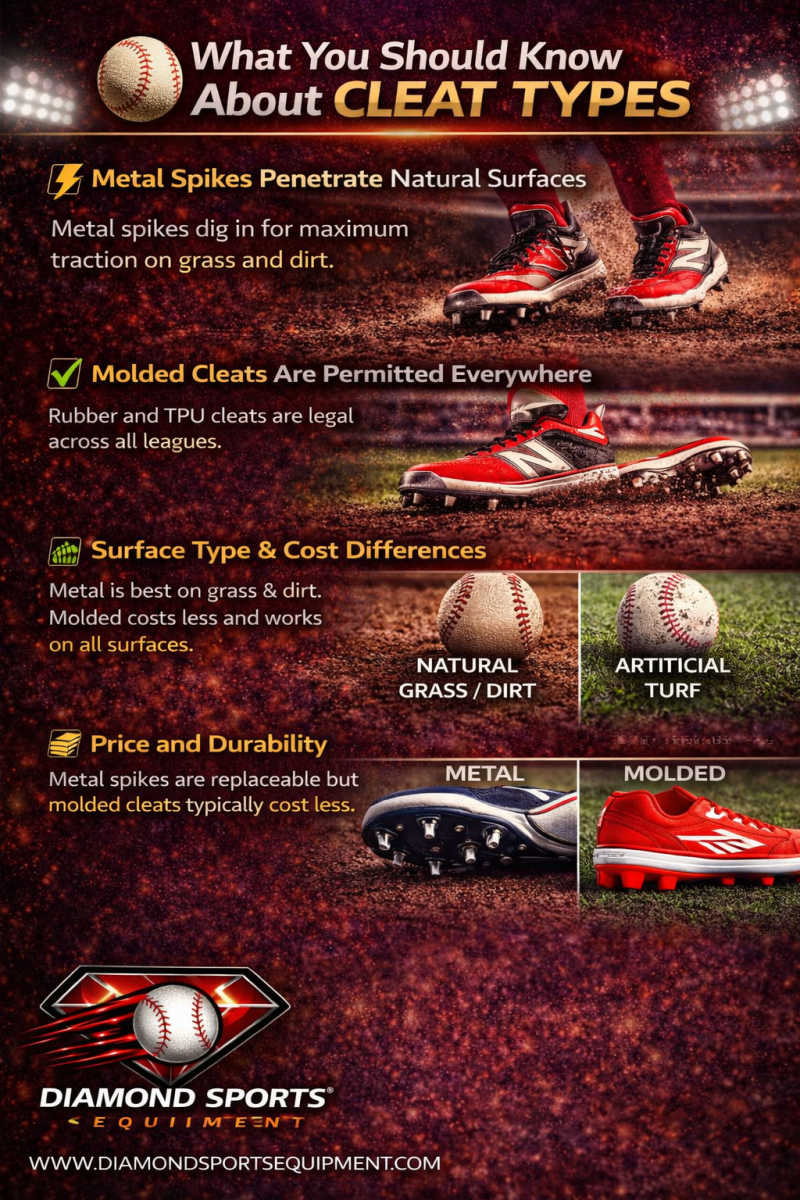
🔩 Metal Spikes Penetrate the Surface for Superior Traction
Metal spikes grip natural grass and dirt from below the surface — creating directional traction on cuts and explosive first steps that molded alternatives sitting on top of the surface cannot replicate. The performance gap is most apparent on aggressive lateral cuts where metal holds while molded designs can slip on wet or soft natural grass.
✅ Molded Cleats Are Permitted Everywhere — Metal Is Not
Molded rubber and TPU cleats are legal at every level of organized baseball and softball. Metal cleats are restricted in most youth leagues, many recreational adult formats, and all artificial turf surfaces. Always confirm league rules before purchasing metal cleats.
🌿 Surface Type Determines Where Each Performs Best
Metal cleats perform best on natural grass and dirt where the spikes can penetrate and grip. Molded cleats perform consistently across natural grass, dirt, and artificial turf. Metal cleats on artificial turf provide poor traction and can damage the surface.
💰 Price and Durability Differ Across Both Types
Premium metal cleats typically cost more than comparable molded alternatives but the metal spikes can be replaced individually when worn rather than replacing the entire cleat. Molded spikes are not replaceable — the entire outsole must be replaced when spikes wear down through regular competitive use.
🥎 How to Choose the Right Cleat Type
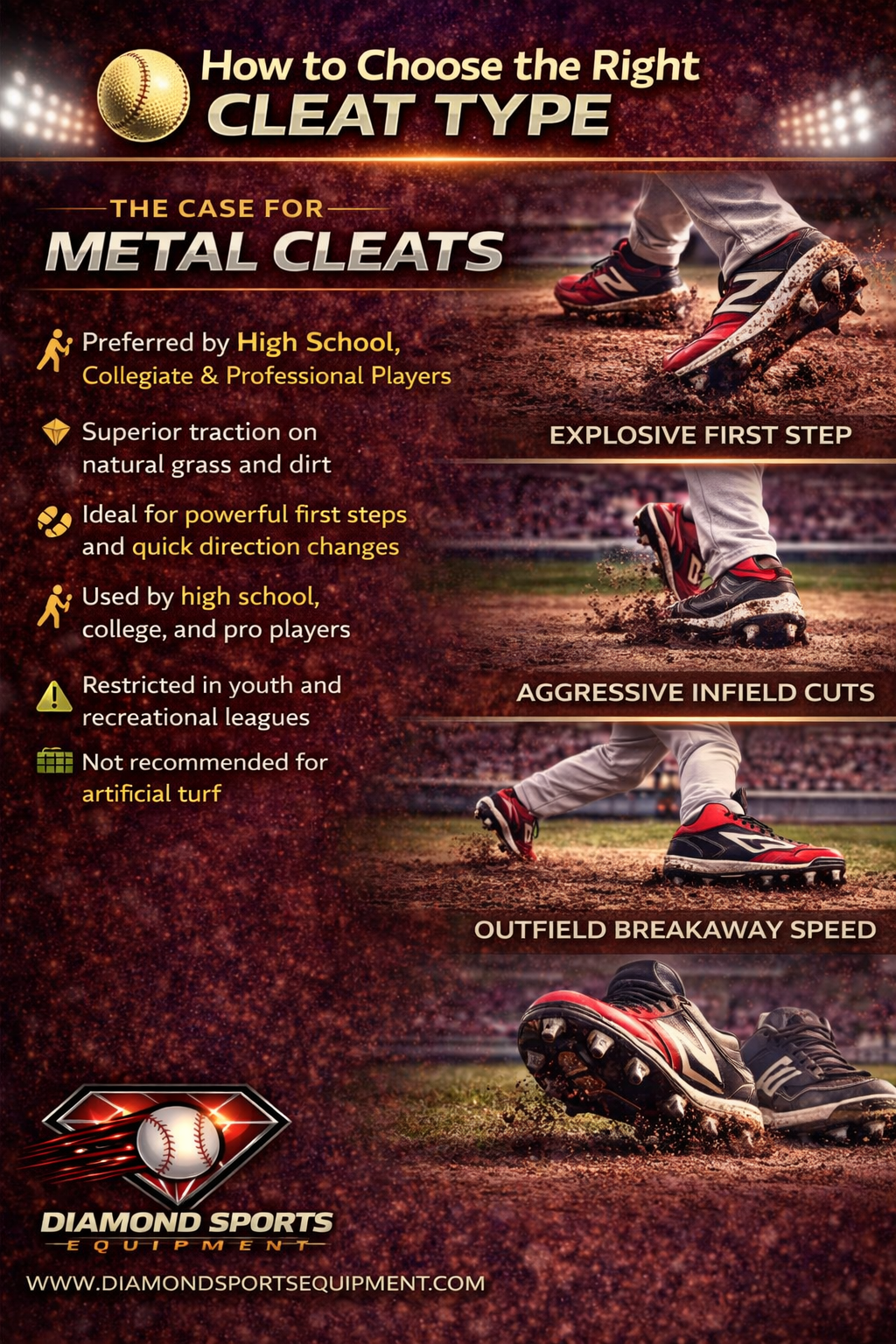
The Case for Metal Cleats
Metal cleats are the choice of serious competitive players at the high school level and above for one primary reason — nothing penetrates natural grass and dirt like metal spikes, and the directional traction advantage on aggressive cuts and explosive first steps creates a genuine performance edge that accumulates across every play of every game on natural surfaces.
The difference between metal and molded traction is most apparent in three specific scenarios. First — the first step out of the batter's box where metal spikes dig into the dirt and launch the runner immediately rather than skidding across the surface on the initial push. Second — aggressive infield cuts where a shortstop or second baseman plants hard to change direction after reading a ground ball trajectory. Third — outfield route breaks where a center fielder needs to push explosively off planted grass to close on a deep ball. In all three scenarios metal delivers grip that molded rubber simply cannot match because the physics of surface penetration versus surface contact cannot be overcome by any rubber or TPU design.
The tradeoffs are real. Metal is restricted in youth leagues and many recreational adult formats — creating compliance issues for players who compete across multiple organizations. Metal cleats on artificial turf provide inadequate traction and damage the surface. Metal cleats cost more to purchase and require more careful maintenance to keep the spikes sharp and properly seated. And players who are not yet strong enough to generate explosive movements do not benefit from metal traction in the same way that developed athletes do — the traction advantage of metal requires the athletic output to use it.
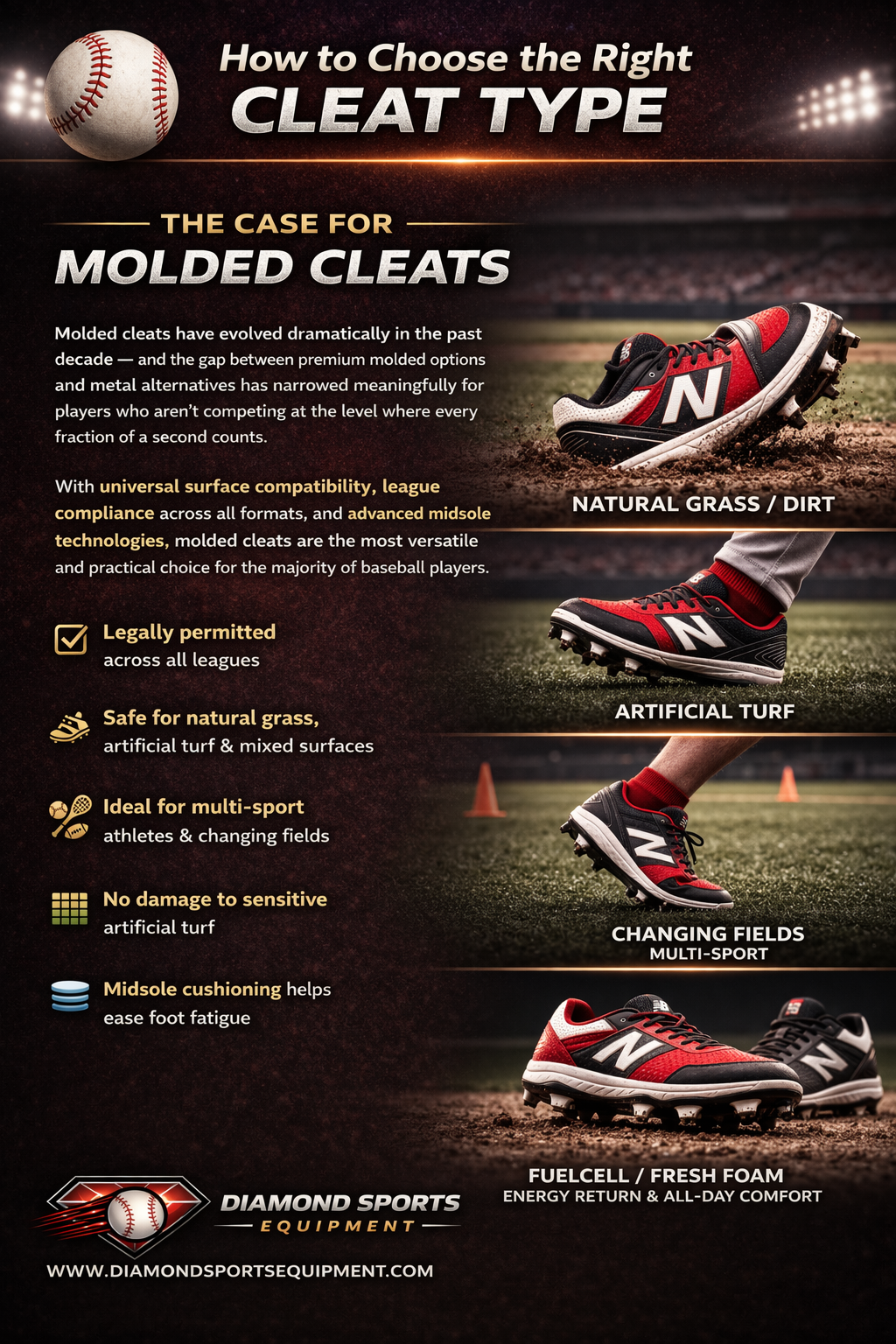
The Case for Molded Cleats
Molded cleats have evolved dramatically in the past decade — and the gap between premium molded options and metal alternatives has narrowed meaningfully for players who are not competing at the level where every fraction of a second of first-step explosiveness determines outcomes. The universal surface compatibility, league compliance across every format, and advanced midsole technologies now available in molded designs make them a genuinely compelling choice for the majority of baseball players regardless of age or competition level.
The practical advantage of molded cleats is most apparent for players who compete across multiple surface types, multiple league formats, or multiple sports in the same season. A player who competes in a high school league on natural grass Tuesday, a travel ball tournament on artificial turf Saturday, and a recreational adult league on a mixed surface Sunday cannot own one pair of metal cleats for all three scenarios. A premium molded cleat with FuelCell or Fresh Foam technology serves all three formats reliably without compliance concerns on any surface.
Advanced midsole technology has also changed the comfort conversation significantly. Standard EVA molded cleats from a decade ago provided adequate but unremarkable cushioning. New Balance's FuelCell 4040 V7 returns energy on every footstrike in a way that no metal cleat midsole currently matches — creating a long-day comfort advantage that serious players who spend full tournament days on the field consistently report as one of the most impactful equipment improvements available regardless of spike type.
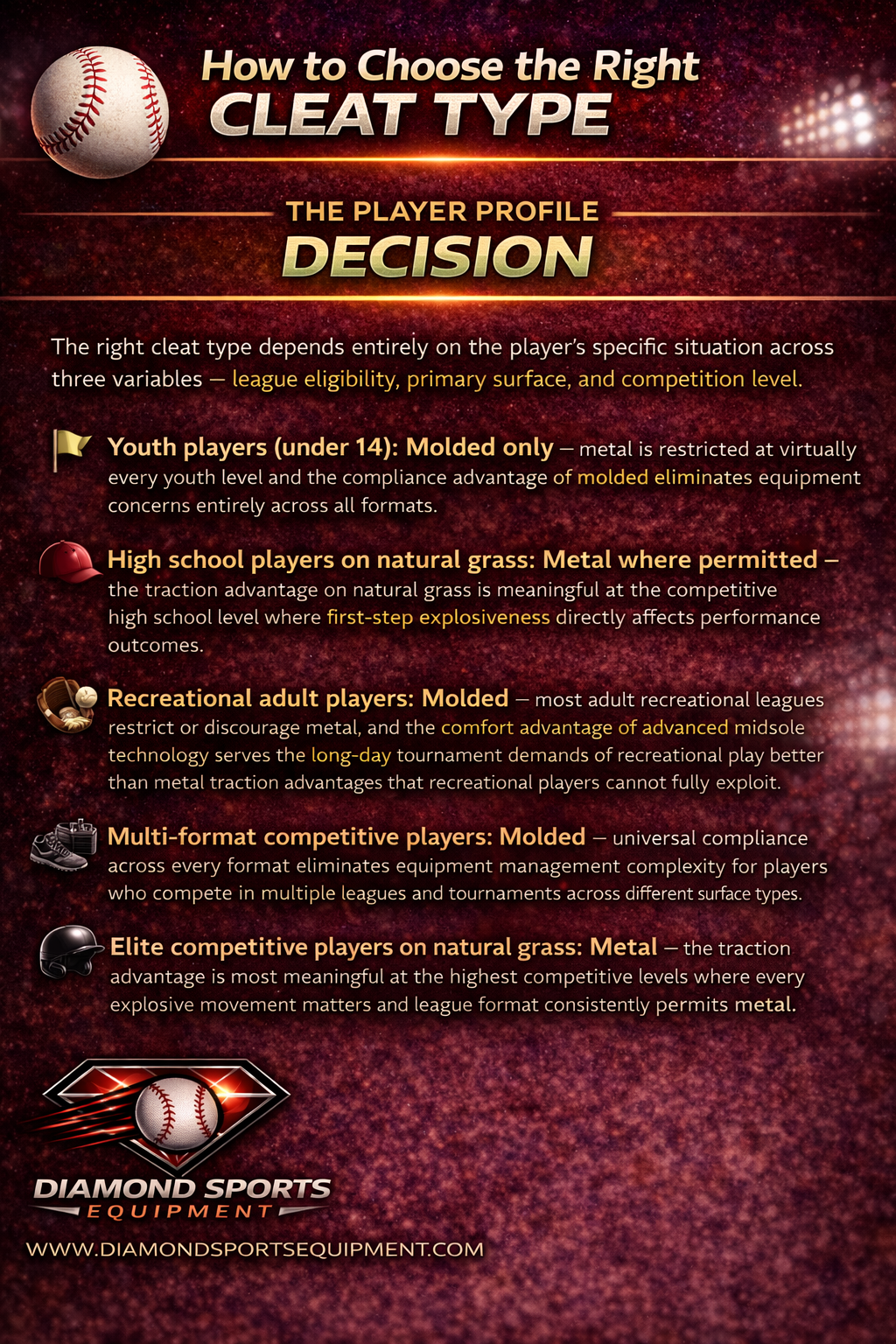
The Player Profile Decision
The right cleat type depends entirely on the player's specific situation across three variables — league eligibility, primary surface, and competition level.
Youth players (under 14): Molded only — metal is restricted at virtually every youth level and the compliance advantage of molded eliminates equipment concerns entirely across all formats.
High school players on natural grass: Metal where permitted — the traction advantage on natural grass is meaningful at the competitive high school level where first-step explosiveness directly affects performance outcomes.
Recreational adult players: Molded — most adult recreational leagues restrict or discourage metal, and the comfort advantage of advanced midsole technology serves the long-day tournament demands of recreational play better than metal traction advantages that recreational players cannot fully exploit.
Multi-format competitive players: Molded — universal compliance across every format eliminates equipment management complexity for players who compete in multiple leagues and tournaments across different surface types.
Elite competitive players on natural grass: Metal — the traction advantage is most meaningful at the highest competitive levels where every explosive movement matters and league format consistently permits metal.
🏆 Putting It Into Practice
Most players make the right choice by defaulting to molded cleats until they are competing at a level and in a format where metal is both permitted and practically beneficial — and then transitioning to metal specifically for natural grass competitive play while maintaining a molded alternative for turf surfaces and mixed-format tournaments. For players who want to explore their complete defensive equipment setup alongside this cleat decision, 🧤 Best Baseball Gloves for Every Player (2026) covers the glove options that complete a competitive player's full field package. And for players who want to round out their full plate equipment alongside their cleats, 🪖 Best Baseball Batting Helmets (2026) covers the certified helmet options that no competitive player should compromise on regardless of cleat type.
❌ Common Cleat Type Mistakes
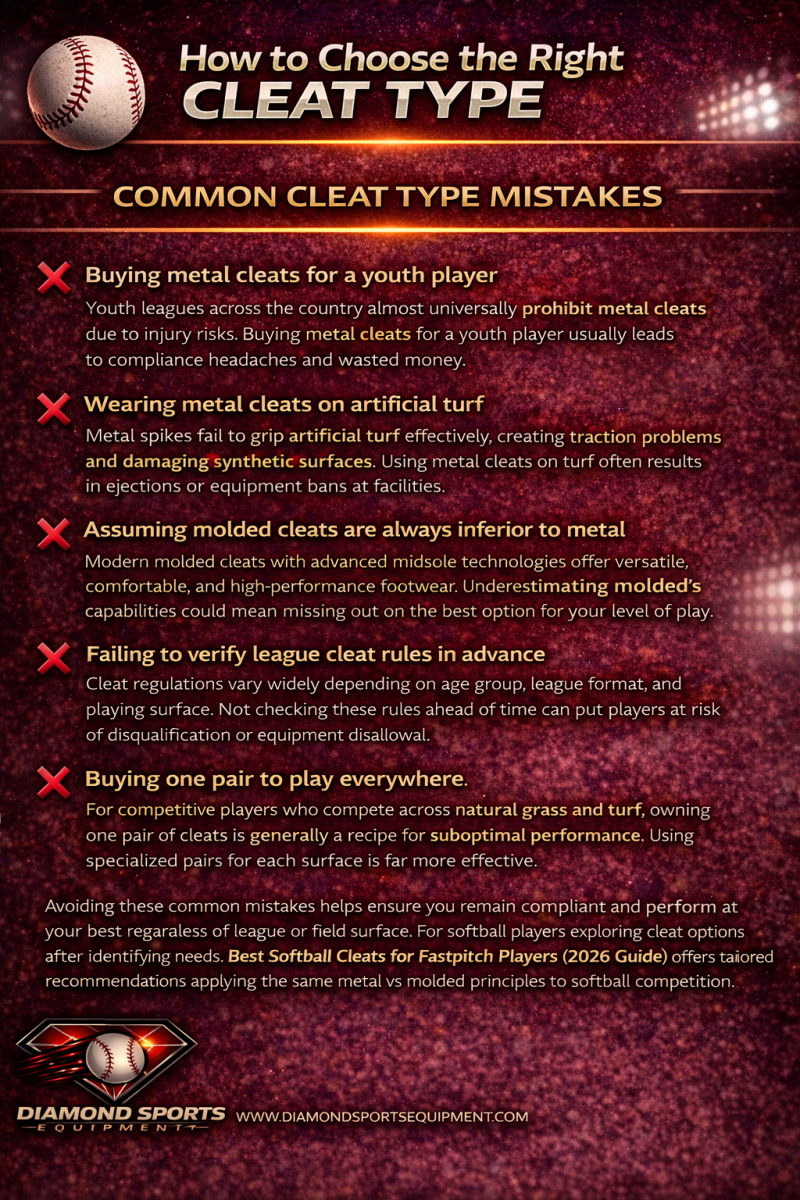
Buying metal cleats for a youth player
Metal is restricted in virtually every youth league — purchasing metal for a youth player creates compliance violations that force a second purchase. Always confirm league rules before buying metal for any player under 14.
Wearing metal cleats on artificial turf
Metal spikes provide poor traction on artificial turf and damage the surface. Players who wear metal on turf risk ejection from facilities that prohibit metal and create unsafe playing conditions for themselves and other players.
Assuming molded cleats are always inferior to metal
Advanced midsole technology has closed the performance gap meaningfully for players below the elite competitive level. A premium FuelCell molded cleat outperforms a budget metal design on most performance metrics except peak natural grass traction.
Not confirming league rules before purchasing
League cleat requirements vary significantly across organizations, age groups, and surface types. Confirming the specific rules for every league a player competes in before purchasing prevents the frustration of compliance violations on game day.
Buying one pair for all surfaces and formats
Serious competitive players who compete across multiple formats benefit from owning both a metal pair for natural grass competition and a molded pair for turf and mixed surfaces — treating them as complementary tools rather than alternatives.
Avoiding these mistakes prevents the compliance issues and performance limitations that cleat type mismatches create. For players ready to shop specific options after working through this decision, 👟 Best Softball Cleats for Fastpitch Players (2026 Guide) covers the softball-specific cleat decisions that apply the same metal vs molded principles to fastpitch competition.
❓ FAQ
At what age can players start wearing metal cleats?
- Most organized leagues permit metal cleats at the high school level — typically age 14 and above depending on the specific organization.
- Always confirm your specific league's age and level requirements before purchasing metal cleats for any player.
Can I wear molded cleats in a league that permits metal?
- Yes — molded cleats are universally permitted even in leagues where metal is allowed.
- Many competitive players choose molded designs with advanced midsole technology even in metal-permitted leagues for the comfort advantage on long game days.
How do I know if my league allows metal cleats?
- Check the equipment rules section of your league's official rulebook or contact the league coordinator directly before purchasing.
- When in doubt default to molded — they are always compliant and never create equipment violation concerns.
Do metal cleats wear out faster than molded?
- Metal spikes dull through regular use but individual spikes can be replaced without replacing the entire cleat — extending the useful life of the shoe.
- Molded spikes wear down and cannot be replaced — the entire outsole degrades through use requiring full cleat replacement when traction diminishes.
Are metal cleats worth it for recreational adult baseball?
- Generally no — most recreational adult leagues restrict metal and the traction advantage is most meaningful at competitive levels where explosive first-step athleticism directly affects outcomes.
- Advanced molded designs with FuelCell or Fresh Foam technology serve recreational adult players better through long-day comfort advantages that matter more than peak traction at the recreational level.
🧢 Final Thoughts
The metal vs molded cleat decision is not a question of which is objectively better — it is a question of which is right for the specific player, league, surface, and competition level in front of them. Metal delivers unmatched natural grass traction for competitive players in formats where it is permitted. Molded delivers universal compliance, advanced comfort technology, and versatile surface performance for the majority of players across the majority of competitive scenarios they will encounter through a full season. Know your league, know your surface, and choose accordingly.
For players who want to complete their full competitive equipment setup alongside their new cleats, check out 🧤 The Complete Baseball Glove Guide (2026) for the glove options that complete a competitive player's full field package. And for everything else across our baseball and softball coverage, visit 📝 Diamond Sports Equipment Blog & Gear Reviews for our full library of buying guides, product comparisons, and equipment reviews updated all season long.