A brand new baseball glove straight out of the box is not a game-ready tool — it is a promise of what the glove will become once the leather has been worked, shaped, and conditioned into a pocket that fits the player's hand and closes reliably on every catch. The break-in process is not optional for leather gloves. It is the step that transforms a stiff, unformed piece of equipment into the personalized defensive tool that serious players describe as feeling like an extension of their hand. Skip it or rush it incorrectly and the glove never reaches its potential — the pocket stays unformed, the leather stays stiff, and the player spends the entire season fighting their equipment instead of focusing on the ball.
The good news is that breaking in a baseball glove correctly is not complicated. It requires the right materials, consistent effort over a realistic timeline, and an understanding of what the break-in process is actually accomplishing inside the leather so the player knows when it is done correctly and when it still needs work. For players who are also still selecting their glove, 🧤 How to Choose a Baseball Glove covers the sizing, web style, and leather quality decisions that should be resolved before the break-in process begins. Still shopping for the right glove to break in? Start with the 🧤 Best Baseball Gloves for Every Player (2026).
🧤 What You Should Know About Breaking In a Glove

⏱️ Break-In Time Varies by Leather Quality
Premium leathers like Wilson Pro Stock and Rawlings Heart of The Hide require two to four weeks of intentional break-in. Softer leathers like Mizuno Bio Soft reach optimal shape in days. Match your expectations to the leather type — not to how quickly you want the glove ready.
🎯 The Goal Is a Specific Pocket Shape — Not Just Softness
Breaking in a glove is not simply about making the leather soft. It is about shaping a specific pocket geometry appropriate for the player's position — shallow for infielders, deep for outfielders. Softening without shaping produces a floppy glove with no defined pocket structure.
🚫 Heat Methods Destroy Leather — Never Use Them
Microwaving, oven-baking, and steaming shortcuts soften leather by breaking down its structural fibers — the same fibers that give the pocket its long-term shape and durability. A heat-broken glove may feel soft immediately but loses pocket integrity within weeks of competitive use.
🔄 Consistent Use Is the Most Effective Break-In Method
No conditioning product or technique replaces the simple act of catching live throws repeatedly. Consistent use shapes the pocket around the player's specific hand and throwing mechanics in a way that manual methods approximate but never fully replicate.
🏆 The Best Break-In Methods
Method 1 — Play Catch Daily
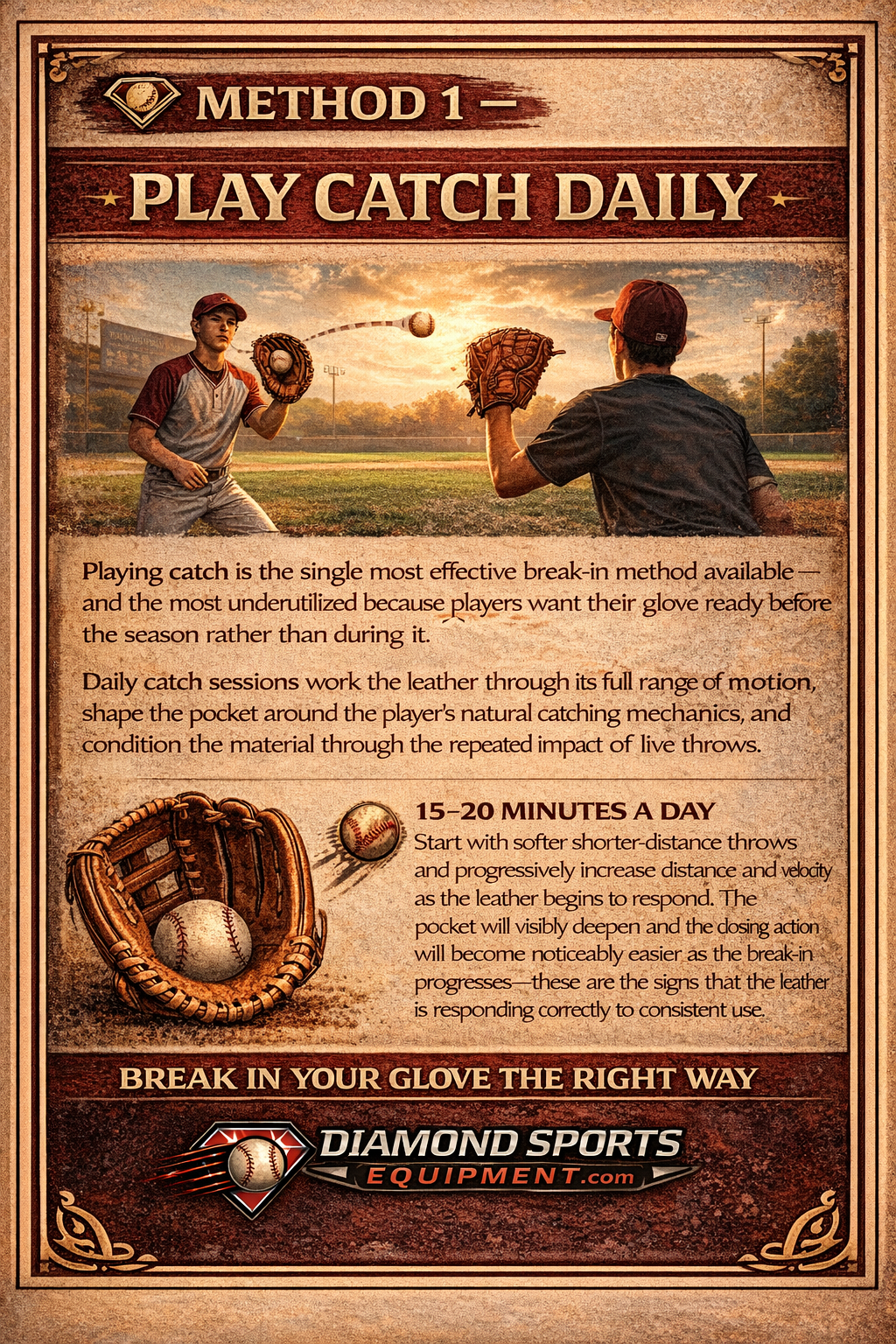
Playing catch is the single most effective break-in method available — and the most underutilized because players want their glove ready before the season rather than during it. Daily catch sessions work the leather through its full range of motion, shape the pocket around the player's natural catching mechanics, and condition the material through the repeated impact of live throws. Fifteen to twenty minutes of catch per day consistently produces a better-formed pocket than any manual technique applied once or twice a week.
Start with softer shorter-distance throws and progressively increase distance and velocity as the leather begins to respond. The pocket will visibly deepen and the closing action will become noticeably easier as the break-in progresses — these are the signs that the leather is responding correctly to consistent use.
Method 2 — Glove Mallet Work
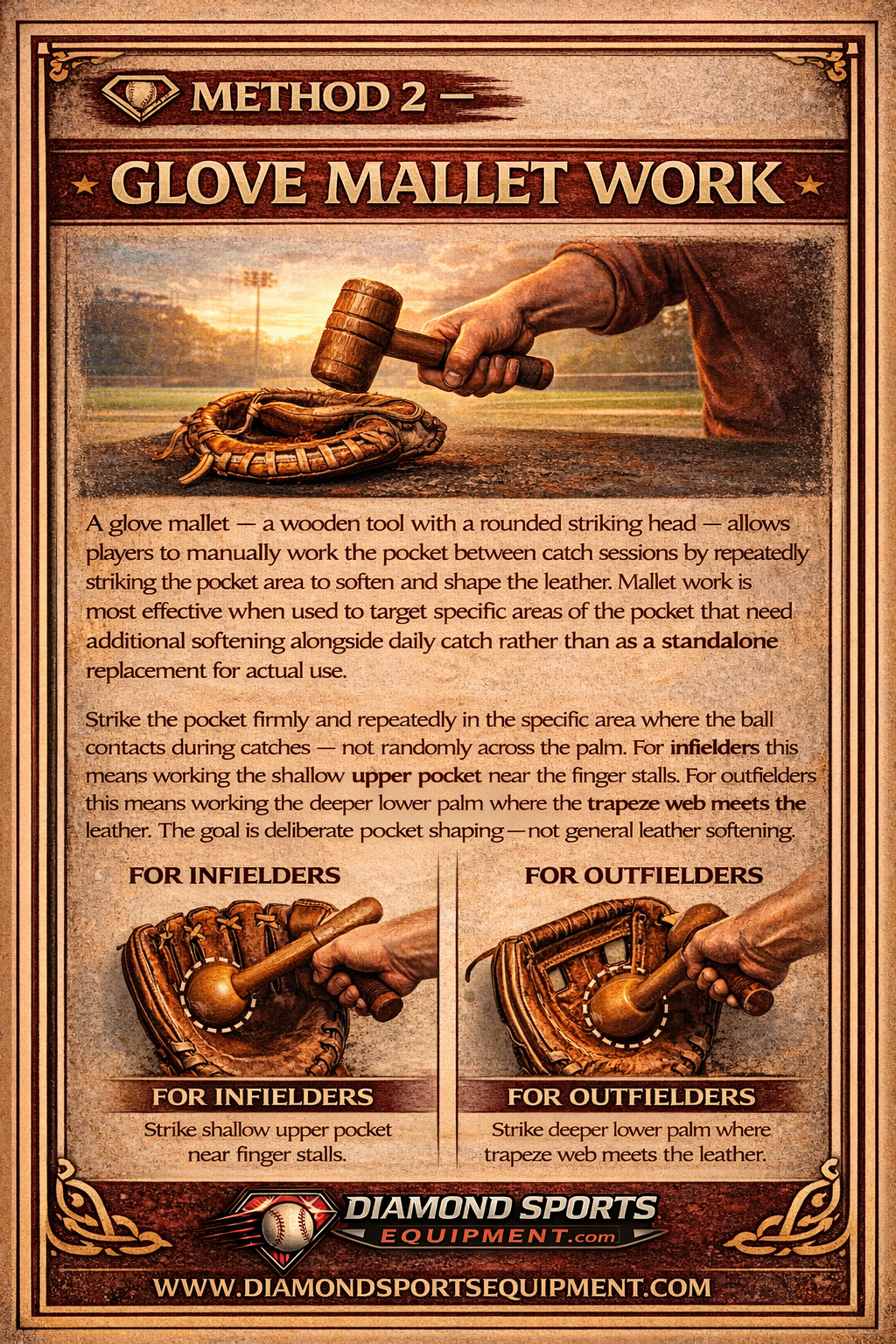
A glove mallet — a wooden tool with a rounded striking head — allows players to manually work the pocket between catch sessions by repeatedly striking the pocket area to soften and shape the leather. Mallet work is most effective when used to target specific areas of the pocket that need additional softening alongside daily catch rather than as a standalone replacement for actual use.
Strike the pocket firmly and repeatedly in the specific area where the ball contacts during catches — not randomly across the palm. For infielders this means working the shallow upper pocket near the finger stalls. For outfielders this means working the deeper lower palm where the trapeze web meets the leather. The goal is deliberate pocket shaping — not general leather softening.
Method 3 — Glove Oil and Conditioner
Quality glove oil or conditioner applied sparingly to the palm, fingers, and web softens the leather to make manual break-in methods more effective and prevents the drying and cracking that shortens glove life through a competitive season. Apply a small amount to a clean cloth and work it evenly into the leather — do not saturate the glove or apply oil directly from the bottle.
Two to three light applications through the break-in period is sufficient for most leather gloves. Over-conditioning is a common mistake — too much oil softens the leather beyond its optimal firmness, adds unnecessary weight, and degrades the pocket structure that the break-in process is working to establish. Use conditioner to support the break-in process — not to replace the work of consistent use and mallet conditioning.

🎯 Putting It Into Practice
The break-in process looks slightly different depending on whether the glove is an infield or outfield design — and understanding that difference helps players shape the pocket correctly from the first session rather than correcting a poorly formed pocket mid-season. Infield pockets should be shaped shallow and compact with the ball sitting near the top of the glove for fast transfer access. Outfield pockets should be shaped deep and wide with the ball sitting lower in the palm where the pocket structure provides maximum fly ball security. For players who want to see specific product recommendations across both categories, 🧤 Best Infield Baseball Gloves (2026) and 🧤 Best Outfield Baseball Gloves (2026) cover the construction details that inform how each glove type should be broken in and what the finished pocket should feel like.
✅ How to Know When Your Glove Is Broken In
Sign 1 — The Glove Closes Naturally
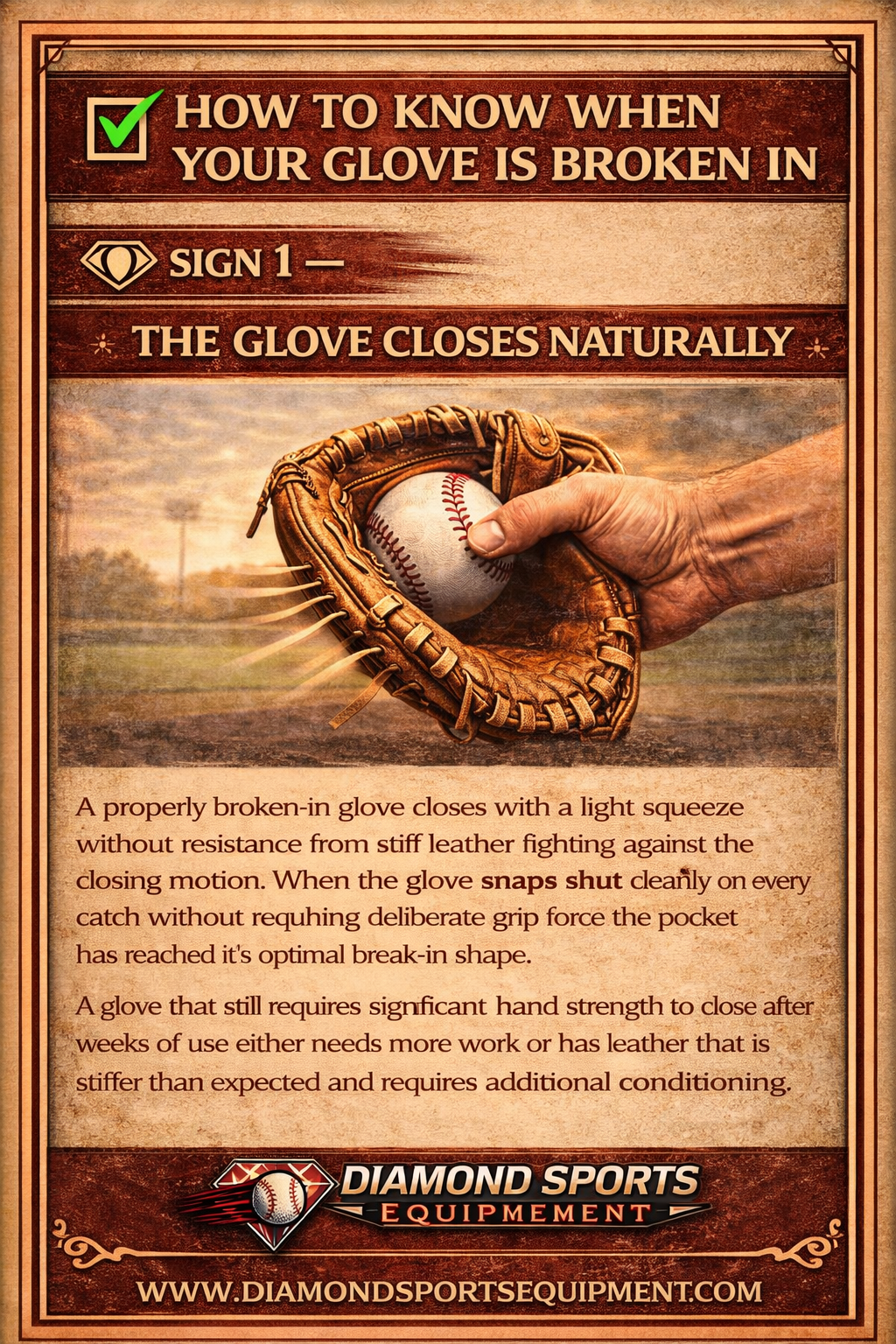
A properly broken-in glove closes with a light squeeze without resistance from stiff leather fighting against the closing motion. When the glove snaps shut cleanly on every catch without requiring deliberate grip force the pocket has reached its optimal break-in shape. A glove that still requires significant hand strength to close after weeks of use either needs more work or has leather that is stiffer than expected and requires additional conditioning.
Sign 2 — The Pocket Has a Defined Shape
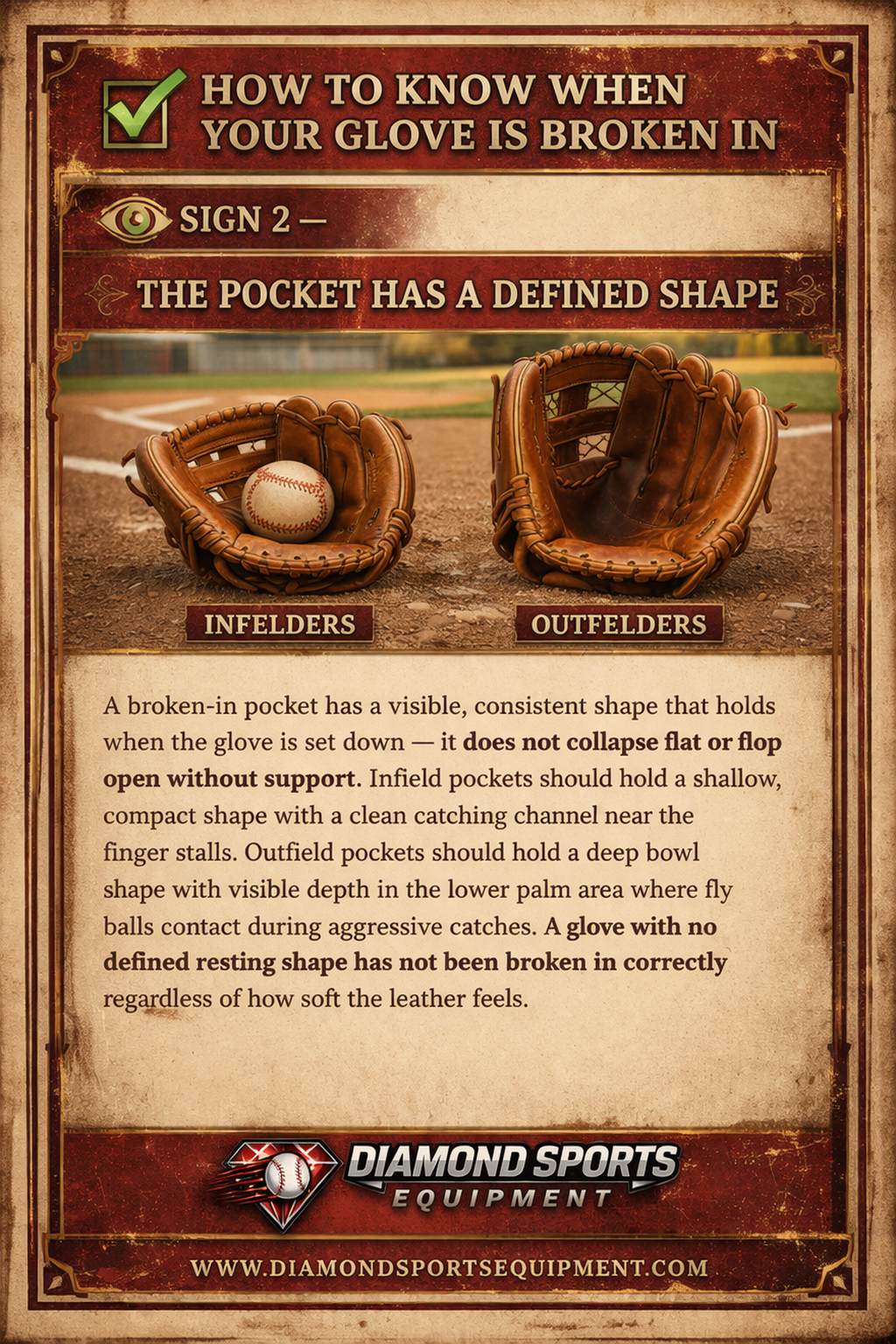
A broken-in pocket has a visible, consistent shape that holds when the glove is set down — it does not collapse flat or flop open without support. Infield pockets should hold a shallow, compact shape with a clean catching channel near the finger stalls. Outfield pockets should hold a deep bowl shape with visible depth in the lower palm area where fly balls contact during aggressive catches. A glove with no defined resting shape has not been broken in correctly regardless of how soft the leather feels.
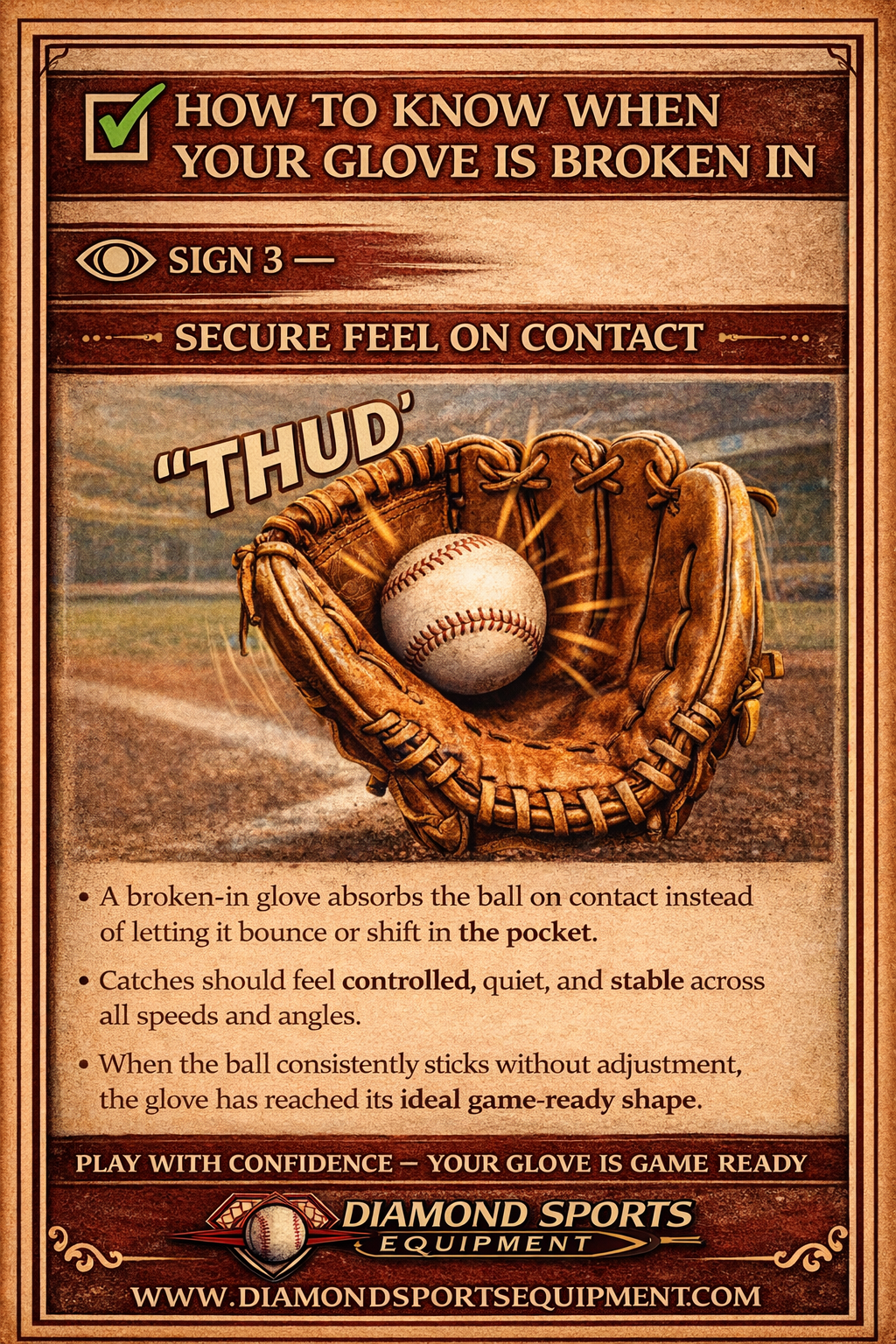
Sign 3 — The Ball Feels Secure on Contact
The most reliable sign that a glove is broken in correctly is the feel of the ball on contact — a secure, absorbed thud that stays in the pocket rather than a hard impact that rattles around or pops toward the glove opening. When catches consistently feel secure across the full range of contact angles and velocities the pocket has been shaped correctly for the player's hand and catching mechanics. This is the moment the glove stops feeling like equipment and starts feeling like part of the player's hand.
❓ FAQ
How long does it take to break in a baseball glove?
- Premium leather like Wilson Pro Stock typically takes two to four weeks of daily work to reach optimal pocket shape.
- Softer leathers like Mizuno Bio Soft can be game-ready within days of consistent use and conditioning.
Can I use petroleum jelly to break in my glove?
- No — petroleum jelly over-softens leather, attracts dirt, and degrades the pocket structure over time.
- Use purpose-made glove oil or conditioner specifically formulated for baseball leather.
Should I put a ball in my glove overnight?
- Yes — storing the glove with a ball in the pocket wrapped with a band helps maintain and develop pocket shape between use sessions.
- This is one of the most effective passive break-in techniques alongside daily catch and mallet work.
How do I break in a glove without playing catch?
- Mallet work and glove oil applied consistently will soften and shape the pocket between active use sessions.
- No passive method fully replaces the pocket shaping that live throws provide — plan to use the glove as soon as possible after starting the break-in process.
Can I re-break in a glove that lost its pocket shape?
- Yes — apply conditioner to soften the leather then work the pocket with a mallet and consistent use to reshape it.
- Prevention is easier than correction — store the glove with a ball in the pocket during the off-season to maintain pocket shape year-round.
🧢 Final Thoughts
Breaking in a baseball glove correctly is one of the most important things a serious player can do for their defensive game — and one of the most frequently rushed or skipped entirely. The three methods in this guide — daily catch, mallet work, and quality conditioning — work together to produce a pocket that fits the player's hand, holds its shape through a full competitive season, and delivers the secure, confident feel that great defensive players depend on from the first game of spring through the final out of the championship.
For players who are ready to shop for their next glove after reading this guide, 🧤 Best Baseball Gloves for Every Player (2026) covers the strongest options across every construction tier and position in a single comprehensive guide. And for everything else across our baseball and softball coverage, visit 📝 Diamond Sports Equipment Blog & Gear Reviews for our full library of buying guides, product comparisons, and equipment reviews updated all season long.