Baseball cleats are one of the most frequently purchased by feel or brand recognition rather than by the specific performance criteria that actually determine whether a cleat serves the player's game. The result is players at every level wearing metal cleats in leagues that restrict them, molded designs that lack adequate cushioning for the tournament schedules they compete in, or cut heights that work against their position's movement demands rather than supporting them. Every one of those mismatches creates a performance limitation that shows up on every play of every game — and every one of them is completely avoidable with two minutes of deliberate selection criteria applied before the purchase.
Choosing baseball cleats correctly in 2026 means making five decisions in the right order — spike type first based on league eligibility, then surface compatibility, then cut height based on position, then midsole technology based on competition schedule, then brand and style within the correctly specified configuration. Get those five decisions right and the cleats become the invisible athletic foundation that every explosive movement builds from. Get them wrong and the equipment creates limitations that no amount of athletic ability can fully overcome. For players who want to understand the core spike type decision in detail before working through this full guide, ⚾ Metal vs Molded Cleats: Which Is Right? covers the metal versus molded decision across every player profile and league format. Once you know what to look for, the 👟 New Baseball Cleats (2026) rounds up the newest options to compare.
⚾ What You Should Know Before Choosing Cleats
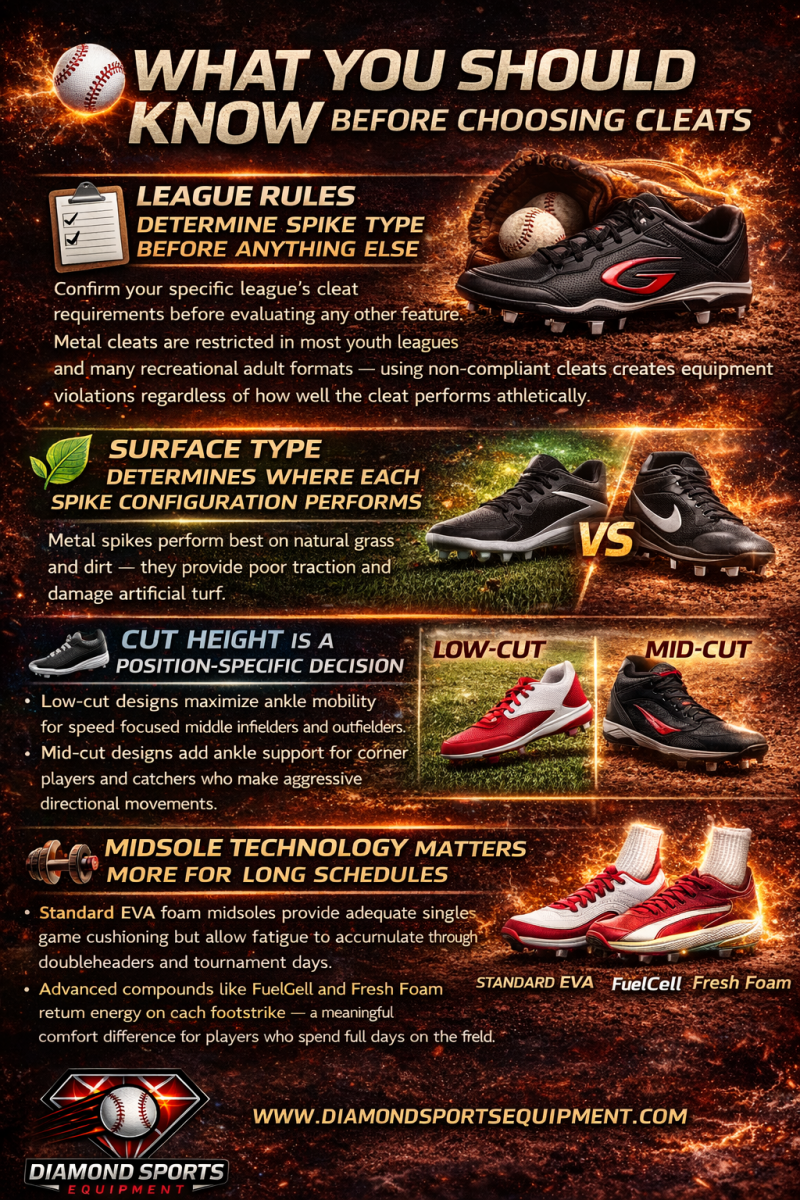
📋 League Rules Determine Spike Type Before Anything Else
Confirm your specific league's cleat requirements before evaluating any other feature. Metal cleats are restricted in most youth leagues and many recreational adult formats — using non-compliant cleats creates equipment violations regardless of how well the cleat performs athletically.
🌿 Surface Type Determines Where Each Spike Configuration Performs
Metal spikes perform best on natural grass and dirt — they provide poor traction and damage artificial turf. Molded and TPU spikes perform consistently across natural grass, dirt, and artificial turf. Players who compete on multiple surface types need surface-appropriate footwear for each.
👟 Cut Height Is a Position-Specific Decision
Low-cut designs maximize ankle mobility for speed-focused middle infielders and outfielders. Mid-cut designs add ankle support for corner players and catchers who make aggressive directional movements. Never choose cut height based on personal preference alone — match it to the specific movement demands of the position.
🏋️ Midsole Technology Matters More for Long Schedules
Standard EVA foam midsoles provide adequate single-game cushioning but allow fatigue to accumulate through doubleheaders and tournament days. Advanced compounds like FuelCell and Fresh Foam return energy on each footstrike — a meaningful comfort difference for players who spend full days on the field.
⚾ How to Choose the Right Baseball Cleats
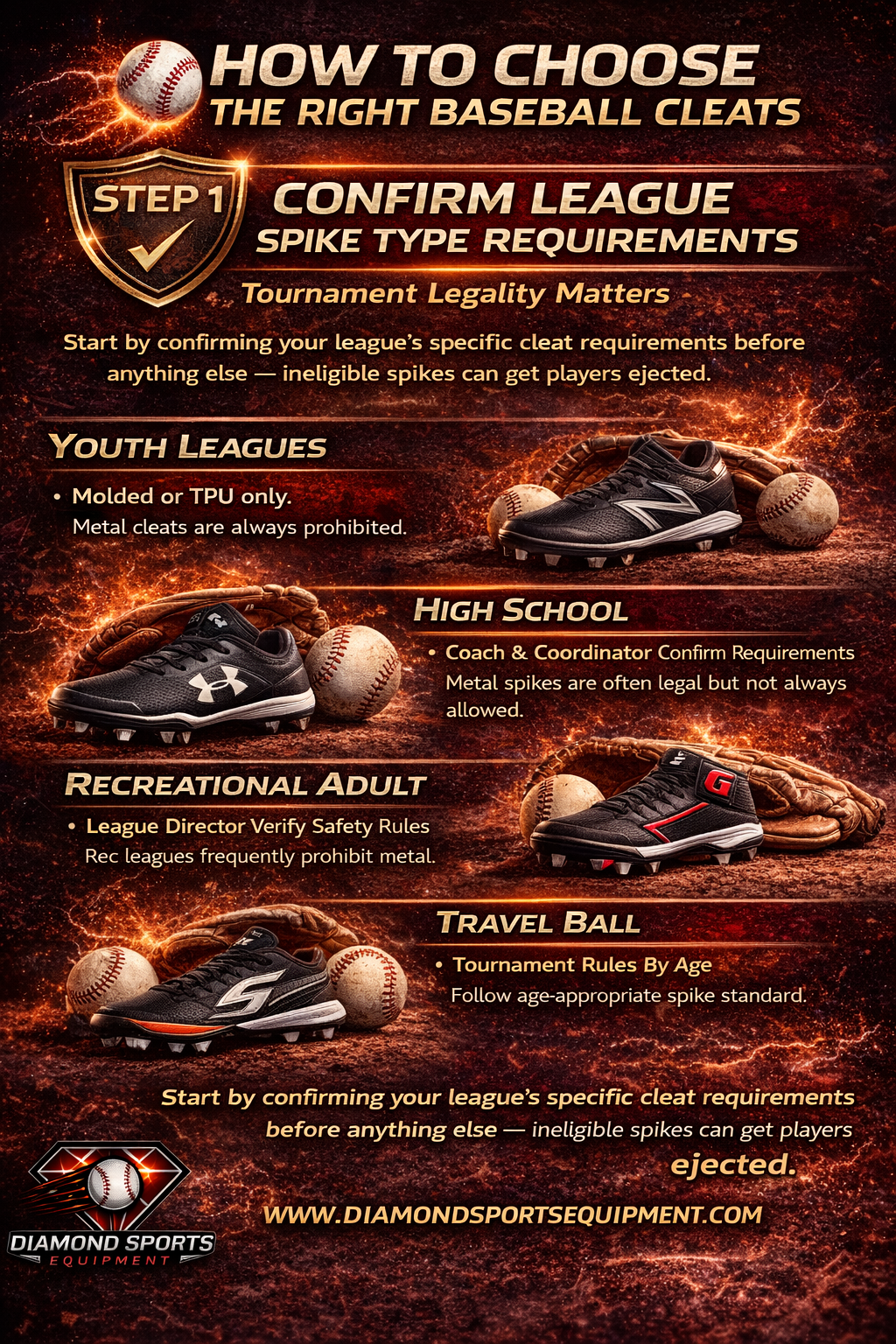
Step 1 — Confirm League Spike Type Requirements
This is the only non-negotiable first step in cleat selection — and the one most frequently skipped. Every organized baseball league has specific cleat requirements that determine which spike configurations are permitted for competition. Using the wrong spike type creates equipment violations that force mid-season replacement purchases and can result in player ejection on game day.
Youth leagues — typically prohibit metal cleats entirely. Molded rubber or TPU is the universal safe choice at every youth level.
High school — most programs permit metal but individual facilities and programs may restrict it. Confirm with your specific coach and league coordinator before purchasing metal for any high school player.
Recreational adult — varies significantly by organization. Many recreational leagues prohibit metal for player safety reasons. Always confirm before assuming metal is permitted.
Travel ball — typically follows the age-appropriate standard for the player's age group. Confirm the specific tournament organization's rules for every new format entered.
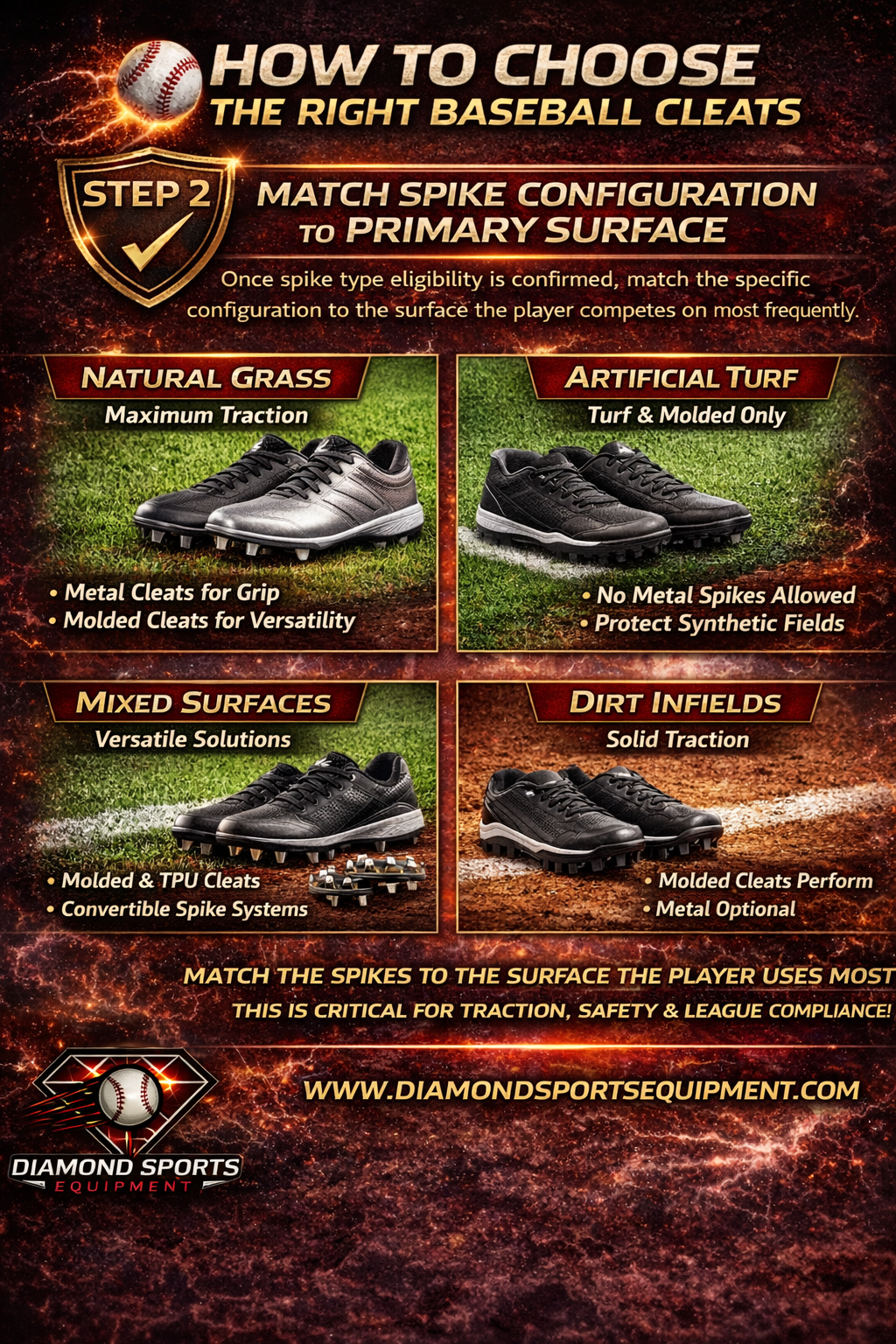
Step 2 — Match Spike Configuration to Primary Surface
Once spike type eligibility is confirmed, match the specific configuration to the surface the player competes on most frequently.
Natural grass — metal spikes provide maximum traction through surface penetration. Molded spikes provide adequate traction but cannot match metal's directional grip on aggressive cuts on maintained natural grass.
Artificial turf — molded rubber or turf shoes only. Metal spikes provide inadequate traction on artificial turf and damage the surface — creating potential ejection from facilities that prohibit metal and unsafe playing conditions for other players.
Mixed surfaces — molded or TPU designs are the practical universal choice for players whose schedule includes both natural grass and artificial turf fields. A removable metal spike system allows surface-specific configuration for players who want metal performance on grass without purchasing separate footwear.
Dirt infields — molded designs perform adequately on pure dirt surfaces. The traction difference between metal and molded is most pronounced on natural grass — the advantage narrows considerably on pure dirt playing surfaces.
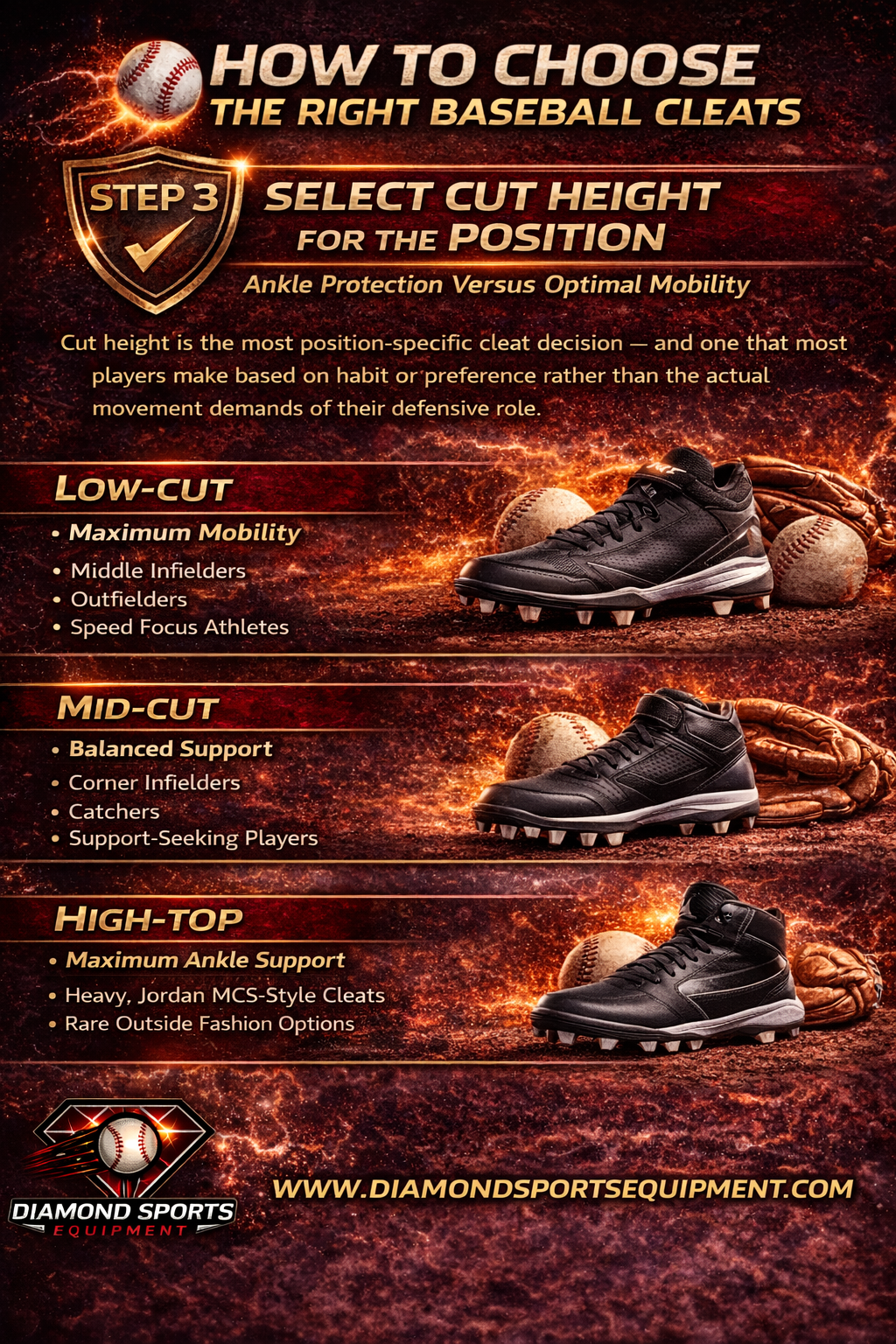
Step 3 — Select Cut Height for the Position
Cut height is the most position-specific cleat decision — and one that most players make based on habit or preference rather than the actual movement demands of their defensive role.
Low-cut — maximizes ankle mobility for explosive lateral movements. The correct choice for middle infielders who make quick directional changes on every groundball, outfielders who break on fly balls at full speed, and speed-first athletes at any position who want maximum first-step explosiveness.
Mid-cut — adds ankle collar coverage that provides support during aggressive directional changes. The correct choice for corner infielders who make hard lateral cuts on shots down the line, catchers who repeatedly transition from crouch to throw, and any player who has experienced ankle instability during aggressive defensive movements in low-cut alternatives.
High-top — rare in baseball outside of Jordan MCS-style designs. Provides maximum ankle coverage but restricts the ankle mobility that most baseball positions require for optimal athletic performance.
🎯 Putting It Into Practice
The three foundational decisions — spike type, surface compatibility, and cut height — narrow the field of appropriate options dramatically before brand, midsole technology, or style ever enter the conversation. A player who has confirmed molded-only league rules, competes primarily on mixed surfaces, and plays shortstop has already determined that they need a low-cut molded design before evaluating any specific product. For players ready to shop specific metal options after completing this selection process, 👞 Best Metal Baseball Cleats (2026 Guide) covers the strongest metal alternatives for players in leagues where metal is permitted. And for players at the high school level who want position and style-specific recommendations alongside this guide, 👟 Best Baseball Cleats for High School covers the design options that serve high school players' performance and identity priorities specifically.
✅ Steps 4 and 5 — Midsole Technology and Brand
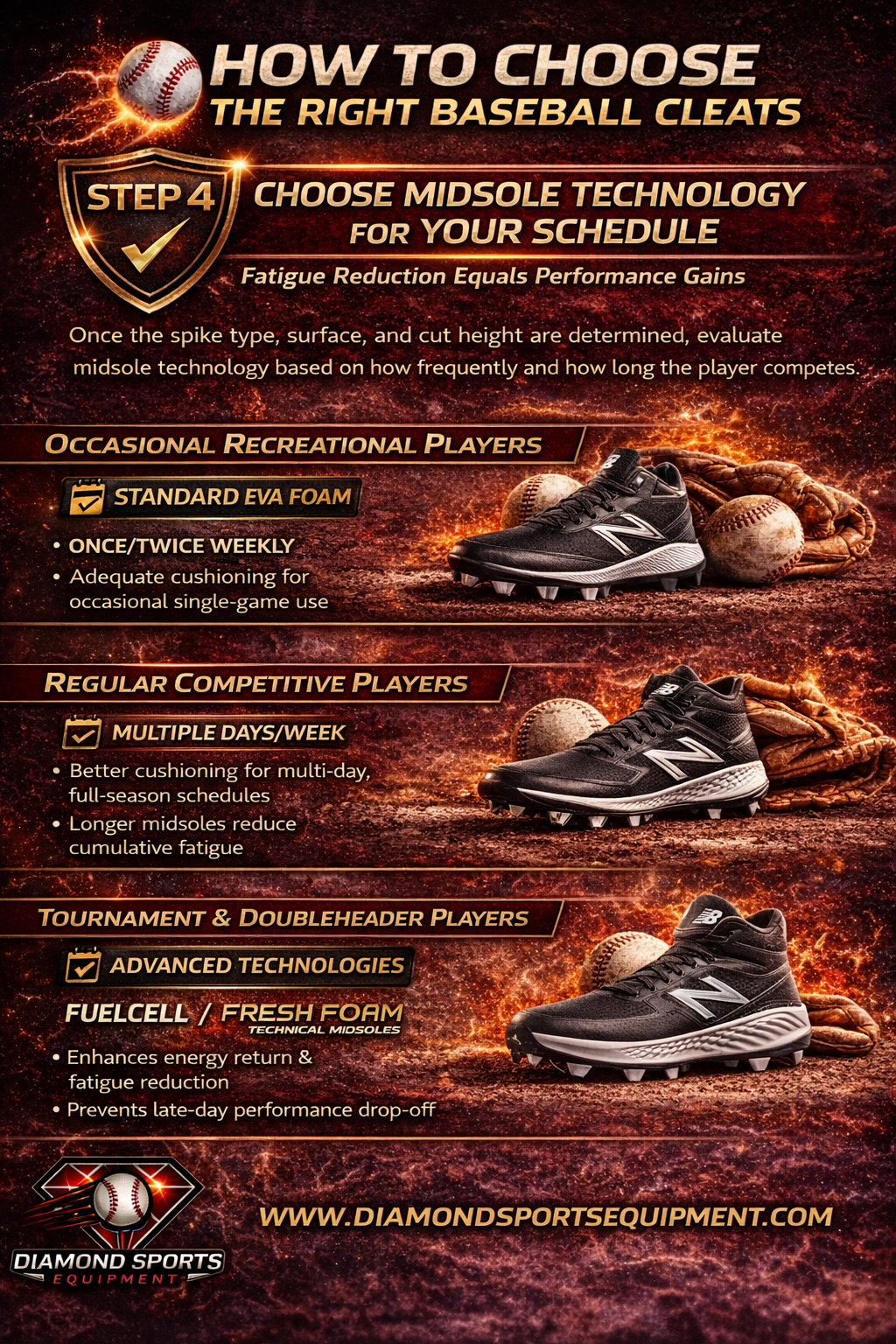
Step 4 — Choose Midsole Technology for Your Schedule
Once the spike type, surface, and cut height are determined, evaluate midsole technology based on how frequently and how long the player competes.
Occasional recreational players — standard EVA foam midsoles provide adequate cushioning for once or twice weekly single-game competition without significant fatigue accumulation.
Regular competitive players — mid-tier midsole compounds provide better long-game cushioning for players who compete multiple days per week through a full competitive season.
Tournament and doubleheader players — advanced midsole technologies like New Balance's FuelCell or Fresh Foam provide energy return on every footstrike that reduces fatigue accumulation meaningfully across full tournament days. The investment pays off most clearly in the final innings of the second game of a doubleheader when standard EVA fatigue has accumulated to the point of affecting movement quality.
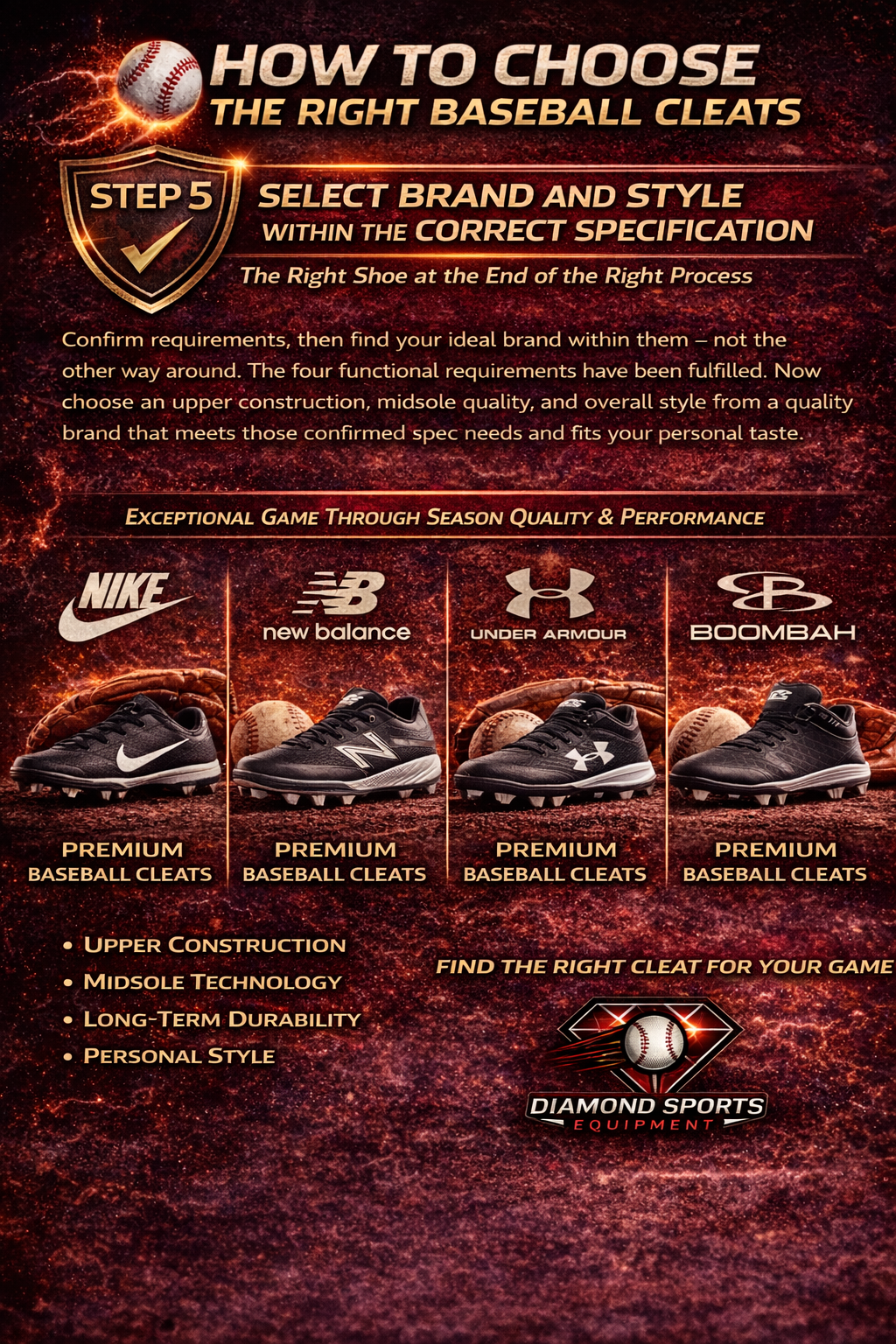
Step 5 — Select Brand and Style Within the Correct Specification
Only after the four functional decisions are complete should brand preference and style enter the selection process. The correct process is: confirm what you need technically, then find the best option within that specification from the brand you prefer. The incorrect process — and the most common one — is choosing based on brand or appearance first and hoping the technical specifications happen to match.
Within any correctly specified configuration, brand differences matter in terms of upper construction quality, midsole compound performance, and long-term durability through regular competitive use. Premium constructions from New Balance, Nike, Under Armour, and Boombah all deliver meaningfully different performance experiences within the same general cleat category — evaluating specific options within the correct specification produces a better outcome than defaulting to brand loyalty before specification is confirmed.
❌ Common Cleat Buying Mistakes
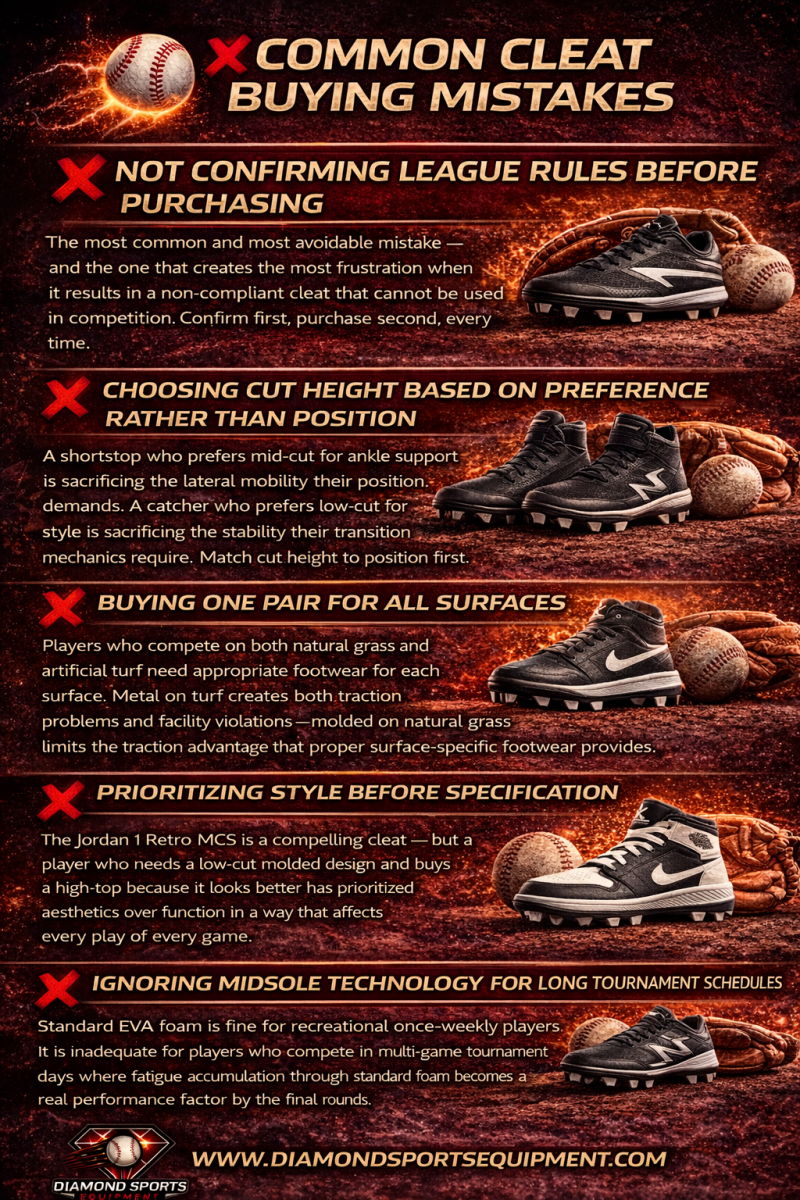
Not confirming league rules before purchasing
The most common and most avoidable mistake — and the one that creates the most frustration when it results in a non-compliant cleat that cannot be used in competition. Confirm first, purchase second, every time.
Choosing cut height based on preference rather than position
A shortstop who prefers mid-cut for ankle support is sacrificing the lateral mobility their position demands. A catcher who prefers low-cut for style is sacrificing the stability their transition mechanics require. Match cut height to position first.
Buying one pair for all surfaces
Players who compete on both natural grass and artificial turf need appropriate footwear for each surface. Metal on turf creates both traction problems and facility violations — molded on natural grass limits the traction advantage that proper surface-specific footwear provides.
Prioritizing style before specification
The Jordan 1 Retro MCS is a compelling cleat — but a player who needs a low-cut molded design and buys a high-top because it looks better has prioritized aesthetics over function in a way that affects every play of every game.
Ignoring midsole technology for long tournament schedules
Standard EVA foam is fine for recreational once-weekly players. It is inadequate for players who compete in multi-game tournament days where fatigue accumulation through standard foam becomes a real performance factor by the final rounds.
❓ FAQ
What is the difference between molded and metal baseball cleats?
- Molded rubber or TPU spikes sit on the surface and are universally permitted at every competitive level.
- Metal spikes penetrate the surface for superior natural grass traction but are restricted in youth leagues and many recreational formats.
What cut height should I choose for my position?
- Low-cut for middle infielders and outfielders who prioritize ankle mobility for explosive lateral movements.
- Mid-cut for corner players and catchers who want ankle support during aggressive directional changes and transition mechanics.
Can I wear the same cleats on grass and turf?
- Molded designs perform adequately on both — making them the practical choice for players whose schedules include both surface types.
- Metal cleats should never be worn on artificial turf — they provide poor traction and damage the surface.
How often should I replace my baseball cleats?
- Quality cleats used in regular competitive play typically last one to two seasons before spike wear or upper breakdown affects performance.
- Inspect spike wear and upper integrity at the start of every season before assuming previous year cleats are still performing correctly.
Do expensive cleats actually perform better?
- Yes — within the correct specification. Advanced midsole technology, premium upper construction, and quality spike materials all deliver meaningfully better performance than entry-level alternatives at comparable construction tiers.
- The key is investing in the correct specification first — a premium cleat in the wrong spike type or cut height underperforms a basic cleat in the correct specification.
🧢 Final Thoughts
Choosing the right baseball cleats comes down to five decisions made in the right order — league eligibility first, surface compatibility second, cut height for the position third, midsole technology for the schedule fourth, and brand within the correct specification fifth. Get those five right and the cleats become the invisible athletic foundation that every explosive first step, every aggressive cut, and every confident baserunning decision builds from. Get them wrong and the equipment limits the player on every play without the player ever identifying the gear as the source of the problem.
For players who want to complete their full defensive equipment setup alongside their new cleats, check out 🧤 Best Baseball Gloves for Every Player (2026) for the glove options that complete a competitive player's full field package. And for everything else across our baseball and softball coverage, visit 📝 Diamond Sports Equipment Blog & Gear Reviews for our full library of buying guides, product comparisons, and equipment reviews updated all season long.
Add comment
Comments