High school baseball gives players access to a wider range of cleat designs, but the best choice starts with league rules, primary playing surface, foot fit, and weekly workload rather than brand or style alone. Metal spikes can provide aggressive traction on natural dirt and grass when they are permitted, while molded and TPU designs give players more flexibility across different fields and facilities. Cushioning, heel lockdown, forefoot room, and outsole construction also become more important as practices, games, doubleheaders, and tournament schedules add hours of wear each week.
The six cleats in this guide cover both metal and molded options for high school players with different fit preferences and competitive schedules. Players who already know they want maximum natural-surface traction can compare dedicated spike options in 👞 Best Metal Baseball Cleats (2026 Guide), while players who need a more versatile outsole can narrow the field with 👟 Best Molded Baseball Cleats (2026 Guide).
👟 What You Should Know About High School Baseball Cleats

📋 League Rules and Playing Surface Come First
High school cleat rules can vary by governing body, program, tournament, and facility, so confirm what is allowed before choosing metal or molded traction. Players who regularly move between natural grass, dirt, turf, and indoor facilities also need to consider whether one cleat can realistically handle their full schedule.
👟 Fit and Lockdown Matter More Than Brand Preference
The best cleat is the one that holds the heel securely, gives the forefoot enough room, and prevents excessive movement during hard cuts and acceleration. A popular premium model can still be the wrong choice when its shape creates heel slip, toe pressure, or poor lockdown for the individual player's foot.
⚙️ Metal and Molded Cleats Create Different Tradeoffs
Metal spikes are designed to penetrate natural dirt and grass for aggressive traction, while molded rubber or TPU designs provide a more versatile platform for players whose schedules include different field types. Neither construction is automatically best for every high school player because surface, rules, comfort, and usage all affect the decision.
⏱️ Long Schedules Make Cushioning and Durability More Important
A cleat that feels fine during a short practice may feel very different late in a doubleheader or tournament day. Players with heavy schedules should pay closer attention to midsole cushioning, upper durability, fit security, and outsole wear because those qualities become increasingly noticeable as weekly playing time rises.
🏆 Best Baseball Cleats for High School (2026)
These six cleats cover metal and molded traction, different cushioning systems, traditional and roomier fits, and multiple style profiles so high school players can match their footwear to league rules, field surface, foot shape, and competitive workload.
🌊 New Balance Men's Fresh Foam X 3000 V6 Metal Baseball Cleats
Best For: Competitive high school players who want metal-spike traction with more underfoot cushioning for long practices, games, doubleheaders, and tournament schedules.
Construction: Low-cut baseball cleat built with a full-length Fresh Foam X midsole, PU-coated mesh upper, TPU heel clip, and an 8-spike metal plate with a flex zone designed to allow natural foot movement.
Material: PU-coated mesh upper combines breathability with added durability, while the Fresh Foam X cushioning platform runs through the full midsole. The outsole uses an eight-spike metal configuration for traction on natural dirt and grass.
Performance Feel: Cushioned and flexible underfoot without giving up the planted feel of a traditional metal cleat. The low-cut construction keeps the ankle relatively unrestricted, while the Fresh Foam X midsole makes this a strong option for high school players who spend long competitive days on their feet.
Ideal Player Type: High school players competing primarily on natural dirt and grass who are permitted to wear metal cleats and want a balance of aggressive traction, low-cut mobility, and more cushioning than traditional firm-soled metal designs.
Performance Overview: The New Balance Fresh Foam X 3000 V6 Metal gives this guide a true competitive metal option for high school players whose league and field rules allow spikes. Its eight-spike plate provides the natural-surface traction serious players expect from metal, while the Fresh Foam X midsole separates it from firmer traditional designs by putting more emphasis on comfort across long game and practice schedules. The PU-coated mesh upper also keeps the construction relatively lightweight and breathable without sacrificing the structure needed for regular baseball use.
Why It Stands Out:
-
Fresh Foam X midsole adds substantial cushioning to a true metal baseball cleat.
-
Eight-spike metal plate with flex zone provides aggressive dirt and grass traction while allowing natural foot movement.
-
Low-cut profile works well for players who prefer less material around the ankle.
-
PU-coated mesh balances breathability, softness, and durability for regular competitive use.
-
Gives high school players a legitimate metal option alongside the molded cleats in this guide.

🏀 Nike Jordan 1 Retro MCS
Best For: High school players who want a baseball-specific molded cleat with the recognizable Jordan 1 design and more ankle coverage than a typical low-cut baseball shoe.
Construction: Baseball adaptation of the Jordan 1 built with a high-top synthetic-leather upper, foam midsole, and cleated TPU plate designed for diamond traction.
Material: Synthetic leather provides structure and durability through the upper, while a foam midsole supplies lightweight cushioning and the TPU cleat plate handles traction underfoot.
Performance Feel: More substantial around the ankle than a low-cut baseball cleat, with a structured upper and conventional foam cushioning. The molded TPU plate provides baseball traction without the sharper underfoot feel of metal spikes.
Ideal Player Type: High school players who prioritize molded traction, a structured high-top fit, and Jordan styling and who are comfortable with more material around the ankle than a lightweight low-cut design.
Performance Overview: The Jordan 1 Retro MCS stands out because it is a legitimate baseball cleat rather than simply a basketball shoe worn on the field. Its cleated TPU plate provides diamond-specific traction, while the synthetic-leather upper preserves the Jordan 1 look that makes the model distinctive. It makes the most sense for players who genuinely prefer its fit and high-top construction rather than choosing it solely because of the Jordan name.
Why It Stands Out:
- Baseball-specific cleated TPU plate rather than a lifestyle outsole.
- Synthetic-leather upper provides structured support and durability.
- Foam midsole adds straightforward underfoot cushioning.
- High-top Jordan 1 design provides more ankle coverage than low-cut alternatives.
- Strong option for players who value baseball function and distinctive styling in the same cleat.
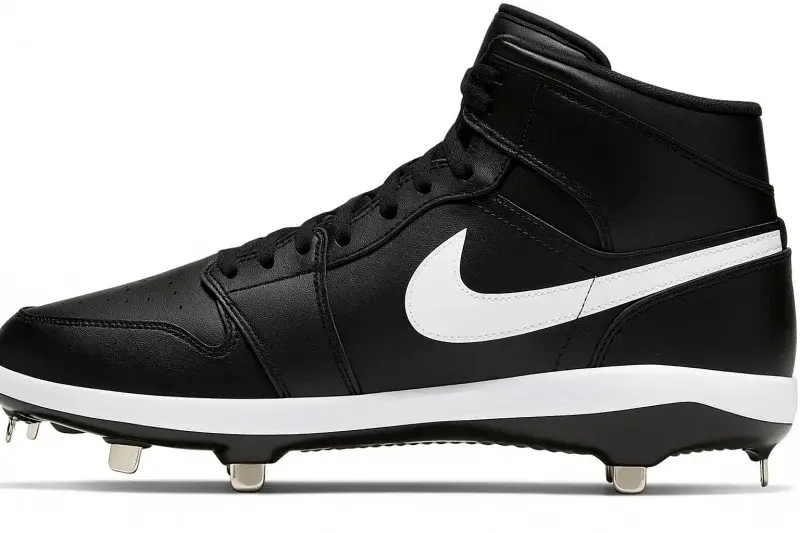
🔥 Nike Men's Alpha Huarache Elite 4 Baseball Cleats
Best For: Competitive high school players who want a baseball-specific Nike metal cleat with responsive cushioning, breathable containment, and a flexible plate for natural dirt and grass.
Construction: The Alpha Huarache Elite 4 uses Nike React foam underfoot, breathable mesh with internal webbing and overlays through the upper, and a two-piece plate with metal studs designed to provide traction while allowing the foot to flex naturally.
Material: Breathable mesh and strategically placed overlays create the upper structure, internal webbing helps contain the foot, Nike React foam supplies cushioning, and the outsole uses a metal-studded two-piece plate.
Performance Feel: Responsive and relatively flexible for a metal cleat, with React cushioning softening the feel underfoot while the mesh-based upper reduces some of the bulk associated with heavier traditional constructions. The metal plate gives players aggressive natural-surface traction without requiring an overly rigid upper.
Ideal Player Type: High school players permitted to wear metal spikes who compete primarily on dirt and natural grass and want Nike's combination of React cushioning, breathable containment, and metal traction.
Performance Overview: The Alpha Huarache Elite 4 is the more performance-focused Nike option in this guide. React cushioning addresses comfort across repeated innings, while internal webbing and overlays help keep the foot contained during acceleration and directional changes. The two-piece metal plate is the defining difference from the molded options in the lineup, making this a better fit for players who specifically want metal-spike traction rather than simply a recognizable Nike silhouette.
Why It Stands Out:
- Nike React foam provides responsive cushioning underfoot.
- Two-piece metal plate is designed for natural-surface traction and flexibility.
- Breathable mesh reduces unnecessary upper bulk.
- Internal webbing and overlays help secure the foot during baseball movement.
- Strong Nike option for high school players specifically seeking metal spikes.

⚡ Performance Differences Between High School Baseball Cleats
The biggest performance differences in this group come from outsole type, cushioning, foot shape, and how each cleat fits the player's actual field schedule. The Fresh Foam X 3000 V6 and Alpha Huarache Elite 4 give metal-permitted players aggressive natural-surface traction, while the Jordan 1 Retro MCS, Leadoff Icon Low RM, SQAIRZ GFP, and FuelCell 4040 V7 use molded traction for greater versatility. Cushioning also separates the models: Fresh Foam X, Nike React, FuelCell, conventional foam, and EVA platforms create noticeably different underfoot experiences across long practices and tournament days. Fit may ultimately matter more than brand — the SQAIRZ roomier forefoot, Jordan high-top construction, and lower-cut New Balance, Nike, and Under Armour options suit different feet and preferences. Players still deciding which outsole belongs on their fields can use ⚾ Metal vs Molded Cleats: Which Is Right?, while 👟 New Baseball Cleats (2026) covers newer releases across the wider baseball-cleat market.
🟡 Under Armour Men's Leadoff Icon Low RM Baseball Cleats
Best For: High school players who want an accessible low-cut molded baseball cleat with simple construction, dependable traction, and enough cushioning for regular practices and games.
Construction: Low-cut baseball cleat with a synthetic upper, padded collar and heel, full-length EVA midsole, and rubber molded outsole designed for reliable baseball traction without metal spikes.
Material: Lightweight synthetic upper with molded reinforcement details, EVA foam cushioning through the midsole, and a durable rubber molded outsole.
Performance Feel: Comfortable and straightforward, with a padded heel and collar that soften the fit around the rear foot while the full-length EVA midsole distributes pressure across the cleat. The low-cut profile keeps the ankle relatively unrestricted, and the molded rubber outsole provides predictable traction without the sharper feel of metal spikes.
Ideal Player Type: High school players who need a molded option because of league rules, facility restrictions, surface variety, or personal preference and who want an affordable cleat without unnecessary complexity.
Performance Overview: The Under Armour Leadoff Icon Low RM works as the accessible molded option in this guide. It does not use removable metal spikes — the RM version uses a rubber molded outsole — which makes it a more versatile choice for players who do not need or cannot use metal. The full-length EVA midsole and padded collar emphasize comfort, while the low-cut construction keeps the shoe simple and mobile for players across multiple positions.
Why It Stands Out:
- Rubber molded outsole avoids the restrictions that come with metal spikes.
- Full-length EVA midsole provides straightforward cushioning and pressure distribution.
- Padded collar and heel improve step-in comfort.
- Low-cut design keeps the ankle relatively free during baseball movements.
- Accessible construction makes it a practical high school option for players who do not need premium footwear technology.

🟠 SQAIRZ GFP Baseball Molded Cleat
Best For: High school players who want a roomier forefoot and molded traction for mixed field schedules.
Construction: The SQAIRZ GFP Molded is built around the brand's roomier toe-box geometry, GFP platform, heel-to-arch stabilizer, Sta-Put lacing system, and SmartTraction molded rubber cleats.
Material: Structured upper construction works with the wider forefoot shape, while molded rubber traction provides a non-metal outsole intended for grass, turf, and mixed playing environments.
Performance Feel: The most noticeable difference is the forefoot shape. Players accustomed to narrow or tapered cleats may feel more room for natural toe spread, while the molded outsole gives the shoe a different underfoot experience from the metal options in this guide.
Ideal Player Type: High school players who prefer more forefoot room, have felt compressed in conventional cleat shapes, or need molded traction for a schedule that crosses multiple surfaces.
Performance Overview: The SQAIRZ GFP earns its place here because it approaches fit differently from the more traditional Nike, Under Armour, and New Balance models. The roomier toe box is the feature players will notice first, while the molded rubber outsole gives it practical versatility for programs that do not want to rely on metal spikes. SQAIRZ publishes performance testing around its platform, but fit, comfort, and surface compatibility are the more useful reasons for an individual player to choose it.
Why It Stands Out:
- Roomier toe-box geometry differentiates its fit from traditional tapered cleats.
- SmartTraction molded rubber outsole works across mixed field conditions.
- Heel-to-arch stabilizer adds structure through the foot.
- Sta-Put lacing system is designed to help maintain lockdown.
- Useful alternative for players who prioritize forefoot space and molded versatility.

🟩 New Balance Men's FuelCell 4040 V7 Molded Baseball Shoe
Best For: High school players who want responsive FuelCell cushioning with a baseball-specific molded TPU plate for a demanding practice and game schedule.
Construction: The 4040 V7 combines a full-length FuelCell midsole with an engineered air-mesh upper, thin micro-film overlay, premium PU insert, and a baseball-specific 10-spike TPU molded plate.
Material: Synthetic and mesh upper materials balance airflow with structure, FuelCell foam forms the cushioning platform, the PU insert supports underfoot comfort and shape retention, and the outsole uses molded TPU traction.
Performance Feel: Responsive and cushioned underfoot with a lighter, less harsh feel than a traditional metal-spike setup. The molded TPU plate provides a planted baseball feel while remaining useful for players who do not want or cannot use metal spikes.
Ideal Player Type: High school players who prioritize cushioning and molded traction, especially those with long practice schedules, tournament weekends, or facilities where metal spikes are not always appropriate.
Performance Overview: The FuelCell 4040 V7 is one of the strongest all-around molded options in the guide because its value comes from more than outsole type. Full-length FuelCell cushioning addresses long-session comfort, while the baseball-specific TPU plate and supportive mesh upper keep the shoe purpose-built for diamond movement. It is particularly useful for players who want a serious competitive cleat without committing to metal.
Why It Stands Out:
- Full-length FuelCell midsole provides responsive cushioning.
- Baseball-specific 10-spike TPU molded plate supports diamond traction.
- Engineered air-mesh upper balances breathability and containment.
- Premium PU insert improves comfort and helps the shoe retain shape.
- Strong choice for high-volume high school players who prefer molded traction.

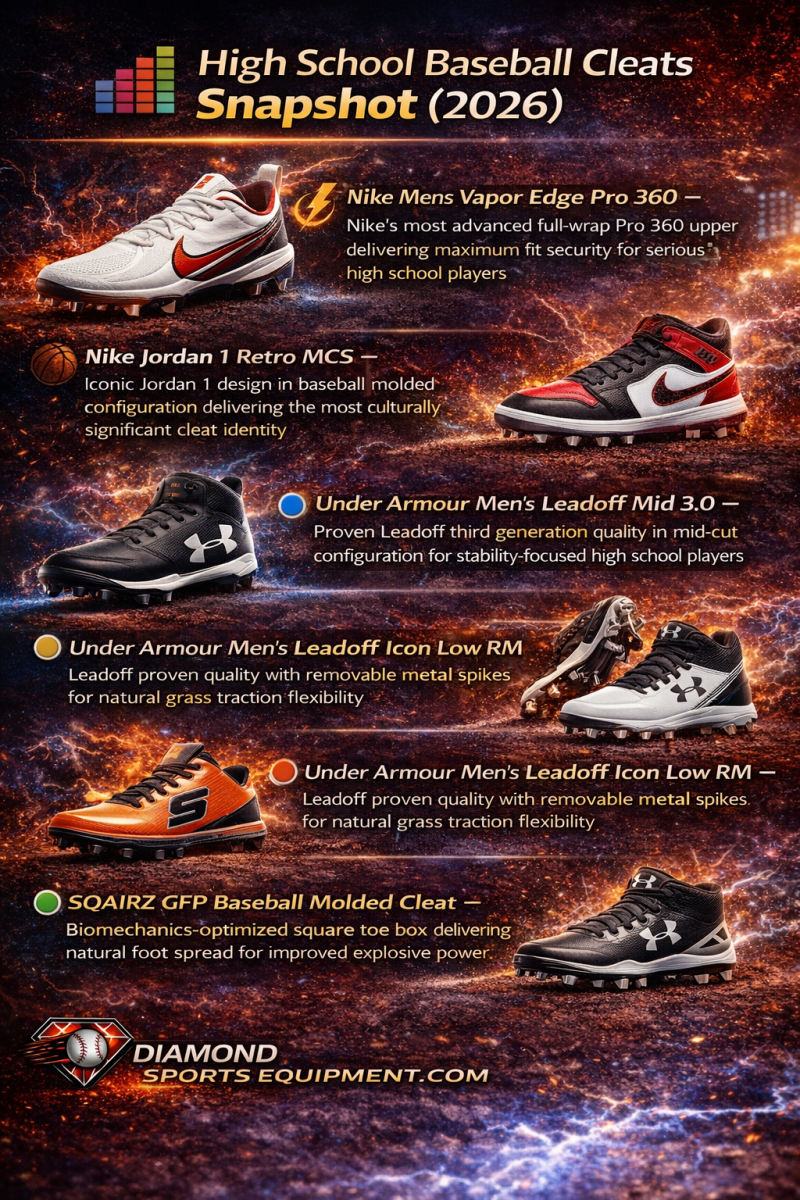
📊 High School Baseball Cleats Snapshot (2026)
- 🌊 New Balance Men's Fresh Foam X 3000 V6 Metal Baseball Cleats — Fresh Foam X cushioning paired with an eight-spike metal plate for high school players who want natural-surface traction with added long-game comfort.
- 🏀 Nike Jordan 1 Retro MCS — Jordan 1 styling combined with a synthetic-leather upper, foam cushioning, and baseball-specific TPU molded traction.
- 🔥 Nike Men's Alpha Huarache Elite 4 Baseball Cleats — React cushioning, breathable containment, and a flexible metal-spike plate for competitive natural-surface play.
- 🟡 Under Armour Men's Leadoff Icon Low RM — ow-cut molded option with full-length EVA cushioning and a rubber outsole for straightforward comfort and traction.
- 🟠 SQAIRZ GFP Baseball Molded Cleat — Roomier forefoot geometry and molded rubber traction for players who prioritize toe space and mixed-surface versatility.
- 🟩 New Balance Men's FuelCell 4040 V7 Molded Baseball Shoe — Full-length FuelCell cushioning with a baseball-specific TPU molded plate for responsive comfort across demanding schedules.
❓ FAQ
Can high school players wear metal cleats?
- Many high school programs permit metal spikes, but league, tournament, school, and facility rules can differ, so confirm the rules that apply to the player before buying.
- Molded or TPU cleats are useful alternatives when metal is restricted or when a player's schedule includes surfaces where metal spikes are inappropriate.
What cut height is best for high school baseball?
- Low-cut designs use less material around the ankle and appeal to players who prefer a lighter, less restrictive feel during running and defensive movement.
- Mid- and high-cut designs provide more coverage around the ankle, but the best choice should come from fit and comfort rather than assuming one cut automatically provides better performance or injury protection.
Are Nike Jordan cleats good for baseball?
- Yes. The Jordan 1 Retro MCS is built specifically for baseball with a cleated TPU plate, synthetic-leather upper, and foam midsole.
- It makes the most sense for players who genuinely like its higher-cut fit and structured feel rather than choosing it only for the Jordan styling.
What makes SQAIRZ cleats different from standard designs?
- The SQAIRZ GFP uses a roomier toe-box shape designed to give the forefoot more space than many conventionally tapered cleats.
- Its fit is noticeably different, so players should choose it because the shape and molded traction suit their feet and playing surfaces rather than assuming one footwear design automatically improves performance for everyone.
How often should high school players replace their cleats?
- Replace cleats when worn studs or spikes, outsole separation, damaged uppers, lost cushioning, or poor lockdown begin affecting traction, comfort, or fit.
- Inspect them regularly during the season because playing frequency, position, field conditions, and pitching toe drag can make one player's cleats wear much faster than another's.
🧢 Final Thoughts
The best high school baseball cleat is not automatically the most expensive model or the one with the most aggressive outsole. Start with the player's league rules and primary surfaces, then compare fit, traction type, cushioning, and workload before choosing between metal and molded options. A properly fitted cleat that stays secure through cuts and remains comfortable late in games will usually serve a player better than a premium model that does not match the foot or schedule. Players completing the rest of their game-day protection can compare helmets in 🪖 Best Baseball Batting Helmets (2026), while 📝 Diamond Sports Equipment Blog & Gear Reviews contains the full library of baseball and softball equipment guides.