A catcher's chest protector is the piece of equipment that takes the most direct punishment of any item in a catcher's gear set — and the one that most directly determines whether the catcher can stay behind the plate for an entire game, season, and career without cumulative impact damage affecting their ability to perform. Every pitch that bounces in the dirt, every foul tip that deflects into the chest, and every collision at home plate passes through the chest protector before it reaches the body. The protector that absorbs that impact cleanly keeps the catcher focused on calling the game. The one that transmits it does not.
Selecting the right chest protector means matching padding technology, coverage area, and fit to the catcher's age, level, and the specific demands of the position they play — baseball or fastpitch, youth or adult, recreational or competitive. For the complete picture on building a full catcher's gear set around the right chest protector, pair this guide with 🏆 Full Sets for Competitive Catchers. For the complete breakdown across baseball and softball, see the 🏆 The Complete Chest Protector Guide.
⚾ What You Should Know About Catcher's Chest Protectors

🛡 Padding Technology Determines Impact Absorption
The foam, gel, and multi-layer padding systems used in chest protectors determine how much of each impact reaches the catcher's body. Higher-grade padding materials absorb more force and maintain their protective properties longer across a full season of repeated contact.
📐 Coverage Area Affects Full-Body Protection
A chest protector that leaves gaps at the collar, shoulders, or sides exposes the catcher to foul tips and deflections that proper coverage would stop. Full wraparound designs and extended shoulder caps close the gaps that narrower protectors leave open.
⚖️ Weight and Mobility Are a Direct Tradeoff
Heavier protectors with more padding absorb more impact but restrict the lateral movement that blocking and receiving require. Lighter designs improve mobility but sacrifice some protection — matching the tradeoff to the level of play is what separates a smart equipment decision from a compromised one.
📏 Fit and Sizing Are Non-Negotiable
A chest protector that is too large shifts on contact and leaves gaps. One that is too small leaves the collarbone, shoulders, and sides exposed. Proper fit means full coverage that stays in place through blocking, throwing, and receiving without adjustment between pitches.
🏆 Best Catcher's Chest Protectors for Players (2026)
Six chest protectors built for impact absorption, full-body coverage, and the mobility demands of competitive play at every age and level.
🥇 Rawlings MACH PRO Series Catcher's Chest Protector
Best For: Competitive baseball catchers who want professional-grade impact absorption and full-body coverage at the high school and travel ball level.
Construction: Multi-layer foam padding system with full wraparound coverage, extended shoulder caps, and adjustable harness straps.
Material: High-density impact foam with durable outer shell and reinforced stitching at all adjustment points.
Performance Feel: Substantial and secure — the multi-layer padding system absorbs foul tips and direct impacts cleanly without the sting-through sensation that lower-grade foam transmits, and the wraparound fit stays locked in position through blocking and throwing without shifting.
Ideal Player Type: High school, travel ball, and competitive recreational baseball catchers who take a high volume of pitches per game and need a protector that holds up through a full season of regular use.
Performance Overview: The Rawlings MACH PRO Series Chest Protector is built for the catcher who needs professional-grade protection without the professional-level price tag. The multi-layer foam padding system is the defining feature — it absorbs the force of foul tips, wild pitches, and direct contact across multiple impact zones simultaneously, distributing the energy of each hit across a wider surface area than single-layer designs can manage. The extended shoulder caps close the gap between the chest protector and the helmet that standard designs leave exposed, and the adjustable harness system locks the protector in position through the full range of catcher's movements without riding up or shifting on blocking attempts.
Why It Stands Out:
- Multi-layer foam padding absorbs impact across multiple zones simultaneously.
- Extended shoulder caps close the collar gap that standard chest protector designs leave exposed.
- Adjustable harness system locks the protector in position through blocking and throwing movements.
- Durable outer shell maintains structural integrity through a full season of competitive use.
- Professional-grade protection at a price point that works for high school and travel ball programs.
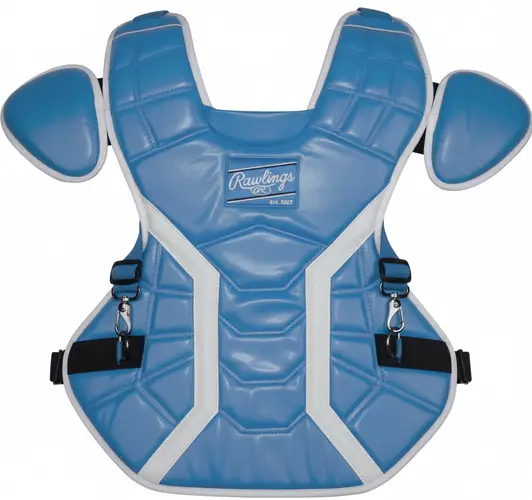
🥈 All-Star S7 Axis Baseball Catcher's Chest Protector
Best For: Competitive baseball catchers who prioritize mobility and a lightweight feel without sacrificing the coverage that serious behind-the-plate work demands.
Construction: Segmented padding panel design with flexible connector system and adjustable fit harness.
Material: High-density foam padding with flexible outer shell panels and reinforced harness attachment points.
Performance Feel: Light and mobile — the segmented panel design moves with the catcher's body through lateral blocking, low throws, and receiving positions rather than restricting movement the way rigid single-piece designs do.
Ideal Player Type: Athletically mobile catchers at the high school and travel ball level who need a protector that keeps up with the full range of movements the position demands without adding bulk or weight that slows them down.
Performance Overview: The All-Star S7 Axis Chest Protector approaches protection from a mobility-first perspective — the segmented panel design breaks the protector into connected sections that flex independently as the catcher moves, rather than forcing the body to work against a single rigid piece of equipment. The result is a protector that stays in full coverage position through the lateral movements, low blocking angles, and throwing rotations that a mobile catcher executes dozens of times per game. The high-density foam padding within each panel still absorbs direct impact effectively, and the adjustable harness keeps the full assembly in position without the mid-inning adjustments that poorly fitted protectors require.
Why It Stands Out:
- Segmented panel design flexes with the catcher's movements rather than restricting them.
- Maintains full coverage position through lateral blocking, low angles, and throwing rotation.
- High-density foam padding within each segment absorbs direct impact without sacrificing flexibility.
- Lightweight construction reduces fatigue across long games and doubleheader schedules.
- Adjustable harness keeps the full assembly in position without mid-inning shifting or adjustment.
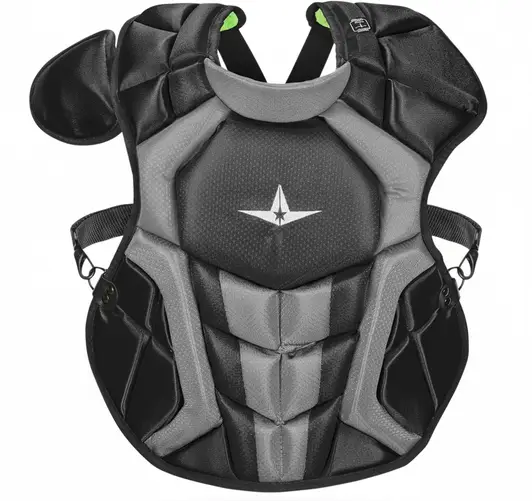
🥉 EvoShield Pro-SRZ™ 2.0 Fastpitch Catcher's Chest Protector
Best For: Fastpitch softball catchers who need a protector built specifically for the dimensions, padding placement, and coverage priorities of the softball catching position.
Construction: Fastpitch-specific padding layout with molded chest plate, extended coverage panels, and adjustable fit system.
Material: Molded foam padding with reinforced outer shell and fastpitch-specific panel shaping.
Performance Feel: Fitted and secure — the fastpitch-specific construction sits flush against the body without the bulk gaps that baseball protectors create when used in softball, and the extended panels cover the areas most exposed to softball-speed foul tips and deflections.
Ideal Player Type: Fastpitch softball catchers at the competitive travel ball, high school, and club level who want a protector designed for their specific position rather than a baseball crossover product adapted to a different sport.
Performance Overview: The EvoShield Pro-SRZ 2.0 Fastpitch Chest Protector is built around the reality that fastpitch softball catching has different impact angles, ball speeds, and body position demands than baseball catching — and that a protector designed specifically for those demands performs better than a baseball model adapted for softball use. The fastpitch-specific padding layout places impact absorption where softball contact actually occurs, and the molded chest plate distributes the force of direct hits across the full plate surface rather than concentrating it at the point of contact. The adjustable fit system accommodates the range of body types in competitive fastpitch without the sizing gaps that force catchers to choose between a protector that is too large or too small.
Why It Stands Out:
- Fastpitch-specific construction addresses the impact angles and coverage priorities of softball catching.
- Molded chest plate distributes direct impact force across the full plate surface.
- Extended panels cover the areas most exposed to softball-speed foul tips and deflections.
- Adjustable fit system accommodates a wide range of body types in competitive fastpitch.
- Outperforms baseball crossover designs in softball-specific coverage and fit.

⚡ Performance Differences Between Catcher's Chest Protectors
The most significant performance difference between catcher's chest protectors is padding technology — and it determines how much of each impact the protector absorbs versus how much it transmits to the catcher's body. Single-layer foam designs at the entry level absorb a portion of each impact but transmit the remainder as sting, which accumulates across a full game and a full season into the kind of cumulative discomfort that affects a catcher's willingness to block aggressively. Multi-layer and molded padding systems absorb more force at the point of contact and distribute the remainder across a wider surface area, reducing the per-impact sensation to the point where a catcher can block a bounced fastball in the dirt and immediately return to receiving position without a second thought. For more on completing the catcher's gear setup, see 🦵 The Complete Leg Guard Guide (2026) and 🧤 Best Catcher's Mitts for Baseball & Softball.
Coverage area is the second major performance differentiator and the one that creates the most risk when the wrong protector is selected. The gaps that an undersized or poorly designed chest protector leaves at the collar, shoulders, and sides are not theoretical — they are the areas where foul tips and deflected pitches consistently find their way through to the body. Extended shoulder caps, wraparound side panels, and high collar designs close those gaps with materials that absorb impact rather than the bare skin and uniform fabric that gaps expose. The difference between a protector with full coverage and one with standard coverage is not visible until a foul tip finds the gap — and by then the equipment decision has already been made.
⚡ Easton Elite X Youth/Intermediate/Adult Catchers Chest Protector
Best For: Players across multiple age groups who need a chest protector that grows with them from youth through adult sizing without requiring a full gear set replacement.
Construction: Multi-size adjustable design with segmented padding panels and adjustable harness fit system.
Material: High-density foam padding with durable outer shell and multi-point adjustable harness.
Performance Feel: Versatile and well-padded — the multi-size design maintains consistent coverage and padding density across all three size configurations, so the protection level does not drop as the protector is adjusted for a larger player.
Ideal Player Type: Youth programs, growing players, and families who want a single chest protector investment that covers multiple seasons and size ranges without the repeated replacement cost that fixed-size designs require.
Performance Overview: The Easton Elite X Chest Protector earns its spot in this guide by solving one of the most common equipment budget problems in youth and developing baseball — the cost of replacing a chest protector every season or two as the player grows out of a fixed-size design. The multi-size adjustable construction covers youth through adult sizing ranges in a single unit, maintaining consistent padding density and coverage area at every size setting so the protection level grows with the player rather than degrading as the fit is pushed beyond its optimal range. The segmented padding panels flex with the catcher's movements across all size configurations, and the multi-point harness system keeps the protector in full coverage position regardless of the size setting it is adjusted to.
Why It Stands Out:
- Multi-size adjustable design covers youth through adult sizing in a single unit.
- Maintains consistent padding density and coverage at every size configuration.
- Segmented padding panels flex with the catcher's movements across all size settings.
- Multi-point harness keeps the protector in full coverage position at every adjustment.
- Reduces the repeated replacement cost of fixed-size designs across multiple seasons of growth.

🛡 Mizuno Samurai Baseball Chest Protector
Best For: Competitive baseball catchers who want a protector with a proven track record of impact absorption and durability at the high school and collegiate level.
Construction: Full-coverage padding design with molded impact zones, extended shoulder protection, and adjustable fit harness.
Material: High-density molded foam with reinforced outer shell and durable harness attachment hardware.
Performance Feel: Solid and confidence-inspiring — the molded impact zones absorb direct hits cleanly across the chest and stomach without flex or compression that transmits force, and the full-coverage design eliminates the gap anxiety that narrower protectors create behind the plate.
Ideal Player Type: Competitive baseball catchers at the high school, travel ball, and collegiate level who want a protector that performs consistently across a full season of heavy game and practice use without padding breakdown or coverage degradation.
Performance Overview: The Mizuno Samurai Baseball Chest Protector has built its reputation on consistent performance across the full range of conditions competitive catchers face — from early-season cold that stiffens lower-grade foam to late-season humidity that breaks down poorly constructed outer shells. The molded impact zones are positioned to absorb contact at the areas where foul tips and direct hits most commonly land, and the padding density within each zone maintains its absorption characteristics across a full season without the compression set that cheaper foam develops after repeated impacts. The extended shoulder protection closes the collar gap, and the adjustable harness keeps the protector in optimal coverage position through blocking, throwing, and the full range of catcher's movements.
Why It Stands Out:
- Molded impact zones absorb contact at the most commonly hit areas of the chest protector.
- Padding density maintains absorption characteristics across a full season without compression set.
- Extended shoulder protection closes the collar gap between the chest protector and helmet.
- Durable outer shell holds up through the full range of weather conditions competitive play produces.
- Adjustable harness maintains optimal coverage position through blocking and throwing movements.

👟 Force3 Pro Gear Pro Catcher Chest Protector with Dupont Kevlar
Best For: Catchers who want the highest level of impact protection available in a chest protector, built around Dupont Kevlar reinforcement for maximum force absorption.
Construction: Dupont Kevlar-reinforced padding system with full-coverage design and professional-grade harness fit system.
Material: Dupont Kevlar fiber reinforcement with multi-layer foam backing and durable professional-grade outer shell.
Performance Feel: Exceptionally protective and surprisingly mobile — the Kevlar reinforcement absorbs impact at a level that standard foam alone cannot match, and the professional-grade construction distributes the absorbed force across the full protector surface without the rigid feel that maximum-protection designs sometimes produce.
Ideal Player Type: Serious competitive catchers at the high school, collegiate, and adult league level who want the maximum available protection for a position that absorbs more direct impact than any other in baseball or softball.
Performance Overview: The Force3 Pro Gear Chest Protector with Dupont Kevlar represents the top of the protection hierarchy in the catcher's chest protector category — a design built around the same Kevlar fiber technology used in ballistic protection applications, applied to the specific impact demands of the catcher's position. The Kevlar reinforcement absorbs the force of direct foul tips, wild pitches, and plate collision contact at a level that multi-layer foam systems approach but do not match — and it does so without the rigid, stiff construction that maximum-protection designs in other categories typically require. The result is a chest protector that delivers elite impact absorption with the mobility and fit characteristics that competitive catchers demand from gear they wear for full games across a full season.
Why It Stands Out:
- Dupont Kevlar reinforcement delivers impact absorption beyond what standard foam systems can achieve.
- Kevlar technology absorbs foul tip and wild pitch force without the rigid construction maximum-protection designs typically require.
- Full-coverage design with professional-grade harness keeps the protector in optimal position through all catcher's movements.
- Multi-layer foam backing behind the Kevlar layer distributes absorbed force across the full protector surface.
- The top protection choice for competitive catchers who take the highest volume of direct contact per season.


📊 Catcher's Chest Protector Snapshot (2026)
- 🥇 Rawlings MACH PRO Series — multi-layer foam padding and extended shoulder caps deliver professional-grade protection for competitive baseball catchers.
- 🥈 All-Star S7 Axis — segmented panel design prioritizes mobility without sacrificing the coverage competitive catching demands.
- 🥉 EvoShield Pro-SRZ 2.0 Fastpitch — fastpitch-specific construction covers the impact angles and body positions unique to softball catching.
- ⚡ Easton Elite X — multi-size adjustable design covers youth through adult sizing in a single unit across multiple seasons.
- 🛡 Mizuno Samurai — molded impact zones and durable construction deliver consistent protection across a full season of competitive use.
- 👟 Force3 Pro Gear with Dupont Kevlar — Kevlar-reinforced padding delivers the highest impact absorption available in a catcher's chest protector.
❓ FAQ
What size chest protector does a youth catcher need?
- Match the protector size to the catcher's height and chest measurement rather than age alone — sizing charts vary by manufacturer.
- The Easton Elite X covers youth through adult sizing in a single adjustable unit, making it the most practical choice for growing players.
What is the difference between a baseball and fastpitch chest protector?
- Baseball protectors are built for the impact angles and body dimensions of baseball catching; fastpitch protectors address the different coverage priorities and fit requirements of softball catching.
- Using a baseball protector in fastpitch creates fit gaps and coverage mismatches that a sport-specific design eliminates.
How important is padding quality in a chest protector?
- Higher-grade padding absorbs more impact per hit and maintains its absorption characteristics longer across a full season of repeated contact.
- Entry-level foam compresses and loses effectiveness faster than multi-layer or Kevlar-reinforced designs under regular competitive use.
Does a chest protector need to be replaced every season?
- High-quality designs like the Mizuno Samurai and Force3 Pro Gear hold up across multiple seasons of competitive use without padding breakdown.
- Replace any chest protector that shows visible padding compression, cracked outer shell components, or compromised harness hardware regardless of age.
What makes Kevlar reinforcement worth it in a chest protector?
- Kevlar absorbs direct impact force at a level that standard foam systems cannot match, reducing the cumulative physical toll on catchers who block a high volume of pitches per season.
- The Force3 Pro Gear delivers that Kevlar protection without the rigid construction that maximum-protection designs in other categories typically require.
🧢 Final Thoughts
The chest protector is the piece of gear that stands between the catcher and every pitch that misses the zone, every foul tip that deflects low, and every play at the plate that ends in contact. Getting it right means matching padding technology, coverage area, and fit to the specific demands of the position — not buying the cheapest option on the shelf or the most expensive one without understanding what the extra investment actually delivers. The six protectors in this guide cover every level of that decision, from the multi-size accessibility of the Easton Elite X to the Kevlar-grade protection of the Force3 Pro Gear, giving every catcher the right match for their age, level, and the demands of the game they play.
For more on completing the catcher's gear setup, check out 🪖 Best Catcher's Helmets (2026) for the helmet options that pair with these protectors. And for everything across every category of baseball and softball gear, visit 📝 Diamond Sports Equipment Blog & Gear Reviews.
Add comment
Comments