A quality baseball glove is one of the most significant equipment investments a player makes — and one of the most frequently neglected once the purchase is complete. Players who invest in premium leather construction and then store the glove in a hot car trunk, leave it in a wet equipment bag overnight, apply excessive conditioning oil that softens the leather beyond its optimal firmness, or simply never clean the dirt and sweat buildup that accumulates through a full season are systematically undermining the investment they made at purchase. The leather that develops the precise personalized pocket they paid for is the same leather that breaks down progressively when it is not cared for correctly — and the difference between a glove that performs at its best through three competitive seasons and one that develops a floppy, unreliable pocket by midseason of the first year is almost entirely a function of how the player treats it between games.
Proper glove care is not complicated — it requires understanding what leather actually needs to maintain its structure and performance, what damages it most severely, and what simple maintenance habits protect the investment through the full competitive life of the glove. The result of good care habits is a glove that improves through use rather than degrading, maintains its pocket shape through the full season, and lasts multiple competitive seasons rather than requiring replacement every year. For players who are also working through the break-in process alongside their care routine, 🧤 How to Break In a Baseball Glove covers the break-in methods that establish the initial pocket shape that proper care then maintains. And for players who are selecting their glove alongside this care guide, 🧤 How to Choose a Baseball Glove covers every selection decision from sizing through leather quality in the correct order.
When it's time to upgrade, the 🧤 Best Baseball Gloves for Every Player (2026) covers the best gloves for every player.
🧤 What You Should Know About Glove Care

💧 Leather Needs Moisture Balance — Not Maximum Dryness or Saturation
Leather performs best when it maintains adequate moisture — dry leather cracks and loses flexibility while over-conditioned leather becomes soft and loses structural pocket integrity. The goal of glove care is maintaining the leather's optimal moisture balance rather than keeping it as dry or as soft as possible.
🌡️ Heat Is the Most Damaging Environmental Factor
Direct heat exposure from car trunks, direct sunlight storage, and forced drying accelerates leather breakdown faster than almost any other factor. A glove left in a hot car trunk through a summer afternoon experiences more leather degradation than weeks of normal competitive use.
🧴 Less Conditioning Is Better Than More
Over-conditioning is one of the most common glove care mistakes — too much oil softens leather beyond its optimal firmness, adds weight, attracts dirt, and degrades pocket structure. Two to three light applications per season is sufficient for most leather gloves in regular competitive use.
🎯 Pocket Maintenance Prevents Off-Season Shape Loss
A glove stored flat without a ball in the pocket loses its pocket shape through the off-season as the leather relaxes without the structural support of the correct pocket geometry. Always store with a ball in the pocket to maintain the shape that the break-in process established.
🧤 How to Care for Your Baseball Glove
Routine In-Season Care
The most important glove care habits are the simplest ones — and the ones most frequently skipped because they feel too minor to matter. They do matter, and the cumulative effect of consistent routine care versus no care becomes visibly apparent by midseason in the difference between a glove that still looks and performs like quality equipment and one that has visibly degraded through neglect.
After every game or practice, wipe the glove down with a clean dry cloth to remove dirt, sweat, and moisture from the surface. Dirt left on leather surface works its way into the grain over time, creating abrasive wear that accelerates surface breakdown. Sweat left on the leather surface dries as salt deposits that extract moisture from the leather and accelerate cracking at the finger stalls and palm where sweat concentration is highest.
Store the glove in a cool dry location after every use — never in a closed equipment bag where moisture accumulates, never in a car trunk where heat builds, and never in direct sunlight where UV exposure degrades the leather surface over time. A mesh bag or open shelf in a cool indoor location provides the storage environment that leather needs between uses.

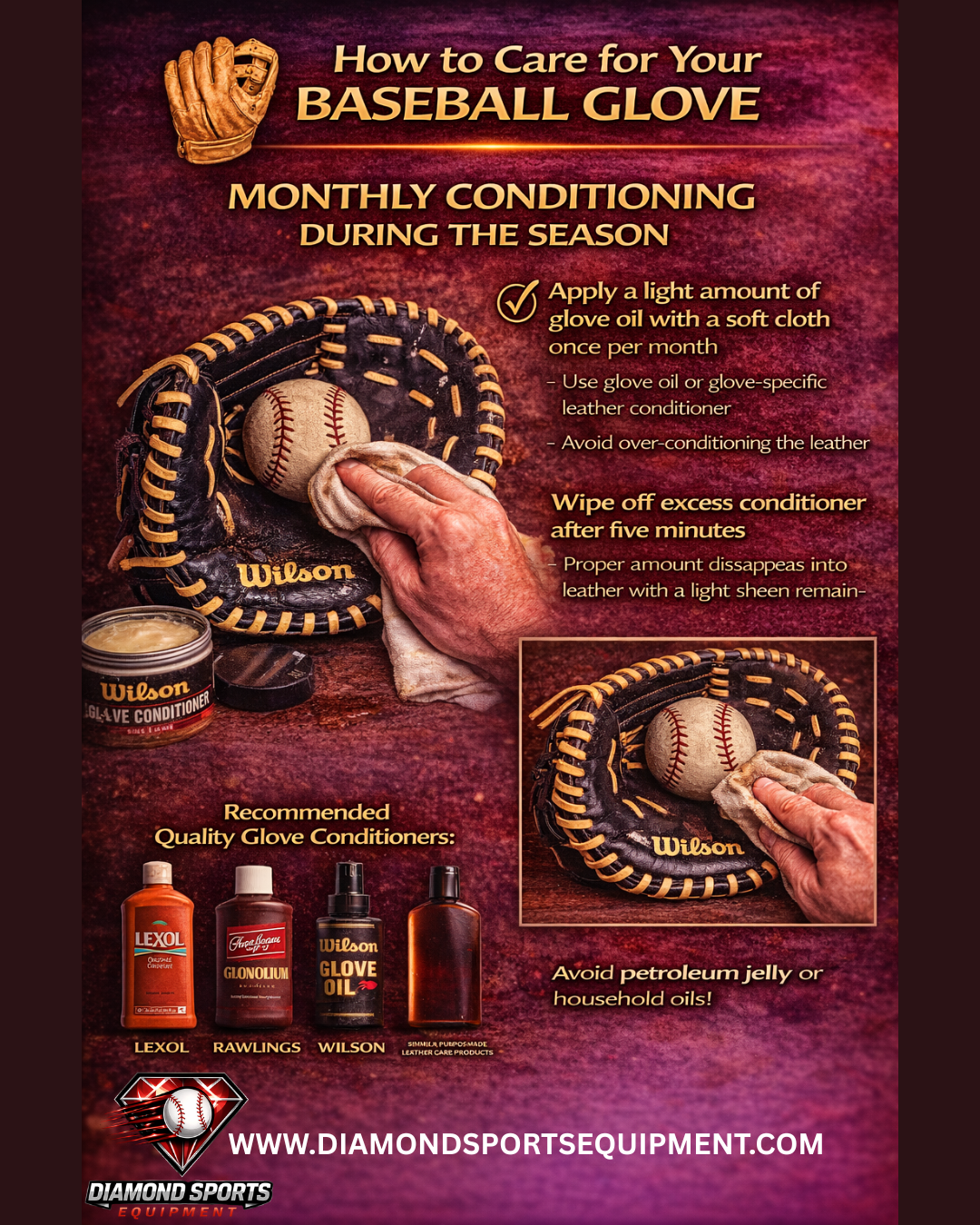
Monthly Conditioning During the Season
Apply quality glove oil or leather conditioner once per month during the competitive season — more frequently if the glove is used daily in wet conditions, less frequently if use is limited to weekend games. Use a clean cloth to apply a small amount of conditioner evenly across the palm, back of the hand, finger stalls, and web — working it gently into the leather without saturating any area.
The right amount of conditioner is less than most players apply. If the leather looks visibly wet or greasy after application too much has been used — the leather should absorb the conditioner within a few minutes of application with only a slight sheen remaining. Wipe away any excess that has not been absorbed after five minutes rather than working it further into the leather.
Quality conditioner options include Lexol, Rawlings Glovolium, Wilson Pro Stock conditioner, and similar purpose-made leather care products. Avoid petroleum jelly, household oils, and generic leather conditioners that are not specifically formulated for baseball glove leather — these alternatives often over-soften the leather or leave residues that attract dirt without providing the moisture balance that proper glove conditioner delivers.
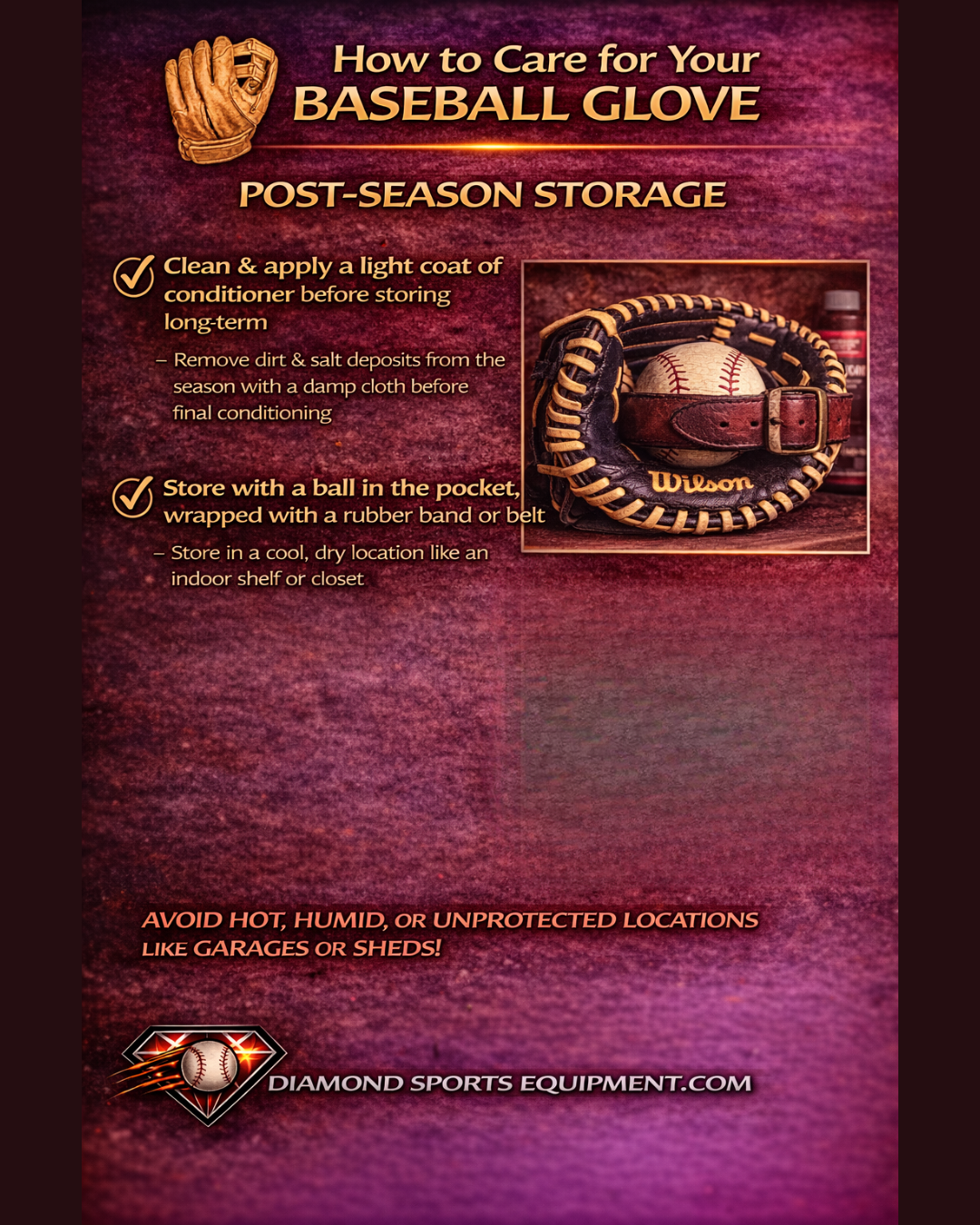
Post-Season Storage
The off-season is when most glove damage happens — and the preparation done before storage determines whether the glove emerges in spring in the same condition it ended the previous season or visibly degraded through months of improper storage.
Clean the glove thoroughly before storage — wipe the full exterior with a damp cloth to remove accumulated dirt and salt deposits from the season, then allow to fully air dry at room temperature before applying a final conditioning treatment. Apply a light coat of conditioner to the palm, fingers, web, and back of hand — enough to maintain moisture through the storage period without saturating the leather.
Place a softball or baseball in the pocket and wrap the glove closed with a rubber band or wrap it with a belt around the outside of the closed glove to maintain the pocket shape through the storage period. Store in a cool dry location — never in a garage or storage unit where temperature extremes occur through winter months.
🎯 Putting It Into Practice
The three-level care system — routine post-use wiping and storage, monthly conditioning during the season, and proper pre-storage preparation — takes less than ten minutes of total effort per month and extends the competitive life of a quality glove by years compared to no care at all. For players who want to explore specific glove options that reward proper care with the best long-term pocket development, 🧤 Best Baseball Gloves for Every Player (2026) covers the construction options that benefit most from consistent care routines. And for players who want to understand how care connects to position-specific pocket maintenance, 🧤 Best Infield Baseball Gloves (2026) covers the shallow pocket geometry that infield gloves specifically need to maintain through proper care.
❌ Common Glove Care Mistakes
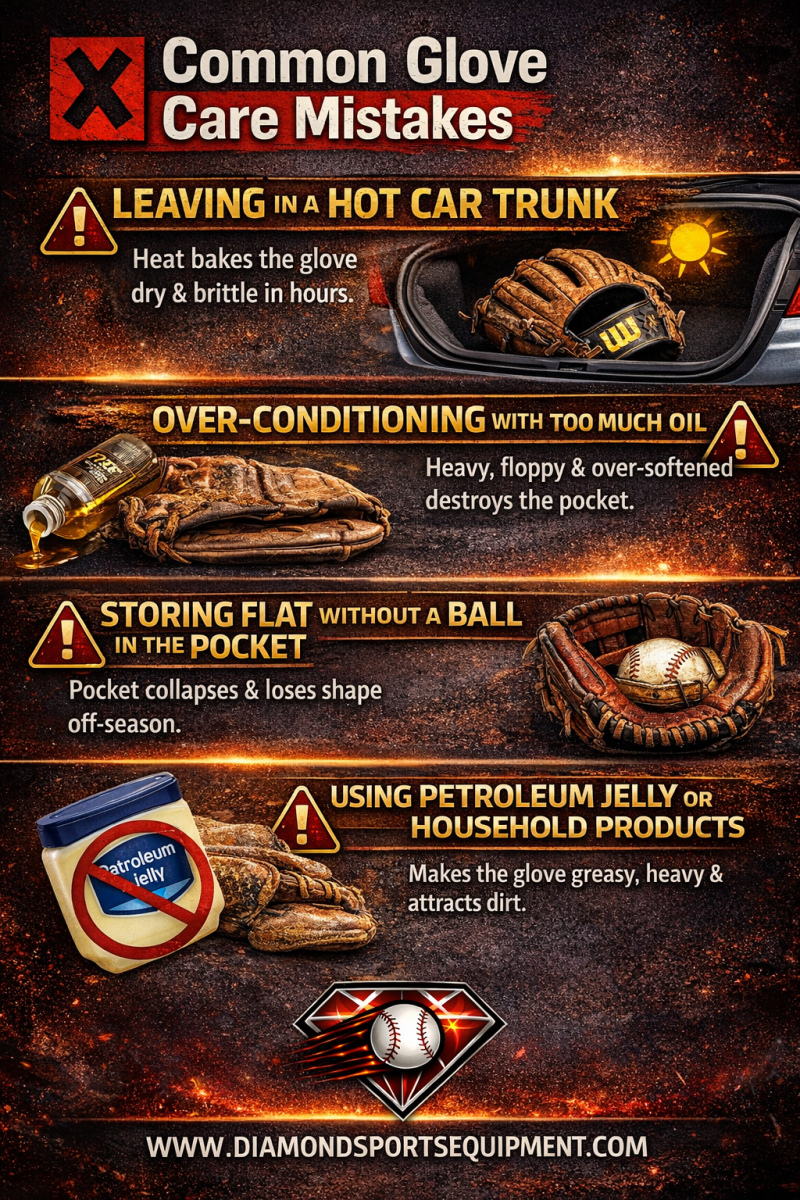
Leaving the glove in a hot car trunk
A single afternoon in a hot car trunk causes more leather degradation than weeks of competitive use. Heat draws moisture out of the leather rapidly — causing the surface to dry, crack, and lose flexibility in ways that no subsequent conditioning can fully reverse.
Over-conditioning with too much oil
More oil does not mean better care — it means softer leather, heavier weight, and degraded pocket structure. Apply sparingly and wipe away excess that is not absorbed within five minutes of application.
Storing flat without a ball in the pocket
A glove stored flat loses its pocket shape as the leather relaxes over months of off-season storage. Always store with a ball in the pocket wrapped closed to maintain the pocket geometry that the break-in process established.
Using petroleum jelly or household products
Petroleum jelly over-softens leather, attracts excessive dirt, and does not provide the moisture balance that purpose-made glove conditioner delivers. Use only products specifically formulated for baseball glove leather.
Never cleaning dirt and sweat accumulation
Dirt and salt deposits from sweat work their way into the leather grain and cause progressive surface breakdown that simple post-use wiping prevents. The easiest and most impactful care habit is the simplest one — wipe the glove down after every single use.
❓ FAQ
How often should I oil my baseball glove?
- Once per month during the competitive season is sufficient for most leather gloves used in regular competitive play.
- Apply more frequently if the glove is used daily in wet conditions — apply less frequently for weekend-only recreational use.
What is the best glove conditioner for baseball gloves?
- Purpose-made products like Lexol, Rawlings Glovolium, and Wilson Pro Stock conditioner are the most reliable options.
- Avoid petroleum jelly, household leather conditioners, and generic oils that are not specifically formulated for baseball glove leather.
Can I wash my baseball glove?
- No — submerging leather in water or machine washing destroys the leather's structural integrity permanently.
- Clean with a damp cloth for surface dirt removal and allow to fully air dry at room temperature before conditioning.
How do I dry a wet baseball glove?
- Air dry at room temperature away from direct heat sources — never use a hair dryer, heater, or direct sunlight to accelerate drying.
- Stuff the pocket with newspaper to help maintain shape while drying and apply a light coat of conditioner once fully dry to restore moisture balance.
How long should a properly cared for baseball glove last?
- Premium leather gloves that are properly cared for typically last three to five competitive seasons before performance noticeably degrades.
- Gloves that receive no care typically show significant pocket and leather degradation within one to two seasons regardless of initial construction quality.
🧢 Final Thoughts
Proper baseball glove care is the simplest way to protect the investment made at purchase and extend the competitive life of quality leather construction through multiple seasons of demanding play. Wipe the glove down after every use, condition monthly during the season, store correctly between uses and through the off-season, and never expose quality leather to the heat and moisture extremes that accelerate breakdown faster than any amount of use. The glove that receives consistent care throughout its life performs better in year three than it did in year one — and that improvement trajectory is the return on a maintenance investment that costs almost nothing in time or money.
For players who want to revisit the positional glove selection decisions that proper care then protects, check out 🧤 Infield vs Outfield Gloves Explained for the design differences that make each position's glove worth caring for correctly. And for everything else across our baseball and softball coverage, visit 📝 Diamond Sports Equipment Blog & Gear Reviews for our full library of buying guides, product comparisons, and equipment reviews updated all season long.