Baseball equipment decisions are made in isolation far more often than they should be — a parent buys a bat based on price, a glove based on appearance, cleats because the old ones wore out, and a helmet because the league requires one. The result is a kit that technically covers every equipment requirement but contains pieces that work against each other rather than complementing the player's specific game. A bat with the wrong certification for the league. A glove sized for the wrong position. Cleats with the wrong spike type for the surfaces the player competes on. A helmet that fits loosely enough to shift on contact. Every one of those individual decisions felt reasonable at the time — and every one of them creates a performance limitation that shows up on every play of every game through the full season.
Building a complete baseball kit correctly means making equipment decisions in the right order, with each decision informed by the player's league, position, age, and competition level. The result is a coordinated set of equipment where every piece serves the player's specific game rather than fighting against it — and where the total investment is distributed across categories in proportion to their actual impact on performance. For players who want to go deep on the bat selection decision specifically, 🦇 How to Choose a Baseball Bat covers certification, material, length, and drop weight in full detail. And for players working through their cleat selection alongside this kit guide, ⚾ How to Choose Baseball Cleats covers every cleat decision from spike type through midsole technology in the correct order.
⚾ What You Should Know Before Building Your Kit
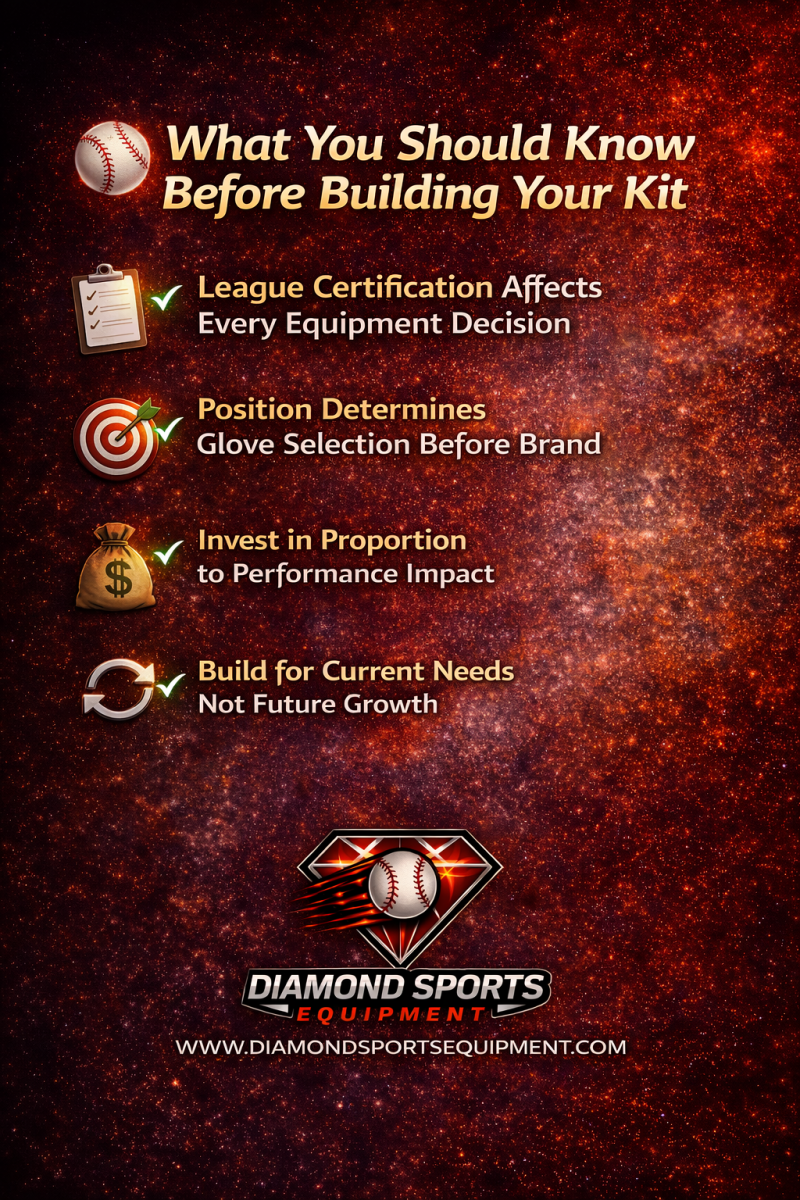
📋 League Certification Affects Every Equipment Decision
Confirm your specific league's certification requirements for bats, helmets, and cleats before purchasing anything. Non-compliant equipment creates violations that force mid-season replacement purchases — always confirm first and purchase second.
🎯 Position Determines Glove Selection Before Brand
The position a player primarily defends determines the glove size, pocket depth, and web style that serves them most effectively. Buying a glove based on brand or appearance before confirming positional requirements is the most common glove buying mistake at every level.
💰 Invest in Proportion to Performance Impact
The bat and glove are the two pieces of equipment that most directly affect on-field performance — invest here first and work outward to supporting equipment. Helmet, cleats, and accessories complement a strong bat and glove foundation rather than compensating for weak ones.
🔄 Build for Current Needs Not Future Growth
Equipment sized for a player to grow into creates mechanical compensations that are harder to correct than the equipment is worth. Size every piece for the player's current dimensions and competition level — replace as the player grows rather than buying oversized equipment that fights against development.
⚾ How to Build Your Complete Baseball Kit
Piece 1 — The Bat
The bat is the highest-impact offensive investment in the kit and the decision that most directly determines competitive performance at the plate. Start with certification — confirm the exact stamp your league requires before evaluating any other bat feature. USA for most youth recreational leagues. USSSA for competitive travel ball. BBCOR for high school and above. Then confirm length and drop weight appropriate for the player's height, reach, and current strength level. Then choose material — alloy for immediate performance without break-in, composite for higher performance ceiling after 150 to 200 break-in hits. Then select barrel size within the correctly specified configuration.
Budget guidance — Recreational youth: $50 to $120 for quality USA alloy. Competitive travel ball: $150 to $300 for premium USSSA composite. High school: $250 to $400 for quality BBCOR construction.
Piece 2 — The Glove
The glove is the highest-impact defensive investment and the decision most frequently made incorrectly by players who buy based on brand or appearance without confirming positional requirements first. Position first — infielders need shallow pockets and open webs for fast transfers, outfielders need deep pockets and trapeze webs for fly ball security, pitchers need closed webs for grip concealment, catchers need mitts rather than standard gloves. Then size — 11 to 11.5 inches for middle infielders, 11.5 to 12 inches for corner infielders and pitchers, 12 to 12.75 inches for outfielders. Then leather quality matched to competition level and usage frequency.
Budget guidance — Recreational youth: $30 to $80 for quality synthetic or entry leather. Competitive travel ball: $80 to $200 for genuine leather with reliable break-in. High school: $150 to $350 for premium leather that develops through a full season.
Piece 3 — The Cleats
Cleat selection starts with league eligibility — metal is restricted in youth leagues and many recreational formats, making molded the universal safe choice for most players. Then surface — molded for mixed surfaces and turf, metal for natural grass in metal-permitted leagues. Then cut height — low for middle infielders and outfielders who need ankle mobility, mid for corner players and catchers who need stability. Then midsole technology — standard EVA for occasional recreational players, advanced compounds for tournament players who need fatigue reduction across long competitive days.
Budget guidance — Recreational youth: $40 to $80 for quality molded design. Competitive travel ball and high school: $80 to $150 for advanced midsole technology and premium upper construction.
🎯 Putting It Into Practice
The three core pieces — bat, glove, and cleats — form the foundation of every baseball kit. Get those three right and every other equipment decision is a refinement rather than a foundation correction. The bat drives every offensive at-bat — a correctly certified, properly sized bat with the right material for the player's competition level and break-in timeline creates the offensive foundation that no amount of batting gloves or pine tar can compensate for when the bat itself is wrong. The glove determines defensive capability on every single play — a correctly sized, position-appropriate leather design that has been properly broken in is the difference between a shortstop who fields with confidence and one who fights their equipment on every short hop. The cleats determine how explosively the player moves in every direction on every play — and the wrong spike type, cut height, or midsole technology creates traction and fatigue limitations that affect the quality of every first step, every lateral cut, and every baserunning decision across a full competitive day. These three pieces working together create a foundation where the helmet and protective accessories can then complete the kit without any single piece compensating for another's limitations. For players who want to evaluate their glove selection alongside this kit guide, 🧤 How to Choose a Baseball Glove covers the sizing, leather, and positional decisions that produce a correctly chosen glove every time. And for players finalizing their helmet selection alongside their complete kit, 🪖 Baseball Batting Helmets for 2026 covers the certified options that every competitive player needs at the plate.
✅ Completing the Kit — Helmet and Accessories
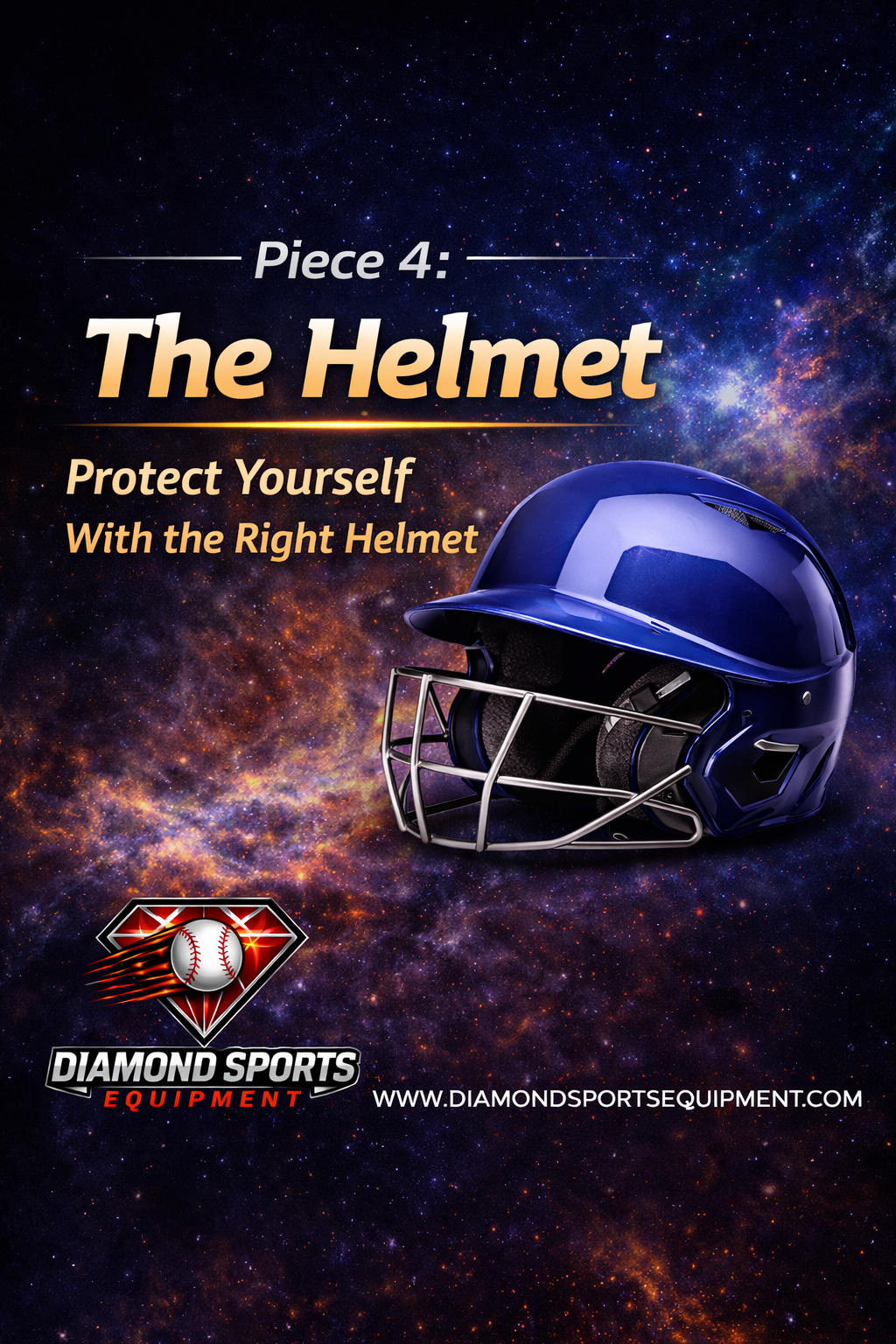
Piece 4 — The Helmet
The helmet is the most important safety investment in any baseball kit — and the one piece where the minimum acceptable standard should always be exceeded rather than met precisely. NOCSAE certification is the baseline requirement at every level of organized baseball. Fit precisely using head circumference measurement — never estimate based on age or hat size. Confirm single or dual ear flap requirement for your specific league. Invest in advanced construction above the standard ABS floor when budget allows — adjustable fit systems and reactive protection technologies deliver meaningful protection above the certification minimum.
Budget guidance — Any level: $25 to $100 for quality NOCSAE-certified construction. Never compromise on certification to save money on the helmet.
Piece 5 — Protective Accessories
Protective accessories complete the kit with the targeted coverage that specific positions and hitting approaches demand. Batting gloves for grip consistency and hand protection through high at-bat volume schedules. A batter's elbow guard for hitters who crowd the plate aggressively on inside pitches. A batter's leg guard for the front foot and ankle exposure that aggressive plate crowding creates. A sliding mitt for base stealers who make aggressive head-first slides into metal bases regularly.
Budget guidance — Batting gloves: $20 to $60. Elbow guard: $20 to $80. Leg guard: $25 to $100 for EvoShield custom molding. Sliding mitt: $20 to $50.
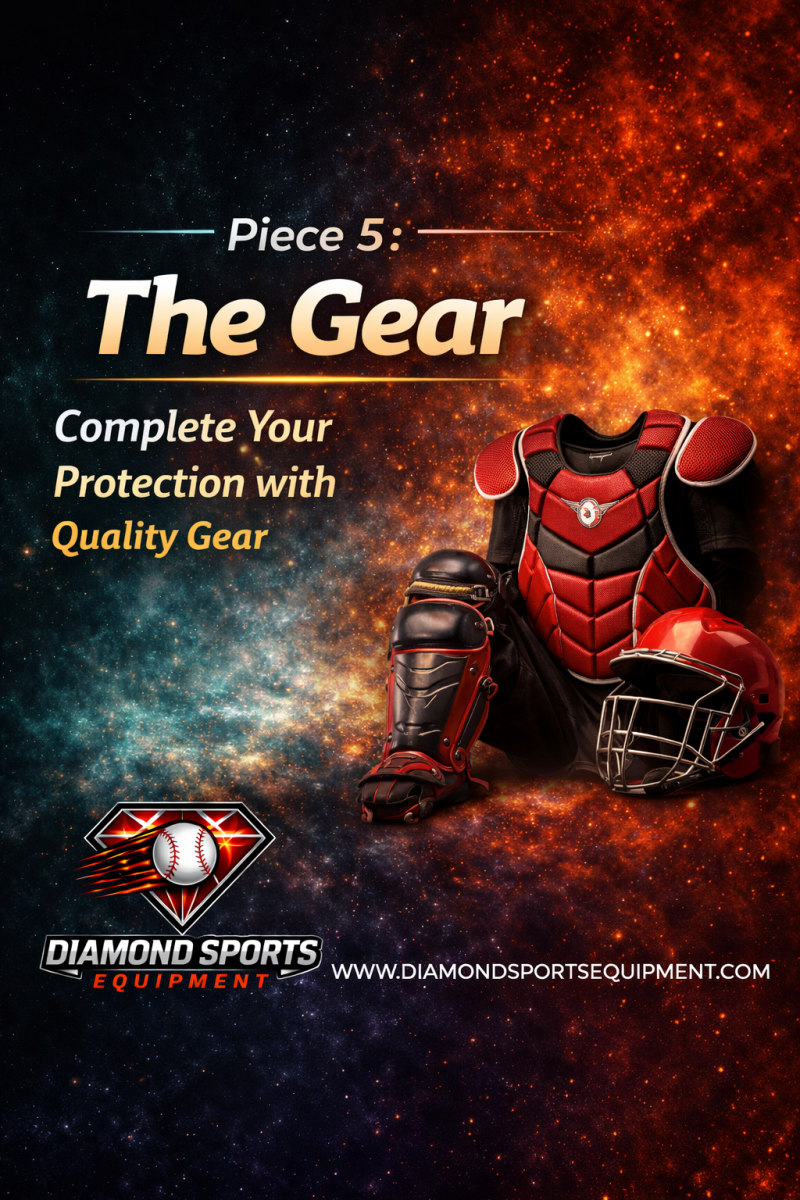
Piece 6 — Bat Accessories
Bat accessories are the final layer of a complete baseball kit — covering the grip, tack, and weight training tools that optimize the bat investment already made. Grip tape replaces worn factory grip for consistent hand contact through a full season. Pine tar or bat wax provides additional tack in cold or wet conditions where bare grip becomes unreliable. A bat donut or training weight builds swing strength through warm-up and off-season training without requiring a separate training bat.
Budget guidance — Grip tape: $8 to $20. Pine tar or bat wax: $10 to $25. Bat donut or weight: $15 to $40.
❌ Common Baseball Kit Building Mistakes
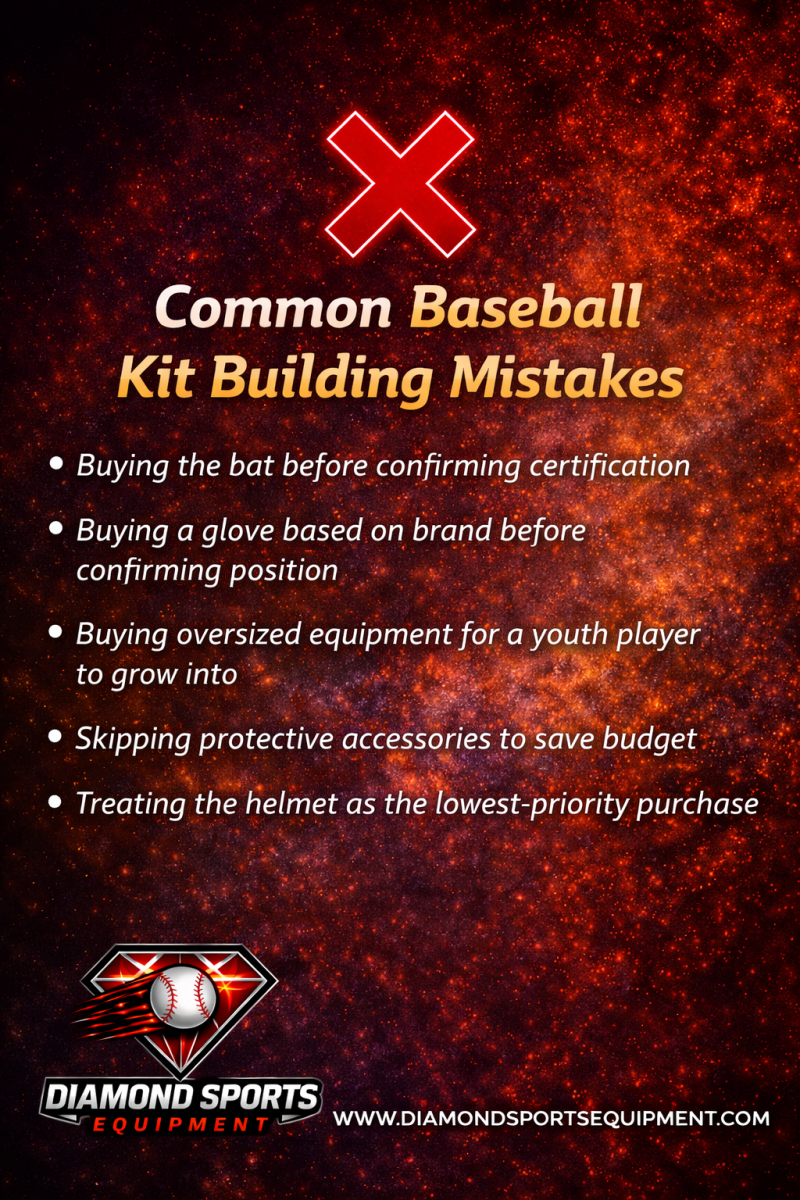
Buying the bat before confirming certification
The most costly and most avoidable mistake — a non-compliant bat cannot be used in competition and requires a replacement purchase. Confirm certification before any other bat decision.
Buying a glove based on brand before confirming position
A premium glove in the wrong positional configuration underperforms a basic glove in the correct one. Position determines pocket depth and web style before brand ever enters the conversation.
Buying oversized equipment for a youth player to grow into
Oversized bats and gloves create mechanical compensations that are harder to correct than the equipment is worth. Size for now — replace when the player grows rather than fighting oversized equipment through the development years where mechanics matter most.
Skipping protective accessories to save budget
Batting gloves, elbow guards, and leg guards represent the lowest cost-to-protection ratio in any baseball kit. A single hit-by-pitch on an unprotected elbow or ankle costs more in time missed than the full protective accessory investment combined.
Treating the helmet as the lowest-priority purchase
The helmet is the most critical safety piece in the kit — it should never be the piece where budget recovery happens after overspending elsewhere. Certified protection at the correct fit is the non-negotiable baseline for every player at every level.
❓ FAQ
How much does a complete baseball kit cost?
- A recreational youth kit with quality equipment across all six pieces typically runs $200 to $400 depending on construction tiers.
- A competitive travel ball or high school kit with premium bat, leather glove, and advanced cleats typically runs $600 to $1000 for the complete setup.
What is the most important piece of equipment to buy first?
- The bat — certification requirements make it the first decision that defines every subsequent purchase in the kit.
- The glove is a close second — defensive limitations from the wrong glove show up on every play throughout the season.
Can I use equipment from a previous season?
- Cleats, batting gloves, and accessories from previous seasons are generally usable if they still fit correctly and show no significant wear.
- Always re-measure for bat length and glove size at the start of every new season for youth players who are still growing.
What order should I replace equipment when upgrading?
- Bat first if certification or sizing has changed. Glove second if the player has committed to a specific position. Cleats third when spike wear or upper breakdown affects performance.
- Protective accessories last — they typically outlast the core equipment pieces with proper care.
Do I need every piece in the kit to start playing?
- Bat, glove, helmet, and cleats are the minimum equipment set required for competitive play at every organized level.
- Protective accessories improve performance and safety but are technically optional in most league formats — add them as the player's commitment to the sport deepens.
🧢 Final Thoughts
Building a complete baseball kit is a six-piece investment made in the right order — bat and glove first as the highest-impact performance pieces, cleats and helmet as the foundation of confident movement and certified safety, and protective accessories and bat accessories as the refinements that complete a setup built to perform from the first pitch of the season through the final out of the championship. Every piece in the kit serves a specific purpose — and every piece chosen correctly makes every other piece more effective by eliminating the equipment limitations that undermine performance when the kit is assembled incorrectly.
For players who want to complete their protective equipment setup alongside this kit guide, check out 🛡️ Elbow Guards for Every Hitter (2026) for the arm protection options that complete a competitive hitter's full plate equipment package. And for everything else across our baseball and softball coverage, visit 📝 Diamond Sports Equipment Blog & Gear Reviews for our full library of buying guides, product comparisons, and equipment reviews updated all season long.
Add comment
Comments