The catcher position demands more equipment than any other position on the field — and the player who assembles that equipment without a position-specific framework is making six separate purchasing decisions without understanding how those decisions interact with each other behind the plate. A catcher's mitt that doesn't match the pitcher's velocity profile, a chest protector that restricts the blocking range that a catcher's technique depends on, leg guards that limit the lateral movement that framing and stolen base prevention require, a helmet whose visibility is compromised by a poorly fitted cage, and a bag that can't organize and protect the full equipment load across a tournament weekend — any one of these mismatches costs the catcher performance on every pitch of every game, and most catchers are carrying at least one. The complete catcher equipment setup is not five separate purchases made independently from five separate buying guides. It is a system — and every piece of that system needs to be evaluated against what the position actually demands from it before the purchase is made. The framing mechanics that block passed balls require leg guard mobility. The blocking position that stops dirt balls requires chest protector coverage that extends through the full crouch range. The receiving technique that frames borderline strikes requires a mitt with the pocket depth and break angle that the catcher's hand position produces on every pitch. And the tournament catcher who can't find their equipment between games because their bag wasn't built for the full gear load is starting every inning behind before they've thrown a warmup pitch. Players building out the complete catcher knowledge base alongside this guide should check out 🏆 The Complete Catcher's Gear Guide (2026) for the full positional framework and 🧤 The Complete Catcher's Mitt Guide (2026) for the mitt-specific selection picture that the catching position's most specialized piece of equipment demands.
⚾ What You Should Know About Catcher's Equipment
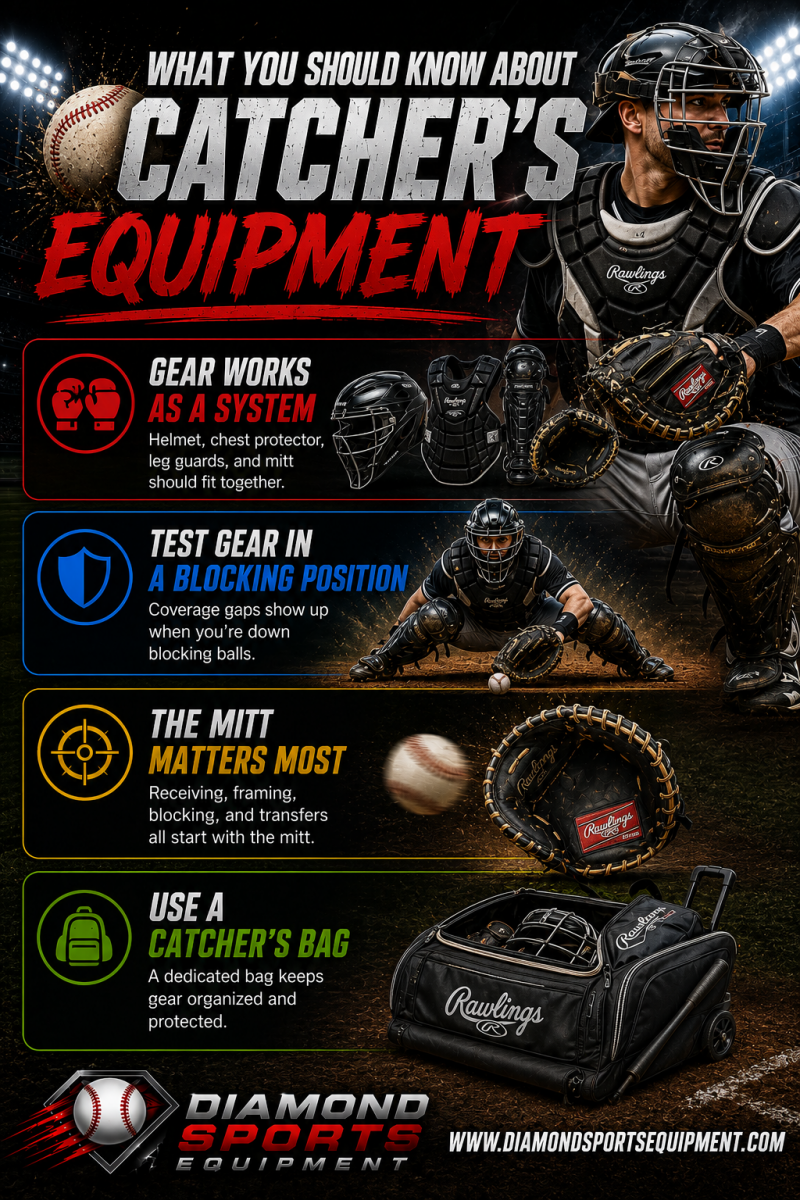
🥊 The Catcher's Equipment System Works Together — Not Independently
Every piece of a catcher's equipment affects every other piece — chest protector coverage interacts with leg guard overlap to determine whether gaps exist in the blocking position, helmet cage visibility interacts with framing technique to determine how early the catcher reads pitch location, and mitt size interacts with transfer speed to determine how quickly the catcher can get into throwing position on stolen base attempts. Purchasing any one piece without considering how it fits the full system produces equipment that works in isolation but underperforms in the position-specific demands that catching places on every piece simultaneously.
🛡️ Protection Coverage Must Hold Up Through the Full Blocking Position
The blocking position — glove hand tucked, throwing hand protected, body square to the incoming ball — places stress on coverage gaps that upright wearing positions don't expose. Chest protectors whose lower extension doesn't reach below the sternum leave the stomach exposed in the blocking position. Leg guards whose knee padding shifts under lateral movement leave the inside of the knee exposed on block attempts to the left and right. The catcher who selects protective equipment by trying it on standing upright rather than in the blocking position is evaluating protection in the position they occupy the least.
🎯 Mitt Selection Drives the Entire Receiving Game
The catcher's mitt is the most position-specific piece of equipment in the sport — a design built exclusively for receiving that no other position uses and that the catcher uses on every single pitch of every game they play behind the plate. Mitt size, pocket depth, break angle, and padding density all interact with the catcher's receiving technique to determine how consistently borderline pitches are framed, how securely balls in the dirt are blocked, and how quickly the glove transfers to the throwing hand on stolen base attempts. Getting the mitt selection right is the single most impactful individual equipment decision a catcher makes.
🎒 The Catcher's Bag Is a Functional Equipment Requirement — Not an Accessory
A catcher carries more equipment than any other player on the field — mitt, helmet, chest protector, leg guards, batting helmet, batting gloves, cleats, and all the standard player gear that every position requires. A bag that isn't specifically designed for the catcher's equipment load creates organizational chaos that costs time before games, between innings, and during transitions from defensive to offensive situations. The rolling catcher's bag format exists specifically because the catcher's equipment volume exceeds what a standard backpack can organize and transport without damage to the gear inside.
🏆 Best Catcher's Equipment for 2026
These six equipment selections represent every category a complete catcher's setup requires — from the mitt that drives the receiving game through the protective system that keeps the catcher in the lineup through a full competitive season, to the bag that organizes and transports the full equipment load across every game day and tournament weekend.
🧤 Wilson 2024 A1000 CM33 33" Baseball Catcher's Mitt
Best For: Competitive high school and adult baseball catchers who want Wilson's A1000 platform quality in a 33-inch catching mitt — the catcher whose receiving skill level, hand size, and competitive standard align with what the A1000 CM33 delivers as Wilson's accessible premium catcher's mitt at the competitive baseball level.
Construction: Wilson A1000 platform with 33-inch pattern and Pro Stock leather construction — a catcher's mitt built around the pocket depth, break angle, and padding density that competitive baseball catchers who are developing their framing technique and blocking range require from a mitt whose construction quality supports the position-specific demands that recreational alternatives don't address.
Material: Wilson Pro Stock leather palm and back construction — the leather specification that Wilson's A1000 platform delivers at the accessible premium tier, providing the combination of pocket formation, break-in responsiveness, and competitive durability that high school and adult catchers who invest in quality mitt construction seek above the synthetic alternatives that don't develop the personalized pocket shape that leather construction produces under regular competitive use.
Performance Feel: Structured and responsive — the A1000 CM33 delivers the catcher's mitt contact experience that competitive players who have moved past entry-level mitt construction describe as the correct feel for their receiving approach: structured Pro Stock leather that breaks in to the catcher's specific hand shape and receiving mechanics, 33-inch pattern coverage that balances blocking surface with transfer speed, and Wilson's A1000 construction quality that communicates genuine competitive mitt investment above recreational alternatives at lower price points.
Ideal Player Type: Competitive high school and adult baseball catchers whose receiving skill level and competitive standard are matched to Wilson's A1000 platform quality — catchers who want the Pro Stock leather construction and Wilson brand engineering in a 33-inch pattern that serves the broadest range of competitive baseball catching hand sizes and receiving styles at the accessible premium tier.
Performance Overview: The Wilson 2024 A1000 CM33 33" Baseball Catcher's Mitt is Wilson's accessible premium catcher's mitt — delivering the Pro Stock leather construction, 33-inch catching pattern, and A1000 platform quality that competitive high school and adult baseball catchers who have outgrown entry-level mitt construction specifically seek when they invest in the position-specific equipment that their receiving game demands. Wilson's Pro Stock leather specification at the A1000 tier delivers the pocket formation responsiveness and competitive durability that distinguishes premium leather mitt construction from the synthetic alternatives — leather that breaks in under regular competitive use to develop the personalized pocket shape and hand-fit that the catcher's specific receiving mechanics produce over the break-in period, holding that shape through the full competitive season without the pocket collapse that synthetic alternatives experience under the same catching volume. The 33-inch pattern delivers the blocking surface and pocket depth that competitive baseball catchers need to receive high-velocity pitching across the full pitch location range — large enough to provide the ball security on pitches in the dirt that blocking technique depends on, precise enough to frame borderline pitches with the hand position that produces the strike call rather than the ball call on pitches that live on the edge of the zone. Wilson's A1000 construction quality gives competitive catchers the mitt investment confidence that A1000 platform quality has earned across multiple product generations at the competitive baseball catching level.
Why It Stands Out:
- Wilson's Pro Stock leather construction at the A1000 tier delivers the pocket formation responsiveness and competitive durability that premium leather mitt construction produces above synthetic alternatives — leather that breaks in to the catcher's specific hand shape and receiving mechanics, develops a personalized pocket that holds through a full competitive season, and communicates the construction quality investment that serious competitive catchers specifically seek when they move past entry-level mitt alternatives.
- 33-inch catching pattern balances blocking surface with transfer speed for the broadest range of competitive baseball catching styles — large enough for ball security on pitches in the dirt and borderline pitch framing, precise enough for the quick transfer to throwing position that stolen base prevention demands from competitive catchers whose arm is the primary weapon against the running game.
- Wilson's A1000 platform quality and brand engineering reputation in the competitive catching mitt market give competitive catchers confidence in the CM33's construction consistency and leather durability across a full competitive season — a premium mitt investment backed by Wilson's manufacturing standards at the accessible tier of their competitive catcher's mitt lineup.
- 33-inch catcher's mitt pattern serves the competitive baseball catcher whose hand size and receiving style are correctly matched to the A1000 CM33's construction — the correct mitt investment for the high school and adult catcher whose skill level and competitive standard demand quality leather construction without the premium investment that Wilson's A2000 platform requires at the top of the catching mitt market.
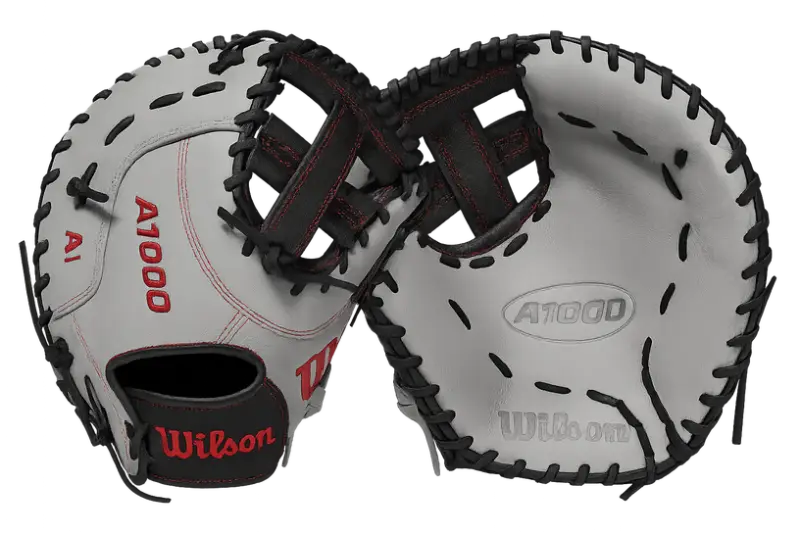
🪖 Rawlings | MACH Series Catcher's Helmet
Best For: Competitive baseball catchers who want Rawlings' MACH platform protection in a catcher-specific helmet design — the catcher whose protection priority, visibility standard, and Rawlings brand confidence align with what the MACH Series Catcher's Helmet delivers as one of Rawlings' most advanced catcher's helmet constructions in the competitive baseball market.
Construction: Rawlings MACH platform with catcher-specific cage integration — a catcher's helmet built around the MACH platform's advanced impact management alongside the catcher-specific cage design that delivers the visibility and protection combination that the catching position's unique demands require above standard batting helmet alternatives that don't address the full-contact catching environment.
Material: Rawlings MACH shell construction with integrated catcher cage — the MACH platform material specification that delivers advanced impact management and certified protection in a catcher-specific design whose cage integration, padding density, and helmet geometry are engineered for the full-contact catching environment rather than the standard batting situation that non-catcher helmet designs address.
Performance Feel: Advanced and secure — the MACH Series Catcher's Helmet delivers the protection experience that competitive catchers who have invested in quality helmet construction describe as the correct feel for their position's demands: MACH advanced impact management on every pitch foul tip and contact situation, catcher-specific cage visibility that reads pitch location and incoming foul balls, and Rawlings' construction quality behind a catcher's helmet whose MACH platform engineering communicates genuine advanced protection investment above standard catcher helmet alternatives.
Ideal Player Type: Competitive baseball catchers whose protection priority, visibility standard, and Rawlings brand confidence are satisfied by the MACH Series Catcher's Helmet — catchers who want Rawlings' most advanced helmet platform in a catcher-specific design that addresses the full-contact catching environment with the protection quality and visibility that competitive baseball catching demands from the most critical protective piece in the full gear system.
Performance Overview: The Rawlings | MACH Series Catcher's Helmet brings Rawlings' MACH platform protection to the catcher-specific helmet category — delivering the advanced impact management and construction quality that the MACH name communicates in the competitive helmet market, in a catcher-specific design whose cage integration and helmet geometry address the full-contact catching environment that standard batting helmet alternatives aren't built to handle. Rawlings' MACH platform uses advanced impact management construction that distributes contact force across the shell more efficiently than standard ABS alternatives — providing certified protection above the NOCSAE floor for the competitive catcher whose helmet absorbs foul tips, passed ball contacts, and bat follow-through impacts that no batting helmet encounters in the batting box situation. The catcher-specific cage design delivers the visibility that the catching position's pitch-reading demands require — the cage geometry that lets the catcher read pitch location, track foul balls, and maintain the field awareness that blocking, framing, and throwing all depend on in the full-speed catching environment. Rawlings' MACH construction quality and competitive catcher's helmet reputation give competitive catchers and coaches confidence in the MACH Series' protection consistency and cage durability through a full competitive season of the high-contact catching environment.
Why It Stands Out:
- Rawlings' MACH platform delivers advanced impact management above standard ABS shell alternatives in a catcher-specific helmet design — the construction quality that addresses the full-contact catching environment's protection demands above what standard batting helmets provide for the position that absorbs the most direct equipment contact of any defensive role in the game.
- Catcher-specific cage design delivers the visibility that pitch-reading, foul ball tracking, and field awareness demand from the catching position — the cage geometry that competitive catchers whose defensive responsibilities require continuous full-field awareness specifically need above standard batting helmet cage alternatives that don't address the catching position's unique visibility requirements.
- Rawlings' MACH construction quality and advanced impact management reputation give competitive catchers confidence in the MACH Series' protection consistency — a premium catcher's helmet investment backed by Rawlings' most advanced helmet platform engineering for the position that demands the most from its helmet on every pitch of every game.
- MACH platform protection above the NOCSAE certification floor for competitive catchers whose helmet absorbs foul tips, equipment contacts, and impact situations that no other defensive position encounters — the advanced protection standard that competitive catchers who invest in quality helmet construction specifically seek above standard alternatives at the same certification level.
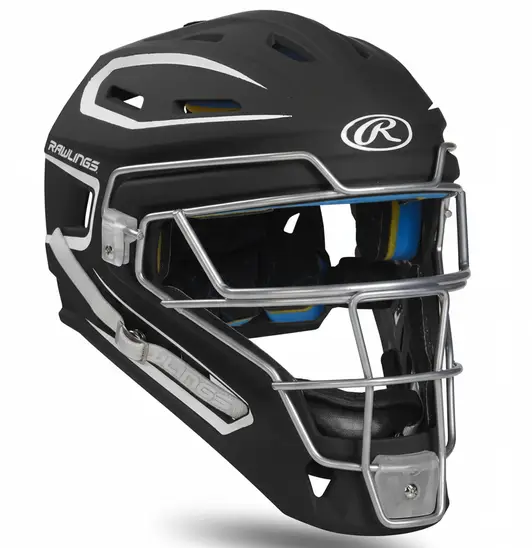
🛡️ Rawlings | MACH PRO Series Catcher's Chest Protector
Best For: Competitive baseball catchers who want Rawlings' MACH PRO protection platform in a chest protector design — the catcher whose blocking technique, mobility requirement, and Rawlings brand confidence align with what the MACH PRO Series Catcher's Chest Protector delivers as Rawlings' premium chest protector construction for competitive baseball catching.
Construction: Rawlings MACH PRO platform with catcher-specific coverage and mobility engineering — a chest protector built around the MACH PRO's advanced protection alongside the coverage geometry and mobility design that blocking technique and lateral movement demand from the catching position's most critical protective piece above the sternum and core.
Material: Rawlings MACH PRO construction with advanced padding and coverage material — the MACH PRO material specification that delivers the combination of impact protection, coverage geometry, and mobility that competitive baseball catchers who block pitches, frame borderline strikes, and make full-range defensive plays require from a chest protector whose construction quality matches the MACH PRO platform's protection standard.
Performance Feel: Premium and mobile — the MACH PRO Chest Protector delivers the protection experience that competitive catchers who have invested in quality chest protector construction describe as the correct feel for their blocking approach: MACH PRO impact protection across the sternum and core coverage area, mobility that allows the full blocking range without restriction, and Rawlings' construction quality behind a chest protector whose MACH PRO engineering communicates genuine advanced protection investment above standard chest protector alternatives.
Ideal Player Type: Competitive baseball catchers whose blocking technique, mobility requirement, and Rawlings brand confidence are satisfied by the MACH PRO Series Chest Protector — catchers who want Rawlings' most advanced chest protector construction in a design whose coverage geometry and mobility engineering address the full blocking and framing demands that competitive baseball catching places on the most critical protective piece above the waist.
Performance Overview: The Rawlings | MACH PRO Series Catcher's Chest Protector is Rawlings' premium chest protector for the competitive baseball catcher — delivering the MACH PRO platform's advanced protection alongside the coverage geometry and mobility design that blocking technique and lateral movement demand from the catching position's core protective piece. Rawlings' MACH PRO construction delivers advanced impact management across the sternum, collarbone, and rib coverage areas that foul tips, wild pitches, and bat contact reach in the catching position's full defensive range — protection that addresses the complete set of impact scenarios that the catching position faces on every pitch rather than the limited batting box contact situations that batting-oriented chest protection addresses. The coverage geometry of the MACH PRO extends through the blocking position's full crouch range — the coverage standard that catchers whose blocking technique depends on protection staying in position through lateral dives and full blocking posture specifically require from a chest protector whose construction holds its coverage geometry under the physical demands of competitive catching. Rawlings' MACH PRO construction quality and competitive catcher's chest protector reputation give competitive catchers and coaches confidence in the MACH PRO's protection consistency and coverage durability through a full competitive season.
Why It Stands Out:
- Rawlings' MACH PRO platform delivers advanced impact protection across the full sternum, collarbone, and rib coverage area that competitive catching demands — the construction quality that addresses the complete impact scenario range the catching position faces on every pitch above what batting-oriented chest protection provides for the full-contact defensive environment behind the plate.
- Coverage geometry extends through the blocking position's full crouch range — the coverage standard that catchers whose blocking technique depends on protection staying in position through lateral movement and full blocking posture specifically require from a chest protector whose construction holds its geometry under competitive catching's physical demands.
- Mobility design allows the full blocking range and lateral movement that framing, blocking, and throwing demand from the catching position — the mobility standard that distinguishes premium catcher's chest protectors from alternatives whose construction restricts the range of motion that competitive catching technique depends on across every pitch of a full game.
- Rawlings' MACH PRO construction quality and competitive chest protector reputation give catchers and coaches confidence in the protection consistency and coverage durability — a premium investment backed by Rawlings' most advanced chest protector engineering for the position that demands the most from its core protective piece on every pitch.
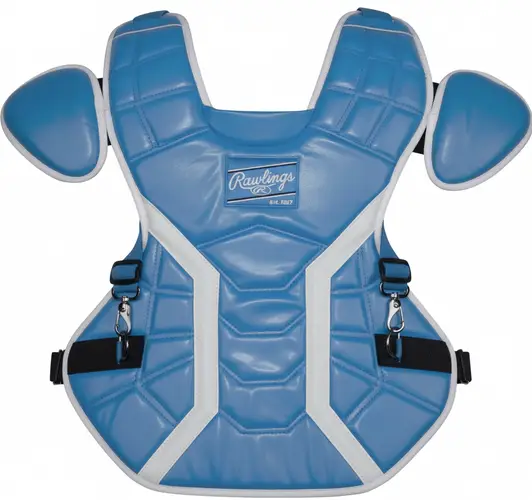
⚡ Performance Differences Between Catcher's Equipment Categories
The most significant performance differences in this guide split along equipment category lines rather than construction tier — because the catcher's system is built from six fundamentally different equipment pieces that each address specific position demands that no other piece in the system covers. The Wilson 2024 A1000 CM33 33" Baseball Catcher's Mitt, Rawlings | MACH Series Catcher's Helmet, and Rawlings | MACH PRO Series Catcher's Chest Protector cover the receiving game, head protection, and core protection that define the catching position's most critical individual equipment investments. The All-Star S7 Axis Baseball Leg Guards, Mizuno Samurai Adult Baseball Boxed Catcher's Gear Set, and PowerNet Optimus Catcher's Bag, Rolling Equipment Bag complete the system — lower body protection that the blocking position demands, the full gear set option for catchers building from scratch, and the organizational solution that the catcher's equipment volume requires above every other position's bag needs. Players building the complete chest protector knowledge base alongside this guide should check out 🏆 The Complete Chest Protector Guide for the full protection framework across every catcher level and format. Players working through the complete leg guard selection picture should read 🦵 The Complete Leg Guard Guide (2026) for the position-specific leg protection framework that complements the chest protector and helmet system.
🦵 All-Star S7 Axis Baseball Leg Guards
Best For: Competitive high school and adult baseball catchers who want All-Star's S7 Axis leg guard construction — the catcher whose lateral mobility requirement, knee protection priority, and All-Star brand confidence align with what the S7 Axis delivers as one of All-Star's most advanced leg guard designs for competitive baseball catching.
Construction: All-Star S7 Axis platform with segmented shell construction and pivot system — a leg guard built around the S7 Axis's segmented design philosophy that delivers lateral mobility and knee protection simultaneously through a pivot system that allows the leg guard to move with the catcher's leg rather than restricting the range of motion that blocking and lateral movement demand from the catching position's lower body protection.
Material: All-Star S7 Axis shell and padding construction — the S7 Axis material specification that delivers the combination of impact protection, segmented coverage, and pivot system mobility that competitive baseball catchers who block pitches, dive laterally, and maintain the crouching position for extended periods require from leg guards whose construction quality matches the S7 Axis platform's protection and mobility standard.
Performance Feel: Mobile and protective — the S7 Axis delivers the leg guard contact experience that competitive catchers who have invested in quality lower body protection describe as the correct feel for their blocking approach: segmented shell coverage that protects the knee and shin through the full blocking range, pivot system mobility that allows lateral movement without the restriction that rigid non-segmented alternatives introduce, and All-Star's S7 Axis construction quality that communicates genuine advanced leg guard investment above standard alternatives.
Ideal Player Type: Competitive high school and adult baseball catchers whose lateral mobility requirement, knee protection priority, and All-Star brand confidence are satisfied by the S7 Axis leg guard construction — catchers who want All-Star's advanced pivot system engineering in a leg guard that delivers the mobility and protection combination that competitive baseball blocking technique demands from lower body protection.
Performance Overview: The All-Star S7 Axis Baseball Leg Guards bring All-Star's S7 Axis platform to the competitive baseball leg guard category — delivering the segmented shell construction and pivot system mobility that competitive catchers whose blocking technique demands both protection coverage and unrestricted lateral range of motion specifically seek above the rigid non-segmented alternatives that sacrifice one side of that trade-off at the expense of the other. All-Star's S7 Axis segmented design philosophy divides the leg guard shell into connected segments that pivot at the knee joint — allowing the leg guard to follow the catcher's leg through lateral blocking movements, full crouch positions, and the dynamic range of motion that competitive catching technique produces across every pitch of a full game rather than restricting that movement to the single position that a rigid shell accommodates without resistance. The knee protection coverage that the S7 Axis delivers through the pivot system addresses the most impact-vulnerable joint in the catcher's lower body — the knee that absorbs blocking contact, lateral dive stress, and the sustained crouch position load that competitive catching places on the catcher's lower body across a full game and tournament weekend. All-Star's S7 Axis construction quality and competitive leg guard reputation give competitive catchers and coaches confidence in the pivot system durability and shell protection consistency through a full competitive season.
Why It Stands Out:
- All-Star's S7 Axis pivot system delivers lateral mobility and knee protection simultaneously through segmented shell construction — the engineering approach that allows the leg guard to follow the catcher's leg through the full range of blocking and lateral movement without the restriction that rigid non-segmented alternatives introduce at the cost of the mobility that competitive catching technique depends on.
- Segmented shell coverage protects the knee and shin through the full blocking position range — the coverage standard that competitive catchers whose blocking technique involves lateral dives and full crouch blocking positions specifically require from leg guards whose construction holds its protective geometry through the dynamic movement range that competitive catching produces.
- All-Star's S7 Axis construction quality and competitive leg guard engineering give catchers and coaches confidence in the pivot system durability and shell protection consistency — a premium lower body protection investment backed by All-Star's manufacturing standards in the competitive catcher's equipment market.
- Pivot system mobility standard distinguishes the S7 Axis from rigid non-segmented leg guard alternatives — delivering the lateral movement freedom that competitive blocking technique demands without sacrificing the knee and shin protection coverage that lower body protection's primary function in the catching position requires on every blocked pitch.

⚾ Mizuno Samurai Adult Baseball Boxed Catcher's Gear Set
Best For: Competitive adult baseball catchers who want Mizuno's Samurai platform across the complete helmet, chest protector, and leg guard system — the catcher building a complete gear set from scratch whose protection priority, mobility standard, and Mizuno brand confidence align with what the Samurai Adult Boxed Set delivers as Mizuno's complete adult catcher's gear system.
Construction: Mizuno Samurai platform across helmet, chest protector, and leg guards — a complete gear set built around the Samurai's integrated protection and mobility engineering that delivers consistent construction quality and coverage geometry across all three protective pieces simultaneously rather than the mismatched coverage that independently purchased alternatives from different brands and construction tiers produce.
Material: Mizuno Samurai construction across all three protective pieces — the Samurai material specification that delivers the combination of impact protection, coverage geometry, and mobility that competitive adult baseball catchers who want a complete, matched gear system require from a boxed set whose construction quality maintains Mizuno's Samurai platform standard across every protective piece in the full system.
Performance Feel: Complete and matched — the Mizuno Samurai Adult Boxed Set delivers the gear system experience that competitive adult catchers who have assembled mismatched individual pieces from different brands and tiers describe as the correct approach to building a catcher's protective system: consistent Samurai construction quality across helmet, chest protector, and leg guards, matched coverage geometry that eliminates the protection gaps that mismatched systems leave between pieces, and Mizuno's brand engineering behind a complete gear set whose integrated design communicates genuine system investment above the piecemeal approach.
Ideal Player Type: Competitive adult baseball catchers building a complete gear system from scratch whose protection priority, mobility standard, and Mizuno brand confidence are satisfied by the Samurai Adult Boxed Set — catchers who want Mizuno's Samurai platform quality across all three protective pieces in a matched system that eliminates the coverage gaps and construction inconsistencies that independently purchased alternatives from different brands produce.
Performance Overview: The Mizuno Samurai Adult Baseball Boxed Catcher's Gear Set is Mizuno's complete adult catcher's gear solution — delivering the Samurai platform's protection and mobility engineering across helmet, chest protector, and leg guards in a matched system that eliminates the coverage inconsistencies that independently assembled gear from mismatched brands and construction tiers produces behind the plate. The integrated Samurai design philosophy ensures that the chest protector's lower coverage geometry overlaps correctly with the leg guard's upper protection — eliminating the gap between pieces that mismatched systems leave exposed when two independently purchased protective pieces whose coverage geometry wasn't designed to work together create an unprotected zone in the blocking position. Mizuno's Samurai construction quality across all three pieces gives competitive adult catchers the protection consistency and coverage durability that a complete matched gear set delivers above the piecemeal approach — the construction standard that holds through the full-contact catching environment across a competitive season without the inconsistent protection that mismatched pieces from different construction tiers produce under the same catching volume.
Why It Stands Out:
- Mizuno's Samurai platform delivers matched construction quality across helmet, chest protector, and leg guards simultaneously — the integrated system approach that eliminates the coverage gaps and construction inconsistencies that independently assembled gear from mismatched brands and tiers produces in the blocking position's full protective geometry.
- Integrated Samurai design ensures chest protector and leg guard coverage geometry overlaps correctly — eliminating the unprotected gap between pieces that mismatched systems leave exposed when independently purchased protective pieces whose coverage geometry wasn't designed to work together create protection failures in the blocking position.
- Complete boxed set format gives catchers building from scratch the most efficient path to a matched, quality gear system — eliminating the research, compatibility verification, and construction tier matching that independently assembling three separate protective pieces from different brands requires.
- Mizuno's Samurai construction quality and competitive catcher's gear reputation give adult catchers and coaches confidence in the complete system's protection consistency and coverage durability — a matched gear investment backed by Mizuno's manufacturing standards in the competitive adult baseball catching equipment market.
🎒 PowerNet Optimus Catcher's Bag, Rolling Equipment Bag
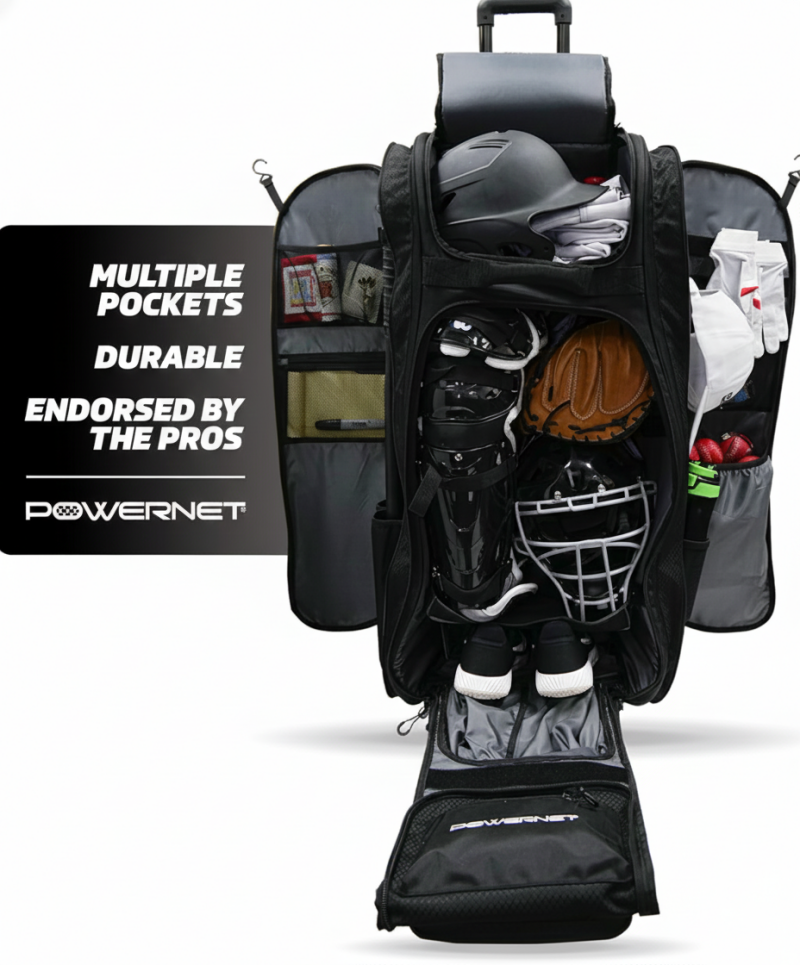
Best For: Competitive baseball catchers who need a rolling equipment bag specifically designed for the catcher's full gear load — the catcher whose equipment volume, organizational priority, and competitive use case align with what the PowerNet Optimus Catcher's Bag delivers as a rolling catcher's bag built around the position's unique equipment organization demands.
Construction: PowerNet Optimus rolling catcher's bag with catcher-specific compartment organization — a rolling equipment bag whose internal organization system is built around the catcher's full gear load rather than the standard player equipment volume that non-catcher rolling bags address, delivering dedicated compartment access for the mitt, helmet, chest protector, and leg guards that the catcher's position requires alongside the standard player equipment that every position carries.
Material: PowerNet Optimus rolling bag construction with durable exterior material and catcher-specific interior organization — the Optimus material specification that delivers the rolling wheel durability, exterior protection, and interior compartment structure that the catcher's full equipment load demands from a bag whose construction quality protects the gear investment across the transport, storage, and tournament day demands that the catching position's equipment volume produces across a full competitive season.
Performance Feel: Organized and mobile — the Optimus delivers the catcher's bag experience that competitive catchers who have carried standard equipment bags describe as the correct organizational approach for their position's gear load: rolling mobility that handles the catcher's full equipment weight without the physical strain that backpack alternatives impose on the player who carries protective gear in addition to standard equipment, dedicated compartments that keep each piece of protective gear accessible and protected during transport, and PowerNet's construction quality behind a catcher-specific bag that communicates genuine position-specific organizational investment.
Ideal Player Type: Competitive baseball catchers whose equipment volume, organizational priority, and rolling bag preference are satisfied by the Optimus Catcher's Bag — catchers who want PowerNet's catcher-specific rolling bag organization in a design whose wheel system, compartment structure, and exterior protection handle the full catching equipment load across game days and tournament weekends without the organizational compromise that standard rolling bags and backpack alternatives impose on the position's unique equipment demands.
Performance Overview: The PowerNet Optimus Catcher's Bag, Rolling Equipment Bag is built specifically for the catcher's equipment organizational demands — delivering a rolling bag whose compartment structure addresses the mitt, helmet, chest protector, and leg guard storage requirements that the catching position's full gear load creates above every other position's equipment volume. The rolling format handles the catcher's complete equipment weight across the parking lot, dugout, and facility transitions that tournament days produce — eliminating the physical strain that backpack alternatives impose on the player who carries protective gear weight in addition to the standard equipment that every position requires at the competitive level. PowerNet's Optimus compartment organization keeps each protective piece separated and accessible during the transitions that competitive catching demands — the organizational approach that lets the catcher move from batting to catching to throwing without the gear search that non-position-specific bags impose through every transition of a full competitive game or tournament day. The exterior construction protects the full gear investment across the transport and storage demands that competitive catching's equipment volume produces across a full season of game days and tournament weekends.
Why It Stands Out:
- PowerNet's Optimus rolling format handles the catcher's full equipment weight across tournament day transitions — eliminating the physical strain that backpack alternatives impose on the player who carries the position's complete protective gear load in addition to the standard equipment that every competitive player requires at the game and tournament level.
- Catcher-specific compartment organization keeps mitt, helmet, chest protector, and leg guards separated and accessible — the organizational approach that lets the catcher move through defensive to offensive transitions without the gear search that non-position-specific bags impose through every transition of a full competitive game or tournament weekend.
- Rolling wheel system and exterior protection handle the catcher's full equipment load across the transport, storage, and tournament day demands — the bag construction standard that protects the full gear investment across a complete competitive season without the exterior damage and interior organizational failure that non-position-specific alternatives produce under the same equipment volume and use frequency.
- PowerNet's construction quality and catcher-specific bag engineering give competitive catchers confidence in the Optimus's wheel durability and compartment structure — a position-specific bag investment backed by PowerNet's manufacturing standards in the competitive catcher's equipment organization category.
📊 Catchers: Complete Equipment Guide Snapshot (2026)
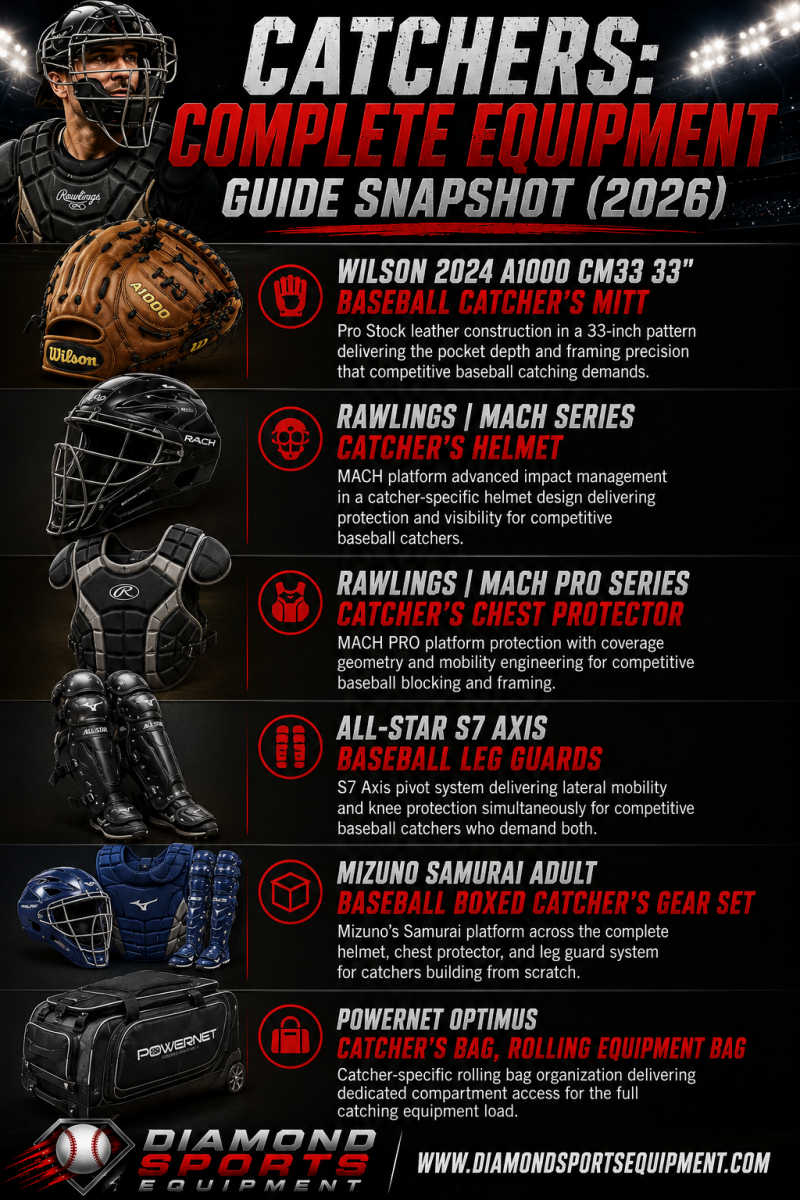
- 🧤 Wilson 2024 A1000 CM33 33" Baseball Catcher's Mitt — Pro Stock leather construction in a 33-inch pattern delivering the pocket depth and framing precision that competitive baseball catching demands.
- 🪖 Rawlings | MACH Series Catcher's Helmet — MACH platform advanced impact management in a catcher-specific helmet design delivering protection and visibility for competitive baseball catchers.
- 🛡️ Rawlings | MACH PRO Series Catcher's Chest Protector — MACH PRO platform protection with coverage geometry and mobility engineering for competitive baseball blocking and framing.
- 🦵 All-Star S7 Axis Baseball Leg Guards — S7 Axis pivot system delivering lateral mobility and knee protection simultaneously for competitive baseball catchers who demand both.
- ⚾ Mizuno Samurai Adult Baseball Boxed Catcher's Gear Set — Mizuno's Samurai platform across the complete helmet, chest protector, and leg guard system for catchers building from scratch.
- 🎒 PowerNet Optimus Catcher's Bag, Rolling Equipment Bag — Catcher-specific rolling bag organization delivering dedicated compartment access for the full catching equipment load.
❓ FAQ
What equipment does a baseball catcher need?
- A complete catcher's equipment setup requires a catcher's mitt, catcher's helmet with cage, chest protector, and leg guards — the four protective pieces that the catching position's full-contact defensive environment demands from every catcher at every competitive level from youth recreational through adult competitive play.
- Catchers also need a position-specific equipment bag that can organize and transport the full gear load alongside the standard player equipment that every position requires — the organizational requirement that makes the catcher's bag selection a functional equipment decision rather than the aesthetic preference that bag selection represents for positions with lower equipment volume.
What size catcher's mitt should I use?
- Adult and high school catchers typically use 32 to 34-inch catcher's mitts — the size range that balances blocking surface and pocket depth with the transfer speed that throwing to bases demands from the catching position's defensive responsibilities beyond receiving.
- Youth catchers typically use 30 to 32-inch mitts that match the smaller hand size and developing catching technique of players whose receiving skills are still developing — the size range that provides manageable weight and appropriate pocket depth for the younger catcher's physical development stage and skill level.
Should a catcher buy a complete gear set or individual pieces?
- Complete gear sets deliver matched coverage geometry across helmet, chest protector, and leg guards simultaneously — eliminating the protection gaps that mismatched pieces from different brands and construction tiers produce when independently purchased protective pieces whose coverage geometry wasn't designed to work together create unprotected zones in the blocking position.
- Individual pieces give catchers the flexibility to match each equipment category to their specific position demand and budget priority — the approach that experienced catchers whose existing gear is partially intact or whose position-specific requirements vary significantly across protective categories use to optimize each piece independently rather than accepting the complete set's uniform construction tier across every piece.
How often should catcher's equipment be replaced?
- Catcher's helmets should be replaced after any significant impact regardless of visible damage — internal compression from impact reduces certified protection even without visible cracking, and the helmet that absorbed a foul tip at full velocity may not provide the same protection on the next impact even if it looks undamaged from the outside.
- Chest protectors and leg guards should be evaluated at the start of every season for padding compression, shell cracking, strap integrity, and coverage geometry — protective pieces whose padding has compressed to the point of reduced impact absorption or whose shell has cracked under sustained impact should be replaced before the competitive season begins regardless of how recently they were purchased.
🧢 Final Thoughts
The catcher's equipment system is the most complex individual equipment investment in the sport — and the player who approaches it as six separate purchasing decisions rather than one integrated system is assembling a setup that underperforms in the position-specific demands that catching places on every piece simultaneously. The Wilson 2024 A1000 CM33 33" Baseball Catcher's Mitt drives the receiving game with Pro Stock leather construction and 33-inch pattern precision. The Rawlings | MACH Series Catcher's Helmet delivers MACH platform advanced protection with the cage visibility that pitch-reading and field awareness demand. The Rawlings | MACH PRO Series Catcher's Chest Protector covers the core with MACH PRO construction quality and blocking range mobility. The All-Star S7 Axis Baseball Leg Guards deliver pivot system lateral mobility alongside knee and shin protection. The Mizuno Samurai Adult Baseball Boxed Catcher's Gear Set gives catchers building from scratch the most efficient path to a matched, quality system. And the PowerNet Optimus Catcher's Bag, Rolling Equipment Bag organizes and transports the full gear load with catcher-specific compartment structure. Build the system — not the individual pieces. For players who want to deepen the helmet selection knowledge behind this guide, 🏆 The Complete Catcher's Helmet Guide covers the catcher-specific helmet framework across every construction tier and competitive level. For everything else across the full baseball and softball equipment market, 📝 Diamond Sports Equipment Blog & Gear Reviews has every guide organized and ready.
Add comment
Comments