A pitching machine is the single training tool that transforms a backyard cage or facility corner into a legitimate high-volume hitting environment — delivering consistent, repeatable pitches at controlled speeds that live batting practice from a human arm can never match for volume, location control, or availability across a full development season. A hitter who takes 200 machine reps in a focused 45-minute session builds timing, pitch recognition, and swing mechanics faster than one who takes 30 reps off a live arm three times a week — and the machine never gets tired, never loses its location, and never has an off day in the middle of a pitcher's heavy workload week. The 2026 pitching machine market covers every training environment and player level — portable compact designs for backyard setups where ease of use and storage matter most, single-wheel machines for consistent straight-pitch training at controlled speeds, dual-wheel machines for adjustable speed ranges and basic movement delivery, and elite multi-wheel systems from the Hack Attack series for multi-pitch type delivery including fastballs, curveballs, and changeups at speeds up to 110 mph. From entry-level youth training machines through professional-grade facility installations, every machine in this guide is matched to a specific speed range, pitch type capability, and training environment. For the complete breakdown of the top pitching machine options for 2026, 💨 Best Pitching Machines for Practice (2026 Guide) covers every model and configuration in detail. Players building a complete machine hitting station should also explore 🥅 Best Batting Cage Nets (2026 Guide) for the containment systems that complete a full high-volume hitting setup.
💨 What You Should Know About Pitching Machines
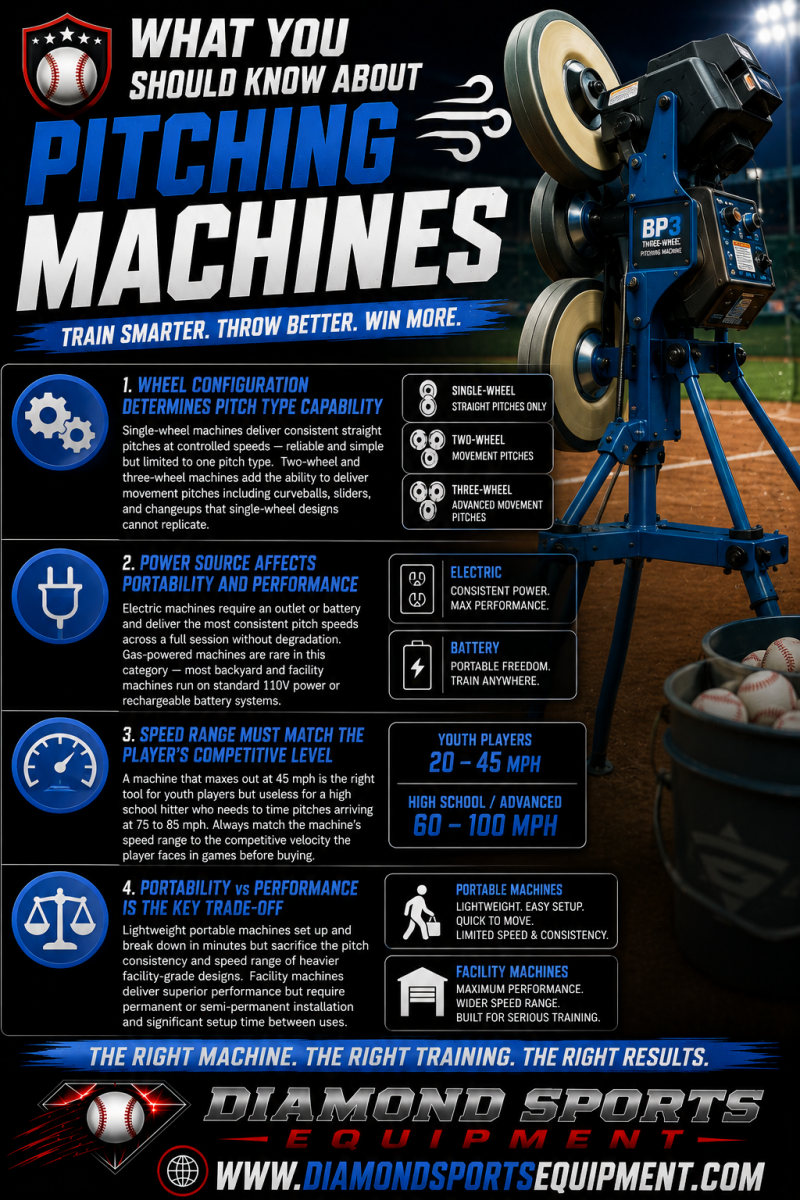
⚙️ Wheel Configuration Determines Pitch Type Capability
Single-wheel machines deliver consistent straight pitches at controlled speeds — reliable and simple but limited to one pitch type. Two-wheel and three-wheel machines add the ability to deliver movement pitches including curveballs, sliders, and changeups that single-wheel designs cannot replicate.
🔌 Power Source Affects Portability and Performance
Electric machines require an outlet or battery and deliver the most consistent pitch speeds across a full session without degradation. Gas-powered machines are rare in this category — most backyard and facility machines run on standard 110V power or rechargeable battery systems.
📏 Speed Range Must Match the Player's Competitive Level
A machine that maxes out at 45 mph is the right tool for youth players but useless for a high school hitter who needs to time pitches arriving at 75 to 85 mph. Always match the machine's speed range to the competitive velocity the player faces in games before buying.
🎯 Portability vs Performance Is the Key Trade-Off
Lightweight portable machines set up and break down in minutes but sacrifice the pitch consistency and speed range of heavier facility-grade designs. Facility machines deliver superior performance but require permanent or semi-permanent installation and significant setup time between uses.
🏆 Best Pitching Machines for Hitters (2026)
The six machines below cover every training environment and player level from youth backyard setups through elite facility installations — designs built to deliver consistent, game-speed reps that develop timing, contact consistency, and pitch recognition across a full competitive season.
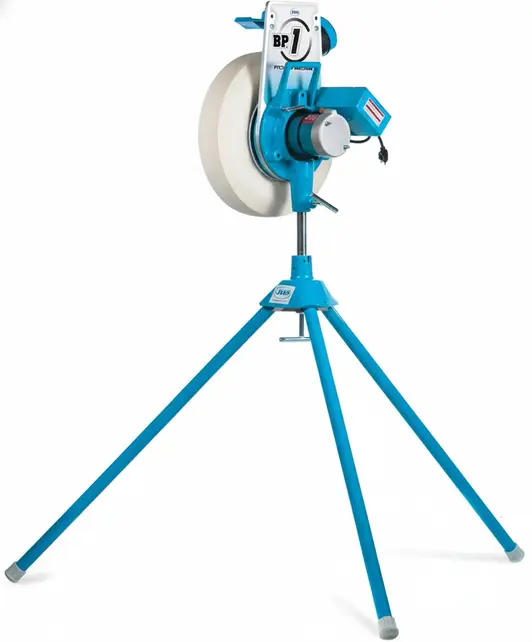
⚡ Jugs BP1 Baseball Only Pitching Machine
Best For: Competitive high school and collegiate programs that want a professional-grade single-wheel pitching machine with Jugs' proven reliability and a speed range that covers every pitch velocity a serious hitter needs to train against.
Construction: Single-wheel electric pitching machine with Jugs' precision motor system and a fully adjustable head that delivers pitches from low to high and side to side across the full range of pitch locations a hitter faces in competitive at-bats.
Material: Heavy-duty steel frame construction with a precision-engineered pitching wheel and electric motor system built for the high-volume daily use demands of a team facility or serious individual training program.
Performance Feel: The Jugs BP1 delivers the pitch consistency that Jugs' professional reputation is built on — every pitch arrives at the same location and the same speed within a tight tolerance that gives hitters the repeatable timing environment they need to build real swing mechanics and contact consistency through high-volume training sessions.
Ideal Player Type: The Jugs BP1 is built for the competitive high school player, collegiate athlete, and team program that wants a professional-grade machine with proven reliability across years of daily high-volume use — not a backyard toy that degrades after one season of regular training.
Performance Overview: Jugs has built their reputation on pitching machine reliability across decades of professional and collegiate use — and the Jugs BP1 represents that standard in a baseball-specific single-wheel design that delivers consistent pitch speed and location through thousands of pitches without the motor degradation, wheel wear, and pitch inconsistency that cheaper machines develop within a single season of regular use. The fully adjustable head covers every pitch location from low and inside through high and away, giving coaches and players the ability to work specific pitch locations in sequence or randomly to build zone coverage and recognition skills that transfer directly to competitive at-bats. For a competitive high school program that wants to provide players with a professional-grade machine that holds up through years of daily team use, the Jugs BP1 is the gold standard in single-wheel baseball machine performance.
Why It Stands Out:
- Professional-grade Jugs reliability proven across decades of competitive use.
- Fully adjustable head covers every pitch location from every angle.
- Consistent pitch speed and location through thousands of pitches without degradation.
- Heavy-duty steel frame built for years of daily high-volume team facility use.
- Baseball-specific design optimized for the pitch types and speeds competitive hitters train against.
🎯 Hack Attack Baseball Pitching Machine by Sports Attack
Best For: Elite programs, serious facilities, and competitive players who want the most advanced three-wheel pitching machine available — capable of delivering every pitch type at speeds up to 110 mph with the most realistic pitch delivery in the category.
Construction: Three-wheel electric pitching machine with Sports Attack's precision three-wheel drive system that independently controls each wheel to deliver the full range of pitch types — fastballs, curveballs, sliders, cutters, and changeups — at speeds from 40 to 110 mph with the same arm-slot delivery angle that a live pitcher produces.
Material: Heavy-duty professional-grade steel and aluminum frame construction with three independently controlled electric wheel motors and a head design that replicates the arm-slot delivery angle of a live pitcher more closely than any other wheel-based pitching machine on the market.
Performance Feel: The Hack Attack delivers the most realistic machine batting practice experience available — the three-wheel system produces pitch movement that single and dual-wheel machines simply cannot replicate, giving hitters the pitch recognition challenge of live pitching with the volume and consistency benefits that only a machine can provide.
Ideal Player Type: The Hack Attack is built for the elite competitive program, professional training facility, and serious high school or collegiate athlete whose training environment demands the most realistic, highest-velocity, most pitch-type versatile machine available regardless of price.
Performance Overview: The Hack Attack has earned its place as the gold standard of multi-wheel pitching machine performance by delivering what no other machine in this guide can — a three-wheel system that independently controls the speed of each wheel to produce authentic pitch movement on every pitch type in a pitcher's arsenal. A hitter taking batting practice against a Hack Attack on curveball settings is training their pitch recognition and timing against a ball that actually breaks the way a competitive curveball breaks — not a ball that approximates movement through a side-arm delivery angle or a single-wheel spin adjustment. For programs that want to provide their hitters with the most game-realistic machine batting practice available, the Hack Attack is the investment that pays off in the contact quality and pitch recognition improvement that carries directly from training into competitive at-bats.
Why It Stands Out:
- Three-wheel system delivers authentic pitch movement on every pitch type in the arsenal.
- Speed range from 40 to 110 mph covers every competitive level from youth through collegiate.
- Most realistic arm-slot delivery angle of any wheel-based pitching machine available.
- Independent wheel speed control produces genuine curveballs, sliders, cutters, and changeups.
- The gold standard of multi-wheel pitching machine performance for elite programs and facilities.

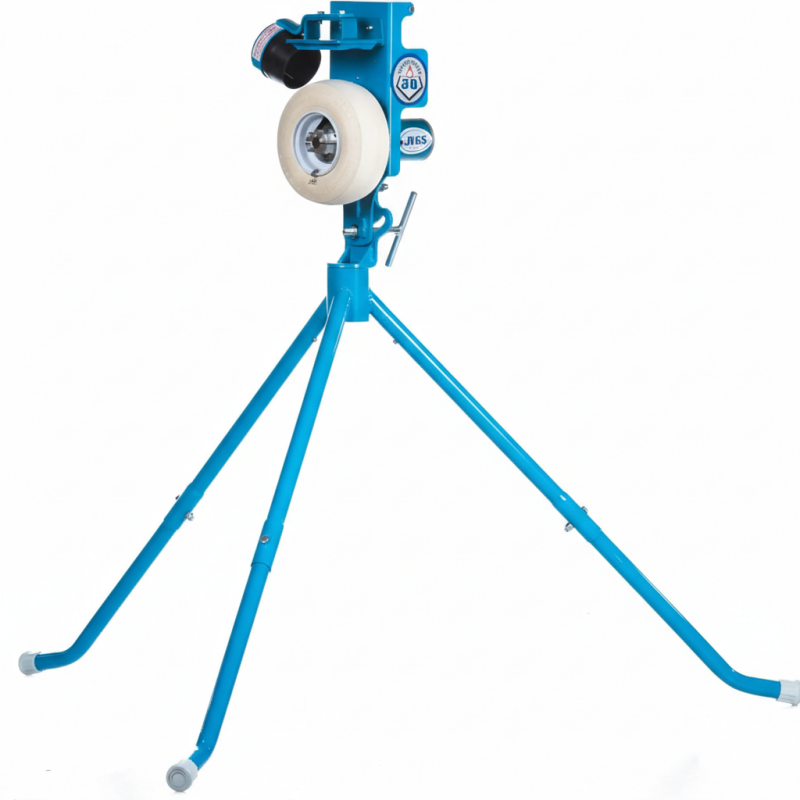
🔵 JUGS PS50 Baseball and Softball Pitching Machine
Best For: Programs, schools, and serious players who want a dual-sport machine that serves both baseball and softball hitters in a single facility investment without purchasing separate machines for each format.
Construction: Single-wheel electric pitching machine with Jugs' precision motor system and a ball feeder design that accommodates both regulation baseballs and softballs — delivering consistent pitches for both formats at speeds appropriate for youth through competitive adult players in both sports.
Material: Heavy-duty steel frame construction with Jugs' professional motor and wheel system built for the durability demands of a dual-sport facility that serves high volumes of both baseball and softball players through a full competitive season.
Performance Feel: The Jugs PS50 delivers the same consistent pitch speed and location reliability that Jugs' professional machines are known for — across both baseball and softball formats — giving coaches and players a dependable training environment without the inconsistency that budget dual-sport machines produce as their motors and wheels wear through high-volume use.
Ideal Player Type: The Jugs PS50 is the right investment for schools, youth organizations, and training facilities that run both baseball and softball programs and need a single professional-grade machine that serves both sports reliably without requiring separate equipment purchases for each format.
Performance Overview: The dual-sport capability of the Jugs PS50 is the feature that separates it from every other machine in this guide — a single machine that transitions between baseball and softball use by swapping the ball type, making it the most cost-effective professional-grade investment for any organization that runs both programs. The PS50 delivers the same Jugs motor reliability and pitch consistency across both sports, which means the softball team gets the same professional-grade training environment as the baseball program without requiring a second machine purchase. For youth organizations and school programs with limited equipment budgets that need to serve multiple sports, the PS50 represents the best value in professional pitching machine performance available in the 2026 market.
Why It Stands Out:
- Dual-sport capability serves both baseball and softball without separate machine purchases.
- Jugs professional motor reliability across both sports through high-volume daily use.
- Most cost-effective professional-grade investment for dual-sport programs and facilities.
- Consistent pitch speed and location across both baseball and softball ball sizes.
- Built for the durability demands of a facility that runs both programs through a full season.
⚡ Performance Differences Between Pitching Machines
The performance gap between an entry-level portable pitching machine and a professional-grade facility design is wider in this category than almost any other piece of baseball and softball training equipment — and the differences show up immediately in pitch consistency, speed range, pitch type capability, and long-term durability through daily high-volume use. Entry-level machines with lightweight motors and basic wheel systems deliver acceptable pitch consistency for occasional backyard use but degrade quickly under the daily volume that serious training programs demand, producing pitch speed fluctuations and location inconsistency that undermine the repeatable timing environment that makes machine batting practice valuable in the first place. Professional-grade machines from Jugs and Sports Attack maintain their pitch consistency through thousands of pitches per day across a full season because their motors, wheels, and frame construction are engineered specifically for that volume — not rated for it on a spec sheet but actually built to deliver it in real training environments. Three-wheel systems from the Hack Attack series add pitch type versatility that no single or dual-wheel machine can replicate, making them the right investment for programs that want hitters training against realistic movement rather than straight pitches at varying speeds. For more detail on how to select the right machine for a backyard versus facility setup, 💨 How to Choose a Pitching Machine covers every portable option in detail. Players building a complete machine station should also explore ⚾ Best Pitching Machine Baseballs (2026) for the machine-specific ball options that keep every machine performing at its best through high-volume training sessions.
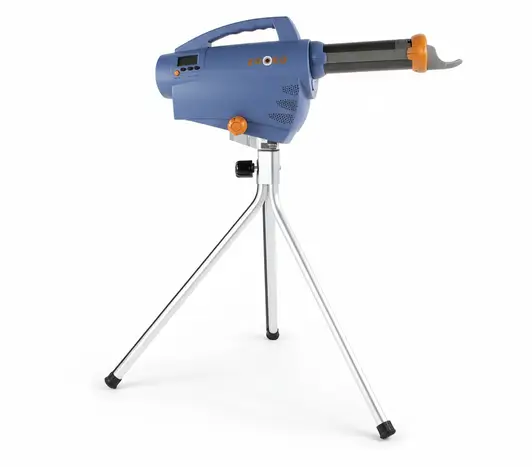
🌀 Zooka ZS740 Baseball Pitching Machine
Best For: Backyard players and individual training setups who want a lightweight, portable pitching machine that delivers consistent pitches at youth through high school speeds without the weight and setup complexity of professional facility machines.
Construction: Lightweight portable pitching machine with Zooka's single-wheel electric design and a compact frame that sets up in minutes, connects to a standard 110V outlet, and delivers consistent pitches at speeds from 20 to 70 mph across the speed range that youth through high school players train against.
Material: Lightweight polymer and aluminum frame construction with Zooka's electric wheel motor system designed for the portability demands of individual players and families who need a machine that sets up quickly, breaks down easily, and stores in a compact footprint between training sessions.
Performance Feel: The Zooka ZS740 delivers a consistent, reliable pitch delivery that individual players and parents will find immediately useful for daily backyard tee and soft toss supplement work — pitches arrive at consistent speeds and locations that give developing players the timing repetitions their swing development needs without the inconsistency of hand-fed soft toss or the setup complexity of heavier facility machines.
Ideal Player Type: The Zooka ZS740 is the right machine for the youth player through high school athlete training at home in a backyard cage or net setup who needs a lightweight, easy-to-use machine that delivers consistent pitches at the speeds their competitive level demands without requiring a truck and a two-person setup crew to get operational.
Performance Overview: The Zooka ZS740 fills the gap between the soft toss and hand-fed practice that most backyard setups depend on and the professional facility machines that most individual players don't have access to — delivering a genuinely consistent machine pitch in a setup that one person can have operational in under five minutes from a standard 110V outlet. The 20 to 70 mph speed range covers youth recreational through high school competitive play, and the lightweight polymer frame makes it practical to move between a backyard cage, a field setup, and indoor training environments without the weight and bulk that make heavier machines impractical for individual use. For the serious developing player who takes daily machine reps as part of their training routine, the Zooka ZS740 delivers the consistency and portability that a backyard training program needs to function effectively.
Why It Stands Out:
- Lightweight portable design sets up in under five minutes from a standard outlet.
- Speed range of 20 to 70 mph covers youth through high school competitive training.
- Compact storage footprint makes it practical for individual and family training setups.
- Consistent pitch delivery that gives developing players the timing reps their swing needs.
- Best portable option for serious players who take daily machine reps in a backyard setup.
🔥 Heater Sports Deuce 75 MPH Baseball Pitching Machine
Best For: Youth and developing players who need an affordable, reliable pitching machine for backyard training at speeds appropriate for youth recreational through early competitive play.
Construction: Compact single-wheel electric pitching machine with Heater Sports' motor system and a lightweight design that delivers pitches up to 75 mph — covering the speed range that youth recreational through middle school competitive players train against in a setup accessible enough for families to use without technical expertise.
Material: Lightweight plastic and steel construction with Heater Sports' electric wheel motor designed for the backyard and recreational training use case that most entry-level machine buyers are actually purchasing for — regular but not daily high-volume professional use.
Performance Feel: The Heater Deuce delivers consistent pitch delivery at the speed ranges youth players need for their development stage — arriving reliably enough in the hitting zone to give developing hitters the timing repetitions that build the swing habits and contact consistency their coaches are working on during practice and games.
Ideal Player Type: The Heater Deuce is built for youth players ages 6 through 14 whose families want an affordable machine for backyard training that provides more consistent pitch delivery than hand toss or soft toss without the professional price point that a serious facility machine carries.
Performance Overview: The Heater Sports Deuce 75 is the most accessible entry point in this pitching machine guide — an affordable, lightweight machine that delivers consistent pitches at the speeds youth players need without the investment that professional-grade designs require from families whose primary use case is occasional backyard batting practice rather than daily high-volume team training. The 75 mph maximum speed covers the competitive velocity range through the middle school level, and the lightweight construction makes it practical for parents to set up and break down without help for regular backyard sessions. For families buying their first pitching machine for a developing player, the Heater Deuce delivers the core value proposition of machine practice — consistent, repeatable pitch delivery — at a price point that makes the investment realistic for the backyard training context it is designed for.
Why It Stands Out:
- Most accessible price point in this guide for families buying a first pitching machine.
- Consistent pitch delivery at youth-appropriate speeds up to 75 mph.
- Lightweight construction practical for one-person setup and breakdown in backyard sessions.
- Covers the speed range youth recreational through middle school competitive players need.
- The right entry-level investment for families focused on backyard development training.
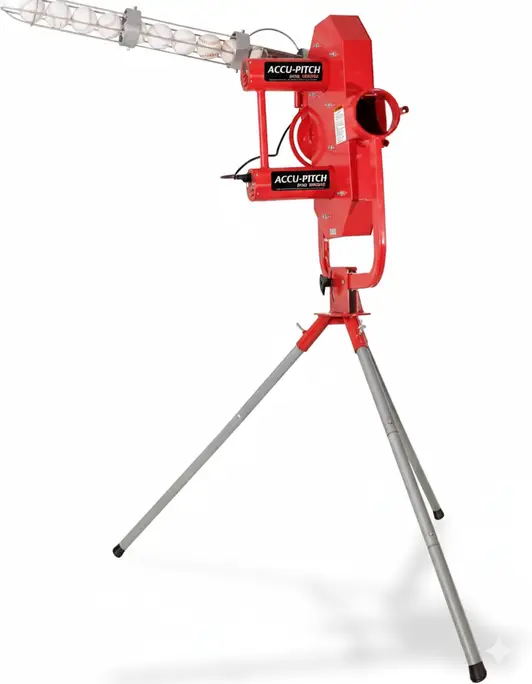
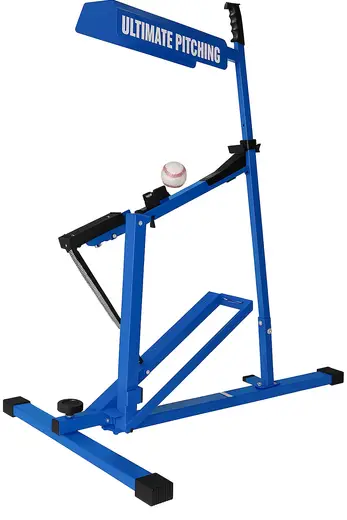
💡 Louisville Slugger Blue Flame Pitching Machine
Best For: Youth recreational players and T-ball through coach pitch age groups who need a simple, durable pitching machine that delivers consistent underhand-style pitches at the slow speeds developing players need to build fundamental contact skills.
Construction: Compact single-wheel electric pitching machine with Louisville Slugger's motor system and a design optimized for the slow, consistent pitch delivery that T-ball through coach pitch players need to develop the basic swing mechanics and contact habits that more advanced training builds on.
Material: Lightweight durable plastic and steel construction with Louisville Slugger's electric motor system built for the youth recreational training use case — regular family backyard sessions that prioritize simplicity, safety, and the consistent slow-pitch delivery that youngest players need to develop fundamental hitting skills.
Performance Feel: The Blue Flame delivers the slow, consistent pitch delivery that youngest players need to see the ball clearly, time their swing without panic, and make solid contact on pitches that arrive in a predictable location and at a speed that gives the development process time to work properly before advancing to faster, more challenging pitch speeds.
Ideal Player Type: The Louisville Slugger Blue Flame is built for T-ball through coach pitch players ages 4 through 8 whose parents want a simple, safe machine that delivers consistent slow pitches for daily backyard fundamental development without the complexity, speed, or price point of machines designed for older more competitive players.
Performance Overview: The Louisville Slugger Blue Flame is the most youth-focused design in this guide — built specifically for the age group where consistent slow-pitch delivery is more valuable than speed range, portability, or pitch type versatility. A T-ball player who takes 50 swings per day against the Blue Flame's consistent, slow, predictable delivery builds the hand-eye coordination, swing timing, and contact consistency that every subsequent level of development depends on — and the simplicity of the machine's operation means parents can run a productive session without technical expertise or a complicated setup process. The trusted Louisville Slugger brand name and durable construction give families confidence that the machine will hold up through the years of regular backyard use that a young player's development demands.
Why It Stands Out:
- Purpose-built for T-ball through coach pitch players — the youngest development age group.
- Consistent slow-pitch delivery gives youngest players the timing they need to make contact.
- Simple operation that parents can manage without technical expertise or complicated setup.
- Trusted Louisville Slugger brand construction built for years of regular backyard use.
- The right first machine investment for families with players in the earliest development stages.
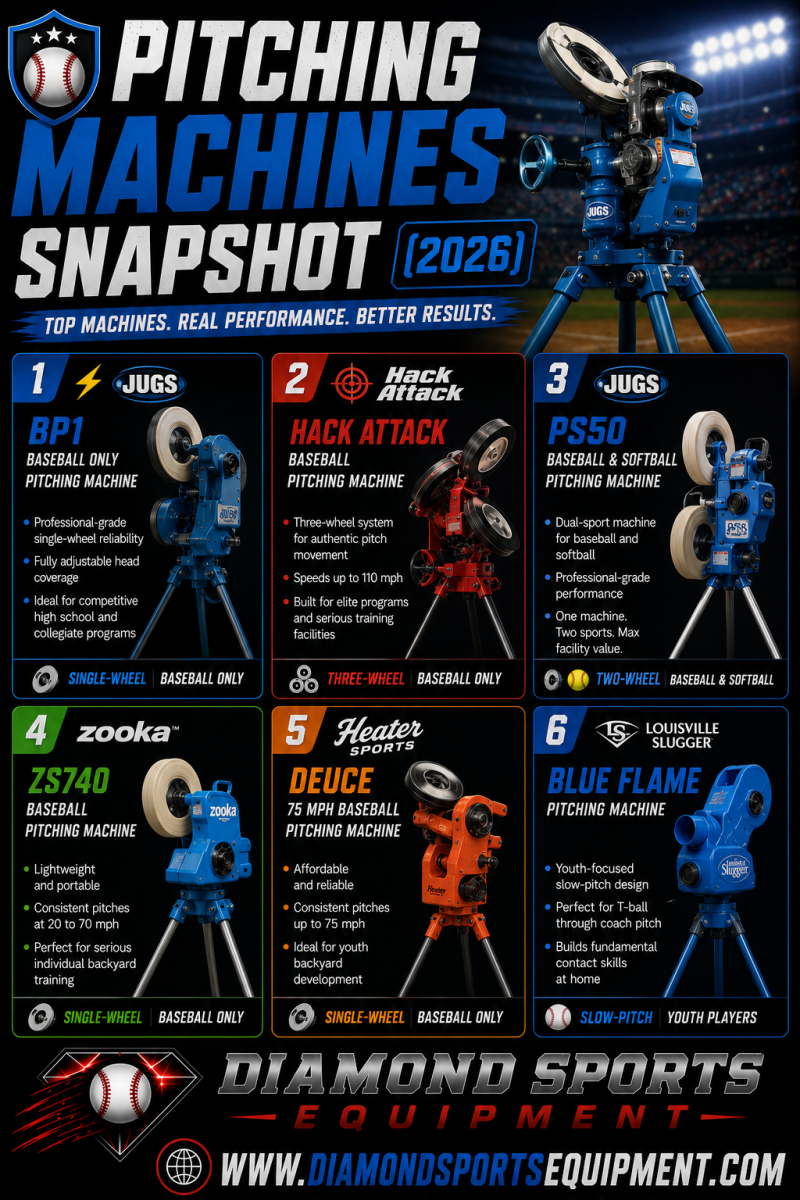
📊 Pitching Machines Snapshot (2026)
- ⚡ Jugs BP1 Baseball Only Pitching Machine — professional-grade single-wheel reliability with fully adjustable head coverage for competitive high school and collegiate programs.
- 🎯 Hack Attack Baseball Pitching Machine — three-wheel system delivering authentic pitch movement at speeds up to 110 mph for elite programs and serious training facilities.
- 🔵 JUGS PS50 Baseball and Softball Pitching Machine — dual-sport professional machine serving both baseball and softball programs in a single facility investment.
- 🌀 Zooka ZS740 Baseball Pitching Machine — lightweight portable design delivering consistent pitches at 20 to 70 mph for serious individual backyard training setups.
- 🔥 Heater Sports Deuce 75 MPH Baseball Pitching Machine — affordable entry-level machine delivering consistent pitches up to 75 mph for youth backyard development training.
- 💡 Louisville Slugger Blue Flame Pitching Machine — youth-focused slow-pitch design for T-ball through coach pitch players building fundamental contact skills at home.
❓ FAQ
What is the difference between a single-wheel and three-wheel pitching machine?
- Single-wheel machines deliver consistent straight pitches at controlled speeds but cannot produce authentic movement on breaking balls.
- Three-wheel machines independently control each wheel to deliver the full range of pitch types including curveballs, sliders, and changeups at realistic movement and velocity.
What speed range do I need for my player's age and level?
- Youth recreational and T-ball players need machines that deliver 20 to 45 mph — enough speed to challenge developing timing without overwhelming a player still building fundamental contact skills.
- High school and competitive players need machines that reach 70 to 90 mph to match the velocities they face in competitive games and build timing against pitches that replicate game conditions.
Do pitching machines work with any baseball or softball?
- No — most pitching machines are designed for specific ball types and produce inconsistent pitch delivery and accelerated wear when used with the wrong ball.
- Always use dimpled machine baseballs or softballs specifically designed for the machine type being used — standard game balls degrade faster and deliver inconsistent pitches through a wheel machine.
How do I set up a complete backyard pitching machine station?
- You need a pitching machine, a containment net or batting cage, a batting tee as a backup drill tool, and a supply of machine-specific balls in sufficient quantity for a full session without stopping to collect balls mid-practice.
- An L-screen in front of the machine protects it from comebackers on hard contact and is worth adding to any setup where the machine will be positioned in the hitter's direct line of fire.
Can one person operate a pitching machine alone?
- Yes — most modern pitching machines include a ball feeder or hopper that loads multiple balls and feeds them automatically without requiring a second person to hand-feed each pitch.
- Machines without an automatic feeder require a second person or a pitching machine ball feeder accessory to allow the hitter to take continuous reps without stopping between pitches.
How long do pitching machines last?
- Professional-grade machines from Jugs and Sports Attack are built for daily high-volume use across many years and typically last a decade or more with proper maintenance.
- Entry-level and mid-tier machines are built for lighter use and typically last two to five years depending on how frequently they are used and how well they are maintained between sessions.
🧢 Final Thoughts
A pitching machine is the training investment that pays off every single day a player uses it — delivering the consistent, game-speed repetitions that live batting practice can never match for volume, location control, or availability across a full development season. The six machines in this guide cover every training environment and player level from the youngest T-ball players building fundamental contact skills through elite competitive programs that want the most realistic three-wheel pitch movement available in the market. The right machine is the one that matches the player's competitive level, fits the training environment, delivers the pitch types needed for development, and holds up through the use volume the training program demands. For more detail on the pitching machines that serious backyard training programs rely on most, 💨 Pitching Machines Complete Guide (2026) covers additional options and configurations worth comparing alongside this season's lineup. For the complete catalog of training gear reviews and buying guides across every category, 📝 Diamond Sports Equipment Blog & Gear Reviews has everything in one place.
Add comment
Comments