Baseball field accessories help coaches, groundskeepers, and facility managers maintain the areas of a diamond that drag mats and line-marking equipment cannot address alone. Grass and turf may need debris collection or sticker burr removal, while base installations require clean anchor openings, compatible hardware, and regular inspections. These maintenance tasks involve different tools, making it important to choose equipment for the actual conditions of the field rather than assuming one accessory can handle every job.
The right field maintenance setup depends on the size of the facility, the type of playing surface, the existing base hardware, and the equipment available for regular maintenance. Push-style burr rollers can address smaller affected areas, tow-behind equipment is intended for broader coverage, and specialized hand tools help maintain base anchor openings. Groundskeepers comparing additional infield equipment can explore 🧰 Field Grooming Tools (2026) for specialized surface preparation options. Facilities planning field layouts and boundary markings can also review 🎨 Field Striping & Marking Tools (2026) for complementary maintenance equipment.
⚾ What You Should Know About Field Accessories
🌵 Burr Removal Requires the Right Surface Tool
Sticker burrs and sand spurs can collect in grass and other outdoor areas where players walk, dive, or retrieve balls. Mechanical burr rollers are designed to pick up loose burrs, but they do not remove every attached seed head or eliminate the underlying weeds.
🍂 Lawn Sweepers Collect Loose Debris
Tow-behind lawn sweepers use rotating brushes and collection hoppers to gather material such as leaves and grass clippings. Models equipped with dethatcher attachments can also lift accumulated thatch when properly adjusted.
🎏 Base Plugs and Anchors Serve Different Purposes
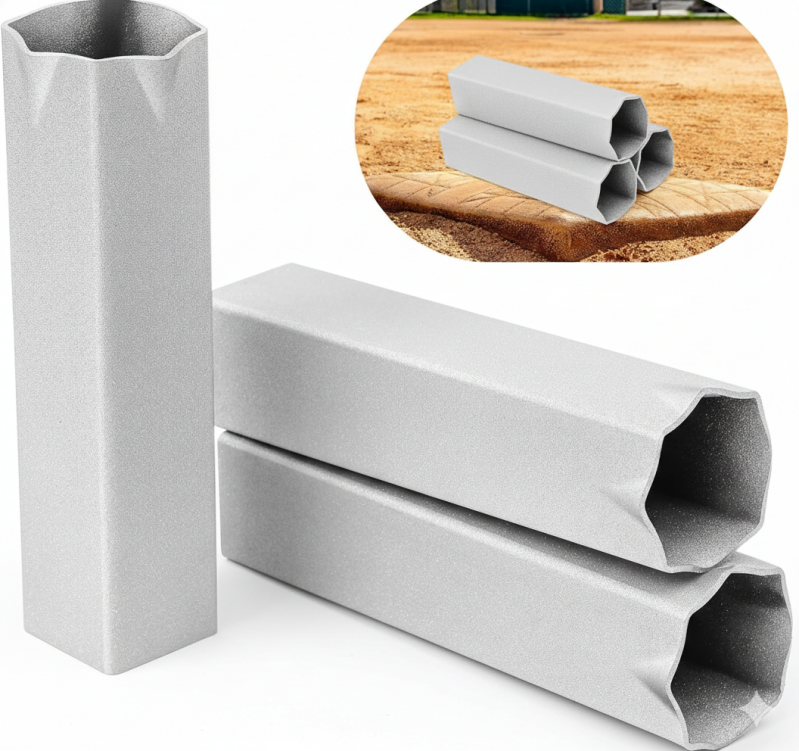
Base plugs cover or mark empty anchor sleeves when bases are removed, while ground anchors provide attachment points for compatible base hardware. Sleeve dimensions, installation requirements, and the intended playing activity should be checked before use.
🔧 Anchor Openings Need Regular Maintenance
Dirt and other debris can collect inside and around recessed base anchors. A dedicated dig-out tool helps remove that material, while inspections help identify damaged, loose, or incompatible hardware before field use.
🏆 Best Field Accessories (2026)
These six field accessories address different maintenance tasks, including burr collection, turf sweeping, base-anchor cleaning, sleeve identification, and replacement ground hardware.
🌵 Sticker Burr Roller Original Remover
Best For: Groundskeepers, coaches, and property managers who need a manually operated tool for collecting loose sticker burrs from smaller grass or turf areas. The push-style design is particularly relevant to localized problem spots where using a tow vehicle would be unnecessary.
Construction: Walk-behind burr roller featuring a handle-operated frame and a rotating pickup surface. The manufacturer's original push-style design uses a foam roller sleeve and conveyor screen to lift and collect loose burrs as the operator moves the equipment across the ground.
Material: Replaceable foam pickup sleeve, screen components, and a supporting roller assembly. The manufacturer identifies the foam sleeve and conveyor screen as serviceable components, allowing worn pickup materials to be replaced rather than treating the entire unit as disposable.
Performance Feel: The push design provides direct control over travel speed and coverage. Operators can make repeated passes across affected areas and inspect the results, although pickup depends on burr location, ground conditions, and the amount of vegetation covering the seeds.
Ideal Player Type: Youth league volunteers, school groundskeepers, recreational facility operators, and coaches responsible for maintaining grass areas around baseball or softball fields. Suitable for users who want a manually operated burr-collection tool without additional towing equipment.
Performance Overview: The Sticker Burr Roller Original Remover provides a mechanical method for collecting loose sticker burrs from outdoor surfaces. Its foam-covered roller picks up accessible burrs as the operator pushes the equipment forward, while the conveyor screen strips collected burrs from the roller and directs them into the collection basket. This design allows users to remove loose burrs without applying herbicides during collection. The manufacturer also offers replacement foam and screen components for maintaining the pickup system. However, the roller does not eliminate existing weeds or reliably remove seeds buried beneath vegetation or soil. Repeated passes and additional turf maintenance may be necessary depending on surface conditions and infestation levels. Its principal advantage is providing a manually operated burr-collection system for localized maintenance areas.
Why It Stands Out:
- Mechanical burr collection: Uses a rolling pickup surface and conveyor screen to collect accessible loose burrs without applying chemicals during operation.
- Push-style control: Allows operators to work through smaller affected areas at a manageable walking pace.
- Replaceable pickup components: The manufacturer's original design includes serviceable foam and screen materials.
- Targeted turf maintenance: Provides an alternative to hand-picking individual burrs from accessible grass and ground surfaces.

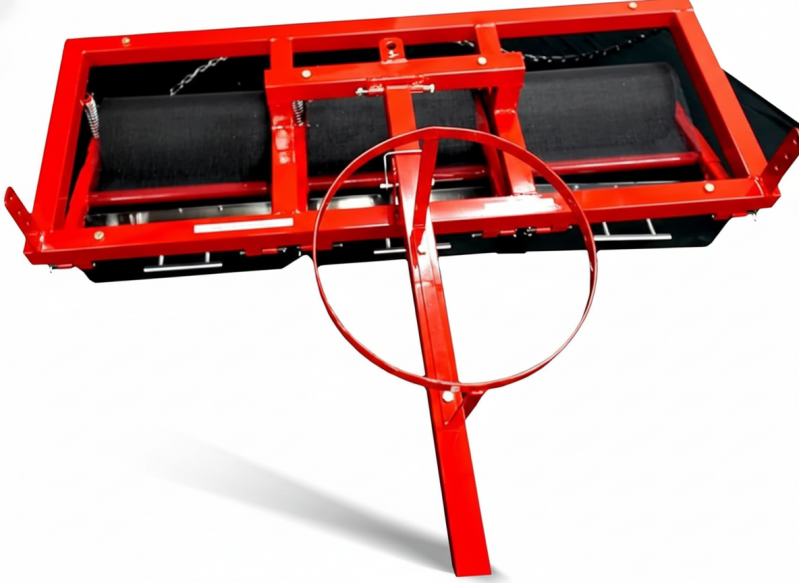
🚜 Sticker Burr Roller X-Large Pull-Behind Remover
Best For: Groundskeepers and facility operators responsible for larger areas affected by loose sticker burrs. Its tow-behind configuration is relevant to users who have compatible maintenance vehicles and want to cover broader stretches of turf without manually pushing a roller.
Construction: Pull-behind burr-collection assembly designed to operate behind a suitable towing vehicle. The unit uses a rolling pickup system connected to a towable support structure, allowing the operator to guide it over affected ground from the towing vehicle.
Material: Rolling burr-pickup components supported by a towable frame and connection assembly. Sticker Burr Roller's product family uses foam-based pickup surfaces and screen components, although the exact dimensions and replacement-part requirements should be matched to the specific pull-behind configuration.
Performance Feel: The towing arrangement reduces the need to push the equipment manually and allows users to cover larger areas through successive passes. Actual collection depends on travel speed, surface conditions, burr density, and compatibility with the towing equipment.
Ideal Player Type: Athletic facility managers, school maintenance crews, parks departments, and groundskeepers managing larger grass areas. Most relevant to operators who already have access to a suitable riding mower, ATV, or utility vehicle.
Performance Overview: The Sticker Burr Roller X-Large Pull-Behind Remover provides a towable alternative to manually operated burr-collection equipment. Instead of pushing a roller across the affected area, the operator connects the unit to compatible towing equipment and moves it over the ground at an appropriate pace. The rolling pickup system is intended to collect accessible burrs and seed pods during these passes, while the tow-behind format makes it practical to address larger areas without continuous manual pushing. The manufacturer's broader pull-behind lineup uses foam-based pickup technology, but individual models differ in roller dimensions and equipment configurations. Users should therefore confirm the exact hitch arrangement and operating instructions for the selected model. No particular percentage of time saved or guaranteed collection rate can be established without comparable field testing. Its principal advantage over the Original push-style roller is the towing arrangement, which changes how the operator covers large affected areas.
Why It Stands Out:
- Tow-behind operation: Allows burr collection using a compatible maintenance vehicle instead of manual pushing.
- Larger-area application: Designed for situations where the affected turf area extends beyond small localized patches.
- Mechanical pickup method: Collects accessible loose burrs without requiring herbicide application during the rolling process.
- Vehicle-based coverage: Allows operators to organize repeated passes over affected areas using suitable towing equipment.
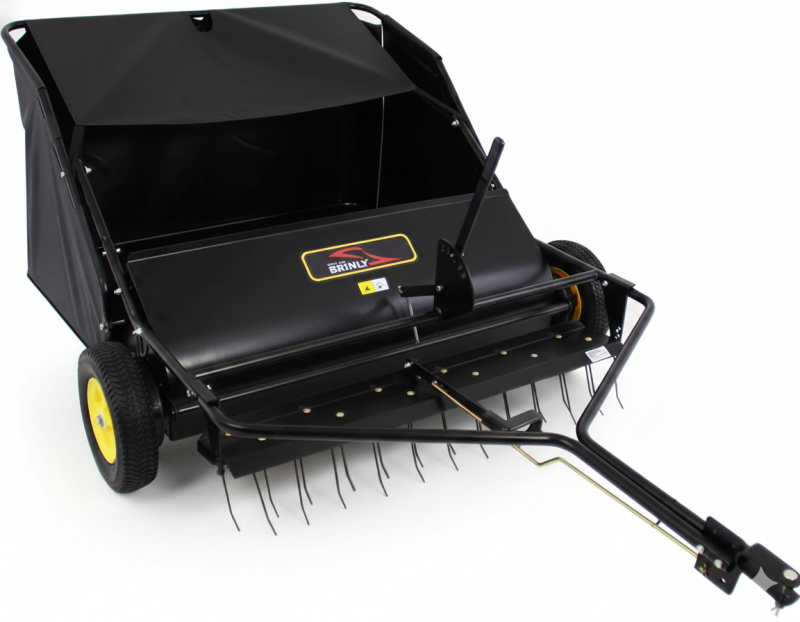
🍂 Brinly STS-42BHDK-A 42" Tow-Behind Lawn Sweeper
Best For: Groundskeepers and facility managers who need a tow-behind tool for collecting loose debris from maintained grass areas. The included dethatcher attachment also makes this configuration relevant to lawn and turf maintenance programs that address thatch buildup.
Construction: Combination 42-inch tow-behind lawn sweeper and dethatcher with a rotating brush system, collection hamper, and adjustable dethatching attachment. The STS-42BHDK series uses an adjustable brush-height mechanism and a tow hitch designed for suitable riding lawn and garden tractors.
Material: Metal frame and dethatcher components, rotating sweeper brushes, and a fabric collection hopper. The inventory-listed configuration includes a hamper windscreen, while the dethatcher uses spring-tine components for working through accumulated turf material.
Performance Feel: The rotating brushes move loose debris into the collection hamper as the unit travels over grass. When the dethatcher is engaged and properly adjusted, its tines work through accumulated thatch; results depend on grass conditions, tine adjustment, and towing speed.
Ideal Player Type: School maintenance teams, athletic facility groundskeepers, parks departments, and property managers maintaining larger grass areas. Appropriate for operators with compatible towing equipment who need both debris collection and periodic dethatching capability.
Performance Overview: The Brinly STS-42BHDK-A 42" Tow-Behind Lawn Sweeper combines debris collection with a dethatcher attachment, offering two different lawn maintenance functions within one tow-behind system. Its rotating brushes collect loose leaves, grass clippings, and other suitable surface debris into a rear collection hamper. The dethatcher attachment uses spring tines to work through thatch, allowing operators to incorporate dethatching into a sweeping session when turf conditions require it. Brinly documents adjustable brush positioning and operating controls for the STS-42BHDK series, which help users configure the machine for different sweeping conditions. The inventory-listed package also identifies a hamper windscreen, an important distinction from descriptions that treat this model as a basic sweeper without additional attachments. Proper setup is essential because incorrect brush or tine positioning can affect collection results and turf condition. For facilities with maintained grass areas and suitable towing equipment, the Brinly provides both surface-debris collection and dethatching capability.
Why It Stands Out:
- 42-inch sweeping width: Provides a defined collection path for grass-area maintenance.
- Integrated dethatcher attachment: Adds a separate function for working through accumulated turf thatch.
- Adjustable brush height: Allows operators to configure sweeping contact for different grass conditions.
- Collection hamper and windscreen: Provides a receiving area for swept debris, with a windscreen included in the listed configuration.
⚡ Performance Differences Between Field Accessories
The first three products address different forms of turf maintenance. The Sticker Burr Roller Original uses manual push operation to collect accessible burrs from smaller affected areas, while the X-Large Pull-Behind model is intended for covering larger areas with compatible towing equipment. Neither is a replacement for a complete weed-management program, since the rollers collect accessible burrs rather than removing the plants themselves. The Brinly STS-42BHDK-A performs a different task, using rotating brushes and a collection hamper to gather loose debris while offering a dethatcher attachment for additional turf maintenance. Choosing between these tools depends on whether burr collection, debris sweeping, or dethatching is the immediate maintenance priority.
The remaining three accessories focus on base hardware and anchor maintenance rather than turf collection. The Champion Sports Dig Out Tool removes accumulated dirt and debris from inside and around anchor openings. Shappy's 12-piece plug set provides visible tassel markers for empty base-anchor sleeves, while the Yaocom curled-style anchors offer replacement ground hardware for compatible installations. None of these products should be treated as a universal solution for every base system, since anchor dimensions and installation methods vary. Groundskeepers comparing additional preparation equipment can explore 🧰 Field Maintenance Tools (2026) for a broader range of options. Teams reviewing base systems and related hardware can also read ⚾ Best Baseball & Softball Bases (2026).
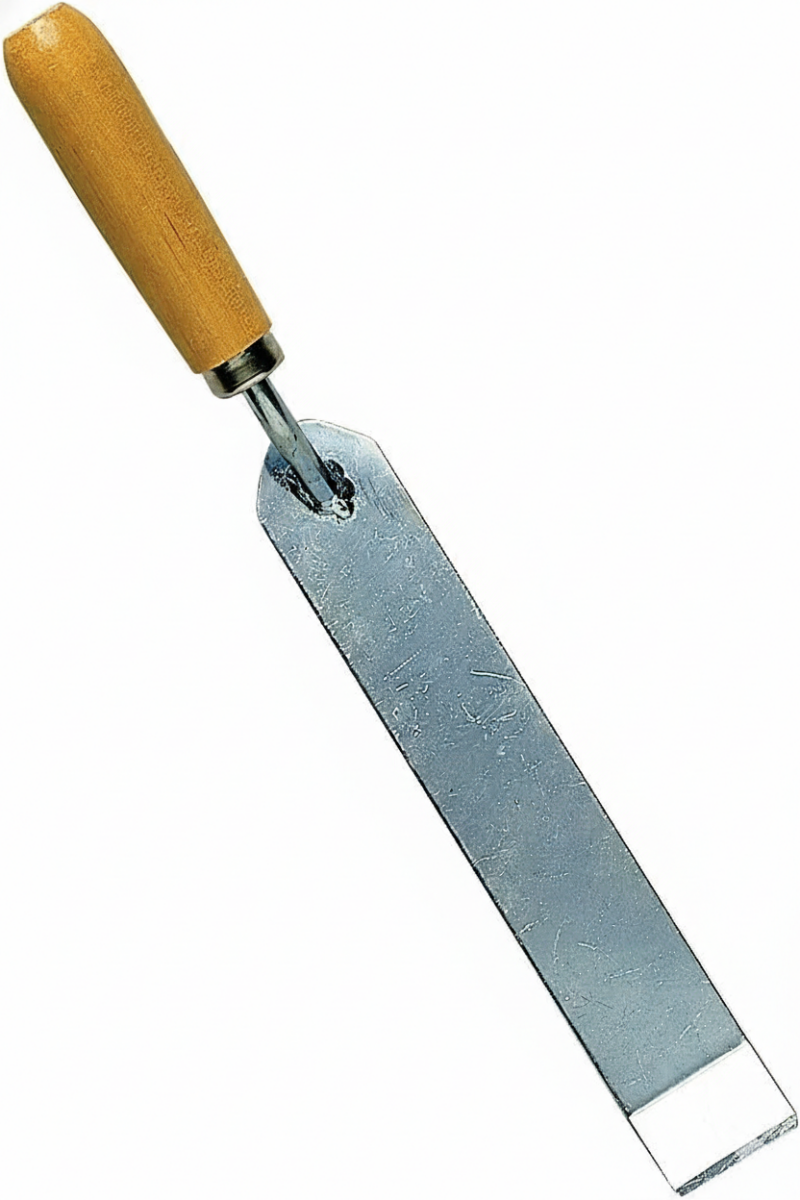
🔧 Champion Sports Baseball Dig Out Tool
Best For: Coaches, groundskeepers, and facility managers who need a dedicated hand tool for cleaning dirt and debris from inside and around recessed baseball or softball base anchors. Particularly useful during routine base removal, inspection, and reinstallation.
Construction: Handheld metal dig-out tool featuring an 8-inch blade with a tapered edge. Champion Sports identifies the tapered design as useful for reaching tight spaces inside and around anchor openings where larger maintenance tools are difficult to use.
Material: Durable metal construction intended for repeated field maintenance tasks. The manufacturer specifies the blade length and tapered-edge design but does not require assumptions about a particular steel grade or specialized protective coating.
Performance Feel: The narrow blade provides controlled access to dirt, mud, and other debris inside recessed anchor areas. Operators can work around the opening and remove accumulated material before checking the condition of the anchor or reinstalling a base.
Ideal Player Type: Groundskeepers, athletic directors, school maintenance teams, and coaches responsible for maintaining fields with recessed base-anchor systems. Most relevant to facilities that routinely remove bases or experience dirt accumulation around their anchor openings.
Performance Overview: The Champion Sports Baseball Dig Out Tool is designed for cleaning the confined spaces inside and around base anchors, where infield dirt, mud, and other debris can accumulate. Champion Sports identifies an 8-inch metal blade with a tapered edge as the tool's primary working feature. This shape allows groundskeepers to reach areas that are difficult to access with standard rakes or larger field maintenance equipment. During base removal and inspection, the tool can be used to loosen and remove accumulated material before checking the condition of the anchor opening. Keeping these areas clean can make inspection and reinstallation easier, although cleaning alone does not repair damaged hardware or establish that a base has been installed correctly. The tool's narrow design and dedicated application distinguish it from larger infield grooming equipment. For facilities maintaining recessed base anchors, it provides a practical addition to routine inspection and cleaning work.
Why It Stands Out:
- 8-inch metal blade: Provides a defined working length for reaching inside anchor openings.
- Tapered-edge design: Helps access confined areas where dirt and debris collect.
- Dedicated anchor cleaning: Addresses a maintenance task that larger drag mats and rakes are not designed to perform.
- Handheld operation: Allows targeted cleaning during base removal, inspection, and reinstallation.
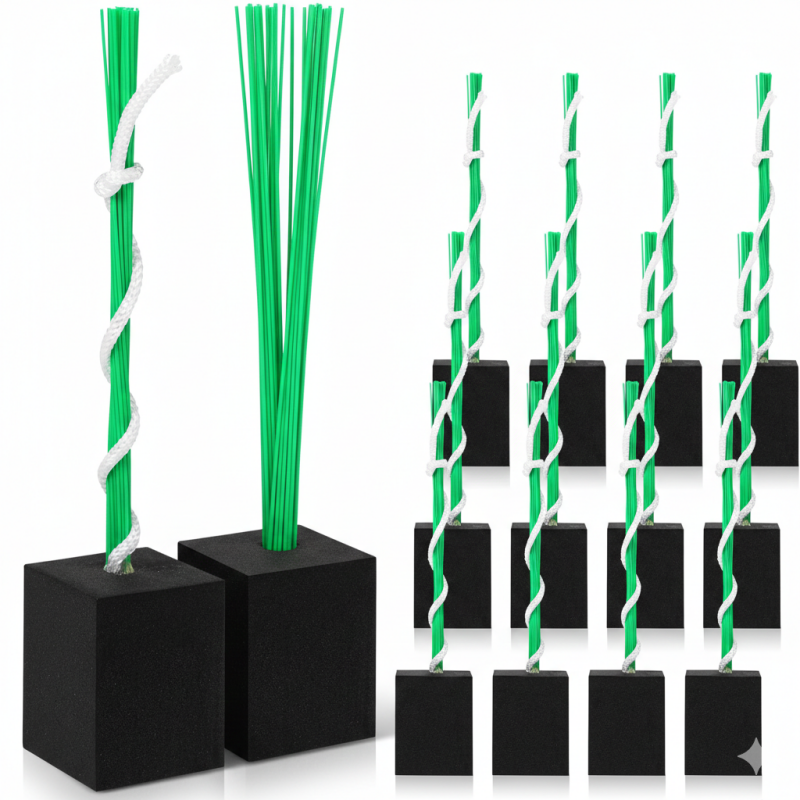
🎏 Shappy 12 Pieces Baseball Base Plugs
Best For: Baseball and softball groundskeepers who want a set of identifiable plugs for empty base-anchor sleeves. The visible tassel design is especially useful when crews need to locate anchor positions during field setup or maintenance.
Construction: Set of 12 sleeve plugs featuring plug bodies and bright tassel markers. The matching Shappy product configuration also includes accessories for handling the plugs, with the tassels extending above the plug bodies to make their positions easier to identify.
Material: The matching Shappy 12-piece configuration specifies EVA plug bodies and PBT tassel fibers. These materials form the sleeve-insert component and the visible marker, rather than a solid, flush-fitting cap with no material extending above ground level.
Performance Feel: The plugs identify empty anchor locations when inserted into compatible sleeves. The tassels provide a visible reference for locating and retrieving the plugs during setup, although their suitability depends on sleeve fit and the activities taking place on the field.
Ideal Player Type: Youth league field crews, school maintenance staff, coaches, and facility managers responsible for removing and reinstalling bases. Particularly suitable for organized maintenance routines where locating empty anchor sleeves quickly is important.
Performance Overview: The Shappy 12 Pieces Baseball Base Plugs provide visible markers for empty base-anchor sleeves during field preparation and maintenance. The matching Shappy configuration uses EVA plug bodies with PBT tassels, creating a two-part design that both occupies the sleeve opening and makes its location easier to identify. The tassels are an important product feature because they extend above the plug rather than forming an entirely flush, invisible surface. A 12-piece package provides multiple plugs for facilities maintaining several anchor locations or keeping replacement units available. The plugs should be matched to the diameter and design of the installed sleeve system, since compatibility cannot be assumed from the number of pieces in the package. They are also not a substitute for inspecting the underlying anchor or evaluating whether the field is appropriate for play while bases are removed. Their principal advantage is the combination of sleeve identification, removable plug construction, and visible tassel markers for organized field maintenance.
Why It Stands Out:
- 12-piece package: Provides multiple plugs for field setups and replacement needs.
- Visible tassel markers: Make empty anchor locations easier to identify during maintenance.
- EVA and PBT construction: Uses the plug-body and tassel materials specified for the matching Shappy configuration.
- Removable sleeve inserts: Supports base removal and reinstallation routines when used with compatible anchor sleeves.
⚓ Yaocom Curled Style Baseball Ground Anchors
Best For: Groundskeepers, coaches, and facility managers who need replacement ground-anchor hardware for compatible baseball or softball base installations. Most appropriate when existing components are damaged, missing, or being replaced as part of a planned installation.
Construction: Curled-style ground-anchor design listed at approximately 1.8 inches by 8 inches. The shaped anchor body is intended for use as part of a compatible base attachment system, with installation requirements determined by the existing base hardware and field conditions.
Material: Metal anchor construction with a shaped end or shaft section. The product is identified by its curled-style design and dimensions; the exact metal grade, surface finish, and structural strength should not be assumed from similarly sized anchors sold under different configurations.
Performance Feel: When correctly sized and installed, ground-anchor hardware provides an attachment point for the compatible base system. The quality of the installation depends on the fit between components, ground conditions, installation method, and subsequent inspections.
Ideal Player Type: School athletic departments, recreational leagues, groundskeepers, and facility managers maintaining anchored-base installations. Particularly relevant to users replacing existing hardware who can confirm the required dimensions and compatibility before installation.
Performance Overview: The Yaocom Curled Style Baseball Ground Anchors provide replacement hardware for baseball or softball field installations that use compatible ground-anchor systems. The inventory-listed model is described as a curled-style anchor measuring approximately 1.8 by 8 inches, giving buyers a starting point for checking dimensional compatibility. The shaped construction distinguishes it from a plain, unmodified tube, but the available product information does not establish a measurable holding-strength advantage over every straight or differently shaped anchor. Proper installation remains essential because anchor performance depends on the surrounding soil, the connected base hardware, and the condition of the installed components. Groundskeepers should inspect existing equipment and confirm the required dimensions before selecting replacements. These anchors are intended to serve as components within an installation system rather than guaranteeing that a base will remain fixed under every possible playing condition. Their main value is providing a specific replacement-anchor format for compatible field hardware.
Why It Stands Out:
- Curled-style construction: Provides a shaped anchor configuration for compatible base installations.
- 1.8-by-8-inch listed size: Gives buyers a dimensional specification to compare with existing hardware.
- Replacement hardware application: Supports planned anchor replacement or installation work.
- Base-system compatibility focus: Can be evaluated against the required sleeve, base attachment, and installation specifications.
📊 Field Accessories Snapshot (2026)
- 🌵 Sticker Burr Roller Original Remover — Push-style foam roller with a conveyor screen and collection basket for accessible sticker burrs.
- 🚜 Sticker Burr Roller X-Large Pull-Behind Remover — Tow-behind burr-collection tool for larger affected areas with compatible towing equipment.
- 🍂 Brinly STS-42BHDK-A 42" Tow-Behind Lawn Sweeper — 42-inch sweeper with a debris collection hamper and dethatcher attachment.
- 🔧 Champion Sports Baseball Dig Out Tool — Handheld 8-inch tapered metal tool for cleaning inside and around base anchors.
- 🎏 Shappy 12 Pieces Baseball Base Plugs — Sleeve plugs with visible tassel markers for identifying empty base-anchor locations.
- ⚓ Yaocom Curled Style Baseball Ground Anchors — Replacement ground hardware with a listed 1.8-by-8-inch curled-style design.
❓ FAQ
What is the best way to remove sticker burrs from a baseball field?
-
Mechanical burr rollers can collect loose burrs and seed pods from accessible turf areas. Push-style models are useful for smaller patches, while tow-behind designs are intended for broader coverage.
-
Burr rollers do not kill existing weeds or reliably remove seeds buried in soil. Effective management may also require mowing, repeated collection, and appropriate turf-care measures.
What is the difference between a push burr roller and a pull-behind model?
-
A push roller is operated manually, giving the user direct control over smaller areas without requiring a vehicle. It is useful for localized burr problems and accessible playing surfaces.
-
A pull-behind roller connects to compatible towing equipment and allows the operator to cover larger areas. Actual collection efficiency depends on the model, ground conditions, and operating speed.
Can a lawn sweeper be used on a baseball or softball outfield?
-
A tow-behind lawn sweeper can collect suitable loose debris from maintained grass areas. The Brinly STS-42BHDK-A also includes a dethatcher attachment for working through accumulated thatch.
-
Brush height, dethatcher settings, towing speed, and turf conditions must be considered. Incorrect adjustment may reduce collection effectiveness or disturb the grass surface.
What are baseball base plugs used for?
-
Base plugs occupy empty anchor sleeves when bases are removed. Shappy's tassel-equipped design also makes those locations easier for maintenance crews to identify.
-
Plugs must fit the installed sleeve system and be appropriate for the intended field activity. Visible tassel plugs should not be described as completely flush or assumed safe for unrestricted gameplay.
What does a baseball dig-out tool remove?
-
A dig-out tool removes dirt, mud, and other debris from inside and around recessed base anchors. The Champion Sports model has an 8-inch tapered metal blade for reaching confined areas.
-
Cleaning makes the anchor area easier to inspect and maintain, but it does not repair damaged hardware. Worn or incompatible components must be addressed separately.
How do I choose replacement baseball ground anchors?
-
Compare the replacement anchor's dimensions and connection design with the existing base system. The Yaocom curled-style anchors in this guide are listed at approximately 1.8 by 8 inches.
-
Confirm compatibility and follow the appropriate installation instructions before field use. Anchor security depends on correct installation, soil conditions, and the condition of connected hardware.
🧢 Final Thoughts
Choosing the right baseball field accessories begins with identifying the maintenance tasks your facility actually needs to perform. The Sticker Burr Roller Original provides a manually operated collection option, while the X-Large Pull-Behind version is intended for larger affected turf areas. Brinly's 42-inch sweeper combines loose-debris collection with a dethatcher attachment, serving a different purpose from burr-specific equipment. The Champion Sports Dig Out Tool helps crews clean recessed anchor areas, Shappy's visible tassel plugs help identify empty sleeves, and Yaocom's curled-style anchors provide a replacement-hardware option for compatible base systems. Each product addresses a particular maintenance requirement rather than replacing an entire field-care program.
A useful maintenance toolkit is built around the facility's playing surface, existing hardware, available equipment, and regular inspection routine. Buyers should verify product dimensions and compatibility before purchasing, especially when selecting tow-behind attachments or components that connect to installed base systems. Maintaining these areas can support better field preparation, but no individual accessory guarantees injury prevention, regulation compliance, or consistently perfect playing conditions. For more information on preparing the infield surface, explore 🧰 Infield Drag Mats & Groomers (2026). For additional baseball and softball equipment reviews, maintenance recommendations, and buying guides, visit 📝 Diamond Sports Equipment Blog & Gear Reviews.
Add comment
Comments