The composite vs alloy decision is the slowpitch bat conversation that recreational and competitive players get wrong more consistently than any other construction variable in the softball equipment market — and the cost of getting it wrong compounds across every at-bat of a season that doesn't come back. Composite and alloy slowpitch bats are not quality tiers where one material automatically outperforms the other — they are fundamentally different construction philosophies that deliver specific performance characteristics matched to specific player profiles, practice environments, league schedules, and competitive use cases that no single construction type serves equally well across every situation. Composite slowpitch bats are built from layered carbon fiber that requires 150 to 200 swings of break-in before the barrel reaches its peak performance window — delivering a higher performance ceiling at full break-in than alloy alternatives at the same certification level, a softer more forgiving feel on mishits through the barrel's natural vibration dampening, and the barrel responsiveness that experienced competitive slowpitch players consistently seek when their practice volume and temperature environment support what composite construction demands before use. Alloy slowpitch bats are built from aluminum alloy in a construction that delivers immediate barrel readiness from the first swing, consistent performance in cold weather conditions where composite barrels become brittle and crack-prone, direct crisp feedback on every contact point, and a durability standard that holds up through the high-volume batting practice and recreational game use that slowpitch schedules put on a bat across a full season. Neither construction is universally correct — and the player who picks based on what the guy in the next cage is swinging rather than what actually fits their situation is making an equipment decision that works against them every time they dig in. Players working through the full slowpitch bat selection picture should check out 🦇 Slowpitch Bats by Association (2026) for the certification framework that governs which bat is legal in their specific league and 🥎 The Complete Slowpitch Bat Guide (2026) for the complete market overview across every construction type and player profile.
⚾ What You Should Know About Composite vs Alloy Slowpitch Bats
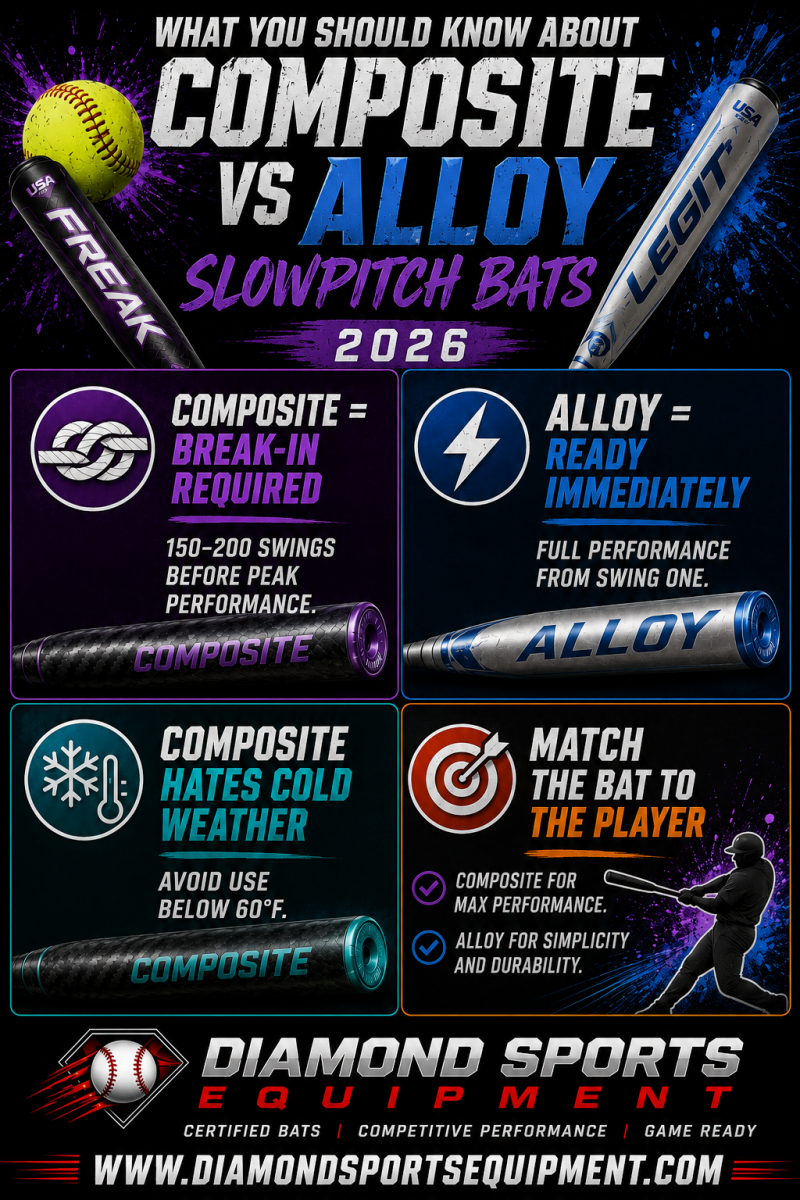
🪢 Composite Slowpitch Barrels Require Break-In Before Reaching Peak Performance
Composite slowpitch barrels are built from layered carbon fiber that starts tightly bound from the factory and needs repeated contact to loosen and flex to peak responsiveness — the 150 to 200 swing break-in period is not optional and cannot be rushed through a pitching machine without risking permanent barrel damage. Players who skip break-in or complete it during league games rather than controlled batting practice are paying a composite price point for alloy-level performance during the competitive windows that matter most.
⚡ Alloy Slowpitch Bats Are Game-Ready From the First Swing
Alloy slowpitch barrels are formed from aluminum alloy in a structure that requires zero break-in — the barrel performs at full capacity on the first swing of the first game with no management timeline, no temperature restriction during break-in, and no performance ramp-up period that delays competitive readiness. For recreational players who pick up a new bat close to the start of a league season or whose Tuesday night schedule doesn't include consistent batting practice volume, alloy's immediate readiness is a practical advantage that no composite barrel can match regardless of performance ceiling.
🌡️ Temperature Splits Cleanly Between Construction Types
Composite slowpitch barrels should not be used below 60 degrees Fahrenheit — the layered carbon fiber becomes brittle in cold conditions, barrel responsiveness drops significantly, and the risk of cracking on mishits increases enough that most manufacturers void warranties on cold-weather composite damage. Alloy barrels have no cold weather restriction and perform consistently across the full temperature range that spring and fall slowpitch recreational and tournament schedules produce across most climates.
🎯 Matching Construction to the Player's Actual Situation
Composite construction rewards the competitive slowpitch player whose practice volume supports break-in, whose league schedule runs in warm weather, and whose swing development is at the stage that benefits most from a higher performance ceiling and forgiving barrel feel on mishits. Alloy construction rewards the recreational player who needs immediate readiness, competes in variable temperature conditions, and benefits more from the direct feedback that aluminum contact delivers than from the dampened feel that composite construction produces across every swing.
🏆 Best Composite vs Alloy Slowpitch Bats for 2026
These six slowpitch bats represent both construction philosophies across every performance tier — three composite designs built for the competitive slowpitch player whose practice environment and schedule support the composite investment, and three alloy designs built for the player who needs immediate readiness, cold weather durability, and honest contact feedback from the first swing to the last out.
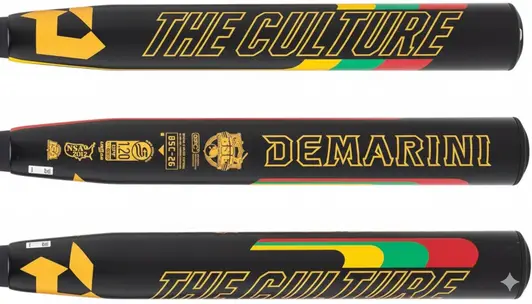
💣 DeMarini 2026 The Culture 13" End Loaded USSSA Slowpitch Softball Bat
Best For: Competitive USSSA slowpitch power hitters whose practice volume, warm weather schedule, and rotational strength support the full composite end-loaded investment that The Culture's construction demands before reaching its performance ceiling.
Construction: Two-piece composite with DeMarini's 13-inch end-loaded barrel — a construction built around the power-first philosophy that drives barrel momentum through the zone for hitters whose rotational mechanics and swing speed are developed enough to drive that extra barrel weight consistently on quality contact.
Material: DeMarini composite barrel and handle construction delivering the combination of end-loaded barrel momentum, large hitting surface, and vibration dampening that The Culture produces for the competitive USSSA slowpitch power hitter at full break-in.
Performance Feel: Powerful and barrel-heavy — The Culture delivers the contact experience that competitive slowpitch power hitters who generate elite rotational speed describe as the correct feel for their approach: barrel momentum through the zone, a large 13-inch hitting surface that rewards aggressive contact in the barrel, and the end-loaded swing weight that maximizes exit velocity for hitters whose mechanics are built around driving the ball with authority.
Ideal Player Type: Competitive USSSA slowpitch power hitters whose rotational strength and swing mechanics support driving end-loaded composite barrel weight through the zone consistently, whose practice volume covers the full composite break-in window before league and tournament play, and whose competitive schedule runs in warm weather conditions that protect the composite barrel from cold-weather cracking risk.
Performance Overview: The DeMarini 2026 The Culture 13" End Loaded USSSA Slowpitch Softball Bat is DeMarini's power-first composite statement in the competitive USSSA slowpitch market — a two-piece composite design built around a 13-inch end-loaded barrel that delivers the maximum barrel surface area and end-loaded momentum that competitive slowpitch power hitters specifically seek when they invest in premium composite construction at the USSSA certification level. The 13-inch barrel gives The Culture one of the largest hitting surfaces in the competitive slowpitch composite category — a construction choice that rewards the power hitter who makes contact in the barrel consistently and punishes the hitter whose swing mechanics aren't developed enough to keep the barrel in the zone through the full contact window that a 13-inch design demands. The end-loaded swing weight concentrates mass at the barrel end of the design, which generates higher barrel momentum on well-struck balls for hitters whose rotational mechanics can drive that weight through the zone — but demands the physical development and swing consistency that lighter balanced designs don't require from the players swinging them. Two-piece composite construction dampens the vibration from mishits before it reaches the hands, which protects hand comfort across the full competitive day that USSSA tournament schedules produce. Full composite break-in is required before The Culture reaches the performance ceiling that its construction is built around — and cold weather use below 60 degrees risks the barrel damage that composite construction carries at every price tier.
Why It Stands Out:
- DeMarini's 13-inch end-loaded composite barrel delivers the largest hitting surface and maximum barrel momentum combination in the competitive USSSA slowpitch power hitter category — a construction whose scale rewards the hitter who makes consistent barrel contact and whose physical development supports driving that end-loaded weight through the zone on every quality swing.
- Two-piece composite construction dampens vibration on mishits throughout the contact zone — protecting hand comfort across the full competitive days and multi-game USSSA tournament formats that recreational and league play don't produce at the same physical and mental fatigue level.
- End-loaded swing weight maximizes exit velocity on well-struck balls for hitters whose rotational mechanics are developed enough to drive the barrel weight consistently — the power performance advantage that physically mature competitive slowpitch players specifically seek above the balanced swing weight profiles that recreational designs optimize for.
- DeMarini's construction quality and power-first engineering reputation in the competitive slowpitch market give tournament players confidence in the barrel consistency and swing weight accuracy that The Culture delivers across a full USSSA competitive season.
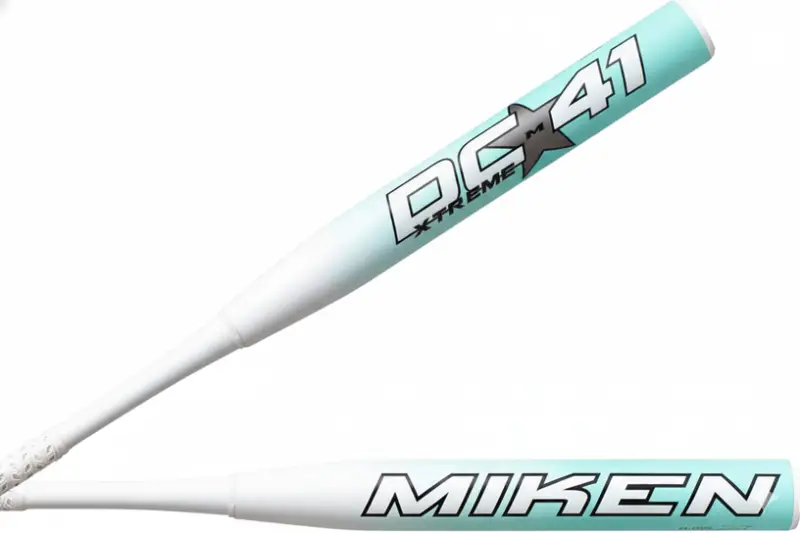
🔬 Miken 2025 DC41 Slowpitch Softball Bat
Best For: Competitive slowpitch players who want Miken's premium composite construction in a balanced swing profile — the player whose approach at the plate prioritizes consistent barrel control and gap coverage over end-loaded barrel momentum, and who wants the DC41's composite performance ceiling in a swing weight that keeps bat speed high through the full contact zone.
Construction: Two-piece composite with Miken's premium barrel engineering — a balanced construction built around the swing weight distribution that competitive slowpitch contact hitters and gap power players require to cover the zone consistently, delivering composite barrel responsiveness and vibration dampening alongside a balance point that keeps swing speed high through the full plate coverage that a balanced approach demands.
Material: Miken premium composite barrel and handle construction providing the combination of barrel responsiveness, balanced swing weight distribution, and contact feel that the DC41 delivers to the competitive slowpitch player whose approach is built around consistent hard contact across the full zone — composite fiber materials that produce the performance ceiling composite construction reaches at peak break-in in a swing profile matched to balanced plate coverage.
Performance Feel: Premium and balanced — the DC41 delivers the composite contact experience that competitive slowpitch players whose approach prioritizes gap power and consistent contact describe as the correct feel for their hitting identity: responsive on well-struck balls at peak break-in, forgiving on mishits through the two-piece composite connection's vibration dampening, and balanced enough through the zone that barrel control stays consistent across the full range of pitch locations that competitive slowpitch pitching produces.
Ideal Player Type: Competitive slowpitch players at the recreational league and tournament level whose practice volume and warm weather schedule support the composite investment, whose plate approach prioritizes consistent hard contact and gap coverage over end-loaded barrel momentum, and who want Miken's premium composite construction and performance reputation in a balanced swing profile that serves their contact-first hitting identity.
Performance Overview: The Miken 2025 DC41 Slowpitch Softball Bat is built around the balanced composite philosophy that competitive slowpitch players who generate their offensive production from consistent hard contact specifically seek — a two-piece composite design whose balance point keeps the swing weight centered and bat speed high enough for the broadest range of competitive slowpitch players to benefit from the construction without the swing weight demands that end-loaded designs introduce for hitters whose rotational strength isn't built around driving maximum barrel weight through the zone. The DC41's premium composite barrel delivers the vibration dampening and barrel responsiveness that define composite slowpitch performance at the competitive level — the soft forgiving feel on mishits that composite's natural vibration dampening produces and the responsive barrel feel on quality contact that the composite fiber's peak performance window delivers after the break-in process is properly completed. Miken's engineering behind the DC41 gives competitive slowpitch players the brand quality and construction consistency that the Miken name communicates in the slowpitch bat market — a design whose balanced construction philosophy makes it one of the more versatile composite options for the player who competes across multiple formats and governing bodies at the recreational and tournament level.
Why It Stands Out:
- Miken's premium balanced composite construction keeps the swing weight centered rather than barrel-heavy — directly supporting the plate coverage, bat speed, and contact consistency that gap-first slowpitch hitters require to produce hard contact across the full zone rather than sacrificing zone coverage for pull-side barrel momentum.
- Two-piece composite barrel delivers the vibration dampening and performance ceiling that premium composite construction produces at peak break-in — the soft forgiving feel on mishits and responsive barrel feel on quality contact that competitive slowpitch players who invest in composite specifically seek above the direct feedback of alloy alternatives.
- Miken's construction quality and performance reputation in the competitive slowpitch market give competitive players and their teammates confidence in the DC41's barrel consistency and swing weight accuracy — a brand investment backed by Miken's engineering standards in the slowpitch equipment category.
- Balanced swing weight profile accessible to the broadest range of competitive slowpitch player development stages — from the recreational league player whose rotational mechanics are still developing through the tournament-level competitor whose swing is fully mature, rather than limiting peak performance to the elite bat speed that end-loaded alternatives require.
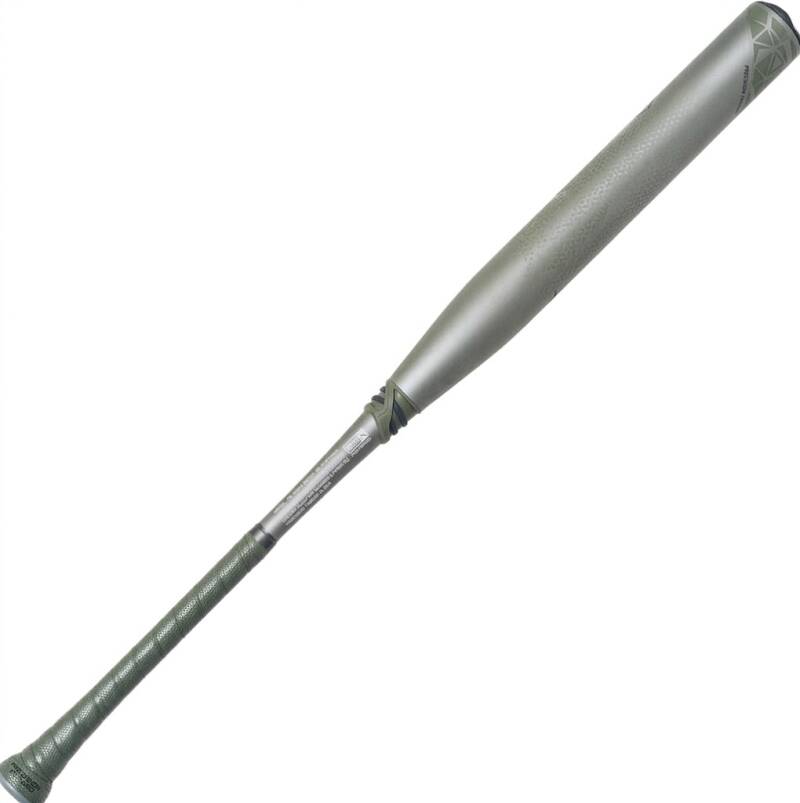
🪓 Axe Fury Bravo 2-Piece Composite USSSA Slowpitch Softball Bat 13" Barrel Balanced
Best For: Competitive USSSA slowpitch players who want premium composite barrel performance in a 13-inch balanced design with Axe's distinctive handle format — the player whose swing mechanics benefit from the directional grip and single-sided barrel contact that the Axe handle delivers, and who wants composite performance ceiling alongside the biomechanical hitting advantages that Axe's handle philosophy communicates.
Construction: Two-piece composite with Axe's 13-inch balanced barrel and asymmetrical axe handle format — a design that combines premium composite barrel performance with Axe's distinctive handle philosophy, delivering the composite barrel's trampoline effect and vibration dampening alongside the directional grip and wrist angle that the axe handle format produces for slowpitch hitters whose swing mechanics benefit from the biomechanical advantages the asymmetrical design delivers.
Material: Premium composite barrel and handle construction with Axe's asymmetrical handle material — composite fiber barrel materials that deliver the barrel responsiveness and vibration dampening that Axe's Fury Bravo composite construction produces at peak break-in, alongside the axe handle's distinctive grip material that provides the directional contact and single-sided barrel wear pattern that Axe's handle philosophy is built around.
Performance Feel: Premium composite with distinctive handle feedback — the Fury Bravo delivers the composite contact experience alongside the directional grip feel that the axe handle format produces, giving competitive slowpitch players the soft forgiving feel on mishits and explosive barrel response at peak break-in that composite construction delivers alongside the wrist angle and grip control that Axe's asymmetrical handle design adds above the conventional round handle format.
Ideal Player Type: Competitive USSSA slowpitch players whose swing mechanics specifically benefit from the directional grip and biomechanical advantages that Axe's handle format delivers — players who want premium composite barrel performance at the USSSA certification level alongside the handle philosophy that Axe's design communicates, whose practice volume and warm weather schedule support the composite break-in investment, and whose commitment to the axe handle format is based on the biomechanical hitting advantages rather than novelty.
Performance Overview: The Axe Fury Bravo 2-Piece Composite USSSA Slowpitch Softball Bat 13" Barrel Balanced combines premium composite barrel performance with Axe's distinctive handle philosophy — delivering the composite barrel's performance ceiling alongside the biomechanical hitting advantages that the axe handle format produces for the competitive slowpitch player whose swing mechanics are matched to the directional grip and single-sided barrel contact that Axe's design is built around. The 13-inch balanced barrel gives the Fury Bravo one of the larger hitting surfaces in the competitive USSSA slowpitch composite category while maintaining the balanced swing weight that keeps bat speed high for the broadest range of competitive slowpitch players — a construction choice that delivers the large barrel surface area of an end-loaded design in a swing profile that doesn't demand the elite rotational strength that end-loaded alternatives require from every player swinging them. Axe's handle philosophy is based on the biomechanical argument that the natural wrist angle and grip position that an axe handle produces more closely matches the swing mechanics that hitting coaches teach than the conventional round handle format — a philosophy that has been adopted by a meaningful number of competitive slowpitch players whose results with the format have confirmed the biomechanical advantages the design communicates. Full composite break-in is required before the Fury Bravo reaches its peak performance window, and the standard cold weather restriction that composite construction carries applies at every temperature below the composite use threshold.
Why It Stands Out:
- Premium 13-inch balanced composite barrel delivers the large hitting surface area that competitive USSSA slowpitch players seek in a swing weight profile that keeps bat speed high across the full zone — the performance combination that end-loaded designs achieve at the cost of swing speed that balanced construction preserves for players across the full range of competitive slowpitch development stages.
- Axe's distinctive handle format delivers the directional grip and biomechanical hitting advantages that the asymmetrical handle design produces for slowpitch players whose swing mechanics benefit from the wrist angle and grip control that conventional round handles don't provide.
- Single-sided barrel contact zone extends barrel life by concentrating wear on the same face of the barrel on every swing — a practical durability advantage that round handle bats don't produce because hitters don't consistently contact the ball on the same barrel face across every swing.
- Axe's construction quality and handle philosophy applied to the premium composite USSSA slowpitch format — brand identity and engineering commitment that give competitive slowpitch players and coaches confidence in a handle design backed by a biomechanical philosophy rather than a novelty aesthetic.
⚡ Performance Differences Between Composite vs Alloy Slowpitch Bats
The most significant performance differences between the slowpitch bats in this guide split cleanly along the composite vs alloy construction line — and understanding where those differences matter most for the specific player, practice environment, and competitive schedule determines which construction delivers the correct investment. The DeMarini 2026 The Culture 13" End Loaded USSSA Slowpitch Softball Bat, Miken 2025 DC41 Slowpitch Softball Bat, and Axe Fury Bravo 2-Piece Composite USSSA Slowpitch Softball Bat 13" Barrel Balanced represent the composite performance tier — designs whose ceiling at peak break-in exceeds what alloy alternatives at the same certification level produce, but whose cold weather restriction, break-in timeline, and performance management demands create real variables that the alloy side of this guide eliminates entirely. The Easton Hammer Slowpitch Softball Bat, DeMarini 2025 Steel Slowpitch Softball Bats, and Worth 2025 Bedlam Slowpitch Softball Bat USSSA 12.75" Barrel XL End Load 1-Piece represent the alloy construction tier — designs that are game-ready from the first swing, cold weather safe across the full temperature range that competitive slowpitch produces, and built around the direct contact feedback that recreational players and contact-first competitors use more effectively than the dampened feel that composite construction delivers. Players choosing between construction types based on their swing weight preference should check out ⚖️ End-Loaded vs Balanced Slowpitch Bats for the complete swing weight framework that interacts directly with the composite vs alloy decision. Players focused specifically on maximizing offensive output at the plate should read 💥 Slowpitch Bats for Power Hitters (2026) for the power-oriented picks across both construction philosophies.
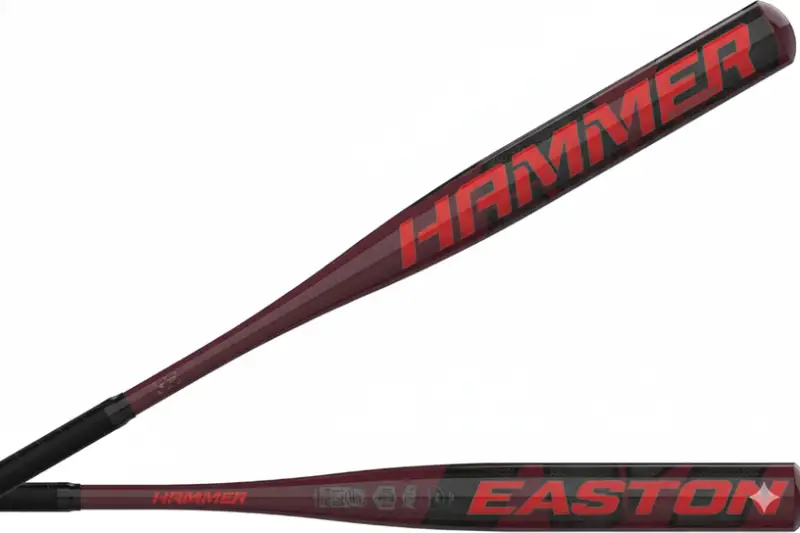
🔨 Easton Hammer Slowpitch Softball Bat
Best For: Recreational and entry-level competitive slowpitch players who need immediate alloy barrel readiness, cold weather performance, and durable construction without the break-in investment, temperature management, or price premium that composite alternatives require at the same certification level.
Construction: One-piece alloy with Easton's aluminum alloy barrel — a single-piece construction that provides direct immediate barrel response from the first swing with no connection system between barrel and handle, delivering crisp feedback on every contact point and consistent performance that alloy's material properties maintain across every temperature condition the bat encounters throughout the season.
Material: Easton aluminum alloy barrel construction delivering consistent wall thickness, reliable barrel durability, and honest contact feedback in a material specification matched to the recreational and entry-level competitive slowpitch market — alloy that performs reliably from the first swing without the temperature restriction, break-in management, or cracking risk that composite alternatives introduce at every price tier.
Performance Feel: Direct and consistent — the Hammer delivers the alloy contact experience that recreational and entry-level competitive slowpitch players describe as honest and straightforward: crisp feedback on every contact point that tells the player exactly where on the barrel they are making contact, slightly more vibration on off-center hits than two-piece composite alternatives, and performance that stays identical from cold early-season recreational games through warm mid-summer league nights without the temperature management that composite construction requires.
Ideal Player Type: Recreational and entry-level competitive slowpitch players who need a bat that is ready from the first swing of the season without break-in management, whose spring league schedule includes games in temperatures below the composite use threshold that would restrict a composite alternative, and who want Easton's alloy construction and durability in a design that delivers consistent honest performance across every recreational game and batting practice session of a full slowpitch season.
Performance Overview: The Easton Hammer Slowpitch Softball Bat delivers the core alloy advantages — immediate readiness, cold weather performance, and durable construction — in a one-piece design that serves the recreational and entry-level competitive slowpitch market with an honest consistent batting experience that players and their teammates can rely on without managing the variables that composite construction introduces at every stage of the season. The alloy barrel performs at full capacity from the first swing with no break-in period required — a practical advantage that matters most for the recreational player whose Tuesday night league schedule doesn't include the consistent batting practice volume that composite break-in demands, and whose spring season opener in April may produce the cool temperatures that composite barrels can't safely handle without risking the barrel damage that voids manufacturer warranties. One-piece construction produces slightly more vibration on off-center contact than two-piece composite alternatives, which is the honest trade-off that recreational players who benefit more from direct feedback on barrel contact location than from the forgiving dampened feel of a premium composite accept when they choose alloy construction for their actual competitive situation. Easton's construction quality behind the Hammer gives recreational slowpitch players the brand reliability and manufacturing consistency that the Easton name communicates across its equipment line.
Why It Stands Out:
- Easton's alloy construction delivers immediate game-ready performance with no break-in period required — the bat performs identically from the first swing of the first recreational league game as it does on the five hundredth swing of the season, eliminating the break-in timeline management that composite construction requires before competitive use begins.
- Cold weather performance stays consistent across the full temperature range that recreational and competitive slowpitch produces — no 60-degree composite use threshold, no cracking risk on cold-weather mishits, and no warranty concerns about early-season temperature exposure that composite alternatives carry through the spring competitive calendar.
- One-piece alloy construction delivers honest direct feedback on every contact point — giving recreational players the barrel location information that helps them understand where on the barrel they are making contact and how their swing mechanics are translating to ball contact across every at-bat of their competitive season.
- Accessible construction and Easton's brand quality bring reliable alloy performance to the recreational slowpitch market without the premium investment that composite or high-end alloy alternatives require — the correct investment for the player whose competitive level is matched to honest alloy performance rather than the premium construction that higher price tiers deliver.
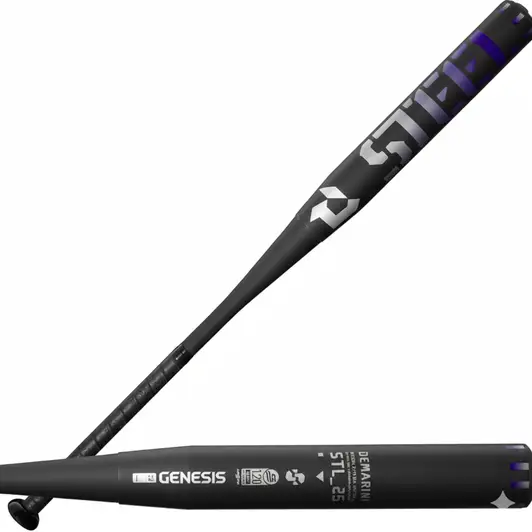
⚙️ DeMarini 2025 Steel Slowpitch Softball Bats
Best For: Recreational and competitive slowpitch players who want DeMarini's alloy construction quality and brand engineering in an immediately game-ready design — the player who chooses alloy intentionally for its cold weather safety, direct feedback, and zero break-in requirement, and who wants DeMarini's manufacturing standards and performance reputation behind the alloy design they swing in competition.
Construction: One-piece alloy with DeMarini's steel alloy barrel — a single-piece alloy construction whose design delivers the direct crisp feedback that contact-first slowpitch players use for real-time plate adjustments, alongside the barrel stiffness and durability that one-piece alloy construction maintains through the high-volume batting practice and game use that a full recreational or competitive slowpitch season demands.
Material: DeMarini steel alloy barrel construction providing the combination of barrel stiffness, consistent wall thickness, and direct contact feedback that DeMarini's alloy specification delivers to the slowpitch player who has made the intentional decision that alloy construction is the correct investment for their practice environment and competitive schedule.
Performance Feel: Stiff and direct — the Steel delivers the alloy contact experience that competitive slowpitch players who choose alloy construction intentionally describe as the correct feedback for their plate approach: crisp and immediate on quality contact, honestly communicative on mishits through the slight vibration that one-piece construction delivers to the hands, and consistent from the first swing to the last with no performance variation based on temperature, break-in stage, or batting practice volume.
Ideal Player Type: Recreational and competitive slowpitch players who have made the intentional decision that alloy construction — immediate readiness, cold weather safety, and direct feedback — is the correct investment for their practice environment and competitive schedule, and who want DeMarini's steel alloy construction quality and brand engineering behind the alloy design they swing in recreational league and tournament competition.
Performance Overview: The DeMarini 2025 Steel Slowpitch Softball Bats bring DeMarini's alloy construction to the slowpitch market — serving the recreational and competitive player who has chosen alloy for its real advantages rather than as a fallback when composite is financially out of reach, and who wants DeMarini's manufacturing standards and performance reputation behind the alloy design they swing across a full slowpitch season. DeMarini's steel alloy specification delivers consistent barrel wall thickness, reliable exit velocity on quality contact, and the direct crisp feedback that slowpitch players use to make real-time adjustments at the plate across a competitive season — the material quality that distinguishes DeMarini's alloy construction from budget alternatives whose lower-grade alloy formulations produce inconsistent barrel response and faster degradation under sustained high-velocity use. One-piece construction means the Steel delivers slightly more vibration on off-center contact than two-piece composite designs — the honest trade-off that competitive players who choose alloy specifically for its direct feedback profile understand and accept when they make the construction decision based on actual fit rather than composite's performance ceiling narrative. No break-in is required, cold weather is not a concern, and DeMarini's construction quality gives slowpitch players the brand credibility and manufacturing consistency that makes the Steel a reliable investment across every game and practice of a full season.
Why It Stands Out:
- DeMarini's steel alloy construction delivers consistent barrel wall thickness and reliable exit velocity on quality contact — the manufacturing quality that distinguishes DeMarini's alloy specification from budget alternatives that sacrifice barrel consistency for lower production cost at the same price tier.
- One-piece alloy construction provides direct crisp feedback on every contact point — giving competitive slowpitch hitters the plate information that contact-first players use for real-time mechanical adjustments and barrel location awareness across every at-bat of a full competitive season.
- No break-in required and no cold weather restriction — the Steel performs at full alloy capacity from the first swing of the first practice and maintains that performance consistency across every temperature condition that recreational and competitive slowpitch schedules produce without the material management that composite construction demands at every price tier.
- DeMarini's construction quality and performance reputation in the competitive softball market give recreational and competitive slowpitch players confidence in the Steel's barrel consistency and durability — a brand investment backed by a manufacturer whose engineering standards in the competitive bat market are as well-established as any name in the sport.
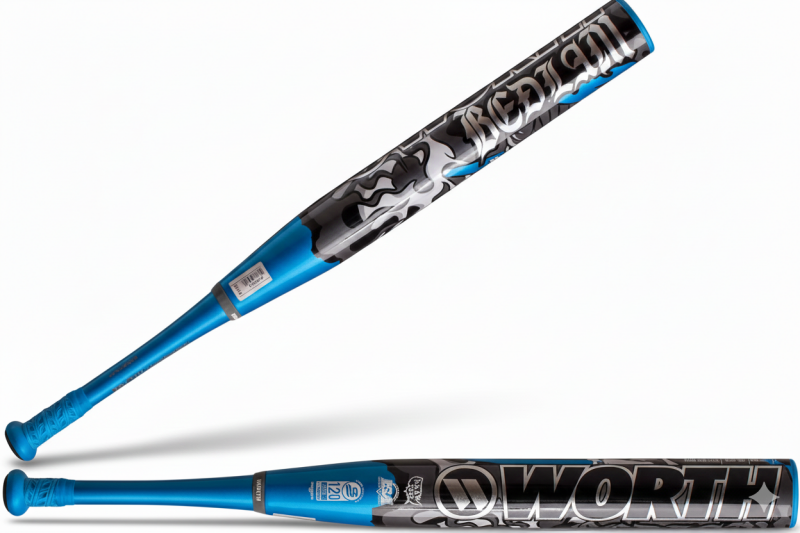
🏟️ Worth 2025 Bedlam Slowpitch Softball Bat USSSA 12.75" Barrel XL End Load 1-Piece
Best For: Competitive USSSA slowpitch power hitters who want alloy end-loaded barrel momentum without the break-in investment or cold weather restriction that composite end-loaded alternatives carry — the physically developed player whose rotational strength supports driving end-loaded alloy barrel weight through the zone and who wants immediate game-ready performance from an end-loaded construction that doesn't require managing a composite break-in timeline.
Construction: One-piece alloy with Worth's 12.75-inch XL end-loaded barrel — a single-piece alloy construction built around the power-first philosophy that concentrates mass at the barrel end for hitters whose rotational mechanics and swing speed are developed enough to drive that extra barrel weight consistently, delivering end-loaded momentum from the first swing without the break-in management or temperature restriction that composite end-loaded alternatives require.
Material: Worth alloy barrel construction providing the combination of end-loaded barrel momentum, large 12.75-inch hitting surface, and direct contact feedback that the Bedlam delivers to the competitive USSSA slowpitch power hitter whose game is built around driving the ball hard and whose practice environment doesn't support the composite break-in investment that end-loaded composite alternatives demand before competitive use.
Performance Feel: Powerful and end-loaded — the Bedlam delivers the alloy contact experience in an end-loaded swing profile that competitive slowpitch power hitters whose physical development supports driving barrel weight through the zone describe as the correct feel for their approach: barrel momentum on quality contact, crisp direct feedback that one-piece alloy construction delivers on every swing, and end-loaded mass that maximizes exit velocity for hitters whose rotational mechanics are built around driving the ball with authority from the first pitch of the first game.
Ideal Player Type: Competitive USSSA slowpitch power hitters whose rotational strength and swing mechanics support driving end-loaded alloy barrel weight through the zone consistently, whose competitive schedule or practice environment doesn't support the composite break-in investment that end-loaded composite alternatives require, and who want alloy's immediate game readiness and cold weather performance in a power-focused end-loaded construction that delivers USSSA competitive performance without the management demands composite construction carries at every price tier.
Performance Overview: The Worth 2025 Bedlam Slowpitch Softball Bat USSSA 12.75" Barrel XL End Load 1-Piece brings the end-loaded power philosophy to the alloy construction side of the USSSA slowpitch market — solving the problem that competitive slowpitch power hitters face when they want end-loaded barrel momentum but don't have the practice volume, warm weather schedule, or break-in timeline management that composite end-loaded alternatives demand before competitive use. The 12.75-inch XL end-loaded alloy barrel delivers meaningful barrel surface area and end-loaded mass concentration at the barrel end in a one-piece construction that is game-ready from the first swing — no 150 to 200 swing break-in period, no 60-degree temperature threshold, and no warranty concerns about cold-weather barrel damage that composite end-loaded alternatives carry through every spring and fall competitive window. One-piece alloy construction delivers the direct crisp feedback on every contact point that power hitters use to understand where in the barrel they are generating their exit velocity — the plate information that helps competitive slowpitch players calibrate their approach across a full game and tournament day. Worth's construction quality behind the Bedlam gives competitive USSSA slowpitch players the brand credibility and manufacturing consistency that the Worth name communicates in the slowpitch equipment category.
Why It Stands Out:
- Worth's 12.75-inch XL end-loaded alloy barrel delivers meaningful barrel surface area and end-loaded momentum concentration in a one-piece construction that is immediately game-ready — the power performance combination that competitive USSSA slowpitch power hitters seek without the composite break-in investment and cold weather restriction that end-loaded composite alternatives carry at every price tier.
- One-piece alloy construction delivers direct crisp feedback on every contact point — giving competitive slowpitch power hitters the plate information they need to understand where in the barrel they are making contact and how their rotational mechanics are translating to exit velocity across a full competitive day.
- No break-in required and no cold weather restriction — the Bedlam performs at full end-loaded alloy capacity from the first competitive swing and maintains that performance consistency across every temperature condition that USSSA tournament and league play produces without the management demands that composite end-loaded construction introduces.
- Worth's construction quality and competitive slowpitch performance reputation give USSSA tournament players confidence in the Bedlam's barrel consistency and end-loaded swing weight accuracy — a competitive alloy investment backed by a manufacturer whose engineering in the slowpitch bat market has served serious players for decades.
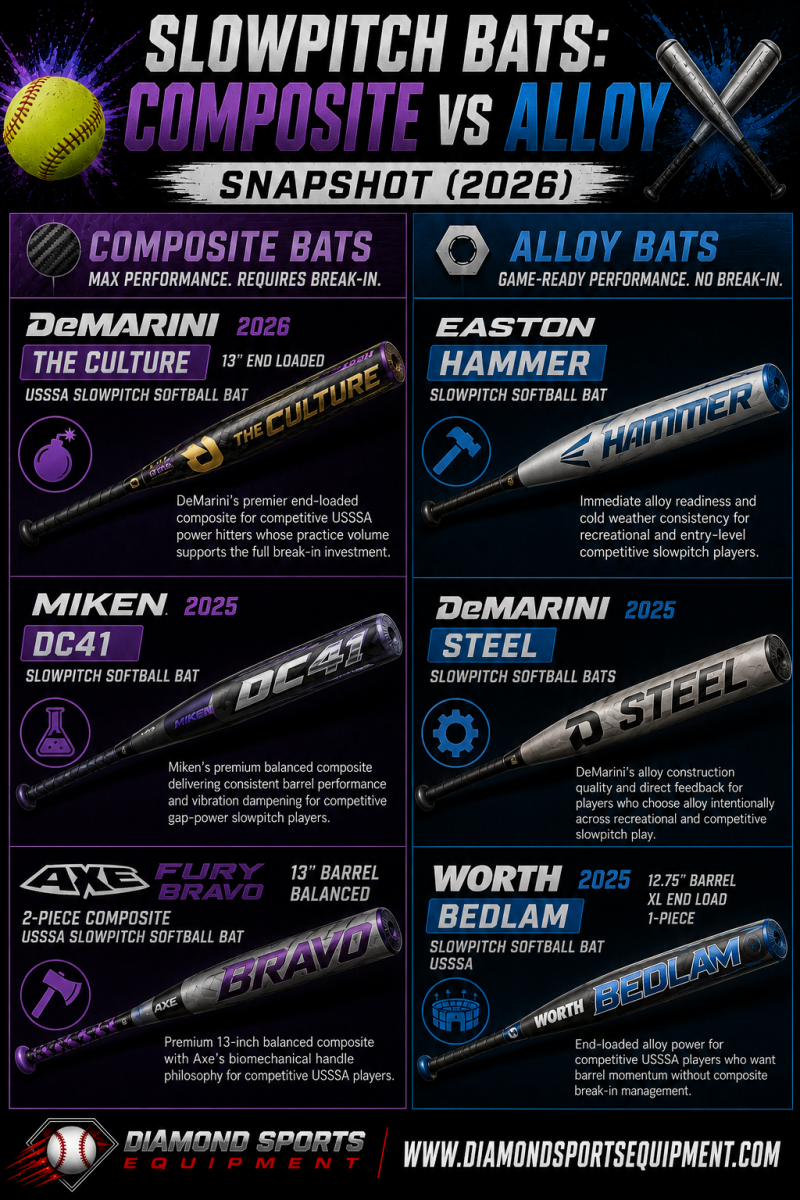
📊 Slowpitch Bats: Composite vs Alloy Snapshot (2026)
- 💣 DeMarini 2026 The Culture 13" End Loaded USSSA Slowpitch Softball Bat — DeMarini's premier end-loaded composite for competitive USSSA power hitters whose practice volume supports the full break-in investment.
- 🔬 Miken 2025 DC41 Slowpitch Softball Bat — Miken's premium balanced composite delivering consistent barrel performance and vibration dampening for competitive gap-power slowpitch players.
- 🪓 Axe Fury Bravo 2-Piece Composite USSSA Slowpitch Softball Bat 13" Barrel Balanced — premium 13-inch balanced composite with Axe's biomechanical handle philosophy for competitive USSSA players.
- 🔨 Easton Hammer Slowpitch Softball Bat — immediate alloy readiness and cold weather consistency for recreational and entry-level competitive slowpitch players.
- ⚙️ DeMarini 2025 Steel Slowpitch Softball Bats — DeMarini's alloy construction quality and direct feedback for players who choose alloy intentionally across recreational and competitive slowpitch play.
- 🏟️ Worth 2025 Bedlam Slowpitch Softball Bat USSSA 12.75" Barrel XL End Load 1-Piece — end-loaded alloy power for competitive USSSA players who want barrel momentum without composite break-in management.
❓ FAQ
Should a slowpitch player use composite or alloy construction?
- Composite construction rewards the competitive slowpitch player whose practice volume supports 150 to 200 swing break-in, whose league and tournament schedule runs in warm weather conditions above 60 degrees, and whose swing development benefits most from a higher performance ceiling and forgiving barrel feel on mishits across a full competitive season
- Alloy construction rewards the recreational and competitive player who needs immediate game readiness from the first swing, competes in variable temperature conditions where composite barrel safety is a concern, and benefits more from direct contact feedback than from the dampened feel that composite construction delivers across every at-bat
How long does it take to break in a composite slowpitch bat?
- Composite slowpitch bats require approximately 150 to 200 controlled swings against a tee or soft toss before the composite fibers loosen and the barrel reaches its peak performance window — rotating the bat a quarter turn between swings distributes contact evenly across the full barrel surface and protects the composite fiber from concentrated wear
- Players who rush break-in through a pitching machine or skip it entirely risk permanent barrel damage and a shortened performance lifespan — the break-in investment is the management cost that composite construction's performance ceiling requires before it delivers what the construction is capable of producing in competition
Can composite slowpitch bats be used in cold weather?
- Composite slowpitch barrels should not be used below approximately 60 degrees Fahrenheit — the layered carbon fiber becomes brittle in cold conditions, barrel responsiveness drops significantly, and the risk of cracking on mishits increases enough that most manufacturers void their warranties on cold-weather composite damage
- Alloy slowpitch bats have no cold weather restriction and maintain consistent performance across the full temperature range that spring and fall slowpitch recreational and tournament schedules produce — making alloy the correct construction choice for players whose leagues begin in cool spring conditions that composite barrels can't handle safely
Are end-loaded composite bats better than end-loaded alloy bats?
- End-loaded composite bats deliver a higher performance ceiling after full break-in than end-loaded alloy alternatives at the same certification level — the composite barrel's trampoline effect and vibration dampening on mishits give physically mature power hitters a performance experience that alloy end-loaded construction cannot fully replicate at peak break-in
- End-loaded alloy bats deliver immediate game readiness, cold weather performance, and honest direct feedback that end-loaded composite alternatives cannot match on day one — for the competitive power hitter whose practice environment doesn't support composite break-in management or whose spring schedule begins in temperatures below the composite use threshold, alloy end-loaded construction is the correct investment regardless of composite's ceiling advantage
🧢 Final Thoughts
The composite vs alloy decision for slowpitch bats comes down to one honest question — does the player's practice environment, league temperature, and break-in timeline actually support what composite construction requires before it delivers what it's capable of? If the answer is yes, the DeMarini 2026 The Culture 13" End Loaded USSSA Slowpitch Softball Bat, Miken 2025 DC41 Slowpitch Softball Bat, and Axe Fury Bravo 2-Piece Composite USSSA Slowpitch Softball Bat 13" Barrel Balanced all represent the composite performance ceiling that the slowpitch market reaches at its best — from The Culture's maximum end-loaded power statement through the DC41's balanced competitive composite and the Fury Bravo's biomechanical handle advantage in a 13-inch balanced design. If the answer is no — or even maybe — the Easton Hammer Slowpitch Softball Bat, DeMarini 2025 Steel Slowpitch Softball Bats, and Worth 2025 Bedlam Slowpitch Softball Bat USSSA 12.75" Barrel XL End Load 1-Piece eliminate the cold weather risk, the break-in timeline pressure, and the performance ramp-up period without asking the player to significantly sacrifice the barrel performance available at the alloy construction level they're actually competing at. Match the construction to the actual practice situation rather than the composite marketing narrative — and the correct slowpitch bat decision becomes straightforward. For players ready to narrow their selection by swing approach, 🎯 Slowpitch Bats for Contact Hitters (2026) covers the contact-oriented picks across both construction types. For everything else across the full baseball and softball equipment market, 📝 Diamond Sports Equipment Blog & Gear Reviews has every guide organized and ready.
Add comment
Comments