Wood training bats strip a swing down to its fundamentals. Without the forgiveness of a modern alloy or composite barrel, every mis-hit shows up instantly — bad hand path, poor sequencing, an early roll of the wrists. That immediate feedback is exactly why hitting instructors and serious players keep a training bat in the bag year-round, separate from whatever certified bat they use in games.
This guide covers six of the best wood training bats for 2026, from one-hand bats that isolate top-hand mechanics to weighted two-hand trainers built for strength and bat speed development. For players still working through their primary bat decision, 🦇 How to Choose a Baseball Bat covers certification, length, and drop weight in full. And for a broader look at everything that belongs in a complete practice setup, ⚒️ Training Tools for Ball Players rounds out the tools worth pairing with a training bat.
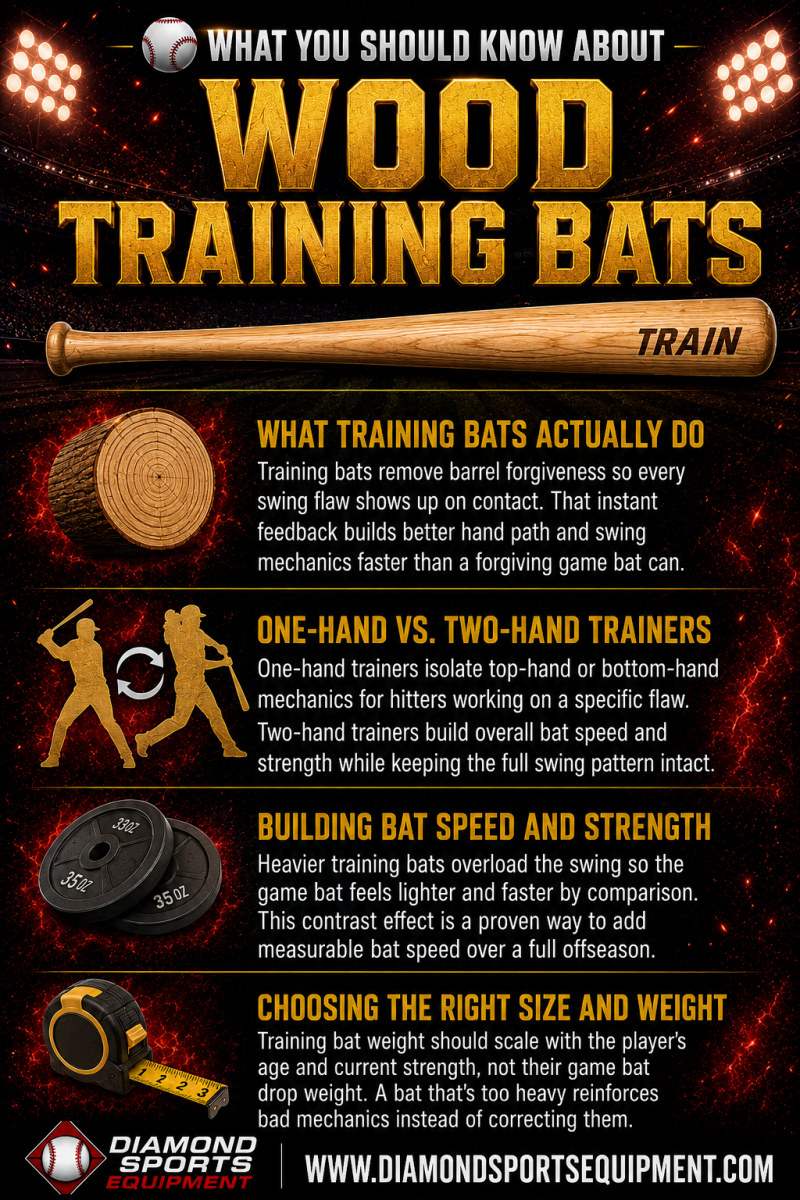
⚾ What You Should Know About Wood Training Bats
🪵 What Training Bats Actually Do
Training bats remove barrel forgiveness so every swing flaw shows up on contact. That instant feedback builds better hand path and swing mechanics faster than a forgiving game bat can.
🔄 One-Hand vs. Two-Hand Trainers
One-hand trainers isolate top-hand or bottom-hand mechanics for hitters working on a specific flaw. Two-hand trainers build overall bat speed and strength while keeping the full swing pattern intact.
🏋️ Building Bat Speed and Strength
Heavier training bats overload the swing so the game bat feels lighter and faster by comparison. This contrast effect is a proven way to add measurable bat speed over a full offseason.
📏 Choosing the Right Size and Weight
Training bat weight should scale with the player's age and current strength, not their game bat drop weight. A bat that's too heavy reinforces bad mechanics instead of correcting them.
🏆 Best Wood Training Bats for Players
Below are six standout wood training bats for 2026, covering swing sequencing, hand speed, one-hand isolation work, and full-strength two-hand training.
🎯 No Errors Sports Sequence Training Bat
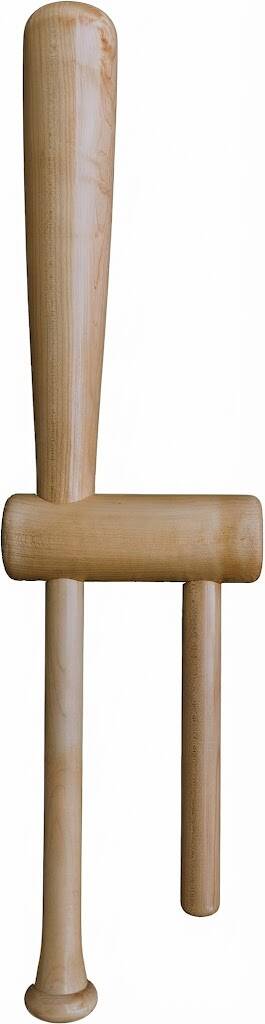
Best For: Hitters working specifically on swing sequencing and timing rather than raw bat speed. This bat is built for players who already understand their swing has a mechanical breakdown somewhere but need a tool that isolates exactly where that breakdown happens, rather than a generic trainer that only adds resistance.
Construction: Solid wood training bat purpose-built around a sequencing drill system rather than standard bat geometry. Unlike a repurposed fungo or standard two-hand trainer, the design is engineered from the handle up specifically to reinforce the correct order of load, hip rotation, and hand release.
Material: Solid hardwood construction designed to hold up to repeated drill work. The density and weight distribution are tuned so the bat holds its balance point consistently through hundreds of reps, which matters for a tool meant to be used in structured daily practice.
Performance Feel: Deliberate and drill-focused — the bat is built to be used in a specific sequencing progression rather than free swings, giving hitters a structured way to feel proper load, separation, and swing order. It rewards a slower, more intentional swing during drill work over trying to simply muscle the bat through the zone.
Ideal Player Type: Competitive hitters and players working with an instructor who want a dedicated tool for correcting sequencing issues rather than a general-purpose trainer. It's especially well suited to players who have hit a plateau with generic training bats and need something that targets timing specifically.
Performance Overview: The No Errors Sports Sequence Training Bat earns the top spot in this guide as the highest-value pick for hitters serious about correcting mechanical flaws rather than just adding bat speed. Where most training bats work on strength or hand speed, this one is built around a specific sequencing methodology that isolates the exact phase of the swing where most hitters lose power and consistency. For players who have already put in the reps with a standard training bat and plateaued, this is the tool that addresses the timing and sequencing issues those reps couldn't fix on their own.
Why It Stands Out:
- Purpose-built specifically for swing sequencing rather than general bat speed training.
- Gives hitters a structured, repeatable drill progression instead of unguided swings.
- Ideal complement to instructor-led lessons focused on mechanical correction.
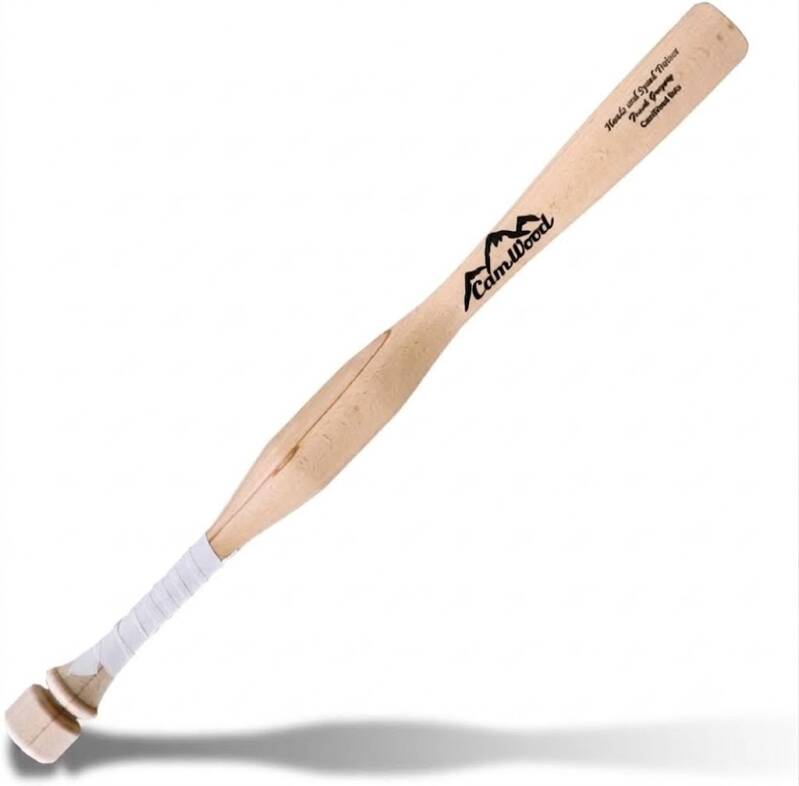
🌀 Camwood Hands & Speed Trainer
Best For: Hitters looking to build hand speed and bat control through short, focused reps. It's a strong fit for players whose swing mechanics are already sound but whose hands are simply too slow to catch up to good velocity.
Construction: Traditional heavy-barrel wood design intended for overload-style swing work. The extra barrel mass relative to a standard game bat is the entire point of the design, forcing the hands to generate more force to bring the bat through the zone on time.
Material: Solid wood barrel and handle built for repeated high-effort swings. The construction is dense enough to hold up to daily overload training without the barrel losing its shape or balance over a full offseason of use.
Performance Feel: Noticeably heavier through the barrel, forcing the hands and forearms to work harder to bring the bat through the zone with control rather than just force. Hitters typically notice the difference in their hand speed with the game bat within just a few weeks of consistent use.
Ideal Player Type: Players focused specifically on hand speed and bat control rather than pure strength building. It's a particularly good fit for hitters who already have a strong lower half in their swing but need their hands to catch up to the rest of the mechanics.
Performance Overview: The Camwood Hands & Speed Trainer is a longtime staple in hitting facilities for a reason — its heavier barrel weight targets hand speed and bat control in a way that lighter trainers can't replicate. Short, controlled rep sets with this bat translate directly into a quicker, more controlled bat path with the game bat. Instructors have relied on this exact overload-then-underload principle for decades because the carryover to game-bat swing speed is consistent and measurable.
Why It Stands Out:
- Heavier barrel design specifically targets hand speed rather than general strength.
- Well-established training tool with a long track record in competitive hitting programs.
- Rewards controlled mechanics over brute force, reinforcing better swing habits.
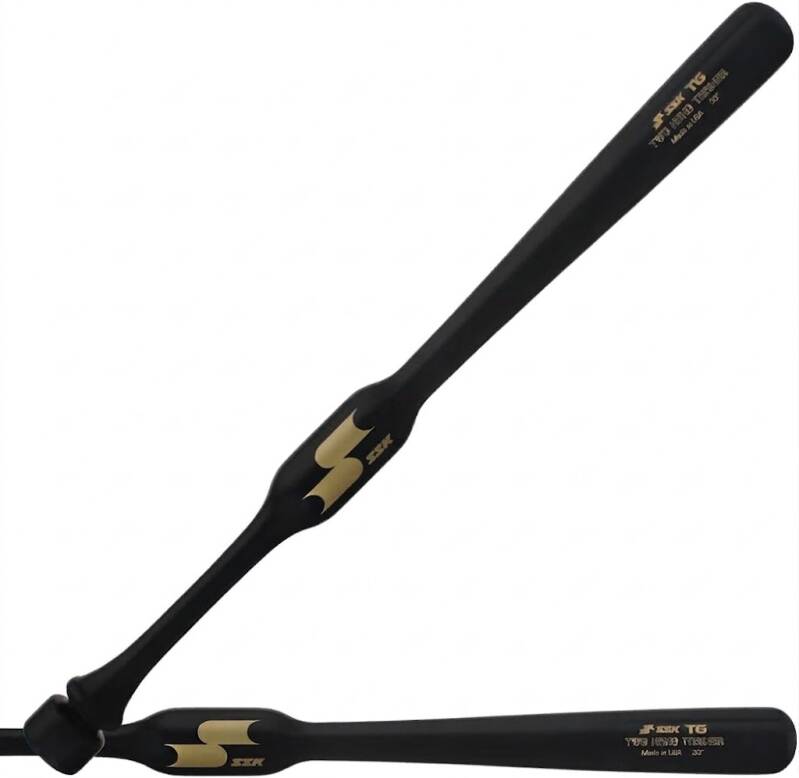
🤲 SSK Training Gear Two Hand Baseball Training Bat
Best For: Hitters building full-swing bat speed and strength while keeping proper two-hand mechanics. It suits players and teams that want one reliable trainer for daily use rather than switching between multiple specialized tools.
Construction: Standard two-hand wood training bat built to full-swing length and balance. The proportions closely mirror a game bat's length and swing weight, which keeps the mechanics transferable rather than exaggerated in either direction.
Material: Solid wood construction designed for daily use in team and individual training settings. It's built to withstand the wear of being passed around a full roster during team practice without the durability concerns of a lighter novelty trainer.
Performance Feel: Balanced and slightly heavier than a standard game bat, encouraging a full, connected swing rather than isolated one-hand work. Hitters describe the feel as close enough to a game bat that warmup swings translate directly into game-ready mechanics.
Ideal Player Type: Players and teams wanting a reliable everyday two-hand trainer for warmups and dedicated swing sessions. It's a practical choice for programs equipping an entire lineup with a consistent trainer rather than outfitting each player individually.
Performance Overview: The SSK Training Gear Two Hand Baseball Training Bat is built for hitters who want to train their complete swing rather than isolate one hand at a time. Its balanced weighting makes it a practical everyday tool for both individual reps and team warmup routines. Because it doesn't require any specialized drill knowledge to use effectively, it's an easy addition to a daily routine for players at nearly any experience level.
Why It Stands Out:
- Full two-hand design keeps complete swing mechanics intact during training.
- Balanced weighting suits both warmup use and dedicated strength sessions.
- SSK's trusted training gear construction holds up to daily team use.
⚡ Performance Differences Between Wood Training Bats
The biggest difference across this category isn't wood species — it's training purpose. Sequencing tools like the No Errors Sports Sequence Training Bat target timing and swing order specifically, while hand-speed trainers like the Camwood Hands & Speed Trainer build quicker, more controlled bat paths through overload weighting. Two-hand trainers such as the SSK Training Gear Two Hand Baseball Training Bat and Victus Sports Youth Two Hand Trainer keep full swing mechanics intact for players who want to build strength without isolating one side of the swing, while one-hand trainers like the Axe Bat One-Hand Training Bat and Pinnacle Sports BamBooBat Wood One Hand Training Bat narrow the focus down to a single hand for targeted correction work. For more on how weighted training tools fit into a complete practice setup, 🍩 Best Bat Donuts & Weights (2026) covers the warmup and strength side of the equation.
Weight and length matter just as much as design intent. A trainer that's too heavy for the player's current strength reinforces poor mechanics instead of correcting them, which is why matching the bat to age and development stage — not just training goal — is essential. For stationary drill tools that pair well with a training bat, 🏏 Best Batting Tees for Baseball & Softball (2026 Guide) rounds out a complete setup.
🌱 Victus Sports Youth Two Hand Trainer
Best For: Younger players developing two-hand swing mechanics and early bat speed. It's designed specifically for the stage of development where a player is still building foundational mechanics rather than refining an already-established swing.
Construction: Youth-scaled two-hand wood trainer sized for developing players. The shorter length and lighter overall profile compared to an adult trainer keeps the swing mechanically correct instead of forcing a younger player to compensate for oversized equipment.
Material: Solid wood construction scaled appropriately for youth strength levels. The construction quality mirrors Victus's adult-level bat standards, just proportioned down to a size and weight a developing player can actually control.
Performance Feel: Manageable weight for younger hitters, allowing full, controlled swings without overloading a still-developing swing. Parents and coaches often notice younger players swing more confidently with this trainer than with a cut-down adult bat.
Ideal Player Type: Youth players early in their development who need a trainer scaled to their size and strength rather than an adult-weighted bat. It's a strong option for parents introducing structured swing training for the first time.
Performance Overview: The Victus Sports Youth Two Hand Trainer gives younger hitters a training bat actually built for their stage of development rather than a scaled-down adult design. That youth-appropriate weighting means younger players build correct mechanics instead of compensating for a bat that's too heavy. Because the bat is properly proportioned rather than just a shorter version of an adult trainer, the swing habits it reinforces carry over cleanly as the player grows into heavier equipment.
Why It Stands Out:
- Scaled specifically for youth strength levels rather than adapted from an adult trainer.
- Encourages full, correct two-hand mechanics without overloading the swing.
- Victus build quality brings trusted bat construction to a youth-specific trainer.

✋ Axe Bat One-Hand Training Bat
Best For: Hitters isolating top-hand or bottom-hand mechanics to correct specific swing flaws. It's particularly effective for players whose coach has identified a specific one-hand issue rather than a general strength or timing problem.
Construction: One-hand wood trainer built on Axe's ergonomic handle geometry. The angled handle shape is the defining construction feature, changing the hand-to-handle contact point compared to a traditional round-handled trainer.
Material: Solid wood construction with Axe's signature angled handle shape. The handle geometry is molded directly into the wood rather than added as an attachment, keeping the bat durable through repeated one-hand drill work.
Performance Feel: Lighter and shorter than a two-hand trainer, letting hitters focus entirely on one hand's path and control through the zone. The angled handle encourages a more natural wrist position during single-hand swings compared to a standard oval handle.
Ideal Player Type: Players working on a specific one-hand flaw — casting, early extension, or a disconnected top hand — under an instructor's guidance or independent drill work. It's best suited to hitters who already know which hand and which flaw they're correcting.
Performance Overview: The Axe Bat One-Hand Training Bat pairs one-hand isolation training with Axe's angled handle design, giving hitters a more natural hand position while working through single-hand drills. It's a focused tool for correcting exactly the kind of mechanical flaw that full-swing trainers can mask. Because the handle geometry mirrors what Axe uses in its full-size bats, the hand position a player builds in drill work carries over directly to their game bat.
Why It Stands Out:
- Axe's angled handle geometry supports a more natural one-hand grip during drills.
- Isolates top-hand or bottom-hand mechanics more precisely than two-hand trainers.
- Lightweight, drill-specific design built for repeated one-hand rep work.
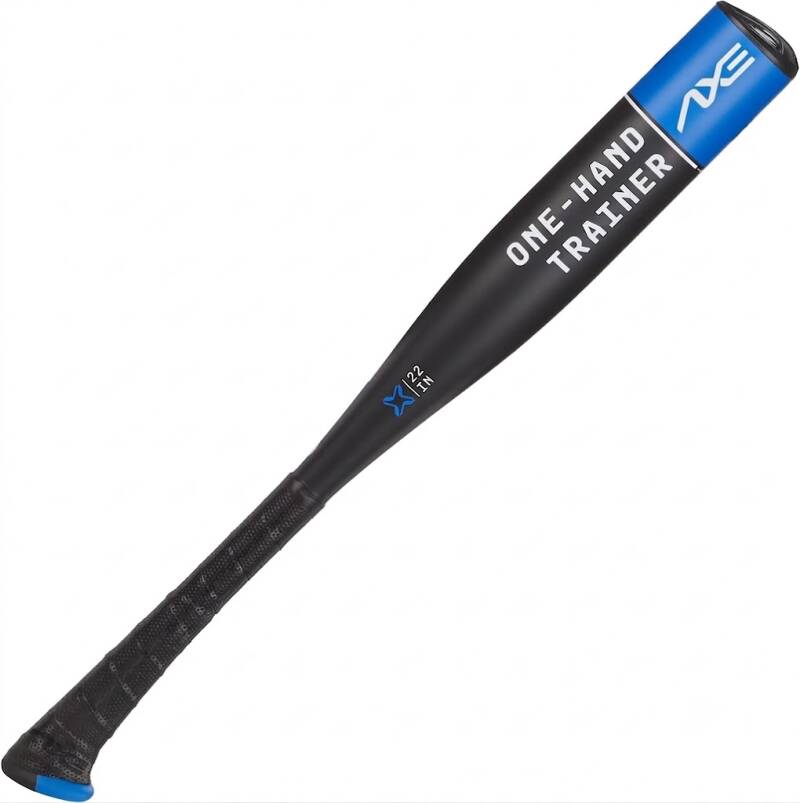
🎋 Pinnacle Sports BamBooBat Wood One Hand Training Bat
Best For: Hitters wanting a durable one-hand trainer built specifically for high-volume drill use. It's a strong fit for programs and individual players who put heavy daily reps through a trainer and need it to hold up over a full season.
Construction: One-hand wood trainer built from bamboo composite construction. The bamboo build is the defining difference from a standard maple one-hand trainer, chosen specifically for its resistance to cracking under repeated contact.
Material: Bamboo, chosen specifically for its durability under repeated drill contact. Bamboo's natural fiber structure gives it a durability advantage over solid maple in a training-specific context where the bat sees far more contact than a game bat ever would.
Performance Feel: Slightly more forgiving than solid maple in a one-hand trainer, while still providing the feedback needed for isolation swing work. That added forgiveness doesn't come at the cost of the drill feedback the bat is designed to deliver.
Ideal Player Type: Players and coaches who put heavy daily volume through a one-hand trainer and need a bat that holds up over a full season of drill work. It's especially practical for coaches running group sessions where one trainer sees repeated use across multiple players in a single practice.
Performance Overview: The Pinnacle Sports BamBooBat Wood One Hand Training Bat brings bamboo's natural durability advantage to one-hand training work, where repeated contact adds up fast. It's a practical choice for coaches running frequent group drill sessions who need equipment that lasts. Where a standard maple one-hand trainer can start to show wear after a season of daily group use, the bamboo construction here is built specifically to outlast that kind of volume.
Why It Stands Out:
- Bamboo construction offers added durability for high-volume drill use.
- Well-suited to coaches and facilities running frequent group training sessions.
- One-hand format isolates swing mechanics for focused correction work.

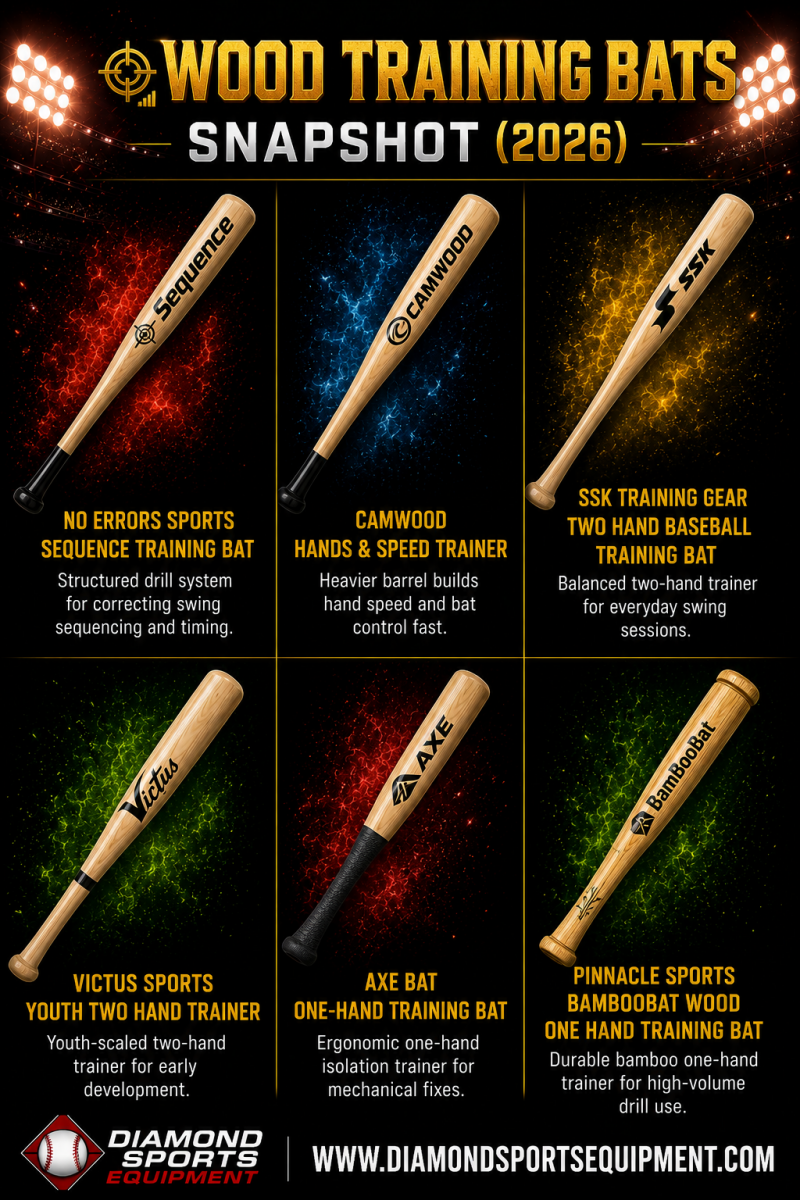
📊 Wood Training Bats Snapshot (2026)
- 🎯 No Errors Sports Sequence Training Bat — Structured drill system for correcting swing sequencing and timing.
- 🌀 Camwood Hands & Speed Trainer — Heavier barrel builds hand speed and bat control fast.
- 🤲 SSK Training Gear Two Hand Baseball Training Bat — Balanced two-hand trainer for everyday swing sessions.
- 🌱 Victus Sports Youth Two Hand Trainer — Youth-scaled two-hand trainer for early development.
- ✋ Axe Bat One-Hand Training Bat — Ergonomic one-hand isolation trainer for mechanical fixes.
- 🎋 Pinnacle Sports BamBooBat Wood One Hand Training Bat — Durable bamboo one-hand trainer for high-volume drill use.
❓ FAQ
What is a wood training bat used for?
- Training bats remove barrel forgiveness so swing flaws show up immediately on contact.
- They're used to build bat speed, correct mechanics, and reinforce proper swing sequencing.
Should I use a one-hand or two-hand trainer?
- One-hand trainers isolate a specific hand's path for targeted mechanical correction.
- Two-hand trainers build overall bat speed and strength while keeping full swing mechanics intact.
How heavy should a training bat be?
- Training bat weight should match the player's current strength and age, not their game bat's drop weight.
- A bat that's too heavy reinforces poor mechanics instead of correcting them.
Are wood training bats suitable for youth players?
- Yes, as long as the bat is scaled to the player's size and strength level.
- Youth-specific trainers like the Victus Sports Youth Two Hand Trainer are built for this exact purpose.
🧢 Final Thoughts
The right wood training bat comes down to what you're actually trying to fix. Sequencing and timing issues call for a structured tool like the No Errors Sports Sequence Training Bat, hand speed and control work points toward the Camwood Hands & Speed Trainer, and mechanical isolation is best handled with a one-hand bat like the Axe Bat One-Hand Training Bat or Pinnacle Sports BamBooBat Wood One Hand Training Bat. Two-hand trainers from SSK and Victus round out a complete training setup for players building strength without sacrificing full swing mechanics.
For more ways to round out a complete practice setup, 🍩 Traditional Bat Donuts (2026 Guide) covers additional weighted training tools worth pairing with a wood trainer. And for the full library of equipment guides across every category, visit 📝 Diamond Sports Equipment Blog & Gear Reviews.
Add comment
Comments