The right pitching target matched to the right training priority — command precision for the pitcher working corners, rebound return for the solo practitioner without a catcher, multi-zone feedback for the pitcher developing pitch tunneling and location sequencing — is the training infrastructure decision that determines whether every bullpen rep the pitcher throws is actually building the command that game situations demand. For pitchers pairing target work with the full arm development picture, ⚒️ Pitching & Arm Development Tools (2026) covers every tool that builds arm strength, velocity, and mechanical consistency alongside command training. Hitters who want to understand what a well-located pitch looks like from the other side of the equation will find the full hitting development picture in 🏏 Swing Trainers for Hitters (2026 Guide). This guide focuses on pitching targets and rebounders that help pitchers work on strike-zone command, location accuracy, and repeatable throwing drills. Players looking primarily for ball return, fielding practice, reaction work, and general solo training can also see Best Pitch-Back Nets & Rebounder Nets (2026 Guide) for a broader look at rebound-focused training equipment.
⚾ What You Should Know About Pitching Targets
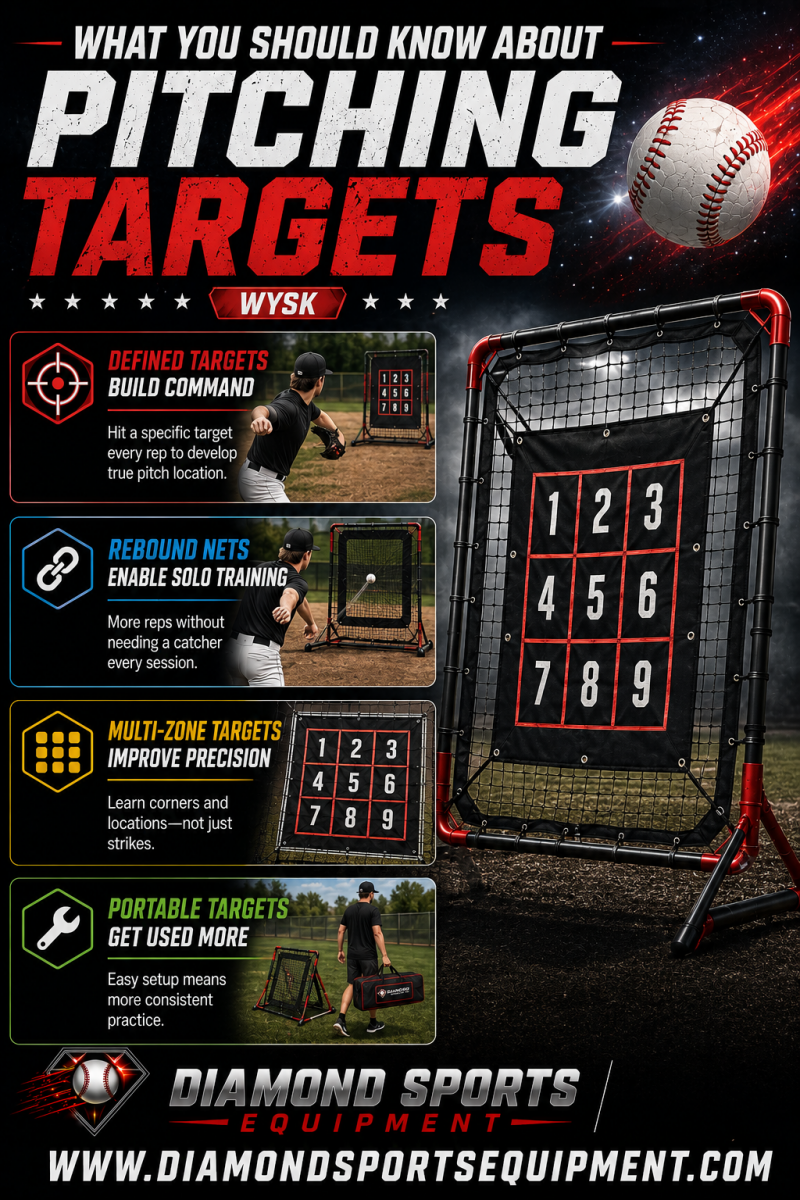
🎯 Command Development Requires a Defined Target on Every Rep
A pitcher who throws fifty bullpen pitches toward a general zone is developing arm endurance and mechanical repetition — but not the specific command precision that competitive pitching demands at every level above recreational play. Command is a trained response, not a natural attribute — it develops through repeated intentional throws against a defined target that provides immediate location feedback on every pitch, building the neuromuscular connection between the pitcher's intent and the ball's arrival point through the specific repetition pattern that command precision requires. Pitching targets create the training environment that open-net sessions cannot — a defined zone, an immediate visual result, and the consistent feedback loop that turns throwing reps into command reps.
🪢 Rebound Targets Enable Solo Pitching Development Without a Catcher
The most consistent limiting factor in pitcher development is the availability of a catcher — and the pitcher whose practice schedule depends entirely on having a catcher present is the pitcher who accumulates fewer command reps than the one whose training setup returns the ball automatically after every pitch. Rebounder-style pitching nets solve this problem directly, giving pitchers the ability to run full command sessions, location sequences, and high-volume pitch count work without requiring a catcher, a partner, or a full team practice environment. Solo development capacity is the practical training advantage that rebounder nets deliver above fixed-target alternatives for the pitcher whose access to catchers is limited by schedule, availability, or training environment.
🕳️ Multi-Hole Strike Zone Targets Develop Location Precision Across the Full Zone
A single-zone pitching target tells a pitcher whether the pitch was a strike — a nine-hole strike zone target tells them exactly where in the zone the pitch landed on every rep. The difference between those two feedback levels is the difference between a pitcher who knows they threw a strike and a pitcher who knows they hit the low-outside corner versus the middle-middle location their mechanics defaulted to when command broke down under pressure. Nine-hole targets with distinct pocket zones develop the location precision that pitch sequencing and two-strike execution specifically require — giving pitchers the specific feedback about location within the zone that single-target alternatives cannot provide.
🎯 Target Feedback Should Match Your Training Goals
Pitching targets are most useful when they provide clear visual zones that make location misses easy to recognize and correct. Smaller pockets and divided strike zones demand more precise command, while larger target areas work better for developing consistency before moving into more advanced location drills.
🏆 Best Pitching Targets for Baseball & Softball (2026)
These six pitching targets cover every command training priority, feedback format, and training environment that baseball and softball pitchers work in — from audible strike zone feedback and nine-hole location precision through rebounder return systems and multi-angle rebound training for solo development sessions.
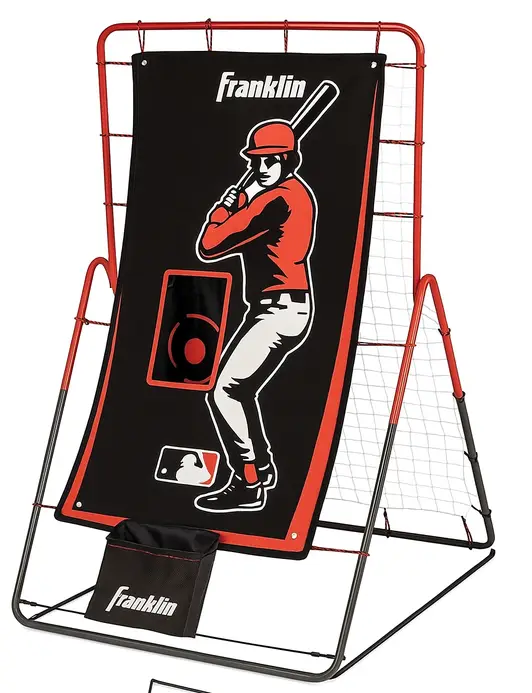
🎵 Franklin Sports Baseball Pitching Target and Rebounder Net
Best For: Pitchers who want a combined pitching target and rebounder return system in a single setup — the baseball or softball pitcher whose training environment doesn't consistently include a catcher and who needs a net that delivers both strike zone feedback and automatic ball return to keep pitch volume high without interrupting the session to retrieve every throw.
Construction: Dual-function frame construction combining a defined strike zone target face with a rebounder net panel that returns the ball toward the pitcher after each pitch — a construction that eliminates the ball retrieval interruption that fixed target alternatives create in solo sessions, keeping the pitcher in a rhythm that more closely replicates the continuous rep pace of a live bullpen session with a catcher receiving every pitch.
Material: Durable net material maintaining consistent rebound response and target face integrity through high-volume pitch sessions — construction that holds up through the repeated impact of competitive-velocity pitching across a full off-season training program without the frame instability or net degradation that lower-construction rebounder alternatives produce under the same pitch volume.
Performance Feel: Rhythm-building and solo-session-ready — the Franklin Sports rebounder delivers the training experience that pitchers who run solo command sessions describe as the most practically useful format: a defined zone to target, immediate visual location feedback, and automatic ball return that keeps the session moving without the retrieval interruption that breaks the mechanical rhythm that high-volume command work requires to be productive.
Ideal Player Type: Baseball and softball pitchers at every competitive level whose training schedules include regular solo sessions without a catcher — youth competitive through high school pitchers who need a target system that returns the ball and keeps pitch volume high across a full command development session without requiring a partner to receive every throw.
Performance Overview: The Franklin Sports Baseball Pitching Target and Rebounder Net gives pitchers who train without a catcher the dual-function setup that combines target feedback with automatic ball return in a single portable frame. The core training problem that solo pitching development consistently runs into is session interruption — a pitcher who throws to a fixed target or a standard net has to walk to retrieve every pitch, breaking the mechanical rhythm that command development builds through continuous intentional repetition. The Franklin Sports rebounder eliminates that interruption, returning the ball toward the pitcher after each throw and keeping the rep pace high enough that a solo session can accumulate the pitch volume that command precision requires without the dead time that retrieval creates. The defined strike zone face gives the pitcher immediate visual feedback on every pitch, building the location awareness that open-net throwing cannot develop regardless of how many reps the pitcher accumulates against a target that doesn't define the zone they're trying to hit.
Why It Stands Out:
- Dual-function target and rebounder construction eliminates the ball retrieval interruption that breaks solo pitching session rhythm — keeping rep pace high and mechanical momentum consistent through the full command training session.
- Defined strike zone face delivers immediate visual location feedback on every pitch — building the zone awareness that open-net bullpen sessions cannot develop regardless of rep volume.
- Portable frame construction enables consistent solo command training in any backyard, gymnasium, or facility environment without the catcher dependency that limits development session frequency for pitchers whose practice schedule doesn't guarantee a receiver.
- Franklin Sports' accessible construction makes dual-function pitching target and rebounder training available at the price point that youth and high school development programs can work with across a full training season without premium investment.
🥅 GoSports Baseball and Softball Pitching Strike Zone Target Net
Best For: Baseball and softball pitchers who want a clearly defined strike zone target integrated into a standard pitching net — the competitive pitcher whose command training priority is consistent pitch location feedback within a defined zone and whose training environment benefits from the portability and quick setup that a lightweight strike zone net frame delivers across a full development season.
Construction: Standard pitching net frame with integrated strike zone target panel providing a clearly defined hitting and pitching zone — a construction that combines the net's ball containment function with the target's location feedback function in a single setup that serves both pitching command development and hitting station use for the player whose training program includes both disciplines in the same session.
Material: Quality net material maintaining consistent target panel definition and frame stability through regular competitive-velocity pitching sessions — construction that holds the strike zone target in the correct position through repeated pitch impacts without the panel drift or frame movement that lighter-construction alternatives produce under the same session volume, keeping the target face in the consistent position that location feedback accuracy depends on.
Performance Feel: Clean and defined — the GoSports strike zone target delivers the pitching training experience that coaches and pitchers who prioritize consistent zone definition describe as the correct training environment: a target that clearly shows where the strike zone is, immediate visual feedback on whether the pitch landed in or out of the zone, and a net construction that contains pitches cleanly without the rebound unpredictability that some alternative designs produce at higher velocities.
Ideal Player Type: Baseball and softball pitchers at the youth competitive through high school level whose command training priority is consistent strike zone location feedback — coaches running team practice stations who need a target net that clearly defines the zone for multiple pitchers across a full practice session without requiring individual setup and teardown between rotation changes.
Performance Overview: The GoSports Baseball and Softball Pitching Strike Zone Target Net brings a clearly defined strike zone target to the standard pitching net format — giving pitchers and coaches the location feedback infrastructure that open-net bullpen stations consistently lack. The GoSports design integrates the strike zone target directly into the net panel, eliminating the secondary setup that separate target attachment systems require and keeping the zone definition consistent across the full session without the target drift that clip-on or velcro attachment alternatives produce under repeated pitch impact. The dual baseball and softball compatibility makes the GoSports a genuinely versatile station for programs whose practice schedule includes both formats in the same facility, giving coaches a single target net setup that serves every pitcher in the rotation regardless of which discipline they compete in.
Why It Stands Out:
- Integrated strike zone target panel eliminates secondary attachment setup — keeping zone definition consistent across the full session without the target drift that clip-on attachment alternatives produce under repeated pitch impact.
- Dual baseball and softball compatibility makes a single net setup serve every pitcher in a mixed-format program — reducing equipment investment and setup time for programs that run both disciplines through the same practice station.
- Clearly defined strike zone delivers the immediate visual location feedback that command development requires on every pitch — building the zone awareness that pitchers need to develop corner precision across a full off-season command training program.
- GoSports' quality construction maintains frame stability and target panel integrity through the competitive-velocity pitch volume that high school and travel ball development programs produce across a full training season.

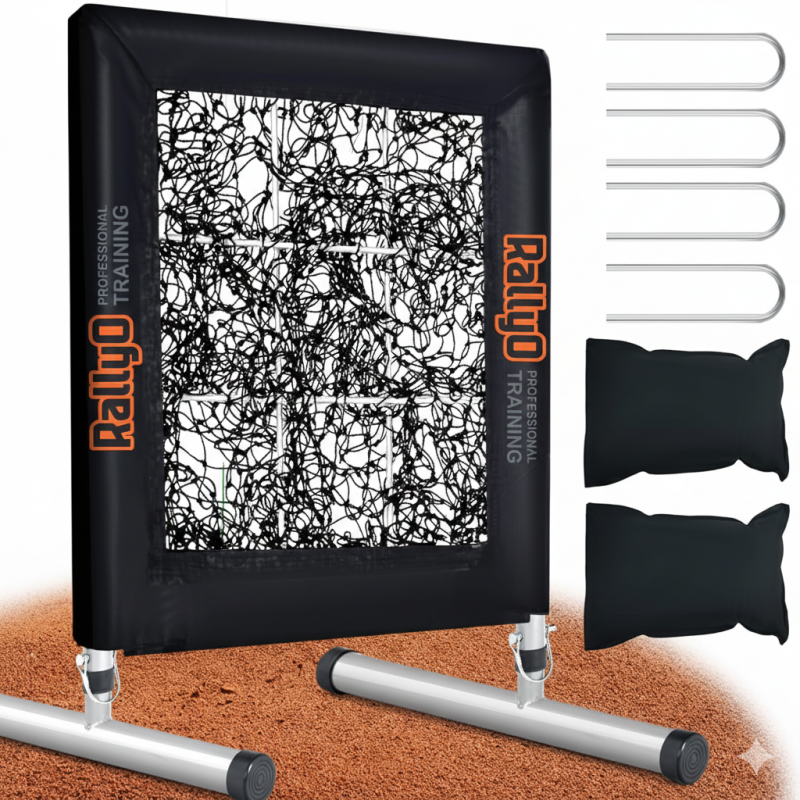
🕳️ Pitching Net — 9 Hole Baseball & Softball Pitching Net with Strike Zone
Best For: Pitchers who want nine-hole location precision across the full strike zone — the competitive pitcher whose command training has progressed beyond basic strike-or-ball feedback and who needs the specific pocket-by-pocket location data that nine-hole targets deliver for developing corner precision, pitch tunneling, and two-strike execution location on every rep.
Construction: Nine-pocket strike zone net construction with distinct target zones covering the full strike zone from low-inside through high-outside — a construction that gives pitchers specific location feedback on every pitch rather than the binary strike-or-ball result that single-zone alternatives provide, developing the corner precision and location sequencing that competitive pitching demands at every level above recreational play.
Material: Durable multi-pocket net material maintaining distinct pocket definition and consistent rebound response across all nine target zones through high-volume pitching sessions — construction that keeps each pocket's boundary clearly defined through repeated pitch impacts so the location feedback remains accurate across the full session rather than degrading as the net material softens and pocket boundaries blur under volume.
Performance Feel: Precise and development-focused — the nine-hole pitching net delivers the training experience that pitchers working on corner command and location sequencing describe as a fundamentally different feedback level than single-zone alternatives: specific pocket identification on every pitch, immediate visual confirmation of exactly where in the zone the ball landed, and the granular location data that turns command training from a general accuracy exercise into a specific pitch-by-pitch development session.
Ideal Player Type: Competitive baseball and softball pitchers at the travel ball, high school, and collegiate level whose command development priority has progressed to corner precision and pitch tunneling — pitchers who already throw consistent strikes and need the specific location feedback that nine-hole targeting provides to develop the within-zone precision that elite command performance requires.
Performance Overview: The Pitching Net — 9 Hole Baseball & Softball Pitching Net with Strike Zone advances pitcher command training from basic zone accuracy to specific location precision — delivering the pocket-by-pocket feedback that separates a pitcher who throws strikes from one who commands the full zone. The nine-hole format gives pitchers the specific location information that single-zone alternatives cannot: not just whether the pitch was a strike, but exactly which pocket it hit, which tells the pitcher whether they hit the intended corner, drifted toward the middle, or missed the target zone entirely. That granular feedback builds the neuromuscular precision that pitch sequencing and two-strike execution require at the competitive levels where every at-bat involves a pitcher and hitter solving a location puzzle rather than simply throwing toward a general zone and hoping for a strike.
Why It Stands Out:
- Nine-pocket strike zone construction delivers specific location feedback on every pitch — developing corner precision and pitch tunneling capacity that single-zone targets cannot build regardless of the rep volume accumulated against a less specific feedback format.
- Full strike zone coverage from low-inside through high-outside gives pitchers the complete location training environment that developing a competitive pitch sequence requires — every location a hitter can protect or be exposed at is represented in the nine-hole format.
- Dual baseball and softball compatibility extends the training value across both pitching formats — making a single net investment serve the competitive pitcher regardless of which discipline their game is built around.
- Durable multi-pocket construction maintains distinct zone definition through high-volume competitive-velocity sessions — keeping the location feedback accurate across the full training program rather than degrading as net material softens under pitch impact volume.
⚡ Performance Differences Between Pitching Targets
The biggest performance differences between pitching targets and rebounders come from target size, strike-zone visibility, feedback design, and pitching-specific versatility. Multi-zone targets are better for pitchers working individual locations and changing eye levels, while simpler target areas work well for repetitive command practice. Rebound capability adds value when pitchers want the ball returned between throws, but target clarity and location feedback should remain the priority on pitching-focused equipment.
For the complete rebounder and pitch-back net options that pair with every pitching target in this guide for a full solo training station, 🥅 Best Batting Cage Nets (2026) covers every return net worth considering. For the full hitting net setup that creates a complete practice station alongside pitching target work, 🥅 Best Hitting Nets for Baseball & Softball (2026 Guide) covers every net format that serious players use to build a backyard or facility training environment.
🌟 ZEALFEEL Baseball Pitching Net Pro — 9 Hole Pitching Target with Strike Zone
Best For: Pitchers who want nine-hole location precision in a pro-grade construction — the competitive travel ball or high school pitcher whose command training has progressed to the corner precision and pitch tunneling stage and who needs the specific pocket feedback that nine-hole targeting provides in a frame construction that holds up through the high-velocity, high-volume pitch sessions that serious development programs produce across a full off-season.
Construction: Pro-grade nine-hole pitching target construction with reinforced pocket boundaries and a frame system designed for the competitive-velocity pitching that high school and travel ball pitchers generate — a construction step above recreational nine-hole alternatives whose pocket definition and frame stability degrade faster under the higher pitch velocity that competitive-level development sessions produce compared to the youth recreational use case those lighter-construction alternatives were built for.
Material: Reinforced net material with clearly defined nine-pocket strike zone construction maintaining pocket boundary integrity and consistent rebound response through competitive-velocity pitching volume — materials that hold the zone definition accurate across a full season of high-intensity bullpen work without the pocket blurring and frame flex that lighter-construction nine-hole alternatives produce under the same competitive-velocity pitch load.
Performance Feel: Pro-grade and precision-focused — the ZEALFEEL Pro delivers the nine-hole command training experience that competitive pitchers who have outgrown recreational-construction alternatives describe as the correct feedback environment for serious location development: sharp pocket boundaries that give accurate location data on every pitch, frame stability that keeps the target face in the correct position through full-velocity bullpen sessions, and a construction quality that communicates to the pitcher that the tool they are training against is built for the development level they are actually at.
Ideal Player Type: Competitive travel ball and high school pitchers whose command development is at the corner precision and pitch sequencing stage — pitchers who already throw consistent strikes and need the pro-grade nine-hole construction that holds up through the high-velocity, high-volume sessions that serious location development requires without the degradation that lighter-construction alternatives produce under competitive pitching conditions.
Performance Overview: The ZEALFEEL Baseball Pitching Net Pro — 9 Hole Pitching Target with Strike Zone brings pro-grade construction to the nine-hole pitching target format — giving competitive pitchers the location precision feedback they need in a frame that holds up through the velocity and volume that serious development sessions produce. The distinction between the ZEALFEEL Pro and standard nine-hole alternatives is the construction quality behind the pocket definition: reinforced boundaries that stay sharp through high-velocity pitch impacts rather than softening and blurring as the session volume accumulates, and a frame stability that keeps the target face correctly positioned through the full bullpen session rather than drifting under repeated impact and requiring repositioning that interrupts the session rhythm. Pitchers developing corner command and pitch tunneling need accurate location feedback on every pitch — and that accuracy depends on the pocket boundaries staying defined and the frame staying stable through the full volume of reps that serious location training requires.
Why It Stands Out:
- Pro-grade nine-hole construction with reinforced pocket boundaries delivers accurate location feedback through the competitive-velocity, high-volume sessions that serious command development produces — maintaining the precision that lighter-construction alternatives lose as pocket definition degrades under pitch impact.
- Frame stability holds the target face in the correct position through the full bullpen session without the drift and repositioning that lighter-frame alternatives require under repeated competitive-velocity pitch impact.
- Nine-hole strike zone coverage with pro-grade construction at the price point that serious high school and travel ball development programs can work with — construction quality matched to the competitive development level rather than the recreational use case that standard alternatives were built for.
- ZEALFEEL's pitching net construction applied to the nine-hole pro format — brand consistency in construction quality that gives competitive pitchers and coaches confidence in the tool they are building their command program around.

🔄 Apex Power Baseball Rebounder Net — 12-Angle Pitching Net w/ 9 Pocket Nets
Best For: Pitchers and fielders who want a multi-skill training tool that combines nine-pocket pitching accuracy with twelve adjustable rebound angles for fielding, reaction, and return training — the competitive player whose practice station needs to serve multiple development priorities in a single adjustable setup rather than requiring separate equipment investments for pitching command work and fielding reaction development.
Construction: Twelve-angle adjustable rebounder frame with integrated nine-pocket net construction — a dual-function design that gives the pitcher the specific location feedback of a nine-hole target during command sessions and gives the fielder twelve distinct rebound angles for ground ball, line drive, and fly ball reaction training in a single frame that transitions between training modes without secondary setup or equipment changes.
Material: Heavy-duty rebounder net construction maintaining consistent rebound response across all twelve angle settings and nine pocket zones through the combined pitching and fielding training volume that a multi-skill practice station produces — materials built for the higher impact load that multi-angle rebounder training generates compared to fixed-target alternatives whose single-use construction doesn't need to handle the rebound forces that adjustable angle training produces at the steeper and shallower settings.
Performance Feel: Versatile and high-output — the Apex Power rebounder delivers the multi-skill training experience that players and coaches who want a single setup to serve their full practice session describe as the most practically efficient format: twelve angles that cover the full range of fielding scenarios, nine pockets that develop the corner precision that command training requires, and the combined capability that turns a single piece of equipment into a complete individual skill development station.
Ideal Player Type: Competitive baseball and softball players at the travel ball and high school level whose development program includes both pitching command work and fielding reaction training — coaches building individual practice stations that need to serve multiple skill development priorities across a full practice session without the equipment cost and setup complexity of separate pitching and fielding training tools.
Performance Overview: The Apex Power Baseball Rebounder Net combines nine-pocket pitching accuracy with twelve adjustable rebound angles in a single frame — giving competitive players and coaches the multi-skill training capability that separate pitching target and fielding rebounder investments deliver at combined cost and setup complexity. The twelve-angle system covers the ground ball, line drive, and reaction training scenarios that fielding development requires at every position, while the nine-pocket net face gives pitchers the specific location feedback that corner command development needs across the full strike zone. The practical training advantage of the combined format is session efficiency — a pitcher who finishes a command session can immediately transition to fielding reaction work without resetting equipment, keeping the practice station productive across the full training session rather than requiring the equipment change that separate tool setups consistently introduce.
Why It Stands Out:
- Twelve adjustable rebound angles combined with nine-pocket pitching target construction deliver the multi-skill training capability that separate pitching and fielding tool investments provide in a single adjustable frame — reducing equipment cost and setup complexity without reducing training output.
- Nine-pocket net face delivers specific corner and zone location feedback for pitching command development — the same location precision that dedicated nine-hole pitching targets provide, integrated into a rebounder that serves fielding development in the same session.
- Twelve rebound angles cover the full range of fielding scenarios from slow ground balls through sharp line drives and reaction plays — giving fielders at every position the complete defensive reaction training that fixed-angle rebounder alternatives can't produce.
- Heavy-duty construction handles the combined pitching and fielding training volume that a multi-skill practice station produces — construction quality matched to the higher impact load that multi-angle rebounder use generates compared to single-function alternatives.

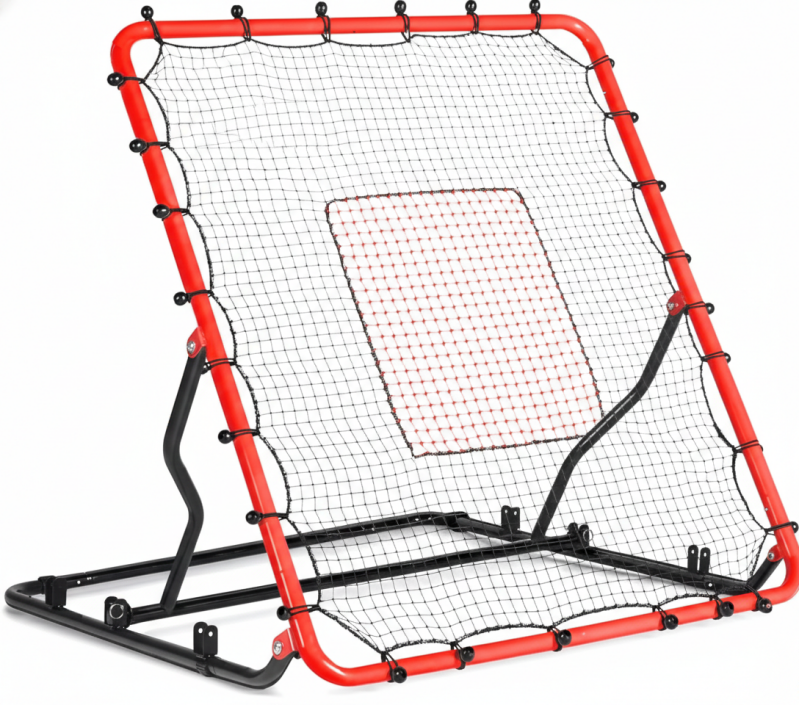
🔁 ZEALFEEL Baseball Rebounder Net — 3/5 Adjustable Angles 4x4.5FT Pitch Back
Best For: Pitchers and players who want adjustable rebound angle control in a compact pitch-back rebounder — the baseball or softball player whose solo training setup needs the automatic ball return and angle adjustability that makes solo command and fielding sessions productive without a partner, in a frame size that fits the backyard, garage, or gymnasium training environments that individual development programs typically work within.
Construction: 3 to 5 adjustable angle rebounder frame in a compact 4x4.5 foot pitch-back design — an angle range that gives the solo pitcher and fielder control over the return trajectory so the session can simulate a wider range of ball-flight scenarios than a fixed-angle return produces, in a frame footprint small enough to set up in the limited-space training environments that individual players work in without the full field or facility access that team practice provides.
Material: Quality rebounder net construction maintaining consistent rebound response across the adjustable angle range through the solo pitching and fielding volume that regular individual training sessions produce — materials that hold the rebound surface taut and consistent through repeated pitch and throw impacts without the net sag and rebound inconsistency that lower-construction pitch-back alternatives produce as session volume accumulates and the net material loses the tension that consistent rebound response depends on.
Performance Feel: Compact and angle-adjustable — the ZEALFEEL rebounder delivers the solo training experience that players who run regular individual practice sessions describe as the right combination of portability and training versatility: enough angle adjustability to vary the return scenario across the full session, a frame size that sets up quickly in a limited-space training environment, and rebound consistency that keeps the ball coming back accurately enough that the player can focus on mechanics rather than chasing errant returns.
Ideal Player Type: Baseball and softball players at every competitive level whose individual training program includes regular solo sessions without a partner or catcher — youth through high school players who need a compact, adjustable pitch-back rebounder that delivers consistent ball return for pitching command work and fielding reaction training in a backyard, garage, or gymnasium environment.
Performance Overview: The ZEALFEEL Baseball Rebounder Net gives solo practitioners the adjustable pitch-back capability that makes individual training sessions productive across both pitching and fielding development priorities in a compact frame that fits the limited-space environments most individual training happens in. The 3 to 5 angle adjustment range gives the player control over return trajectory that a fixed-angle rebounder cannot provide — varying the return between a sharp ground ball return, a line drive trajectory, and a higher arc that simulates pop-up and fly ball reaction scenarios, so the solo fielding session covers more of the defensive range that game situations demand rather than the single-scenario repetition that a fixed-angle net locks the player into. For the pitcher using the rebounder for command and return work, the angle adjustability lets the session vary the return height so the pitcher isn't catching every return at the same location, building the athletic response and body awareness that live bullpen receiving develops alongside the command precision that the pitching reps build.
Why It Stands Out:
- Three to five adjustable rebound angles give solo practitioners control over return trajectory — varying the session between ground ball, line drive, and arc return scenarios that fixed-angle alternatives lock out of every solo training session.
- Compact 4x4.5 foot frame fits the limited-space training environments — backyard, garage, gymnasium — where individual development sessions most consistently happen, making the rebounder a genuinely usable daily training tool rather than equipment that requires full-field access to set up.
- Consistent rebound response across the adjustable angle range keeps the ball return accurate enough that the player can focus on pitching mechanics and fielding footwork rather than chasing inconsistent returns that break session rhythm.
- ZEALFEEL's rebounder construction applied to the compact adjustable pitch-back format — quality construction at the accessible price point that makes a reliable solo training rebounder available to the individual player whose development program doesn't require or can't justify the higher-cost multi-angle alternatives.
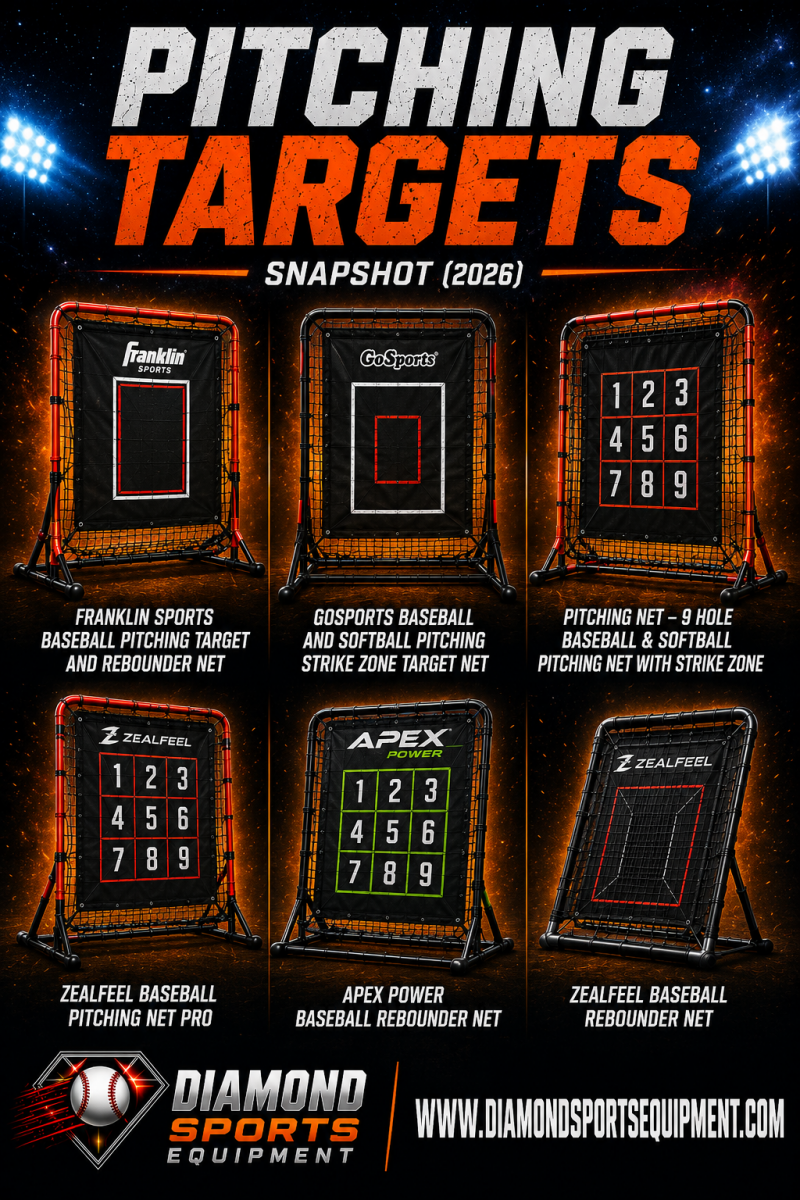
📊 Pitching Targets Snapshot (2026)
- 🔄 Franklin Sports Baseball Pitching Target and Rebounder Net — Dual-function target and rebounder construction delivering automatic ball return and strike zone feedback for solo pitching sessions without a catcher.
- 🎯 GoSports Baseball and Softball Pitching Strike Zone Target Net — Integrated strike zone target panel with dual baseball and softball compatibility delivering consistent zone definition for command training at every competitive level.
- 🕳️ Pitching Net — 9 Hole Baseball & Softball Pitching Net with Strike Zone — Nine-pocket strike zone construction delivering specific location feedback across the full zone for pitchers developing corner precision and pitch tunneling.
- ⭐ ZEALFEEL Baseball Pitching Net Pro — Pro-grade nine-hole construction with reinforced pocket boundaries delivering accurate corner command feedback through competitive-velocity high-volume development sessions.
- 💥 Apex Power Baseball Rebounder Net — Twelve adjustable rebound angles combined with nine-pocket pitching accuracy delivering multi-skill training capability for pitching command and fielding reaction development in a single frame.
- 📐 ZEALFEEL Baseball Rebounder Net — Compact 3 to 5 adjustable angle pitch-back rebounder delivering solo pitching and fielding training capability in a limited-space frame that fits backyard, garage, and gymnasium environments.
❓ FAQ
What is the difference between a pitching target and a rebounder net?
- A pitching target defines a strike zone and gives the pitcher immediate visual feedback on whether each pitch landed in the correct location — it contains the ball but does not return it toward the pitcher after impact.
- A rebounder net returns the ball toward the pitcher after each throw, enabling solo sessions without a catcher by eliminating the retrieval interruption that fixed targets and standard nets create between pitching reps.
Are nine-hole pitching targets better than single-zone targets?
- Nine-hole targets are more effective for pitchers who already throw consistent strikes and need to develop location precision within the zone — they deliver specific pocket feedback that tells the pitcher exactly where in the zone each pitch landed rather than simply whether it was a strike.
- Single-zone targets are more appropriate for younger or developing pitchers whose primary command goal is consistent strike throwing — the specific pocket feedback that nine-hole targets provide is most productive when the pitcher's basic zone accuracy is already established enough to make within-zone location the relevant training priority.
Can pitching targets be used for softball as well as baseball?
- Several targets in this guide are explicitly dual-certified for baseball and softball use — the GoSports strike zone net and the nine-hole pitching net specifically cover both formats, making them appropriate for the mixed-format programs and individual players whose training includes both disciplines.
- Players should confirm the target dimensions match the strike zone they compete in — softball and baseball strike zones differ in height and width parameters, and targets designed specifically for one format may not accurately represent the zone dimensions that the other format's pitchers need to train against.
How important is frame stability in a pitching target?
- Frame stability determines whether the target face stays in the correct position through the full pitching session — a target whose frame shifts or drifts under repeated pitch impact is delivering inaccurate location feedback by the middle of the session, undermining the command development value that consistent zone definition provides.
- Pitchers throwing at competitive velocities generate more frame impact than youth recreational throwers, making construction quality and frame stability a more significant selection variable at the travel ball and high school level than at the youth recreational level where lighter-construction alternatives perform adequately under lower pitch velocity.
🧢 Final Thoughts
Every pitching target in this guide represents a different answer to the same development question — what does this specific pitcher need from their training environment to actually build the command precision that competitive pitching demands? The Franklin Sports rebounder is for the pitcher who trains alone and needs automatic ball return to keep session volume high. The GoSports strike zone net is for the pitcher or coach who needs a clearly defined zone in a portable dual-format setup. The nine-hole pitching net is for the pitcher whose basic accuracy is established and who needs location precision within the zone. The ZEALFEEL Pro is for the competitive pitcher who needs that same nine-hole precision in a construction that holds up through high-velocity bullpen work. The Apex Power is for the player who wants pitching and fielding development capability in a single adjustable frame. The ZEALFEEL rebounder is for the solo practitioner who needs compact adjustable pitch-back capability in a limited-space environment. Match the target to where your command development actually is — not where you want it to be — and every bullpen rep becomes a precision rep rather than a volume rep. For the resistance and arm development tools that build the arm strength behind every pitch in this guide, check out 🏋️ Resistance Training Tools (2026). For more gear guides across every category, visit 📝 Diamond Sports Equipment Blog & Gear Reviews.