Pitching development requires more than repeating mechanics in a bullpen. Command, pitch selection, preparation, confidence, and the ability to reset after a bad pitch all influence how well a pitcher applies physical skills during competition, while position players face many of the same mental-game challenges at the plate and in the field. The six books in this guide cover both technical pitching development and the mindset skills players can use to approach pressure, adversity, preparation, and competition more deliberately.
The lineup includes two pitching-development titles alongside four mental-game resources covering youth players, high school hitters, experienced competitors, coaches, and baseball families. Players who want the physical-development side of the reading library can also explore 📚 Baseball Books for Strength & Hitting (2026), while families focused on player development and the college path can use 📚 Youth Baseball & Recruiting Books (2026).
⚾ What You Should Know About Pitching & Mental Game Books
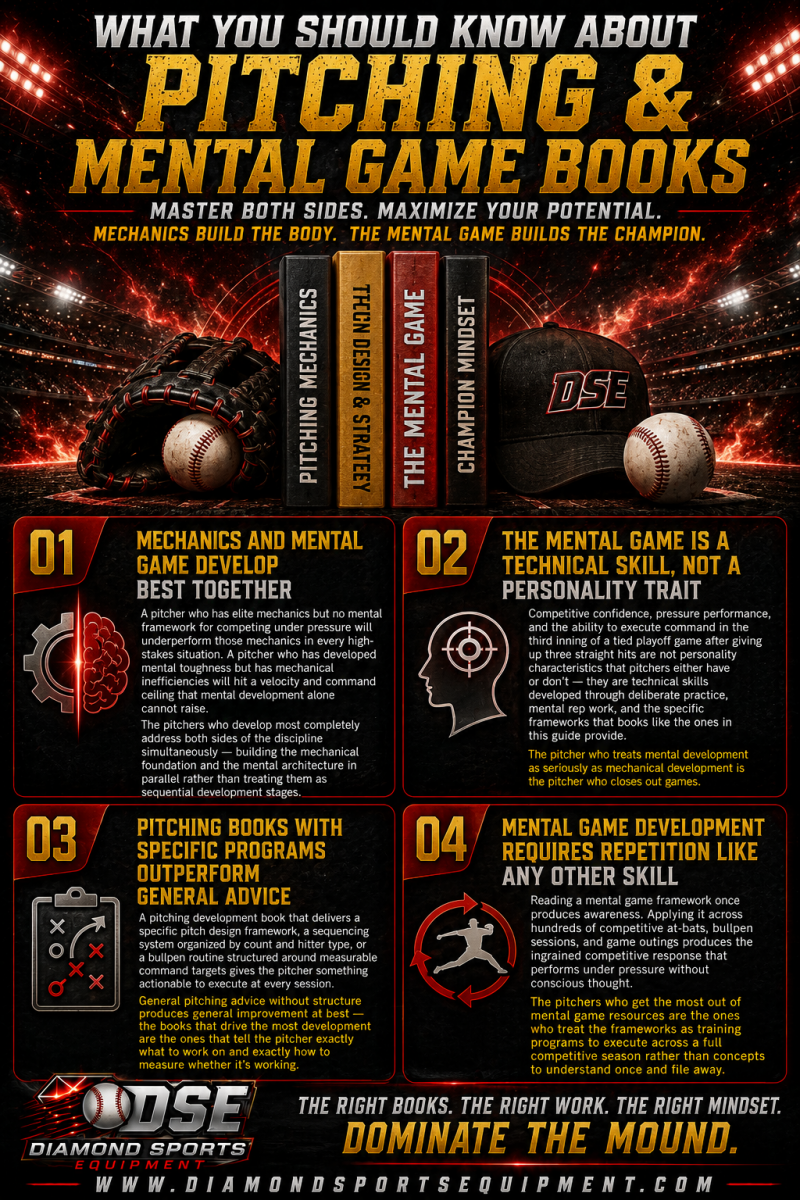
🎯 Mechanics and Mental Game Develop Best Together
Strong mechanics and a strong mental approach solve different parts of pitching performance, so neither should be treated as a substitute for the other. Technical resources can help players understand delivery, command, and pitch development, while mental-game books focus on preparation, confidence, focus, and responding to adversity.
🧠 The Mental Game Is a Technical Skill, Not a Personality Trait
Competitive confidence, pressure performance, and the ability to execute command in the third inning of a tied playoff game after giving up three straight hits are not personality characteristics that pitchers either have or don't — they are technical skills developed through deliberate practice, mental rep work, and the specific frameworks that books like the ones in this guide provide. The pitcher who treats mental development as seriously as mechanical development is the pitcher who closes out games.
📚 Match the Book to the Development Gap
A player struggling with delivery or command needs a different resource than one whose biggest challenge is confidence or pressure management. Choosing the book that addresses the most immediate development need makes the information easier to apply during practice and competition.
🧩 Age and Experience Change What Is Useful
Youth players generally benefit from straightforward routines and age-appropriate examples, while older players can work with more detailed mechanical or mental-performance frameworks. The best resource is one the player can understand, apply consistently, and connect to situations they actually encounter on the field.
🏆 Best Pitching & Mental Game Books (2026)
Six titles covering mechanical pitching mastery and mental game development — each matched to a specific player level, skill focus, and development stage.
🔥 Baseball Pitching Mastery: Guide To Becoming A Dominant Pitcher
Best For: Youth through high school pitchers who want a comprehensive foundational pitching development resource — covering mechanics, command, pitch design, and the competitive approach that builds a pitcher from a thrower into a genuine presence on the mound
Construction: A comprehensive pitching development resource organized around the mechanical fundamentals, command principles, and pitch design elements that separate pitchers who overpower hitters from ones who outthink and outmaneuver them — covering the full delivery sequence from grip through release point and the competitive approach that makes mechanics produce results when the game is on the line
Material: Written content delivering pitching instruction across the full development spectrum — mechanics, command, pitch selection, sequencing principles, and the competitive mindset work that allows every mechanical element to perform under the pressure conditions that game outings create for developing pitchers at every competitive level
Performance Feel: The resource that makes a developing pitcher realize how much of what they thought they knew about pitching was incomplete — and gives them a specific, organized framework for developing the mechanical consistency, command reliability, and competitive approach that dominant pitchers at every level share regardless of velocity or raw stuff
Ideal Player: The youth through high school pitcher who is serious enough about their development to work through a comprehensive pitching resource rather than relying on the fragmented, inconsistent instruction that rotating pitching coaches in team practice environments typically provide across a competitive season
Performance Overview: Baseball Pitching Mastery: Guide To Becoming A Dominant Pitcher delivers the comprehensive foundational framework that developing pitchers need to understand pitching as a complete discipline rather than a collection of individual mechanical cues and general competitive advice assembled from multiple coaches across multiple seasons without a coherent developmental structure connecting what they teach in one context to what the pitcher needs in the next. The mechanical instruction covers the full delivery sequence — grip, windup, leg drive, hip rotation, arm path, release point, and follow-through — as an integrated system where each element influences every other rather than as isolated checkpoints to address independently. The command development framework addresses the specific practice habits, target-setting principles, and bullpen organization that build reliable command across every quadrant of the zone rather than the vague "throw strikes" instruction that most youth pitchers receive without any guidance on how to make that happen consistently under game pressure. The pitch design component gives pitchers a framework for understanding what each pitch type does and why, how to sequence pitches to create the counts and contact patterns that favor the pitcher rather than the hitter, and how to adjust the approach when the original game plan stops producing outs in the middle of an inning.
Why It Stands Out:
- Covers the full pitching delivery as an integrated system rather than isolated mechanical checkpoints.
- Command development framework builds reliable zone control through specific bullpen practices rather than general instruction.
- Pitch design and sequencing component gives pitchers a systematic approach to managing hitters beyond raw stuff.
- Appropriate for the full youth through high school development range — accessible enough for developing players, substantive enough for competitive ones.
- Comprehensive resource that replaces the fragmented instruction pitchers typically receive across multiple coaches without a unified framework.
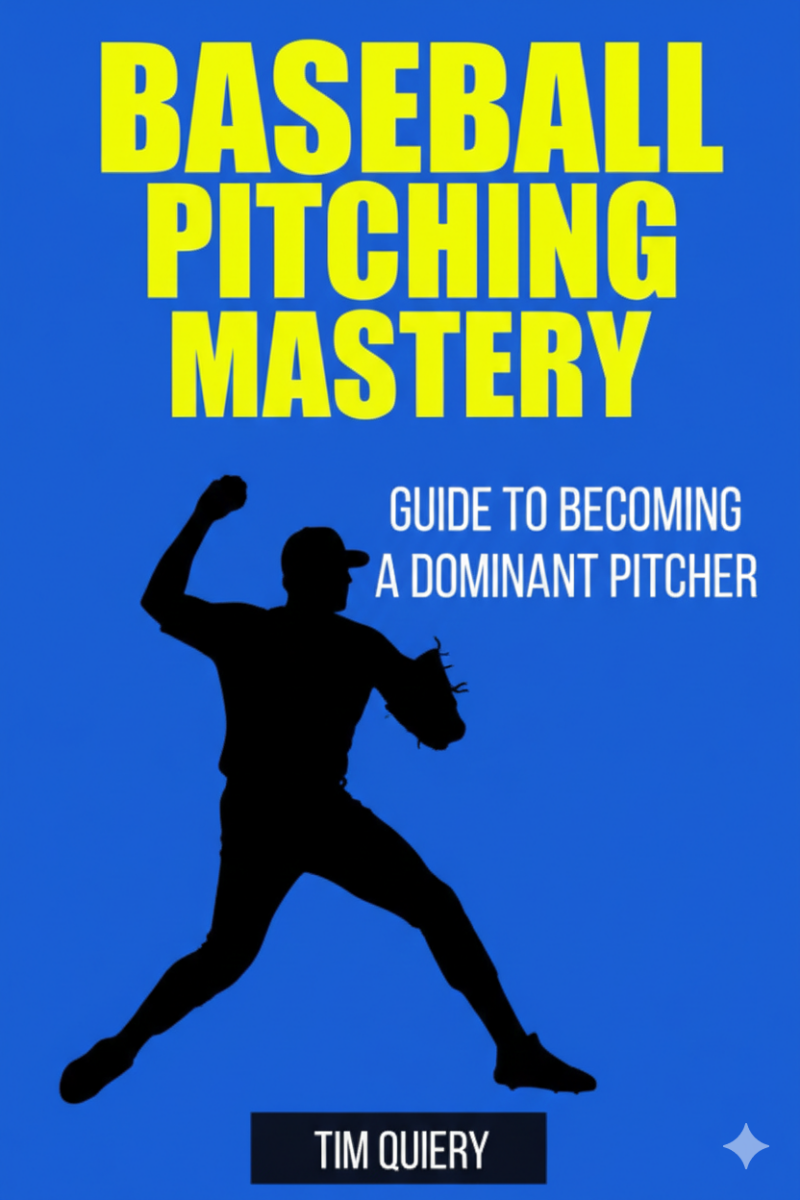
⚡ Baseball Pitching MASTERY: The NEW Guide to Becoming a Dominant Pitcher
Best For: High school and competitive youth pitchers who want the updated, expanded version of the Pitching Mastery framework — new instruction, updated pitch design principles, and the current best practices in pitching development that the competitive landscape of the modern game has driven into the most effective pitching instruction available
Construction: An updated comprehensive pitching development resource built on the original Pitching Mastery framework with new content, updated mechanical instruction, current pitch design principles, and the competitive approach refinements that reflect how pitching development has evolved alongside the analytical and biomechanical advances that have changed what coaches teach at the elite level
Material: Written content delivering updated pitching instruction across mechanics, command, pitch design, and competitive approach — with the new guide's expanded content reflecting the current state of pitching development knowledge rather than the frameworks that were standard before the biomechanical and analytical revolution changed what coaches at the highest levels teach and how they teach it
Performance Feel: The resource that gives a serious pitching student access to the most current thinking in pitching development — the updated frameworks, the refined mechanical instruction, and the pitch design principles that reflect how the game's best pitching minds have refined their approach in response to what the analytical era has revealed about what actually makes pitchers effective
Ideal Player: The competitive high school pitcher and the ambitious youth pitcher who has already worked through foundational pitching instruction and wants the updated, expanded framework that reflects the current best practices in the discipline — the player who treats pitching development as a serious academic pursuit rather than a casual seasonal activity
Performance Overview: Baseball Pitching MASTERY: The NEW Guide to Becoming a Dominant Pitcher delivers the updated comprehensive pitching development framework that the original Pitching Mastery resource built — refined with new mechanical instruction, updated pitch design principles, and the competitive approach frameworks that reflect the evolution of pitching development as a discipline over the period since the original guide was written. The updated mechanical instruction incorporates the biomechanical understanding that has advanced significantly in recent years — the hip-to-shoulder separation timing, the forearm lay-back mechanics, and the hip drive principles that the analytical era has validated as the mechanical characteristics shared by the most effective and durable pitchers at every level of the game. The updated pitch design section reflects how spin rate data, movement profiles, and the hitter tendencies that the analytical era has made available at every level have changed what pitch types pitchers develop and how they sequence them against different hitter profiles. For the pitcher who is serious enough about their development to treat it as a discipline with a current knowledge frontier rather than a set of timeless fundamentals that don't evolve, the NEW Guide delivers the most current comprehensive pitching development resource in the inventory.
Why It Stands Out:
- Updated mechanical instruction incorporates biomechanical advances that have changed elite-level pitching development.
- Revised pitch design principles reflect the spin rate and movement profile understanding the analytical era has produced.
- Expanded content addresses the competitive pitching landscape that has evolved significantly since the original guide.
- The most current comprehensive pitching development resource — not instruction from a decade ago applied to a game that has changed.
- Appropriate for the pitcher who treats development as a discipline with a current knowledge frontier rather than fixed fundamentals.

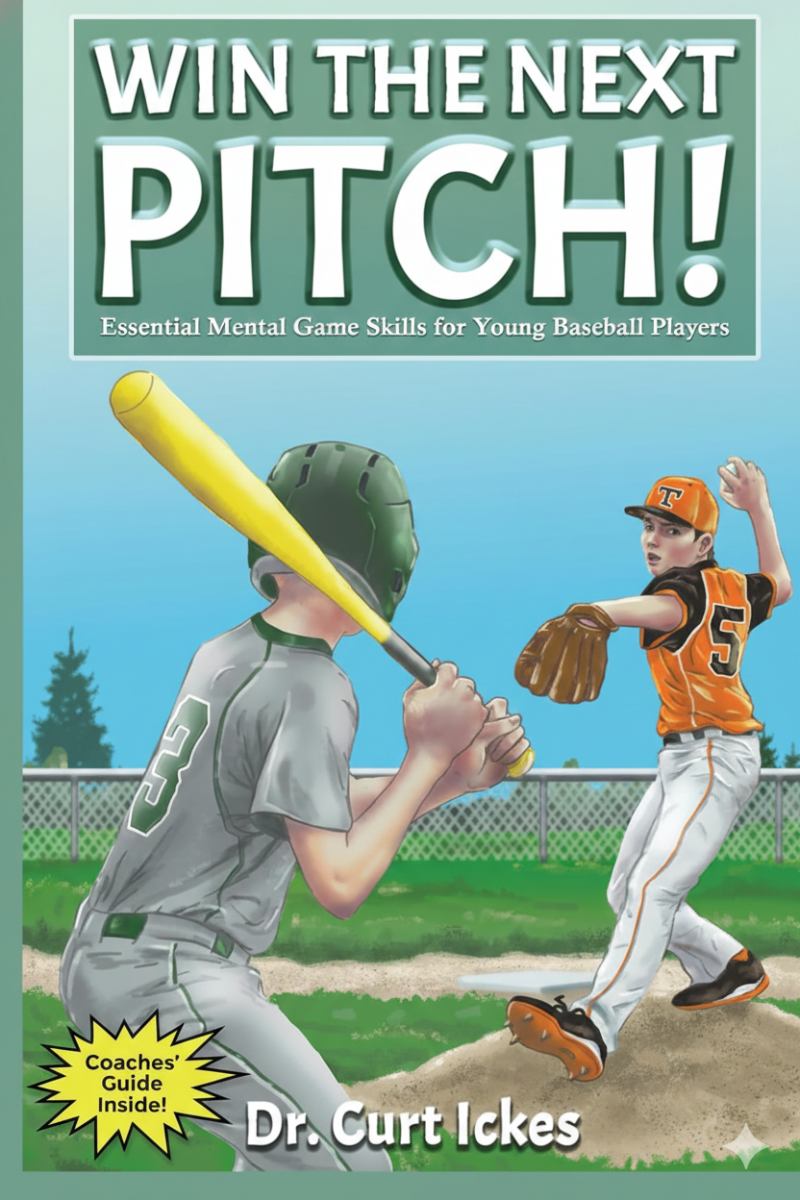
🧠 Win The Next Pitch!: Essential Mental Game Skills for Young Baseball Players
Best For: Youth and early high school pitchers and position players who want a mental game development resource specifically written for their age group and competitive context — addressing the pressure performance challenges, confidence management issues, and competitive mindset development that young baseball players face at the specific developmental stages where mental game instruction makes the biggest long-term impact
Construction: A youth-focused mental game development resource organized around the essential mental skills that young baseball players need to compete confidently under pressure — covering the pre-pitch routine development, failure response frameworks, and competitive confidence principles that are most relevant and most actionable for players in the youth through early high school competitive window
Material: Written content delivering age-appropriate mental game instruction for young baseball players — the pressure performance tools, confidence management frameworks, and competitive mindset principles that experienced mental performance coaches have identified as the highest-impact mental skills for players in the developmental window where mental game habits form and persist through the rest of the player's competitive career
Performance Feel: The mental game resource that speaks directly to the young baseball player rather than requiring them to extract relevant instruction from a framework written for professional athletes or adult competitors — age-appropriate examples, relatable pressure scenarios, and the specific competitive situations that youth and high school players actually face rather than the high-stakes professional scenarios that dominate adult mental game resources
Ideal Player: Youth players aged 10 through 16 and their parents and coaches who want a mental game development resource specifically calibrated for the developmental stage where mental game habits form most durably — the player who is already developing physically but whose mental approach to competition is inconsistent in ways that physical development alone will never address
Performance Overview: Win The Next Pitch!: Essential Mental Game Skills for Young Baseball Players addresses the development gap that most youth baseball programs ignore entirely — the mental game instruction that determines how a young player responds to failure, manages pressure situations, and competes with confidence across the full arc of a competitive season rather than just the games where everything goes right and the execution is easy. The essential mental skills framework is built specifically for young players — not a professional mental performance system scaled down for youth use, but a resource written for the specific competitive situations, developmental pressures, and confidence management challenges that players in the 10 through 16 age range actually encounter. The pre-pitch routine section gives young pitchers and hitters a specific, repeatable process for resetting focus between pitches rather than carrying the emotional residue of the previous one into the next at-bat or next pitch — the single mental habit that separates players who compete consistently through an entire game from those who spiral after one bad inning or one strikeout. The failure response framework addresses the most critical mental game skill for young players — how to process a bad pitch, a strikeout, or an error quickly enough that the next play gets the full competitive focus the situation deserves rather than the distracted, emotionally compromised effort that unresolved failure responses produce.
Why It Stands Out:
- Written specifically for youth players — not adult or professional mental game content scaled down for younger audiences.
- Pre-pitch routine framework gives young pitchers and hitters a specific, repeatable focus-reset process between pitches.
- Failure response instruction addresses the most critical mental skill for young competitive players — processing adversity quickly.
- Age-appropriate examples and pressure scenarios make the content immediately relatable and actionable.
- Builds the mental game habits during the developmental window where they form most durably and persist longest.
⚡ Performance Differences Between Pitching & Mental Game Books
The most important difference between these books is the development problem each one addresses. The two Pitching Mastery titles focus primarily on mechanics, command, pitch development, and mound strategy, while Win The Next Pitch!, BETTER BASEBALL, Baseball Hitting Mindset, and Diamond Positive focus more heavily on confidence, routines, adversity response, competitive mindset, and the mental side of performance.
Players do not necessarily need to choose physical development or mental development exclusively — the better starting point is the area currently limiting their progress the most. Pitchers building the physical side alongside their reading can explore 💪 Speed, Strength & Velocity Training Tools (2026), while players who want equipment specifically focused on pitching development can use ⚒️ Pitching & Arm Development Tools (2026).
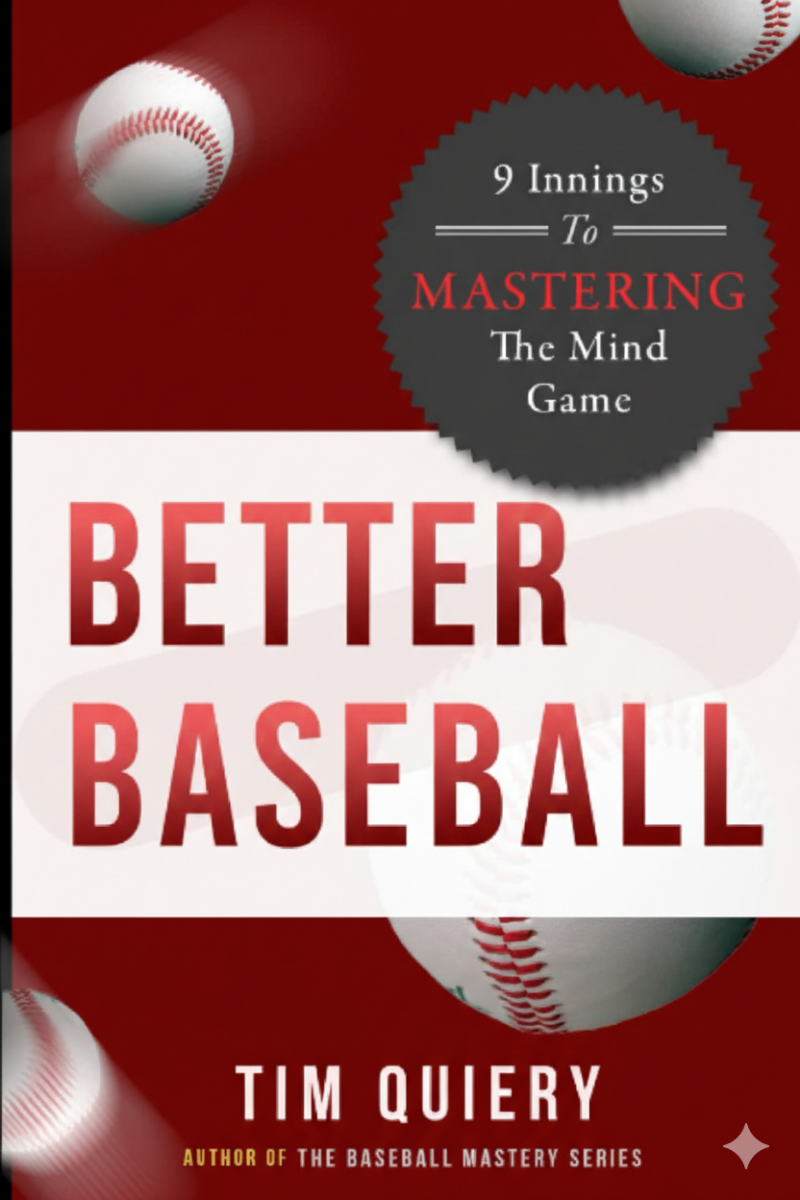
💪 BETTER BASEBALL: 9 Innings to Mastering the Mind Game
Best For: High school and competitive adult players who want a structured, chapter-by-chapter mental game development program built around the nine innings of a baseball game — using the game's natural structure as the organizational framework for delivering the mental skills, competitive mindset principles, and pressure performance tools that complete baseball players develop across every inning of every game
Construction: A mental game development resource organized around the nine innings of a baseball game — each inning delivering a specific mental skill, competitive principle, or mindset framework that builds the complete mental game one chapter at a time through the same sequential structure that a complete nine-inning game builds the competitive narrative of every baseball contest
Material: Written content delivering a nine-inning mental game development program — covering the pre-game mental preparation, in-game focus and adjustment principles, adversity response frameworks, clutch performance tools, and the post-game mental processing habits that the most mentally complete baseball players use to compete at their best across the full arc of a competitive game and a full competitive season
Performance Feel: The mental game resource that uses the game's own structure to deliver its instruction — making the nine-inning framework immediately intuitive for any baseball player who has lived the emotional arc of a complete game and who will recognize every mental challenge and competitive situation the book addresses from their own competitive experience
Ideal Player: The high school and competitive adult player who has enough competitive experience to recognize the mental game challenges the book addresses from their own experience — the player who has felt the focus drift in the sixth inning, the pressure spike with the bases loaded in a tie game, and the emotional carrying effect that a bad at-bat or a costly error produces on the pitches and plays that follow it
Performance Overview: BETTER BASEBALL: 9 Innings to Mastering the Mind Game delivers mental game development through the most intuitive organizational framework a baseball player could encounter — the nine innings that every competitive player has lived through enough times to recognize every mental challenge and pressure situation the book addresses as something they have personally experienced on a real diamond in a real game that mattered. The nine-inning structure builds the mental game chapter by chapter the way a complete performance builds inning by inning — starting with the pre-game mental preparation that sets the competitive tone before the first pitch and progressing through the in-game focus management, adversity response, and clutch performance execution that the late innings of a tight game demand from players who have run out of casual innings and must compete at their full mental capacity through every remaining pitch. The adversity response chapters address the mental game reality that every baseball player encounters repeatedly — the bad inning that creates emotional momentum problems, the error that lingers in the body longer than the play lasted, and the slump that compounds itself because the mental approach deteriorates alongside the statistical results until the player actively intervenes with the specific frameworks the book provides.
Why It Stands Out:
- Nine-inning organizational framework makes mental game instruction immediately intuitive for any experienced baseball player.
- Covers the full competitive mental arc from pre-game preparation through late-inning pressure performance.
- Adversity response chapters address the mental game reality that every competitive player encounters repeatedly.
- In-game focus management instruction builds the adjustment skills that separate consistent competitors from streaky ones.
- The most structurally creative mental game resource in the guide — the format reinforces the content by mirroring the game.
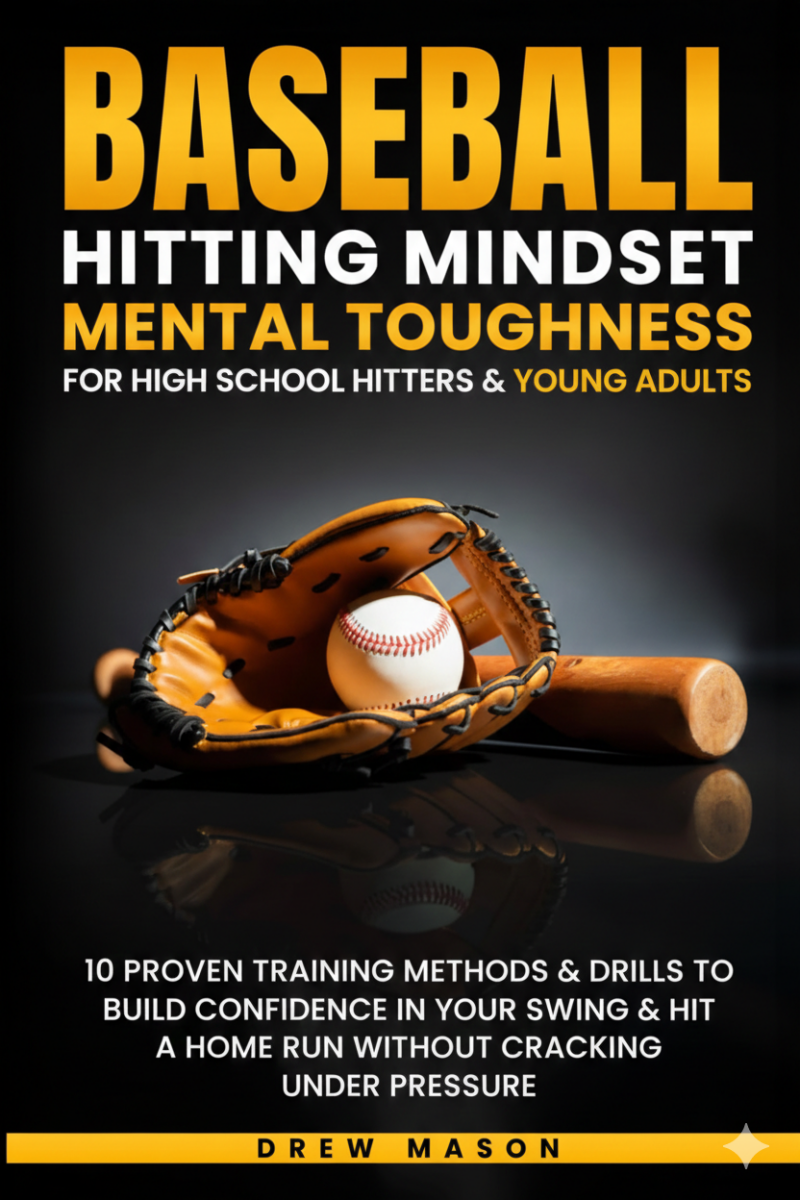
🔑 Baseball Hitting Mindset Mental Toughness for High School Hitters & Young Adults
Best For: High school hitters and young adult players who want a mental toughness development resource specifically written for the competitive pressures, confidence challenges, and performance anxiety that high school and young adult baseball players face — the age group where the mental game gap between players with similar physical tools most clearly determines who competes successfully at the next level
Construction: A mental toughness development resource built specifically for high school hitters and young adults — addressing the confidence management, performance anxiety, competitive pressure response, and mental approach principles that are most relevant to the specific competitive and developmental pressures that high school and young adult baseball players encounter at the stage where mental development has its most significant impact on competitive outcomes
Material: Written content delivering mental toughness instruction calibrated for high school hitters and young adult players — the performance anxiety management tools, confidence development frameworks, pressure situation execution principles, and the competitive identity development that serious players at this developmental stage need to compete at their full physical capacity rather than operating well below it because the mental game is limiting what the physical tools can deliver
Performance Feel: The mental toughness resource that addresses the high school competitive environment specifically — the tryout anxiety, the starting lineup pressure, the college recruiting visibility stress, and the peer comparison mental load that high school players carry into every at-bat and that no amount of batting cage work addresses because the mental game challenge is entirely separate from the mechanical one
Ideal Player: The high school hitter and young adult player whose physical tools are ahead of their mental game — the player who performs better in practice than in games, who struggles at the plate when the stakes feel elevated, or whose confidence fluctuates based on recent results in ways that produce inconsistent performance that their coaches and parents know doesn't reflect what the player is actually capable of delivering
Performance Overview: Baseball Hitting Mindset Mental Toughness for High School Hitters & Young Adults addresses the development gap that separates high school hitters who compete at their full physical capacity from those who deliver inconsistent performance that fluctuates with their confidence rather than their skill level — the mental game gap that physical development alone never closes and that most high school programs address only superficially if they address it at all. The performance anxiety management framework gives high school hitters the specific tools to recognize the physical and mental symptoms of competitive anxiety before they compromise the at-bat — the muscle tension that starts in the hands before the first pitch, the narrowed attention that misses the pitcher's grip change in the wind-up, and the forward thinking that has already processed the swing before the pitch is released. The confidence development framework distinguishes between the conditional confidence that fluctuates with recent results and the unconditional competitive confidence that successful high school hitters develop through a specific process that does not depend on recent performance to remain functional under the pressure conditions that high-stakes at-bats create. The recruiting visibility section addresses the mental load that high school players with college ambitions carry into every game they know a college coach is attending — the most common source of performance anxiety in high school baseball that has nothing to do with the pitcher they are facing and everything to do with the mental framework they are bringing to the at-bat.
Why It Stands Out:
- Written specifically for high school hitters and young adults — not a professional mental game resource adapted for a younger audience.
- Performance anxiety management tools address the physical and mental symptoms before they compromise the at-bat.
- Confidence development framework builds unconditional competitive confidence that doesn't depend on recent results.
- Recruiting visibility pressure section addresses the specific mental load that college-bound high school players carry.
- Closes the gap between practice performance and game performance that physical development alone never addresses.
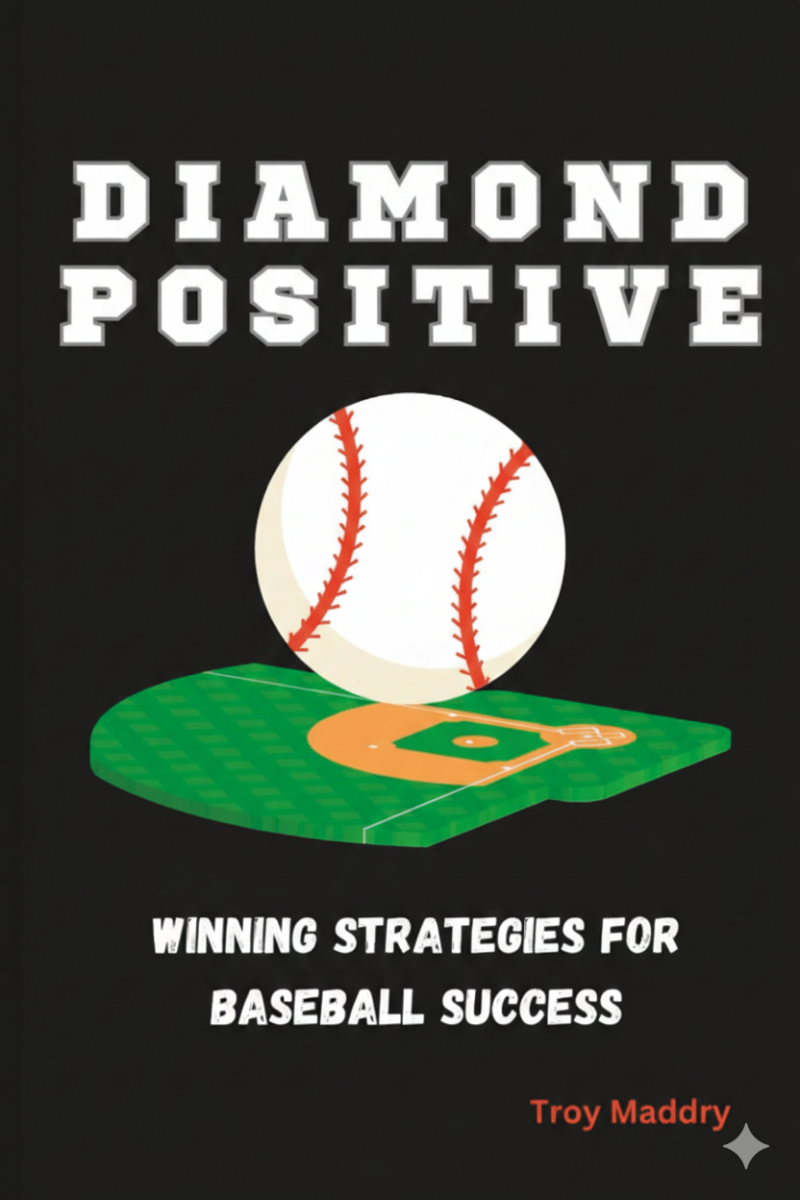
🌟 Diamond Positive: Winning Strategies for Baseball Success
Best For: Players, coaches, and baseball families at every competitive level who want a complete winning mindset and success strategy resource built around the positive competitive philosophy that experienced coaches and successful players have identified as the foundation of sustained baseball success across a full development career
Construction: A comprehensive winning strategies resource organized around the positive competitive philosophy, team culture principles, individual success habits, and the baseball-specific mindset frameworks that drive sustained success at every level of the game — from the individual player's approach to every at-bat through the team culture and competitive identity that winning programs build over time
Material: Written content delivering winning strategies for baseball success — the positive competitive philosophy, individual success habits, team culture principles, and the baseball-specific mindset frameworks that the most successful players and programs at every level have developed through careers spent studying what actually produces winning baseball rather than what looks impressive in a recruiting video or a showcase stat line
Performance Feel: The resource that reframes what baseball success means and how it is built — shifting the focus from the individual performance metrics that players and families typically fixate on to the competitive philosophy, success habits, and team culture elements that experienced coaches and long-time players identify as the real drivers of the sustained success that appears in the box score as a byproduct rather than the direct object of the effort
Ideal Player: Players at every competitive level, coaches building a program culture, and baseball families who want a complete winning philosophy resource — the player who wants to understand what successful baseball looks like beyond the personal statistics, the coach who wants a cultural framework for building a program that develops winners rather than just developing individual players, and the family that wants to support their player's baseball development with the right philosophical foundation
Performance Overview: Diamond Positive: Winning Strategies for Baseball Success closes out this guide as the broadest and most philosophically complete resource in the lineup — a winning strategies framework that addresses baseball success at every level simultaneously rather than narrowing to a single player type, a single skill area, or a single competitive stage. The positive competitive philosophy at the foundation of the book addresses the mental approach that produces sustained success across a full development career — the focus on process over outcomes, the competitive identity that doesn't fracture under adversity, and the team-first mindset that the most successful baseball programs at every level of the game identify as the cultural characteristic that separates programs that develop individual talent into team success from ones that develop individual talent into collection of individuals who happen to wear the same uniform. The individual success habits section gives players the specific daily practices, preparation routines, and competitive habits that winning players develop through careers of deliberate attention to what produces results across a full competitive season rather than in isolated moments of individual performance. The team culture principles give coaches and program leaders the specific cultural elements that the most successful programs build intentionally rather than allowing to develop accidentally through the random combination of individual personalities that a roster produces without deliberate culture construction.
Why It Stands Out:
- Broadest philosophical scope in the guide — addresses winning strategies at every level from individual player through team culture.
- Positive competitive philosophy shifts focus from metrics to the process habits that produce sustained success.
- Individual success habits give players specific daily practices and preparation routines rather than general competitive advice.
- Team culture principles give coaches a specific framework for building program culture deliberately rather than accidentally.
- Appropriate for players, coaches, and families simultaneously — the most universally applicable resource in the guide.
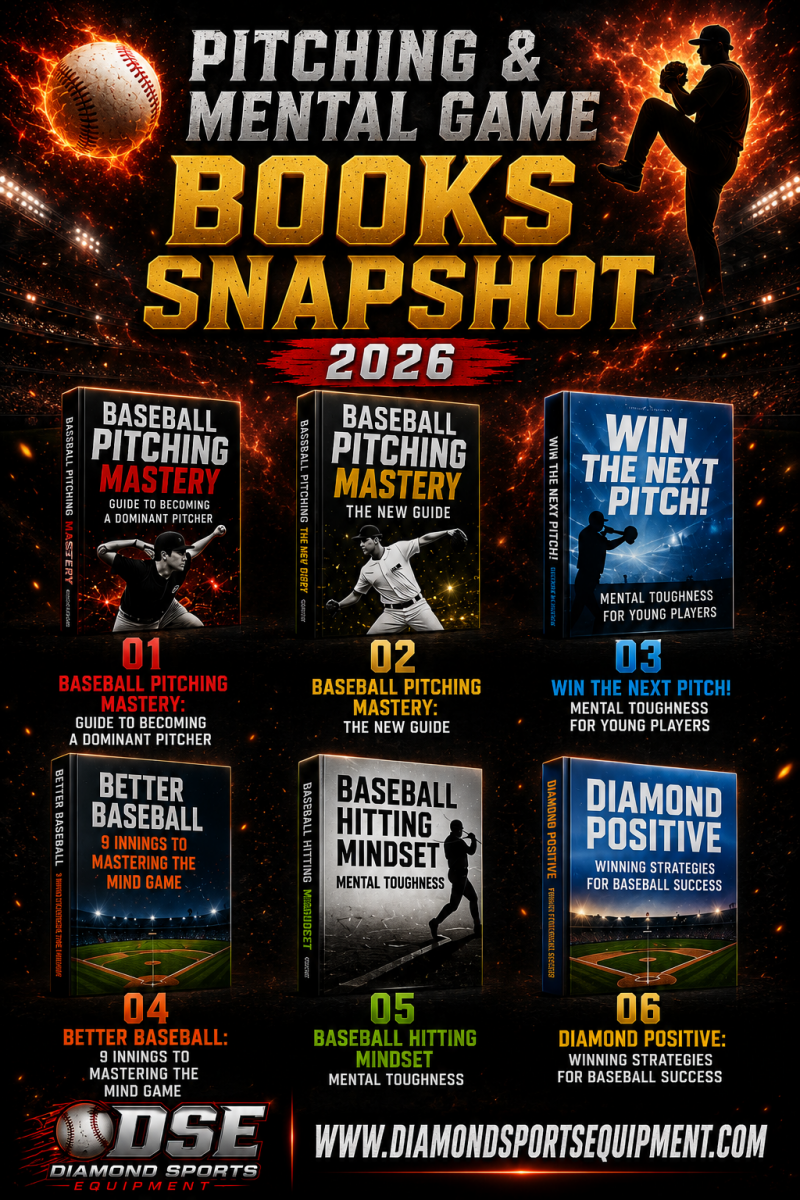
📊 Pitching & Mental Game Books Snapshot (2026)
- 🔥 Baseball Pitching Mastery: Guide To Becoming A Dominant Pitcher — Comprehensive foundational pitching resource covering mechanics, command, pitch design, and competitive approach for youth through high school pitchers.
- ⚡ Baseball Pitching MASTERY: The NEW Guide — Updated framework with current biomechanical instruction, revised pitch design principles, and the competitive development advances that reflect how pitching has evolved.
- 🧠 Win The Next Pitch! — Youth-focused mental game resource delivering pre-pitch routines, failure response frameworks, and essential mental skills for players in the developmental window where habits form most durably.
- 💪 BETTER BASEBALL: 9 Innings to Mastering the Mind Game — Nine-inning mental game program covering pre-game preparation through late-inning pressure performance using the game's own structure as the instructional framework.
- 🔑 Baseball Hitting Mindset Mental Toughness — High school and young adult specific mental toughness resource addressing performance anxiety, confidence development, and recruiting visibility pressure.
- 🌟 Diamond Positive: Winning Strategies for Baseball Success — Complete winning philosophy covering positive competitive mindset, individual success habits, and team culture principles for players, coaches, and families.
❓ FAQ
Should a pitcher focus on mechanics or mental game first?
- Mechanics and mental skills can develop together, but the player's biggest current weakness should determine where the most attention goes.
- A pitcher with repeatable mechanics may benefit from more mental-game work, while mechanical inconsistency still requires technical practice alongside mindset development.
At what age should a pitcher start studying pitching books?
- There is no universal starting age; players can begin when they are able to understand and apply age-appropriate baseball instruction.
- Youth-focused mental-game resources can work earlier, while detailed mechanical books become more useful as players gain enough experience to connect the concepts to their own pitching.
Can mental game books help position players or are they just for pitchers?
- The mental game resources in this guide are explicitly relevant for position players — BETTER BASEBALL, Baseball Hitting Mindset, and Diamond Positive all address the full competitive mental game rather than pitching-specific mental challenges.
- Hitters face the same pressure performance, confidence management, and failure response demands that pitchers do — the mental game discipline is as important at the plate as it is on the mound.
How do I get the most out of a baseball mental game book?
- Treat the frameworks as training programs to execute across a full competitive season rather than concepts to understand once — the mental skills build through repeated application in real competitive situations, not through reading comprehension alone.
- Keep notes on which specific frameworks apply most directly to the mental game challenges your own competitive experience produces — personalizing the application accelerates the development that general reading produces more slowly.
🧢 Final Thoughts
The strongest choice in this guide depends on whether the player currently needs more help understanding pitching mechanics and mound strategy or developing the mental habits that support performance under pressure. The two Pitching Mastery titles address the technical side of pitching development, while Win The Next Pitch!, BETTER BASEBALL, Baseball Hitting Mindset, and Diamond Positive cover different parts of the mental game for youth players, high school hitters, experienced competitors, coaches, and families.
Reading alone does not replace practice, but the right book can give players a clearer framework for what they are trying to improve and how to approach that work more deliberately. Players who want the complete reading library can explore 📚 Best Baseball Training Books (2026), while the full collection of equipment and training guides remains available through 📝 Diamond Sports Equipment Blog & Gear Reviews.
Add comment
Comments