The best baseball training tools help players improve specific skills faster than game reps alone. Whether you're trying to increase bat speed, build throwing velocity, sharpen command, improve swing mechanics, or create a more productive solo practice routine, the right training equipment can dramatically accelerate development.
The biggest mistake most players make is buying tools that don't match their actual weaknesses. A radar gun won't fix swing mechanics. A swing trainer won't improve command. The most effective training setup combines tools that target specific skill gaps while providing immediate feedback that turns practice into measurable improvement.
If you're building a complete player-development setup, check out 📚 Best Baseball Training Books (2026) and ⚾ Best Baseballs for Games & Practice (2026) for additional development resources.
⚾ What You Should Know About Baseball Training Equipment

🏠 Solo-Capable Design Is What Makes Daily Use Realistic
Tools that require a partner, coach, or feeder often sit unused between practices. Tools that work completely independently are the ones players actually use every day, and daily repetition is what drives long-term skill development.
🎯 Match the Tool to the Specific Skill Gap
Different tools solve different problems. Swing trainers improve bat path. Radar guns measure arm strength. Resistance bands support arm care and durability. The best results come from matching the tool to the specific weakness you're trying to improve.
📐 Measurement Tools and Development Tools Serve Different Purposes
Radar guns and swing analyzers measure what a player is already doing, while resistance bands, reaction trainers, and swing-path tools actively create the repetitions that improve performance. The strongest training setups use both types together — development tools to change the skill and measurement tools to confirm whether those changes are producing better speed, mechanics, consistency, or reaction time.
🔄 Versatility Creates More Training Value
Players on a budget should prioritize equipment that serves multiple drills and multiple development goals. Versatile training tools allow hitters, pitchers, and position players to maximize practice value without building an expensive training setup.
🏆 Best Baseball Training Tools & Equipment
These six training tools help players develop swing mechanics, pitching velocity, reaction speed, and overall athletic performance.
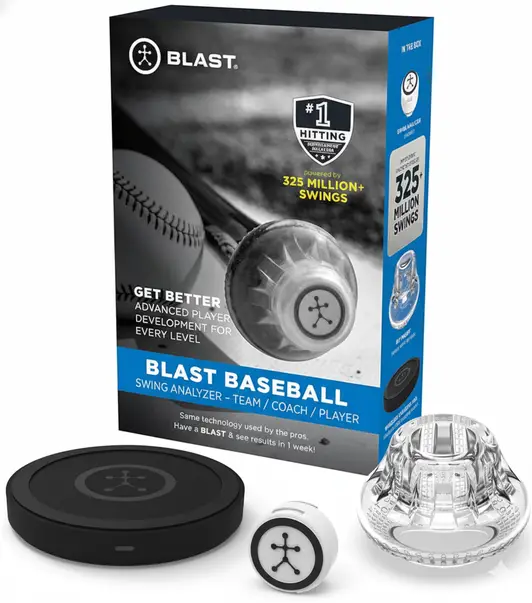
🥇 Blast Baseball Swing Analyzer
-
Best For: Advanced Swing Analytics and Data-Driven Hitting Development.
-
Construction: High-precision motion sensor with a secure, universal bat-attachment sleeve.
-
Material: Lightweight sensor housing with a flexible bat-knob attachment sleeve designed to fit standard and Axe-style bat knobs.
-
Performance Feel: Lightweight and unobtrusive during normal swings, with swing metrics and automatically clipped video delivered through the Blast Baseball app for immediate review.
-
Ideal Player: Competitive high school, collegiate, and professional hitters.
-
Performance Overview: The Blast Baseball Swing Analyzer is the industry leader for quantifying the physics of a baseball swing. By attaching the sensor to the knob of any standard bat, players and coaches gain access to a suite of professional-grade metrics including bat speed, rotational acceleration, and attack angle. This tool eliminates the guesswork from hitting instruction by providing a "digital fingerprint" of every swing. The real-time synchronization with the Blast mobile app allows for instant video clipping with data overlays, making it easy to visualize how mechanical adjustments impact performance. It is an essential component for any hitter looking to optimize their power and consistency through objective measurement rather than subjective feel.
-
Why It Stands Out:
- Tracks core swing metrics including bat speed, attack angle, time to contact, peak hand speed, rotational acceleration, and on-plane efficiency.
- Automated video editing clips swings and overlays data for instant review.
- Used by over 80% of MLB teams for scouting and player development.
🥈 SKLZ Reaction Ball – Reflex and Agility Trainer
-
Best For: Developing Defensive Reflexes and Hand-Eye Coordination.
-
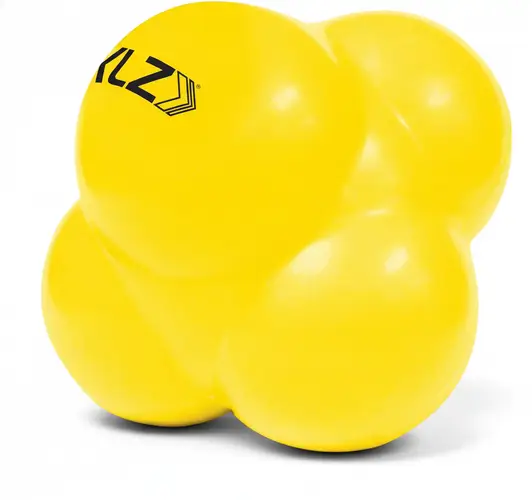
Construction: Unique multi-sided, six-knobbed design for unpredictable bounce patterns.
-
Material: High-density, durable solid rubber.
-
Performance Feel: Erratic and high-energy; requires total visual focus and quick lateral movement.
-
Ideal Player: Infielders, catchers, and youth players building fundamental agility.
-
Performance Overview: The SKLZ Reaction Ball – Reflex and Agility Trainer uses its six-sided high-bounce rubber design to create unpredictable rebounds that challenge hand-eye coordination, reaction time, speed, coordination, and depth perception. It works for solo wall drills or partner work and gives players a simple way to add fast reaction reps without a complicated training setup.
-
Why It Stands Out:
- Six-knob design creates total unpredictability to challenge even elite athletes.
- Solid rubber construction allows for use on dirt, concrete, or gym floors.
- Small, portable size makes it an easy addition to any equipment bag.
🥉 FITPLAY Baseball Radar Gun with Tripod
-
Best For: Objective Velocity Tracking for Pitchers and Position Players.
-
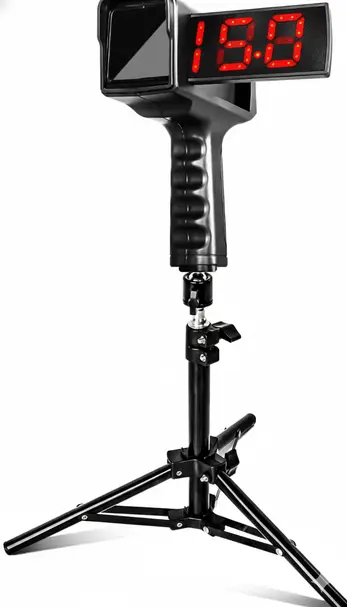
Construction: Digital Doppler-style sensor with a dedicated high-stability tripod mount.
-
Material: Reinforced ABS plastic housing with a backlit LCD display.
-
Performance Feel: Intuitive and responsive; provides clear, large-digit readings from a distance.
-
Ideal Player: Pitchers working on velocity programs and coaches running tryouts.
-
Performance Overview: The FITPLAY Baseball Radar Gun with Tripod provides portable velocity tracking for pitchers, coaches, and training sessions with a listed measurement range of 3–150 MPH and ±1 MPH accuracy. It can store the previous 10 readings, uses both LED and LCD displays for visibility, and can operate handheld or from the included tripod for more consistent measurement positioning.
-
Why It Stands Out:
- Tripod-mounted design ensures consistent measurement angles and accuracy.
- Bright, high-contrast display is easily readable in direct sunlight.
- Wide speed range is ideal for both pitching and exit velocity tracking.
⚡ Performance Differences
The biggest performance differences between baseball training tools come from whether the equipment measures performance, changes mechanics, builds physical capacity, or creates more productive repetitions. Swing analyzers and radar guns provide objective data that helps players track changes over time, while resistance bands and speed-training systems develop the strength and movement qualities behind those numbers. Reaction trainers and rope-based swing tools work more directly on coordination and mechanics by giving immediate physical feedback during each rep, which makes them useful for players trying to correct a specific weakness rather than simply measure it. Players who want to isolate defensive development can compare more specialized options in 🏟️ Fielding & Practice Tools for 2026, while pitchers focused primarily on command and location feedback can narrow the training setup further with 🎯 Pitching Targets & Rebounders (2026).
🏅 Jaeger J-Bands Resistance Bands for Pitchers
-
Best For: Arm Conditioning, Shoulder Health, and Velocity Maintenance.
-
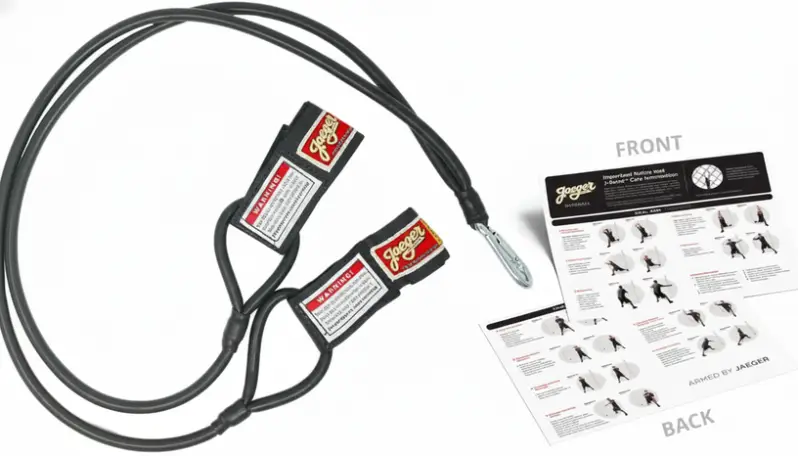
Construction: Heavy-duty surgical tubing with padded wrist cuffs and fence anchors.
-
Material: Premium-grade latex with industrial-strength nylon stitching.
-
Performance Feel: Smooth, progressive resistance that targets the deep rotator cuff muscles.
-
Ideal Player: All serious pitchers from youth league through professional levels.
-
Performance Overview: The Jaeger J-Bands Resistance Bands for Pitchers are built around Jaeger Sports' established arm-care program, which uses an 11-exercise routine to balance, strengthen, and condition the rotator cuff and surrounding throwing muscles. They are best used as part of the manufacturer's prescribed routine rather than as generic resistance bands, with proper clip placement and stretch limits followed during every session.
-
Why It Stands Out:
- Specifically designed for the unique biomechanics of the baseball throwing motion.
- Internal safety cord prevents over-stretching and increases product lifespan.
- Includes a specialized exercise chart to ensure proper form and maximum benefit.
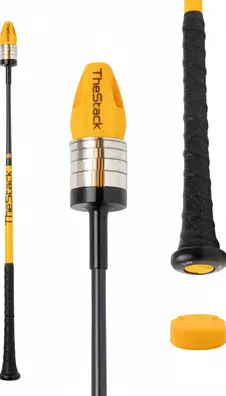
⚾ TheStack Baseball Swing Speed Training System
-
Best For: Increasing Exit Velocity and Rotational Power.
-
Construction: Progressive weighted system with a variable-load training bat.
-
Material: Aerospace-grade alloy shaft with precision-machined steel weights.
-
Performance Feel: Weighted to challenge the fast-twitch fibers; provides a high-velocity "snap".
-
Ideal Player Type: High school and collegiate hitters focused on elite power gains.
-
Performance Overview: The TheStack Baseball Swing Speed Training System combines five milled training weights that create 30 different weight configurations from 0 to 400 grams with an integrated sensor and adaptive app programming. The system uses baseline and training data to adjust future workouts around bat-speed development, and TheStack reports an average 4.5 MPH bat-speed gain among users who complete at least one training program.
- Adaptive app programming adjusts future workouts using baseline and training-session data.
- One tool replaces a full set of weighted bats, saving space and cost.
- TheStack reports an average 4.5 MPH bat-speed gain among users who complete at least one program.
🧢 GoSports Baseball & Softball Rope Swing Trainer
- Best For: Baseball and softball hitters working on swing path, connection, barrel control, and repeatable contact during tee or soft-toss practice.
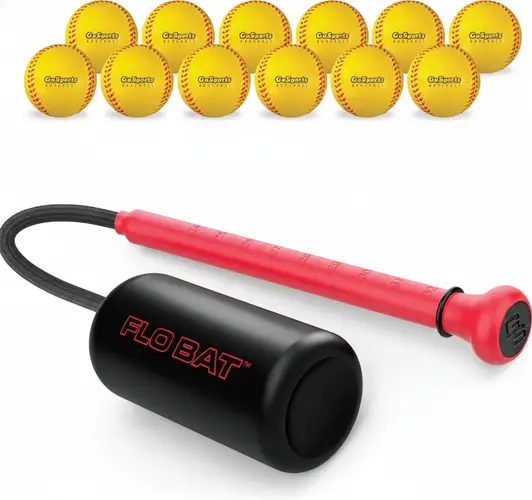
- Construction: The GoSports Baseball & Softball Rope Swing Trainer uses the FLO BAT training design with a firm barrel, realistic handle and knob, adjustable 25–34 inch grip, and fray-resistant double-braided rope. The set also includes 12 foam baseballs and a carrying tote.
- Material: Durable foam training construction with a firm barrel, double-braided rope, and foam practice balls designed for repeated hitting drills.
- Performance Feel: Feedback-heavy training feel that makes weak contact, bat drag, casting, and inefficient swing paths easier to recognize while allowing hitters to adjust the grip length to better match their normal bat setup.
- Ideal Player: Youth through advanced baseball and softball hitters using tee work or soft toss to improve connected swing mechanics and barrel control.
- Performance Overview: The GoSports Baseball & Softball Rope Swing Trainer is built around GoSports' FLO BAT system, which uses an adjustable training bat and foam balls to provide immediate feedback on contact quality, casting, looping, bat drag, and swing path. The adjustable 25–34 inch grip accommodates different player sizes, and GoSports specifies using the included foam balls for tee work or soft-toss training.
- Why It Stands Out:
- Adjustable 25–34 inch grip.
- Includes 12 foam baseballs and carrying tote.
- Firm training barrel with realistic handle and knob.
- Fray-resistant double-braided rope construction.
- Designed for tee work and soft toss with the included foam balls.

📊 Training Tools Snapshot (2026)
- 🥇 Blast Baseball Swing Analyzer — Data-driven swing analysis and performance tracking
- 🥈 SKLZ Reaction Ball — Improves reflexes, reaction time, and defensive agility
- 🥉 FITPLAY Baseball Radar Gun — Tracks pitching velocity and throwing progress
- 🏅 Jaeger J-Bands Resistance Bands — Essential arm care and pitching strength training
- ⚾ TheStack Baseball Swing Speed Training System — Structured program for increasing bat speed
- 🧢 GoSports Baseball & Softball Rope Swing Trainer — Repetition-based hitting trainer for swing mechanics.
❓ FAQ
What training equipment is most useful for baseball players?
- Swing analyzers, resistance bands, radar guns, and reaction trainers are some of the most effective tools for improving baseball performance.
Do baseball training tools really improve performance?
- They can when the tool matches the specific skill being trained and is used consistently.
- Measurement tools can track progress, while skill-specific trainers can reinforce mechanics, reaction work, velocity development, or repetition.
- No single training product improves every part of baseball performance on its own.
Are these tools suitable for youth players?
- Many are, but age, resistance level, equipment size, and manufacturer instructions matter.
- Reaction balls and appropriately sized hitting trainers can work well for younger players when used correctly.
- Resistance systems should follow the manufacturer's age guidance; for example, Jaeger lists standard J-Bands for players age 13 and older and J-Bands Jr. for players age 12 and younger.
🧢 Final Thoughts
The best baseball training tools make practice more efficient, more measurable, and more productive. Whether you're building bat speed, improving command, developing throwing velocity, or creating a better solo practice routine, the right equipment allows players to improve specific skills faster than game reps alone.
The most valuable training tools are not necessarily the most expensive. They're the tools that get used consistently, provide meaningful feedback, and help players turn practice time into measurable improvement.
For more player-development resources, explore 🎯 Pitching Targets & Rebounders (2026) and 💰 Budget Training Tools (2026) to continue building a complete training setup.