The most overlooked development tool in most baseball players' equipment bags is not a training aid, a swing analyzer, or a weighted ball — it is a book. The physical training tools get the most attention, the most purchase discussion, and the most shelf space in equipment bags across every level of the game. The book that changes how a pitcher thinks about sequencing, how a hitter understands the kinetic chain of their swing, how a parent learns to support their child's development without undermining the process — that book gets left on the kitchen table or never purchased at all because the marketing around it is quieter than the marketing around the bat, the glove, and the training gadget that promises faster results with less work. What serious baseball development actually requires is both — the physical training tools that build the body's capacity for the game, and the conceptual framework that tells the athlete and the people around them how to use that capacity intelligently. A pitcher with elite velocity and no understanding of pitch sequencing, count management, and hitter tendencies is leaving the most important dimension of their craft undeveloped. A hitter with excellent bat speed and no mental routine for the plate approach is letting the game's most pressure-filled individual contest happen to them rather than competing within it deliberately. A parent or coach who has never read anything about the college recruiting process is navigating one of the most consequential decisions in a young athlete's career without the information that changes outcomes. Books close those gaps — and the right books close them faster and more completely than any amount of unstructured experience alone.
The 2026 baseball training book category covers every gap that the physical training environment consistently leaves open — pitching mechanics and mound strategy from the ground up, hitting mechanics and the kinetic chain of a productive swing, the mental game and pre-pitch routine that separates consistent hitters from talented ones, the drill library that turns practice time into development time, the situational intelligence that makes athletic players smart players, and the strategic planning tools that coaches and advanced players use to organize and execute the game at its highest level. For the physical training tools that pair with every book in this guide, check out 💪 Speed, Strength & Velocity Training Tools (2026) for the equipment that builds the physical foundation these books are designed to develop. Players and coaches who want the full training equipment picture alongside this book guide should also explore ⚾ Best Baseball Training Tools & Equipment (2026) for the complete training tool breakdown.
🥎 What You Should Know About Training Books

📖 Structured Learning Accelerates Development Faster Than Experience Alone
The player who learns from unstructured experience accumulates knowledge slowly — every lesson comes from making a mistake, waiting for the right situation to arise, or hoping the right coach provides the right instruction at the right moment. The player who reads systematically about the game accelerates that learning curve dramatically by accessing the distilled knowledge of experienced coaches, professional players, and sports scientists who have already made the mistakes, observed the patterns, and organized the insights into a framework the reader can apply immediately. A pitcher who reads about pitch sequencing before they have enough velocity to make the concept matter in competition arrives at the level where it does matter with the framework already in place — rather than having to learn it under competitive pressure when the margin for error is smallest.
🧠 Mental Game Knowledge Is the Most Underinvested Development Area
The physical development of a baseball player — the mechanics of the swing, the delivery of the pitch, the footwork of the fielder — receives the most structured coaching attention at every level of the game. The mental game — the pre-pitch routine, the at-bat approach, the management of failure, the focus strategies that keep a pitcher present through a long inning, the visualization techniques that prepare a hitter for the next at-bat before it arrives — receives far less structured attention and produces far more performance variance when it is underdeveloped. Books that specifically address the mental game fill the most consistently underserved development gap in youth and high school baseball, and the players who invest in that knowledge alongside their physical development consistently perform more reliably under pressure than equally talented athletes whose mental game was never intentionally developed.
📊 Situational Intelligence Separates Athletic Players From Smart Ones
Every youth baseball coach has coached the player who is physically talented but makes the wrong decision on a routine play — throws to the wrong base, misses the cutoff man, doesn't know where the force play is with two outs. That player's athletic ability isn't the problem. The problem is that situational intelligence — the understanding of where the ball should go, what the count means, how to read the base runner — was never systematically taught because the practice environment prioritized physical reps over the conceptual foundation that makes those reps add up to real baseball understanding. Books that specifically target baseball IQ and situational awareness build that conceptual foundation in a way that practice alone, without instruction, consistently fails to develop.
🏫 Recruiting Knowledge Changes Outcomes for the Players Who Have It
The college baseball recruiting process is one of the most information-asymmetric experiences a young athlete and their family can go through — the coaches on the other side of the process know exactly how it works, what the timelines are, what they are looking for, and what mistakes families consistently make. The families on the recruiting side are often navigating it for the first time without a guide, making decisions that affect the player's college opportunity based on assumptions that experienced recruiting consultants would immediately identify as counterproductive. Books that specifically address the college recruiting process give families the information that levels that asymmetry — not guaranteeing a specific outcome, but ensuring that the effort and investment the player and family make in the process is being directed by an informed framework rather than guesswork.
🏆 Best Baseball Training Books for 2026
These six books cover every development need in competitive baseball — pitching mechanics, hitting mastery, mental game development, drill library construction, situational intelligence, and strategic planning for players, coaches, and parents at every level.
📖 Baseball Pitching Mastery: Guide To Becoming A Dominant Pitcher
Best For: Pitchers and pitching coaches at the high school and competitive youth level who want a comprehensive technical and mental framework for mound performance — the pitcher who wants to understand not just how to throw harder but how to sequence pitches, read hitters, manage counts, and compete with intelligence that makes every pitch part of a larger strategic plan rather than an isolated physical act
Construction: Comprehensive technical guide integrating mechanical breakdown with mound strategy and mental preparation — a book whose structure takes the pitcher from physical foundation through the competitive intelligence that separates dominant pitchers from hard throwers at every level
Material: Instructional text combining biomechanical analysis of the pitching delivery with psychological conditioning frameworks for situational pitching — content that addresses both the physical and mental dimensions of pitching performance in a single resource rather than treating them as separate development tracks
Performance Feel: Analytical and disciplined — Baseball Pitching Mastery gives the reader the feeling of working with an experienced pitching coach who understands that the most complete pitcher is the one whose mechanics and mental game are developed in tandem rather than sequentially
Ideal Player Type: Pitchers at the youth through high school level who are serious about pitching as their primary development focus — players and coaches who want a single comprehensive resource that covers velocity, command, pitch mix, sequencing, count management, and the mental routine that makes those physical tools competitive under pressure
Performance Overview: Baseball Pitching Mastery: Guide To Becoming A Dominant Pitcher is the most comprehensive pitching development resource in this guide — a book whose scope covers the full range of what a pitcher needs to develop from a thrower who can get the ball to the plate into a competitor who understands how to win at-bats with the pitch arsenal and the physical tools they have at their current development stage. The mechanical foundation the book builds starts with the delivery's physical drivers — the lower half, the arm slot, the hip-to-shoulder separation that generates velocity and maintains arm health through a long competitive season — and then extends through the development of individual pitches that complement each other within a sequencing strategy rather than simply existing as independent offerings the pitcher rotates through without plan. The mental framework is the dimension that separates this resource from a pure mechanics manual: the book specifically addresses how pitchers develop the competitive intelligence to read hitters, adjust to situational demands within the game, and maintain the composure that sustained high-level pitching requires through the innings where the count runs deep, the runners are on base, and the margin between a quality start and a short outing comes down to how well the pitcher executes under the kind of pressure that only competitive game situations produce.
Why It Stands Out:
- Integrates mechanical development and mound strategy in a single resource rather than treating them as separate development tracks — building the complete pitcher who understands both how to throw and how to compete.
- Addresses the mental framework for situational pitching that most mechanical instruction guides leave entirely undeveloped — giving pitchers the competitive intelligence that makes their physical tools effective under pressure.
- Covers arm health through proper biomechanics alongside velocity and command development — the long-term development perspective that competitive pitching at every level requires from a resource guiding a player through their most important development years.
- Serves as a personal pitching coach in book form for players whose access to high-quality pitching instruction is limited by geography, schedule, or budget — bringing elite-level pitching development concepts to every player who reads it regardless of their program's coaching resources.

🏏 Baseball Hitting Mastery: The Art of a Line Drive Swing
Best For: Hitters at the youth through high school level who want a detailed mechanical breakdown of the baseball swing — the player who has been told what the swing should look like without being told why each mechanical element exists and how it contributes to the contact quality, exit velocity, and barrel control that competitive hitting demands at progressively higher levels of play
Construction: Detail-oriented instructional manual breaking the swing down into its constituent mechanical phases — the load, the stride, the hand path, the contact point, and the extension and follow-through — with specific instruction for each phase and visual descriptions that allow the player to apply the concepts independently without requiring a coach to translate from text to practice
Material: Technical guide focused on the kinetic chain of the swing and its relationship to line drive production, bat path discipline, and the adjustments that situational hitting in competitive baseball requires — content organized around the specific mechanical understanding that separates consistent contact hitters from boom-or-bust swing-and-miss alternatives at the same skill level
Performance Feel: Precise and high-energy — Baseball Hitting Mastery gives the reader the mechanical understanding that produces the specific type of confidence that comes from knowing exactly what the swing is supposed to do and why, rather than the more fragile confidence of a hitter who performs well without understanding the mechanics behind their success and falls apart when the results stop coming temporarily
Ideal Player Type: Youth through high school hitters who want to understand the mechanics of their swing rather than simply repeat instructions they've received from coaches — players whose development benefits from the conceptual framework that translates mechanical instruction into independent understanding that they can apply and troubleshoot without requiring constant external coaching input
Performance Overview: Baseball Hitting Mastery: The Art of a Line Drive Swing addresses the hitting development problem that most youth and high school hitters share — they have received mechanical instruction without receiving the conceptual understanding that makes that instruction stick and self-correct when it breaks down under competitive pressure. A hitter who has been told to stay short to the ball but doesn't understand why staying short matters, what it looks like in their swing when they fail to do it, and what physical cue brings them back to it when they drift away from it is a hitter who depends entirely on external coaching to maintain their mechanics — and external coaching is not available in the batter's box when a pitcher throws a first-pitch fastball at 85 mph with the game on the line. The kinetic chain framework that the book builds around the swing gives hitters the internal understanding that allows them to monitor, adjust, and correct their mechanics in real time — from the load through the stride through the hand path through the contact zone through the extension that completes the swing's energy transfer into the ball. The pitch recognition and situational hitting sections extend the mechanical foundation into the competitive application that turns mechanics into results — teaching hitters how to use the count, how to adjust to pitch location and velocity, and how to approach at-bats against specific pitcher tendencies rather than simply swinging at whatever arrives in the zone.
Why It Stands Out:
- Kinetic chain framework gives hitters the conceptual understanding of the swing that allows them to monitor and self-correct their mechanics without requiring constant external coaching input — the independent development tool that serious players use to accelerate their hitting development between coaching sessions.
- Pitch recognition and situational hitting sections extend the mechanical foundation into the competitive application that separates a player with a good swing from a player with a good offensive approach — the difference that shows up most clearly in the late innings of close games.
- Visual descriptions of swing mechanics allow players to apply the book's concepts independently without requiring a hitting coach to translate from text to practice — making elite hitting instruction accessible to every player who reads it regardless of their access to private coaching resources.
- Addresses the specific failure modes that cause mechanical breakdowns under competitive pressure — giving hitters the diagnostic framework to identify what went wrong and why when results deteriorate temporarily rather than making untargeted mechanical changes that create new problems while trying to fix the original one.

🧠 Baseball Hitting Mindset: Mental Toughness for High School Hitters & Young Adults
Best For: High school hitters and young adult competitive players who struggle with performance consistency under pressure — the player whose mechanics look right in batting practice but fall apart in game situations, whose confidence fluctuates dramatically based on recent results, or whose mental approach to the plate is producing the kind of anxiety and inconsistency that physical mechanics training alone has not been able to address
Construction: Psychology-based training guide building a systematic mental approach to the plate through practical routines, visualization frameworks, and the conceptual understanding of what happens mentally during competitive at-bats — content that treats the mental game of hitting as a learnable, trainable skill rather than a personality trait some players are born with and others lack
Material: Narrative-style mental conditioning text combining sports psychology principles with baseball-specific application — the Traffic Light system and other practical frameworks that give hitters concrete mental tools they can develop, practice, and apply under competitive pressure rather than abstract mindset advice that sounds right but doesn't translate to what a hitter should actually do differently between pitches
Performance Feel: Calm and empowering — Baseball Hitting Mindset gives the reader the sense that the mental pressure of the plate appearance is something they can learn to manage rather than something they must simply endure, and that every at-bat regardless of its outcome is an opportunity to practice the mental routine that consistent hitters use to stay present, stay competitive, and stay ready for the next pitch
Ideal Player Type: High school competitive players and young adult athletes who have reached the level of play where physical tools are necessary but insufficient without a developed mental approach — players whose coaches have identified mental consistency as the specific development gap that is limiting their competitive performance most significantly
Performance Overview: Baseball Hitting Mindset: Mental Toughness for High School Hitters & Young Adults addresses the single development gap that the largest number of physically talented high school hitters share — the mental game. At the youth level, athletic superiority often masks the absence of a developed mental approach because the physical talent gap between players is wide enough that better athleticism consistently wins without requiring the mental infrastructure that higher competitive levels make mandatory. At the high school level and above, that physical superiority gap narrows dramatically — and the players who have developed a mental routine, a pre-pitch focus process, and a failure management system consistently outperform equally talented players who haven't. The Traffic Light system the book builds around the plate approach gives hitters a practical three-phase mental framework — the red light pre-pitch preparation, the green light swing decision, and the reset process between pitches — that makes the mental approach to an at-bat as learnable and repeatable as the physical mechanics of the swing itself. The failure management section addresses the most practically damaging mental pattern in competitive hitting: the at-bat-to-at-bat emotional carryover that takes a bad at-bat in the first inning and compounds it into a bad game, then a bad week, then the slump that defines a player's season. The book's framework for resetting between at-bats and managing the emotional weight of competitive failure is the specific mental skill that separates hitters who produce when it matters from hitters who produce when the situation is comfortable and disappear when the pressure is highest.
Why It Stands Out:
- Traffic Light system gives hitters a practical three-phase mental framework for the plate approach that makes the mental game as learnable and trainable as swing mechanics — the specific, actionable mental toolset that abstract mindset advice consistently fails to provide.
- Failure management framework addresses the most practically damaging mental pattern in competitive hitting — the at-bat-to-at-bat emotional carryover that turns individual failures into slumps — and gives hitters the reset process that prevents that compounding effect.
- Written specifically for high school hitters and young adults whose competitive level has exposed the mental game development gap that youth-level athletic superiority masked — the book that addresses the specific development challenge that coaching staffs consistently identify as the next frontier for physically talented players who aren't yet mentally consistent.
- Builds the mental routine as a practice-able, developable skill rather than treating consistency under pressure as a personality trait some players have and others don't — giving every player who reads it the framework to develop the competitive mental game that their hitting requires.

⚡ Performance Differences Between Baseball Training Books
The most significant performance differences between the books in this guide are the specific development gap each one addresses and the player audience each one serves. Baseball Pitching Mastery and Baseball Hitting Mastery serve the mechanical development audience — players who want the technical framework that explains why their swing or delivery works the way it does and how to develop it further. Baseball Hitting Mindset serves the mental game development audience — the hitter whose mechanics are sound but whose competitive consistency is limited by the absence of a developed mental approach. The Baseball Drill Book serves the practice organization audience — coaches and players who need a library of structured, efficient drills to maximize the development value of every hour on the field. Baseball Playbook serves the strategic planning audience — coaches who want to design and execute game plans at the professional organizational level. Baseball IQ for Kids and Teens serves the situational intelligence audience — the young player who needs the conceptual baseball framework that makes their athletic ability translate into smart, instinctual play.
For the training books that specifically address college recruiting alongside skill development, check out 📚 Pitching & Mental Game Books (2026) for additional options. Players looking for books specifically written for coaches and parents supporting the development process should explore 📚 Baseball Books for Strength & Hitting (2026) for the full parent and coach resource breakdown.
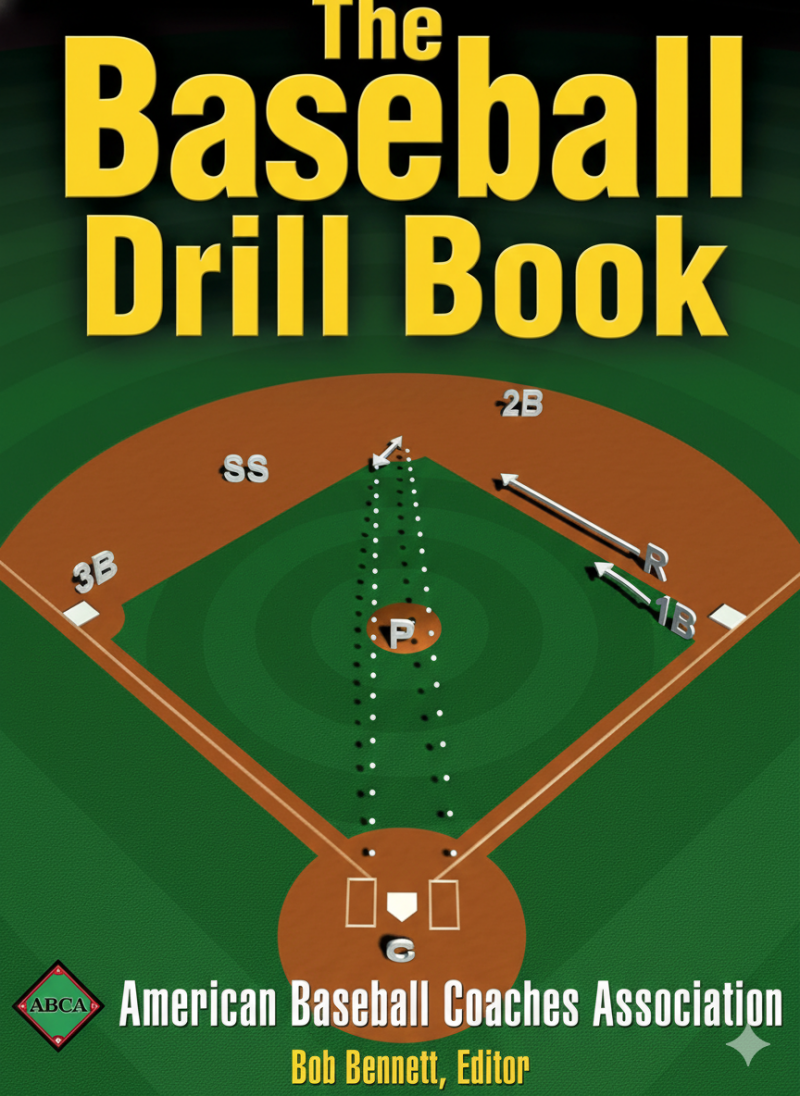
📋 The Baseball Drill Book
Best For: Coaches and players at the youth through collegiate level who want a comprehensive drill library that covers every aspect of the game — the coach who has been running the same five drills for three seasons and whose players have long since stopped developing through them, and the serious competitive player who wants a structured practice framework they can use to develop independently when organized team practice isn't available
Construction: Extensive collection of categorized, structured drills for every defensive position, every offensive skill, and every baserunning scenario in competitive baseball — a reference manual whose organization by skill and position allows coaches and players to locate exactly the drill they need for the specific development gap they are trying to address without having to search through content that doesn't apply to the problem at hand
Material: Diagram-heavy instructional text providing clear step-by-step drill execution instructions, the equipment each drill requires, the number of players each format supports, and the specific skill each drill was designed to develop — content organized for practical use on the field rather than conceptual reading away from it
Performance Feel: Efficient and high-utility — The Baseball Drill Book makes every practice session more productive by giving the coach or player a structured framework that eliminates the dead time, the repeated drills, and the vague "let's just take some ground balls" practice structure that characterizes the least developmental practice environments in the youth through high school game
Ideal Player Type: Coaches at the youth through high school level who run team practices and want a comprehensive drill resource that covers every aspect of the game without requiring them to design original practice content from scratch, and serious individual players who want a structured independent practice framework that develops specific skills rather than simply accumulating unstructured repetition
Performance Overview: The Baseball Drill Book is the most practically useful resource in this guide for coaches specifically — a comprehensive drill library whose hundreds of categorized, diagrammed drills cover every skill development need from fundamental fielding mechanics through advanced baserunning scenarios and pitcher-fielder coverage assignments that the majority of youth and high school programs never get to in practice because nobody has organized it into an accessible format until the drill book does it for them. The drill library covers every position and every skill — infield footwork and throwing mechanics, outfield tracking and communication, pitcher fielding position and coverage responsibilities, catcher blocking and receiving, and every offensive skill from tee work and front toss through situational hitting scenarios that develop the competitive decision-making that game at-bats require. The diagram format is the book's most practically important feature for coaches and players using it during actual practice: rather than requiring the reader to translate a written description into a field setup while twenty players stand around waiting for direction, the diagrams show exactly how each drill is organized, where each player positions, and what the progression of the drill looks like from setup through execution. For any coach who has felt the frustration of a practice session that ran poorly because the drills ran out before the time did — or because the same three drills ran three times through without the players gaining anything new — The Baseball Drill Book is the resource that eliminates that problem permanently.
Why It Stands Out:
- Hundreds of categorized drills covering every position and every skill in competitive baseball — the comprehensive library that eliminates the "what should we work on today" uncertainty that characterizes the least developmental practice environments in the youth through high school game.
- Diagram-heavy format designed for practical use during actual practice — coaches can reference a drill during the session without having to translate a written description into a field setup while players wait.
- Scalable content that can be adapted for youth developmental players through collegiate-level athletes — making the resource useful across multiple seasons of a player's development as the drills that were challenging at one level become the baseline for more advanced versions at the next.
- Covers every aspect of the game including the pitcher fielding position and coverage assignments that most youth and high school programs consistently underdevelop because nobody has organized that instruction into an accessible practice-ready format.
📐 Baseball Playbook: for Coaches and Players | 100 Pages of Blank Field Diagrams
Best For: Coaches who want a dedicated tactical workspace for designing situational plays, organizing defensive assignments, and planning practice structures — and student-athletes of the game who want to organize their own situational understanding into a personal playbook that turns the game's conceptual complexity into a structured reference they can review and refine throughout the season
Construction: Specialized planning tool with blank full-field and infield-specific diagrams, lineup templates, pitching rotation tracking pages, and defensive shift planning sections — a physical workspace designed for the professional-level organizational approach that the best coaching staffs use to ensure that every game-day decision is based on a clearly visualized plan rather than in-game improvisation
Material: High-utility reference tool with heavy-duty paper appropriate for pencil and pen sketching — pages that hold up through the repeated use a coaching staff's primary tactical planning document receives across a full competitive season without the degradation that thinner paper produces when the same pages are referenced, erased, and redrawn through weeks of situational game preparation
Performance Feel: Professional and organized — the Baseball Playbook gives coaches and serious student-athletes the feeling of having the same organizational infrastructure that professional coaching staffs use to prepare for competition, which produces both better preparation and the confidence that better preparation delivers at the point in the game where improvisation is the most expensive form of decision-making
Ideal Player Type: Head coaches and assistant coaches who want a dedicated tactical workspace for game planning, defensive assignment visualization, and practice structure design — and the serious high school or collegiate player who studies the game deeply enough to want a personal situational playbook that organizes their own understanding of the game's complexity
Performance Overview: The Baseball Playbook serves the organizational need that separates coaching staffs who prepare systematically from coaching staffs who prepare adequately — the difference that shows up most clearly in the late innings of close games when the situational complexity is highest and the decisions have to come from preparation rather than improvisation. The blank field diagrams that make up the bulk of the playbook's pages are the tool that professional coaches use to visualize defensive assignments, coverage responsibilities, and offensive plays in a format that every member of the coaching staff can see and discuss simultaneously — because a verbal description of a first-and-third defense is significantly less clear than a diagrammed one that shows every player's position, movement, and responsibility. The lineup and pitching rotation tracking templates add the organizational infrastructure that turns game-day management from a series of reactive decisions into a systematic execution of a plan that was developed before the first pitch — which is the specific competitive advantage that thorough pre-game preparation consistently provides over the game management style that figures it out as the situation develops.
Why It Stands Out:
- Blank field diagrams cover every game situation a coaching staff needs to visualize and communicate — from basic defensive positioning through complex situational coverage assignments that require every player to understand their role before the ball is put in play.
- Lineup and pitching rotation templates provide the organizational infrastructure for professional-level game management — turning the reactive in-game decisions that characterize underprepared coaching into the systematic execution of a plan developed before the first pitch.
- Heavy-duty paper holds up through the repeated use, erasure, and revision that a coaching staff's primary tactical planning document receives across a full competitive season of game preparation.
- Serves as a personal situational playbook for serious student-athletes who study the game deeply enough to want their own organizational system for the situational complexity that competitive baseball produces — the player whose game understanding is developing faster than the team's practice environment allows.

🎓 Baseball iQ for Kids and Teens: Things that smart players do
Best For: Youth and high school players whose athletic ability has outpaced their situational understanding of the game — the talented young athlete whose coach is constantly making the same corrections about where to throw, when to move, and what to do in situations the player has already encountered multiple times but never internalized the correct answer for, and whose development would benefit most from a systematic approach to building the baseball intelligence that physical talent alone cannot provide
Construction: Educational guide written in age-appropriate language that presents the game's situational complexity through specific scenario-based instruction — each section presents a common game situation, explains the factors that determine the correct decision, and gives the young player a clear decision-making framework they can apply in future situations rather than waiting to be told what to do after the fact
Material: Narrative and diagram-based instructional text that translates the game's strategic complexity into the conceptual framework that developing players need to start making smart decisions independently — content written at the reading level and the conceptual sophistication of the youth and high school audience it serves rather than the adult coach or parent who already understands the game
Performance Feel: Encouraging and educational — Baseball iQ for Kids and Teens gives young players the feeling that understanding the game's complexity is achievable rather than overwhelming, and that the gap between the athletic player and the smart player is closed by learning rather than by talent — which is the most empowering message a developmental resource can deliver to a young athlete who is committed to getting better
Ideal Player Type: Youth and high school competitive players whose situational baseball intelligence is the specific development gap most limiting their performance — the player who makes the wrong decision in game situations not because they aren't trying to make the right one but because they have never been given the systematic instruction that builds the conceptual foundation for smart play
Performance Overview: Baseball iQ for Kids and Teens: Things that smart players do addresses the development gap that every youth and high school coach recognizes in their roster — the talented athletes who play the game athletically but not intelligently, making the wrong decision in situations they have already encountered because their baseball understanding was never systematically developed alongside their physical skills. The scenario-based approach the book uses is the most effective instructional format for building situational intelligence — rather than presenting abstract rules about where to throw or how to position, each section presents a specific game situation, walks through the decision factors that determine the correct response, and gives the player the reasoning framework that allows them to apply the same logic in future situations that share the underlying decision-making structure even when the specific surface details differ. By the time a player has worked through the book's full range of scenarios — covering fielding decisions, baserunning choices, pitching situational adjustments, and the hitting approach decisions that competitive at-bats require — they have built a mental model of the game that processes new situations through a framework rather than through the trial-and-error approach that learning from unstructured experience alone consistently produces.
Why It Stands Out:
- Scenario-based instruction builds the decision-making framework that allows young players to apply the correct logic in future situations rather than memorizing isolated rules that don't transfer across the full range of situations the game produces.
- Age-appropriate language and conceptual presentation make the game's strategic complexity accessible to the youth and high school audience it serves — written at the right level to actually build understanding rather than simply presenting information the reader can't yet process.
- Builds anticipation rather than reaction — the developmental shift from responding to situations after they develop to reading the game before the play happens that separates smart players from athletic ones at every level of competition.
- Addresses the specific development gap that youth coaches identify most consistently — the talented athlete who makes the wrong decision not because they aren't trying but because the conceptual foundation for smart play was never systematically built alongside their physical skills.


📊 Baseball Training Books Snapshot (2026)
- 📖 Baseball Pitching Mastery — Comprehensive mechanical and mental pitching development guide covering velocity, command, pitch sequencing, and the competitive intelligence that makes physical tools effective under game pressure.
- 🏏 Baseball Hitting Mastery: The Art of a Line Drive Swing — Kinetic chain hitting mechanics breakdown covering every phase of the swing with pitch recognition and situational hitting instruction that turns mechanics into competitive offensive production.
- 🧠 Baseball Hitting Mindset — Mental game development guide for high school hitters and young adults covering the pre-pitch routine, failure management, and the Traffic Light system that builds mental consistency under competitive pressure.
- 📋 The Baseball Drill Book — Comprehensive diagram-heavy drill library covering every position and every skill in competitive baseball for coaches and players who want structured practice frameworks that maximize development value per hour on the field.
- 📐 Baseball Playbook: 100 Pages of Blank Field Diagrams — Tactical planning workspace with blank field diagrams, lineup templates, and pitching rotation tracking for coaches who prepare at the professional organizational level.
- 🎓 Baseball iQ for Kids and Teens — Scenario-based situational intelligence guide written for youth and high school players who need the conceptual baseball framework that turns athletic ability into smart, instinctual competitive play.
❓ FAQ
What is the best baseball training book for a youth player?
- Baseball iQ for Kids and Teens is the most specifically appropriate resource for youth players whose primary development gap is situational intelligence — the conceptual baseball understanding that physical practice alone consistently fails to develop in young athletes who are still building the foundational game knowledge that smart play requires.
- Baseball Hitting Mindset is the right choice for the youth player who has developed solid physical mechanics and whose performance variability is primarily driven by mental inconsistency — the mental game resource that addresses the specific development gap physical training doesn't close.
Which book is best for a high school pitcher?
- Baseball Pitching Mastery is the most comprehensive single resource for a high school pitcher whose development needs cover the full range from mechanical refinement through competitive pitching intelligence — the book that builds both the physical foundation and the mound strategy that competitive high school pitching demands.
- High school pitchers whose primary challenge is the mental pressure of competitive situations rather than mechanical deficiency should pair Baseball Pitching Mastery with Baseball Hitting Mindset's mental game frameworks, which apply as directly to pitching under pressure as they do to hitting.
Are these books useful for parents and coaches?
- The Baseball Drill Book and Baseball Playbook are the most directly useful resources for coaches who run team practices and want to improve their organizational and instructional quality — the practical planning tools that make coaching staff preparation more systematic and practice sessions more developmentally efficient.
- Parents who want to understand what their young player is being taught and how to support the development process without undermining it benefit most from the hitting mechanics books and the Baseball iQ for Kids and Teens — resources that give parents the conceptual framework to support development conversations at home rather than inadvertently contradicting the instruction their player is receiving from their coaching staff.
How do I know which book addresses my biggest development gap?
- Mechanics are the biggest gap for players who struggle with consistency in physical execution — who swing well sometimes and not others without understanding why, or who can't maintain command from inning to inning without a clear sense of what changes when the mechanics break down.
- Mental game is the biggest gap for players whose mechanics are sound in practice but inconsistent in competition — whose physical tools show up reliably in low-pressure environments and disappear when the game situation is most demanding.
- Situational intelligence is the biggest gap for players who make the wrong decision in game situations they have already encountered — whose coaches are making the same corrections repeatedly because the underlying conceptual framework for that situation was never built.
🧢 Final Thoughts
Every book in this guide represents a different answer to the same development question — what is the specific gap in this player's game that physical practice alone is not closing, and which resource closes it most directly? Baseball Pitching Mastery is for the pitcher who wants the complete mound development framework in a single resource. Baseball Hitting Mastery is for the hitter who wants to understand the mechanics of their swing rather than simply repeat instructions. Baseball Hitting Mindset is for the high school competitor whose mental game is the specific variable limiting their performance consistency. The Baseball Drill Book is for the coach who wants to run practices that actually develop players rather than simply accumulate time on the field. The Baseball Playbook is for the coaching staff that prepares for competition at the professional organizational level. Baseball iQ for Kids and Teens is for the young athlete whose situational intelligence needs to catch up to their physical talent. Add the right book to the training environment, read it seriously, and apply what it teaches — the development that follows is faster and more durable than anything unstructured experience alone produces. For the training tools that pair with every book in this guide, check out ⚒️ Training Tools for Ball Players for the complete physical training equipment breakdown. For more gear guides and equipment reviews across every category, visit 📝 Diamond Sports Equipment Blog & Gear Reviews.