This is the broader all-around baseball reading guide, covering hitting, recruiting, mental development, year-round training, player and parent development, and baseball history. Players looking specifically for mechanics, strength, mindset, and skill-development titles can also see Best Baseball Books (2026).
Every serious baseball player eventually hits a ceiling that physical training alone cannot raise — the ceiling where mechanics are sound, conditioning is solid, and the reps are getting put in, but the mental framework, the game knowledge, and the developmental roadmap for getting to the next level are still missing. Baseball books fill that gap. From Ted Williams' timeless strike zone philosophy to year-round athletic development programs to the college recruiting guides that families who produce college players start reading before high school — the right book delivers the kind of knowledge that changes how a player or family approaches the game at every level. For physical development resources that pair with these books, 📚 Best Baseball Training Books (2026) covers the full training literature library across every skill area. Players who want the physical tools that complement every program in this guide should also explore 💪 Speed, Strength & Velocity Training Tools (2026) for the training equipment that turns book knowledge into on-field results.
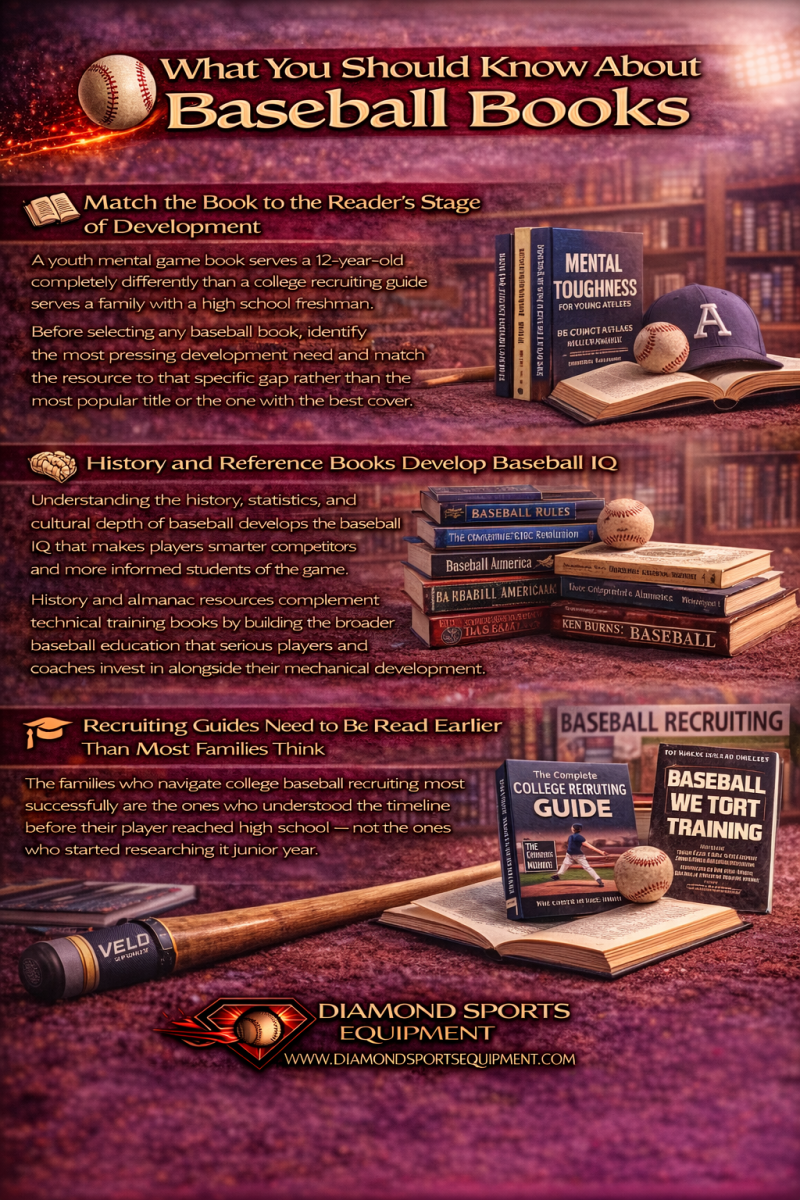
⚾ What You Should Know About Baseball Books
📖 Match the Book to the Reader's Stage
Not every baseball book serves every reader equally. A youth mental game resource delivers maximum value to a 12-year-old developing competitive habits — the same material lands flat for a high school junior who needs a recruiting roadmap right now. Identify the most pressing development gap first, then match the book to that specific need.
🎓 Recruiting Guides Work Best When Read Early
The families who navigate college baseball recruiting most successfully start reading before their player reaches high school — not junior year when the timeline is already running. Every month a family reads a recruiting guide early is a month they can act on what they learn instead of catching up to a process already in motion.
🧠 History and Reference Books Build Real Baseball IQ
Statistical literacy and historical context develop the baseball IQ that makes players smarter competitors and better students of the game. History and almanac resources belong in a player's library alongside technical training books — they build the broader baseball education that practice time cannot provide.
💪 Year-Round Training Programs Require Full Commitment
A 52-week training book only delivers its designed results when the reader commits to the complete program. The progressive loading and periodization built into year-round resources depend on consistency across the full calendar — cherry-picking individual workouts skips the structure that produces the athletic development.
🏆 Best All-Around Baseball Books (2026)
Six baseball books covering timeless hitting wisdom, year-round athletic training, youth mental game development, recruiting strategy, and the history and reference knowledge that builds true baseball IQ.
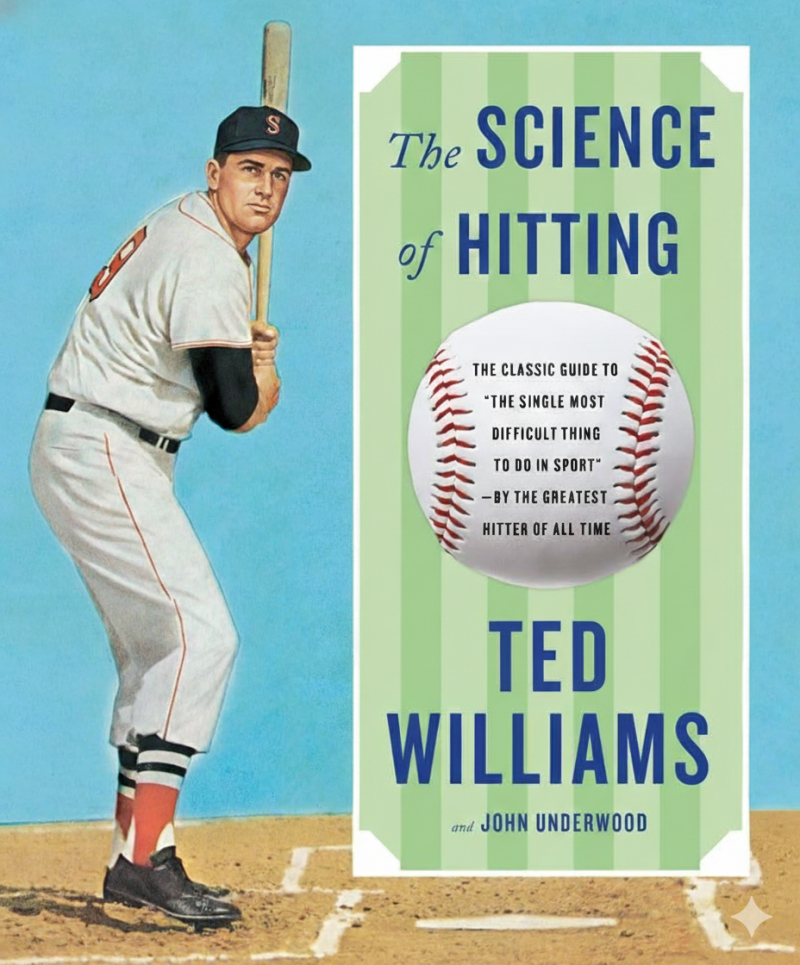
📐 The Science of Hitting — Ted Williams
Best For: Hitters at every level who want to learn hitting from the greatest hitter who ever played — Ted Williams' complete mechanical and philosophical breakdown of the skill that separates good players from great ones.
Construction: Williams' full hitting philosophy covering the strike zone grid, pitch selection, bat speed, and the mental approach that produced the last .400 season in Major League Baseball history.
Material: Firsthand expertise combined with detailed strike zone illustrations that make Williams' principles immediately applicable to any hitter studying their own approach and swing.
Performance Feel: Foundational and timeless — the Science of Hitting delivers insights that no subsequent hitting book has superseded because Williams' understanding of hitting fundamentals was precise enough to remain the reference point every serious hitting instructor returns to regardless of the modern technology and techniques that have developed around it.
Ideal Player Type: Serious hitters at the high school, collegiate, and adult level who want to study hitting from its most authoritative source — and coaches who want to understand the mechanical and philosophical foundation their instruction should be built on.
Performance Overview: The Science of Hitting is the most important hitting book ever written — a statement validated by every generation of serious hitters and hitting instructors since Ted Williams put his lifetime of obsessive study into print. The strike zone grid Williams developed — showing expected production from every pitch location across the entire zone — has influenced hitting instruction at every level of the game for decades and remains the framework that players and coaches who take pitch selection seriously build their approach around. Williams approached hitting with the analytical rigor of a physicist: documenting, testing, and systematizing every principle until he had built a complete framework that any serious hitter can study and apply. For any player or coach who has not read the Science of Hitting, it is the foundational text that every other hitting resource in existence assumes the reader has already absorbed.
Why It Stands Out:
- The most authoritative hitting resource ever written — by the greatest hitter who ever played.
- Ted Williams' strike zone grid remains the foundational reference for serious pitch selection and approach.
- Covers bat speed, mechanical approach, pitch recognition, and the mental discipline that .400 hitting demands.
- Every subsequent hitting book builds on or responds to the framework Williams established here.
- Required reading for any serious hitter or hitting coach who wants to understand the skill at its deepest level.
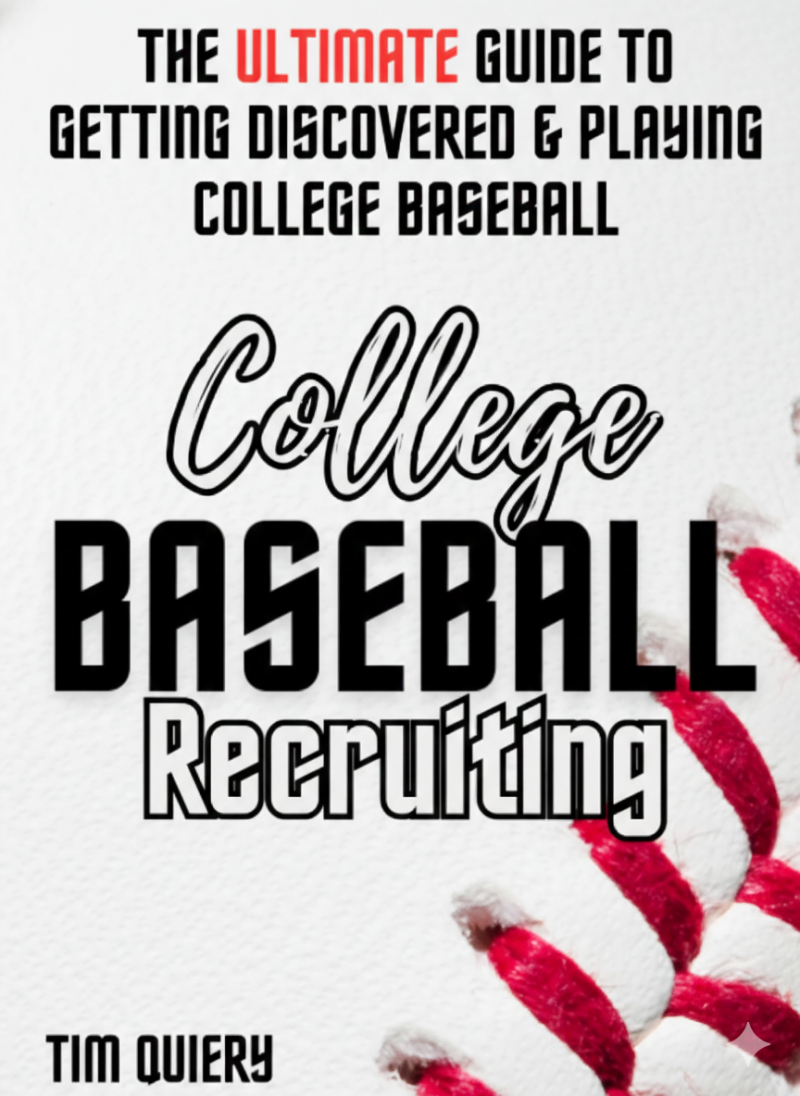
🎓 College BASEBALL Recruiting: The ULTIMATE Guide
Best For: High school players and their families who want the most complete available guide to the college baseball recruiting process — covering every pathway from NCAA Division I through NAIA and JUCO.
Construction: Complete recruiting roadmap covering every level of college baseball with exposure strategies, academic requirements, communication timelines, and the evaluation criteria college coaches actually use to identify and pursue recruits.
Material: Research-based recruiting guidance with practical timelines, communication frameworks, and evaluation criteria families can apply directly to their player's specific situation, academic profile, and competitive goals.
Performance Feel: Comprehensive and immediately actionable — the breadth of coverage across every college baseball pathway means families at any stage of the recruiting process will find information directly applicable to where their player is right now rather than generic guidance that requires translation before it can be used.
Ideal Player Type: High school players and their families at any stage of the recruiting process who want a complete understanding of how college baseball recruiting actually works — from families of freshmen who want to start correctly to families of juniors who need to accelerate an approach that hasn't started yet.
Performance Overview: College BASEBALL Recruiting: The ULTIMATE Guide addresses the single most consequential and least understood process in competitive youth baseball — the recruiting landscape that determines whether years of development investment translate into a college opportunity or result in a senior year without an offer. The guide covers NCAA, NAIA, and JUCO pathways with the specificity that families need to identify which level genuinely fits their player's talent, academic profile, and goals — not just D1 as the default aspiration that leaves D2, D3, NAIA, and JUCO opportunities unexplored until it is too late to pursue them. The communication timelines and exposure strategies give families the tools to take proactive steps rather than waiting for coaches to find their player through a process that consistently rewards families who understand how to get their player seen.
Why It Stands Out:
- Covers NCAA, NAIA, and JUCO recruiting pathways with the specificity each level requires.
- Communication timelines and exposure strategies give families proactive tools rather than passive advice.
- Explains what college coaches at each level are actually evaluating — not what families assume they want.
- Broad enough to serve families from freshman year through senior year at any point in the process.
- The most complete single-volume recruiting guide available for college baseball families.
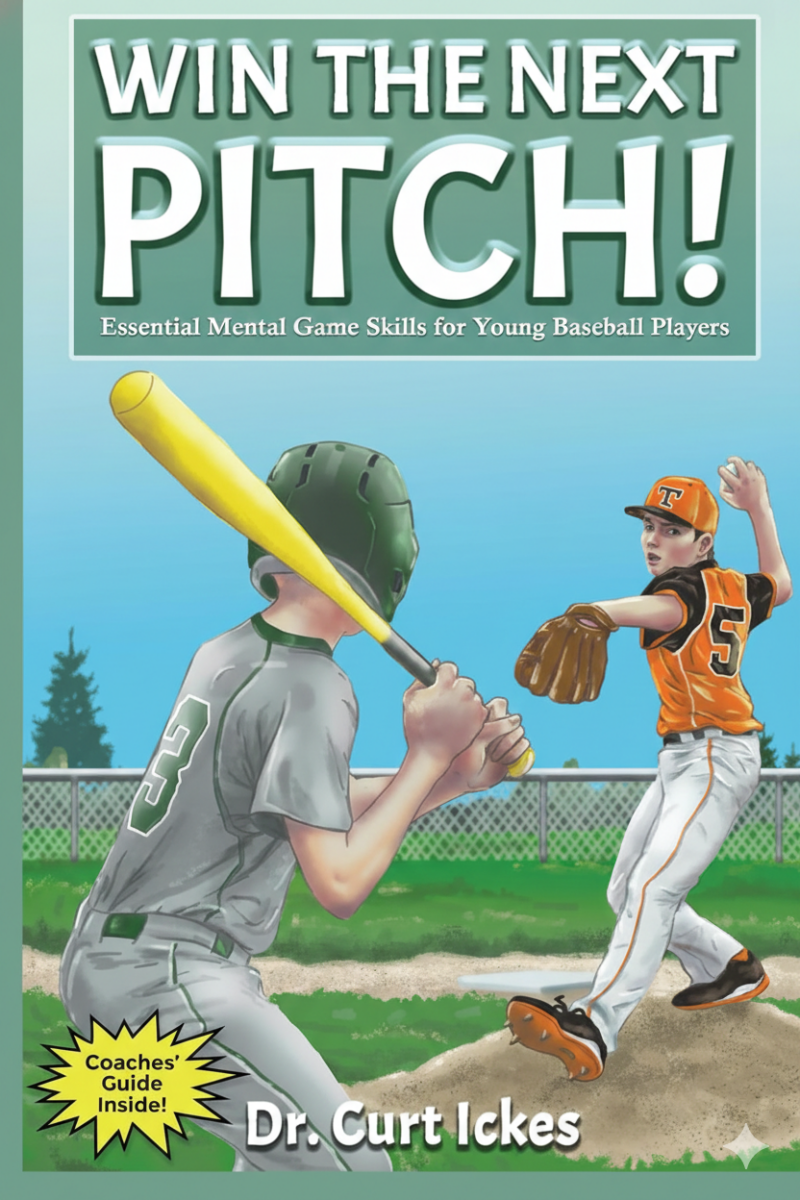
🧠 Win The Next Pitch!: Essential Mental Game Skills for Young Baseball Players
Best For: Youth and middle school baseball players who want an age-appropriate mental game resource written in language they can engage with independently — not adapted from adult competitive psychology that young readers cannot fully apply.
Construction: Youth-specific mental game development covering focus, confidence building, pressure performance, and the competitive approach young baseball players need to develop alongside their physical skills.
Material: Age-appropriate mental game frameworks and practical exercises written for the youth player audience — not adult psychological concepts repackaged for younger readers but material built from the ground up for the competitive situations and emotional experiences young players actually face.
Performance Feel: Accessible and youth-specific — the mental frameworks are presented in language and scenarios young players recognize from their own experience, making the tools immediately applicable in game situations without adult interpretation between the page and the at-bat.
Ideal Player Type: Youth and middle school baseball players — and the parents and coaches who want to introduce mental game development at the age when competitive habits and pressure responses are being formed before high school stakes make them significantly harder to change.
Performance Overview: Win The Next Pitch delivers mental game development at the age when it matters most — the youth and middle school years when competitive habits, pressure responses, and mental approaches to the game are forming before the stakes of high school competition solidify them into patterns that are much harder to change. The youth-specific framing makes the mental frameworks accessible to young readers without adult mediation, and the focus on the next pitch rather than the last mistake gives young players a practical mental reset tool they can apply immediately between pitches without a coaching intervention. For parents and coaches who want to develop complete players, introducing mental game resources at the youth level produces the competitive character that high school coaches recruit as much as physical tools.
Why It Stands Out:
- Youth-specific mental game framework written for the age group most mental game books ignore.
- Accessible language and game scenarios that young players recognize from their own competitive experience.
- The next-pitch mental reset is a practical tool young players can apply independently during live games.
- Develops competitive mental habits at the age when they are most formable and most durable.
- The right mental game starting point before high school competition raises the stakes and the difficulty.
⚡ Performance Differences Between Baseball Books
The most significant performance difference between baseball books is audience specificity — and it determines whether the reader can actually apply the content to their specific situation or simply absorbs it as interesting information that never connects to actionable improvement. A hitting book written for professional hitters delivers insights that a youth recreational player cannot connect to their own mechanics without adult translation. A recruiting guide written for Division I prospect families does not serve the family whose player is a realistic D3 or NAIA candidate. A mental game book written in adult psychological language does not reach the youth player who needs it most. Every book in this guide was selected for how precisely it matches content to the specific audience it serves — giving readers maximum immediately applicable value rather than broadly relevant material that requires reframing before it can be used. For physical training resources that pair with these books, ⚾ Best Baseball Training Tools & Equipment (2026) covers the tools that put book knowledge to work in practice sessions and game preparation. Players building strength and swing development alongside their reading should also explore 📚 Baseball Books for Strength & Hitting (2026) for the titles specifically focused on athletic development and hitting mechanics.
Content depth is the second major differentiator — the difference between a book that mentions a topic and one that goes deep enough to genuinely change how the reader thinks about and approaches it. The Science of Hitting changed how generations of players understood the strike zone not because it mentioned pitch selection but because Williams went deep enough to deliver a systematic framework applicable to every at-bat for the rest of a career. The College Baseball Recruiting guide changes how families approach the process not because it mentions exposure events but because it explains each level's evaluation criteria in enough depth that families can make genuinely informed strategic decisions rather than following generic advice that serves no specific family well.
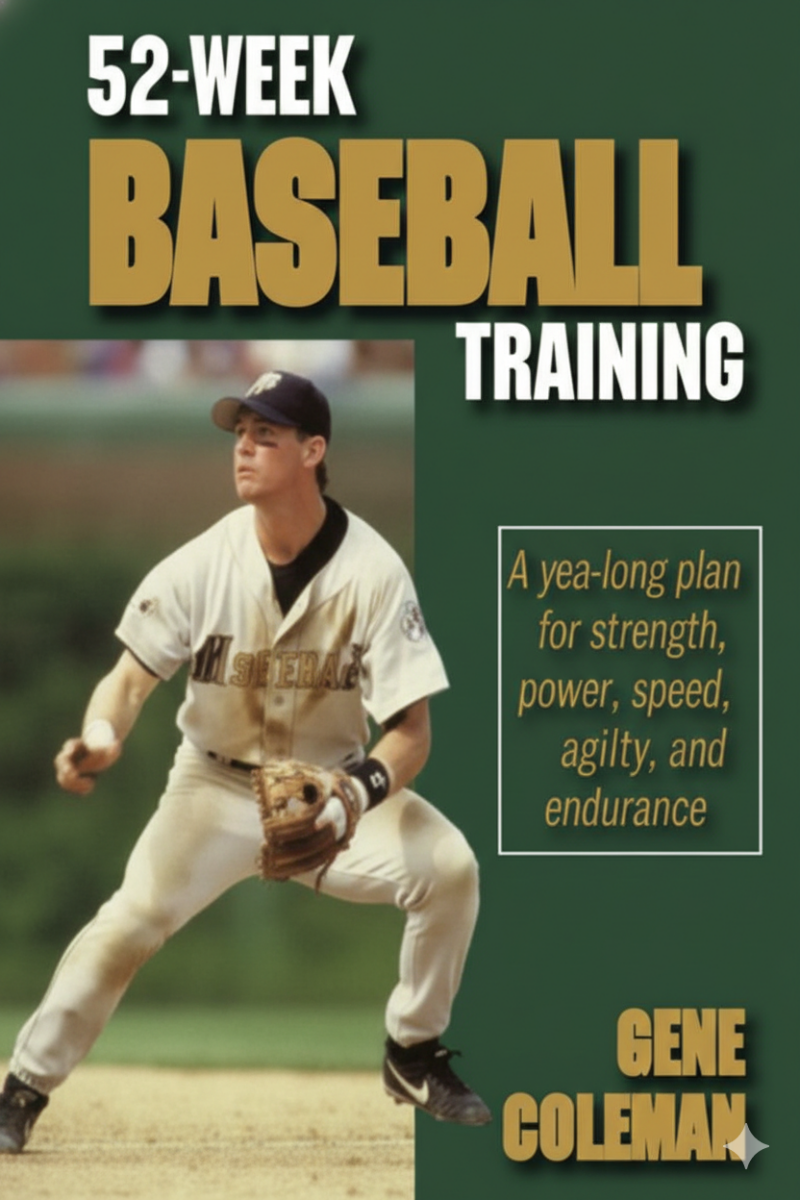
📅 52-Week Baseball Training
Best For: Serious competitive baseball players who want a complete periodized year-round athletic development program built specifically for the physical demands of the sport — off-season through in-season in a single integrated framework.
Construction: Complete 52-week periodized training program covering strength, conditioning, speed, and baseball-specific athletic development across every phase of the annual training calendar.
Material: Year-round training programming with exercise prescriptions, loading progressions, and periodization principles specific to the physical demands of competitive baseball players.
Performance Feel: Comprehensive and commitment-demanding — the 52-week format delivers its full designed value only through commitment to the complete annual structure, because the progressive loading and periodization built into the program depend on consistency across the full calendar to produce the athletic development it is designed to deliver.
Ideal Player Type: Serious competitive players at the high school and collegiate level who want a complete year-round athletic development framework built specifically for baseball — and who are willing to commit to the full program rather than using individual workouts from a book consulted intermittently.
Performance Overview: 52-Week Baseball Training addresses the training gap that most competitive baseball players fall into — the off-season period when players without a structured program either do too much too early, too little throughout, or a random collection of general fitness work that does not develop the specific athletic qualities baseball performance demands. The complete annual periodization structure gives serious players the framework to build maximum strength in the off-season, convert that strength to baseball-specific power in the pre-season, and maintain their physical peak through the in-season schedule without the accumulated fatigue or detraining that unstructured training produces. For players whose physical development has plateaued despite regular practice and game competition, a structured year-round program is the intervention that produces the measurable athletic improvements that unstructured training cannot.
Why It Stands Out:
- Complete 52-week periodized program built specifically for baseball's annual training calendar demands.
- Covers off-season strength, pre-season power conversion, and in-season maintenance in one integrated framework.
- Progressive loading and periodization deliver the athletic development that random training cannot replicate.
- Written for the serious competitive player who wants maximum physical development alongside skill work.
- The right year-round framework for players whose physical progress has plateaued without structured programming.
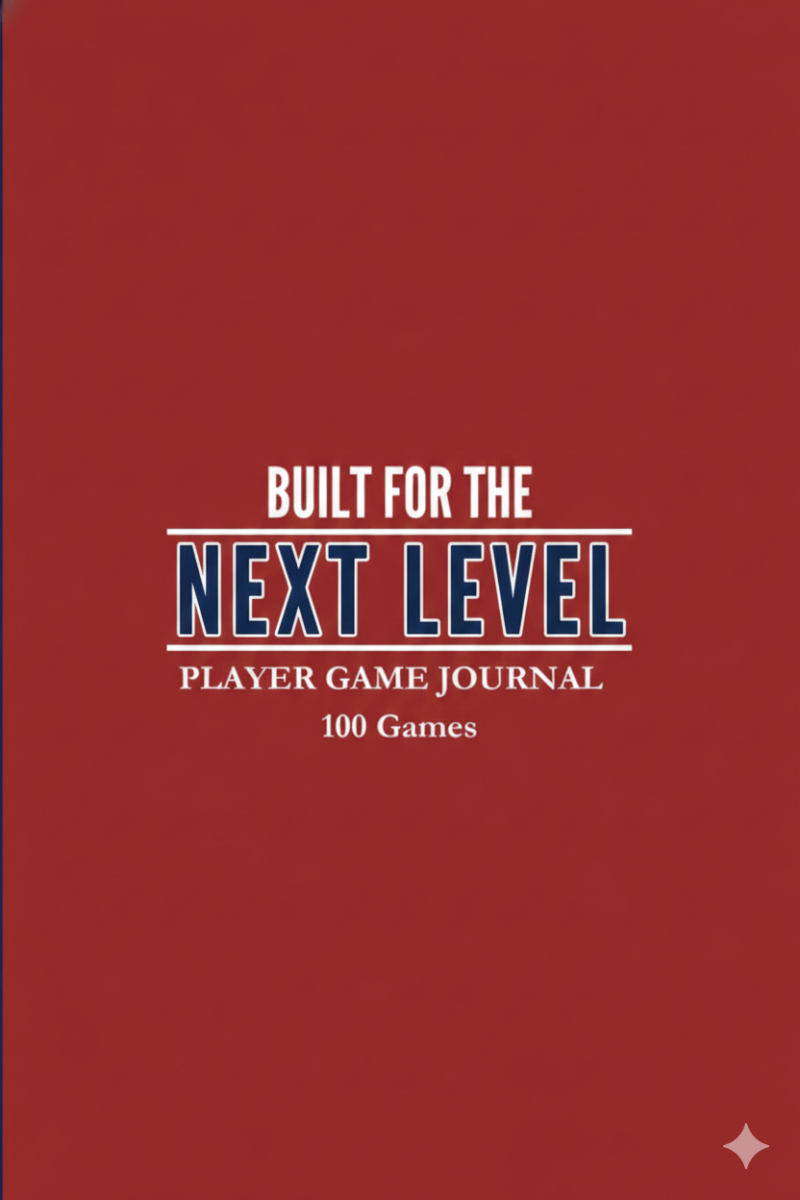
🏗️ BUILT FOR THE NEXT LEVEL: A GUIDE FOR BASEBALL PLAYERS AND PARENTS
Best For: Baseball players and their parents who want a comprehensive development and pathway guide addressing both what the player needs to do and what the family needs to understand — simultaneously, in a single resource.
Construction: Dual-audience development guide covering the player's physical and mental development requirements and the family's strategic and logistical role — addressing the decisions and approaches that distinguish players who advance from those who plateau at each competitive level.
Material: Player development framework and family guidance covering the physical, mental, and strategic dimensions of advancing through competitive baseball levels from youth through high school, college recruiting, and the development milestones each level transition requires.
Performance Feel: Practical and dual-perspective — the simultaneous player and parent framing gives both audiences the specific guidance relevant to their role without requiring either to filter through content written primarily for the other.
Ideal Player Type: Baseball players at the youth through high school level and the parents who are actively invested in their development — families who want a single resource that addresses both the player's development responsibilities and the family's strategic and support role without needing two separate books to cover both perspectives.
Performance Overview: Built for the Next Level earns its place in this guide by addressing the reality that baseball development is a family project — not just a player project. The decisions that determine whether a player advances to the next level involve the family as much as the player: which programs to invest in, which coaches to prioritize, when to specialize, how to navigate recruiting, and how to support development without overstepping in ways that undermine the player's ownership of their own career. The dual-audience structure delivers both perspectives in a single resource that families can read together, discuss, and apply to the specific decisions they face at each stage of the player's development without either party having to translate content written for the other.
Why It Stands Out:
- Dual-audience structure addresses player development and family strategy simultaneously in one resource.
- Covers the development decisions that determine whether players advance at each level transition.
- Eliminates the need for separate books to cover both the player's and the family's perspectives.
- Practical framework for families who want to support development strategically rather than reactively.
- The right single-resource guide for families actively invested in their player's advancement at every level.
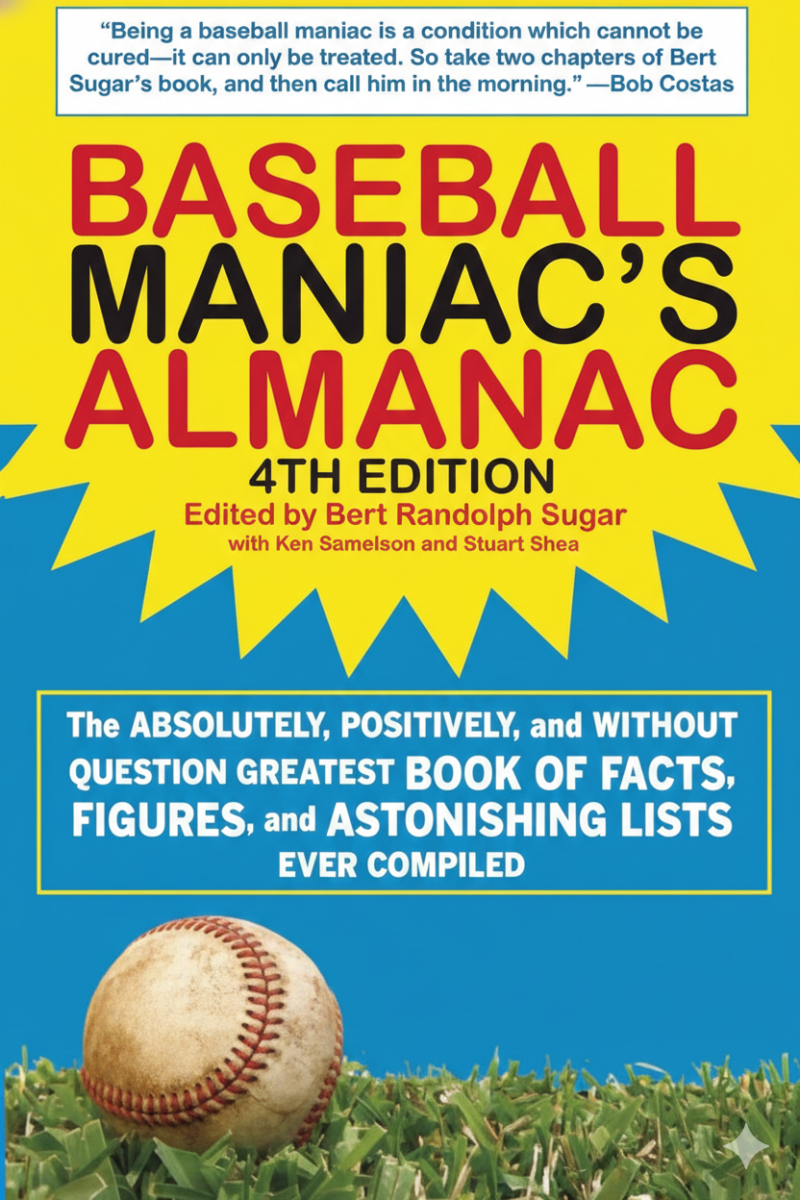
📊 The Baseball Maniac's Almanac — 4th Edition
Best For: Coaches, serious players, and baseball fans who want the most comprehensive statistical and historical reference available — covering records, milestones, trivia, and the historical depth that builds the baseball IQ that separates serious students of the game from casual observers.
Construction: Comprehensive baseball almanac covering records, statistics, milestones, historical achievements, and the full breadth of baseball knowledge — updated through the 4th edition to include the most current statistical records alongside complete historical documentation.
Material: Complete statistical and historical baseball reference covering records across every major category from batting and pitching through fielding, managing, and the cultural milestones that define the game's history across every era.
Performance Feel: Encyclopedic and endlessly browsable — the Almanac rewards both systematic reading and random exploration, building the historical context and statistical literacy that makes serious students of the game significantly more informed competitors and communicators about the sport they have devoted their athletic lives to.
Ideal Player Type: Coaches, serious players, and baseball fans who want the comprehensive historical and statistical reference that develops true baseball IQ — the knowledge depth that separates players and coaches who understand the game's full context from those who know only the current moment of the sport they compete in.
Performance Overview: The Baseball Maniac's Almanac delivers the historical and statistical depth that no other single baseball reference compiles as comprehensively — covering records and milestones across every era of the game's history in a format organized for reference use and engaging enough for recreational reading by anyone whose love of the game extends beyond the physical act of playing it. For coaches who want to develop players with genuine baseball IQ rather than just physical skill, historical and statistical literacy is the education dimension that practice time cannot provide — and the Almanac is the most complete single-volume resource for developing it. The 4th edition updates ensure that the most current records and achievements are included alongside the historical documentation that makes this the definitive reference for serious students of the game.
Why It Stands Out:
- The most comprehensive single-volume baseball statistical and historical reference available.
- 4th edition updates include current records alongside complete historical documentation.
- Builds the baseball IQ and historical literacy that practice time and technical training cannot develop.
- Rewards both systematic reading and random exploration across every dimension of baseball knowledge.
- The right reference investment for coaches and serious players who want genuine depth of baseball understanding.
📊 Baseball Book Snapshot (2026)
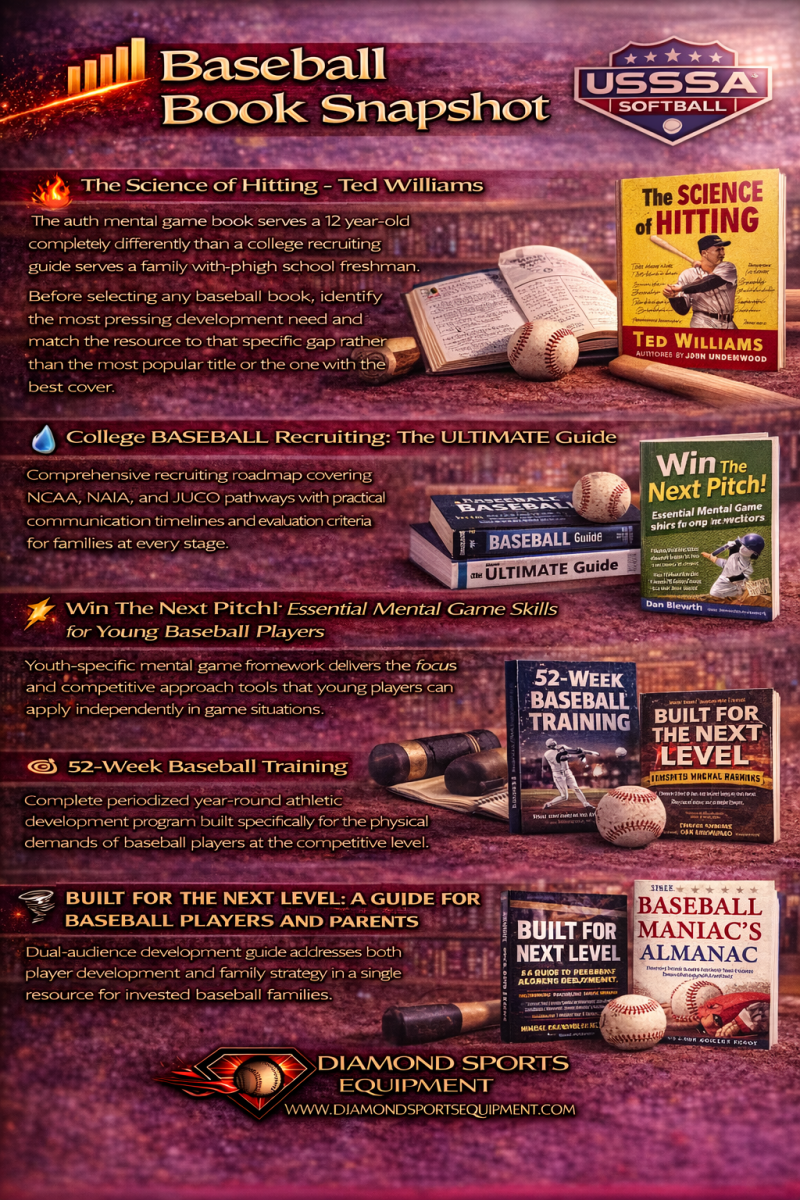
- 📐 The Science of Hitting — Ted Williams — The foundational hitting reference every serious hitter and coach should study — timeless mechanical and philosophical framework from the greatest hitter who ever played.
- 🎓 College BASEBALL Recruiting: The ULTIMATE Guide — Complete recruiting roadmap covering NCAA, NAIA, and JUCO pathways with practical timelines and evaluation criteria for families at every stage.
- 🧠 Win The Next Pitch! — Youth-specific mental game framework that gives young players the focus and competitive reset tools they can apply independently in live game situations.
- 📅 52-Week Baseball Training — Complete periodized year-round athletic development program built specifically for the physical demands of competitive baseball players.
- 🏗️ BUILT FOR THE NEXT LEVEL — Dual-audience development guide addressing both player development and family strategy in a single resource for invested baseball families.
- 📊 The Baseball Maniac's Almanac — 4th Edition — The most comprehensive baseball statistical and historical reference available for building the baseball IQ no other training resource develops.
❓ FAQ
What age is The Science of Hitting appropriate for?
- High school age and above — Williams' framework is most applicable to players with enough at-bat experience to connect his pitch selection and zone management principles to their own competitive situations.
- Younger players benefit most from adult-guided reading where a parent or coach helps connect Williams' principles to the youth player's current mechanical development stage.
How early should a family start using a college recruiting guide?
- Before high school — families who understand the recruiting timeline from the start of freshman year are significantly better positioned than those who begin researching junior year.
- The guide is most valuable when read early enough to act on its strategic guidance rather than catch up to a process that has already started without them.
Can a youth player read Win The Next Pitch independently?
- Yes — it is written specifically for youth players in language they can engage with and apply without adult interpretation between the page and the game situation.
- The next-pitch mental reset tool is designed for independent use between at-bats and during live competitive situations.
Is 52-Week Baseball Training appropriate for high school players?
- Yes — the periodized program is designed for serious competitive players at the high school and collegiate level committed to maximum physical development alongside their skill work.
- The program delivers its full value only through commitment to the complete annual structure rather than selective use of individual workouts.
Is The Baseball Maniac's Almanac useful for players or just fans?
- Both — coaches and serious players who develop genuine baseball IQ and historical literacy are more informed competitors and communicators about the game.
- The Almanac is the most complete single-volume investment in baseball knowledge depth available for anyone whose relationship with the game extends beyond the current season.
🧢 Final Thoughts
The six books in this guide cover every dimension of baseball development that physical practice cannot address on its own — the hitting philosophy that changes how a player approaches every at-bat, the recruiting roadmap that gives families a real strategy before the process starts, the youth mental game tools that build competitive character when it is most formable, the year-round athletic development framework that converts off-season effort into in-season results, the dual-audience development guide that aligns players and parents on the decisions that actually determine advancement, and the historical and statistical reference that builds the baseball IQ every serious student of the game invests in developing. Players building out their physical training setup alongside these books should explore ⚾ Best Baseballs for Practice (2026) for the ball options that pair with year-round training programs. For the complete library of baseball and softball gear guides across every category, visit 📝 Diamond Sports Equipment Blog & Gear Reviews.
Add comment
Comments