Mechanics coaches will tell you the same thing in different words: most hitters don't have a timing problem, a strength problem, or a pitch recognition problem. They have a path problem. The swing path — the route the barrel travels from load to contact — determines everything downstream. An efficient path through the zone produces consistent hard contact across the full range of pitch locations. A casting path, a long path, a path that rolls over early or pulls off the ball produces weak contact, pop-ups, and the grounders to the pull side that hitters blame on bad pitches when the real issue started the moment the hands came forward. The difference between a hitter who makes consistent contact and one who doesn't is almost always visible in the path before the contact point — and the tools in this guide are designed to fix that path with a specificity that tee work and cage sessions alone cannot deliver.
Swing path trainers work because they introduce physical correction into the rep — not verbal instruction, not slow-motion video review after the session, but actual resistance or constraint that forces the barrel into the right route on every single swing. Pair that with the visual processing development that modern contact trainers address, the rotational resistance that builds the athletic foundation every efficient swing requires, and the live pitching environment that ties all of those mechanical improvements to real game-speed stimulus — and you have a complete contact development program that produces measurably different results than unstructured cage work. For pitchers and players building their full development toolkit alongside these contact tools, ⚒️ Pitching & Arm Development Tools (2026) covers the arm side of the training equation. For the full ranked lineup of training tools, see the ⚒️ Training Tools for Ball Players.
⚾ What You Should Know About Swing Path & Contact Trainers
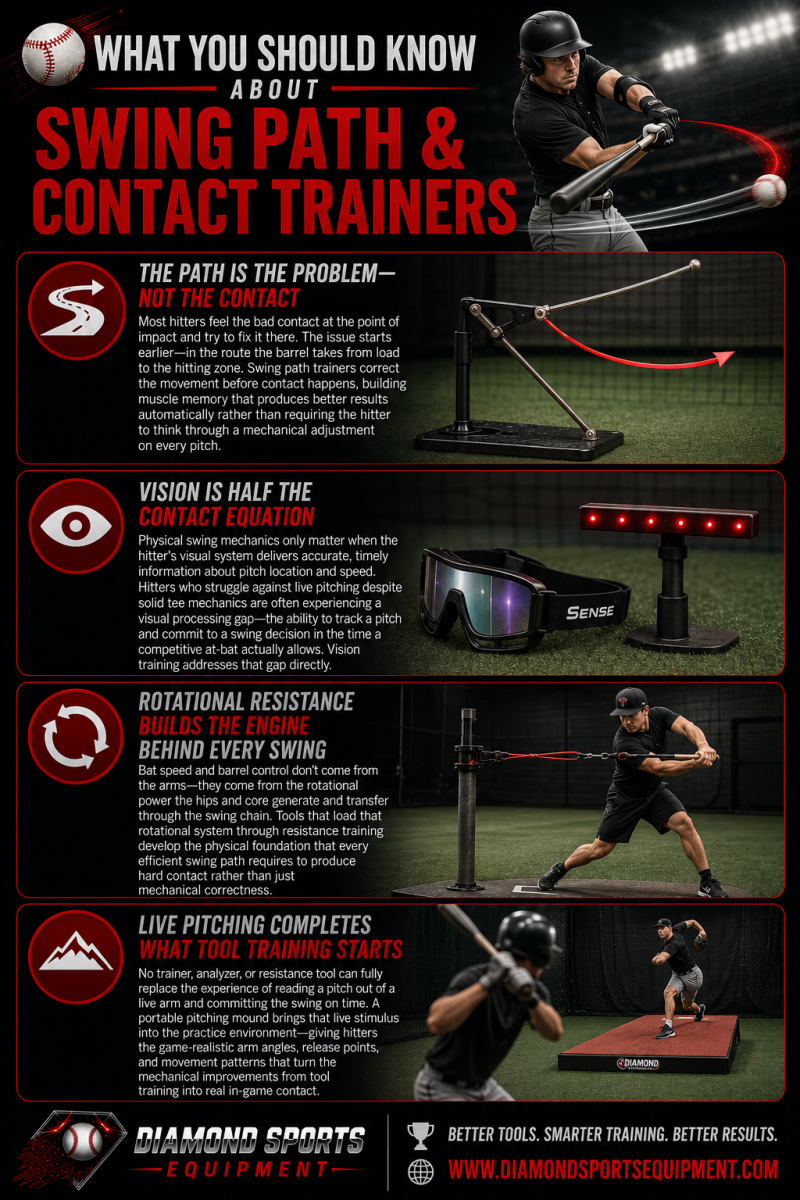
🛤️ The Path Is the Problem — Not the Contact
Most hitters feel the bad contact at the point of impact and try to fix it there. The issue starts earlier — in the route the barrel takes from load to the hitting zone. Swing path trainers correct the movement before contact happens, building muscle memory that produces better results automatically rather than requiring the hitter to think through a mechanical adjustment on every pitch.
👁️ Vision Is Half the Contact Equation
Physical swing mechanics only matter when the hitter's visual system delivers accurate, timely information about pitch location and speed. Hitters who struggle against live pitching despite solid tee mechanics are often experiencing a visual processing gap — the ability to track a pitch and commit to a swing decision in the time a competitive at-bat actually allows. Vision training addresses that gap directly.
🔄 Rotational Resistance Builds the Engine Behind Every Swing
Bat speed and barrel control don't come from the arms — they come from the rotational power the hips and core generate and transfer through the swing chain. Tools that load that rotational system through resistance training develop the physical foundation that every efficient swing path requires to produce hard contact rather than just mechanical correctness.
⛰️ Live Pitching Completes What Tool Training Starts
No trainer, analyzer, or resistance tool can fully replace the experience of reading a pitch out of a live arm and committing the swing on time. A portable pitching mound brings that live stimulus into the practice environment — giving hitters the game-realistic arm angles, release points, and movement patterns that turn the mechanical improvements from tool training into real in-game contact.
🏆 Best Swing Path & Contact Trainers for Players
Six tools that address swing path, visual tracking, rotational power, and live contact development — every variable that separates a mechanically sound hitter from one who just takes a lot of swings.
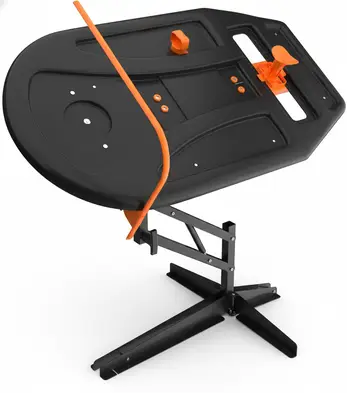
🛤️ Perfect Swings USA Swing Path Trainer
Best For: Hitters who know what a correct swing path looks like but can't execute it consistently — and need a physical correction tool that forces the right route on every rep rather than relying on feel or verbal cues to produce the adjustment.
Construction: Swing path training device that physically constrains or guides the barrel through the correct inside-out swing path on every rep — eliminating casting, rolling over, and the long path habits that consistent hard contact cannot survive.
Material: Durable training construction built to handle the high-rep batting practice volume that swing path correction requires across a full development block — designed to maintain its path-correction function through extended daily use without losing the structural integrity that makes the physical correction effective.
Performance Feel: Swinging through the Perfect Swings trainer feels different from the first rep — the physical constraint removes the option of taking the path the hitter's muscle memory defaults to and replaces it with the only path the trainer allows. That forced correction is uncomfortable at first for hitters with ingrained casting habits, and it's supposed to be. The discomfort is the muscle memory being overwritten.
Ideal Player Type: High school and travel ball hitters with identified swing path faults — specifically casting, barring out the lead arm, rolling over to the pull side, or pulling off the ball — who want a physical correction tool that produces faster mechanical improvement than verbal instruction alone.
Performance Overview: Perfect Swings USA Swing Path Trainer does what coaching cues alone consistently fail to do: it makes the correct swing path the only available option on every rep, so the hitter's nervous system stops reinforcing the fault and starts building the new pattern instead. Verbal instruction tells a hitter what to do. Video review shows them what they did. The Perfect Swings trainer physically prevents the wrong movement from happening in the first place — which is the fastest known route to muscle memory correction for hitters whose path faults are deeply ingrained. For players who have heard "stay inside the ball" a hundred times without fixing the problem, this is the tool that makes those words mean something their body can actually feel and repeat.
Why It Stands Out:
- Physical path correction on every rep eliminates the guesswork that feel-based swing adjustment produces.
- Specifically targets casting, barring, rolling over, and pull-side collapse — the most common and damaging swing path faults.
- Faster muscle memory correction than verbal or video instruction alone because the body learns from constraint, not description.
- Durable construction handles the rep volume that meaningful path correction requires across a full training block.
- The right investment for any hitter who understands the correct path conceptually but cannot yet execute it consistently without physical guidance.
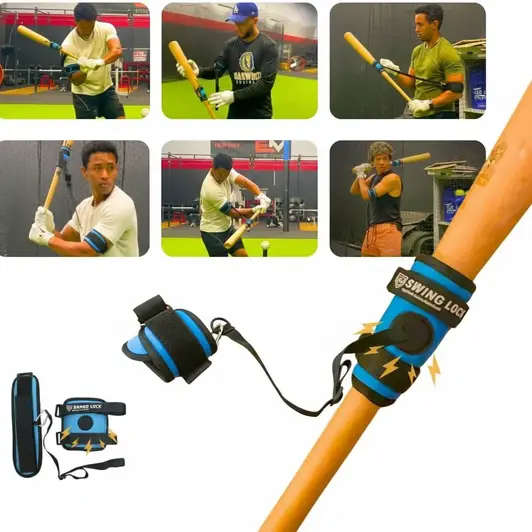
👁️ Applied Vision Sports V-Swing
Best For: Hitters whose physical mechanics are sound but whose contact rate against live pitching lags behind their tee and soft toss numbers — specifically players experiencing a visual processing gap that swing mechanics training alone cannot close.
Construction: Vision and reaction training system that develops pitch recognition speed, visual tracking accuracy, and the swing decision timing that competitive at-bats demand — addressing the visual component of contact that physical swing trainers leave entirely untouched.
Material: Durable vision training hardware built for the sustained daily use that meaningful visual processing improvement requires — designed to maintain its stimulus accuracy and response precision through the extended training blocks that developing pitch recognition speed demands.
Performance Feel: Training with the V-Swing produces a different kind of fatigue than hitting off a tee — it's cognitive and visual rather than physical, which is exactly the point. The hitter's visual system is being pushed to process information and commit to decisions faster than it currently does, and that processing load is what drives the improvement that translates directly to better contact decisions against live pitching.
Ideal Player Type: Competitive hitters at the high school and travel ball level who demonstrate solid mechanics in controlled settings but lose contact quality against live pitching — and players whose coaches have identified pitch recognition and decision timing as the limiting factor in their offensive performance.
Performance Overview: Applied Vision Sports V-Swing addresses the part of hitting that every physical swing trainer ignores: the visual system that has to identify the pitch, track it to the contact zone, and commit the swing decision in the fraction of a second a competitive at-bat actually allows. A hitter can have a mechanically perfect path and still make weak contact against live pitching if the visual processing system isn't fast enough to deliver accurate information in time for the swing to respond correctly. The V-Swing develops that processing speed through targeted visual training that bridges the gap between tee work performance and live pitching performance — making it the right complement to every physical swing trainer in this guide.
Why It Stands Out:
- Targets the visual processing component of hitting that physical swing training tools cannot address.
- Develops pitch recognition speed and decision timing that separate high-contact hitters from mechanical ones.
- The right tool for hitters who perform well on the tee but lose contact quality against live arm speeds and movement.
- Bridges the gap between controlled practice performance and competitive at-bat results.
- Works as a complement to every physical swing trainer — developing the visual foundation that makes mechanical improvements translate to live contact.
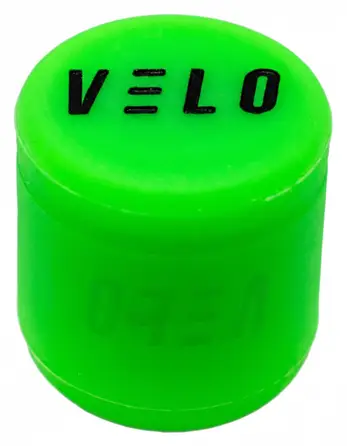
🪃 VELO Sports | Velo Puck
Best For: Hitters and pitchers who want to develop wrist snap, forearm strength, and hand speed in any space — including indoors, on the road, or on days when full swing or throwing sessions aren't possible.
Construction: Compact weighted training puck designed to develop the wrist and hand mechanics that produce bat speed at contact and arm velocity at release — delivering a targeted wrist and forearm training stimulus in a form factor that requires no cage, no net, and no throwing distance.
Material: Durable weighted puck construction built for the high-rep daily use that wrist snap and hand speed development requires — compact enough to use anywhere, weighted specifically to load the wrist and forearm mechanics that both hitting and throwing performance depend on.
Performance Feel: The Velo Puck isolates the wrist snap component of the swing and throw in a way that no other training implement does — because it removes every other physical variable and makes the wrist the only thing that drives the movement. Hitters who train the wrist snap in isolation develop a noticeably more active hand through the contact zone. Pitchers feel the same activation in their release point.
Ideal Player Type: Hitters who want more hand speed and wrist snap through the contact zone, pitchers developing finger and wrist mechanics between full throwing sessions, and any player who wants a compact daily training tool that develops the hand and forearm strength that bat speed and throwing velocity both require.
Performance Overview: VELO Sports | Velo Puck fills the training gap that every hitter and pitcher faces on days when a full cage session or bullpen isn't available — delivering a targeted wrist and hand mechanics training stimulus that can be executed in a living room, a hotel room, or a dugout during a rain delay. The wrist snap is one of the most undertrained mechanical variables in both hitting and pitching because most training tools require full swing or throw mechanics to activate it. The Velo Puck isolates it deliberately — making the forearm, wrist, and fingers do the work without the rest of the kinetic chain sharing the load — and the strength and speed gains that targeted isolation produces translate directly to faster hands at contact and more active fingers at release.
Why It Stands Out:
- Isolates wrist snap and hand speed in a compact format that requires no space, no cage, and no throwing distance.
- Develops the forearm strength and wrist mechanics that bat speed at contact and arm velocity at release both depend on.
- Works for both hitters developing hand speed and pitchers training finger and wrist mechanics between full sessions.
- Compact enough to use anywhere — making daily wrist and hand training possible on travel days and rest days.
- The right complement to full swing and throwing programs for players who want to train hand mechanics every day without a facility.
⚡ Performance Differences Between Swing Path & Contact Trainers
The most important performance distinction in this category is between tools that correct physical mechanics and tools that develop physical capacity — and understanding which one your swing actually needs determines which investment produces the fastest improvement. Path correction tools like the Perfect Swings trainer fix a movement fault that already exists — they're the right tool when the hitter's problem is that the barrel takes the wrong route to the ball despite understanding what the correct route looks like. Capacity tools like the resistance band bat weight and the Tidal Tank Sphere Mini develop the rotational power, core stability, and hand speed that the swing requires as its physical foundation — they're the right tool when the path is mechanically sound but lacks the athleticism behind it to produce hard contact consistently. Deploying a capacity tool on a path fault problem produces a stronger version of the same flawed swing. Deploying a path correction tool on a capacity problem produces a mechanically correct swing with no power behind it. The hitters who develop fastest are the ones who correctly identify which problem they're solving before choosing the tool. For hitters building the complete practice setup to deploy these tools in, 🏏 Best Batting Tees for Baseball & Softball (2026 Guide) covers the tee options that pair with every swing trainer in this guide. Players who want a complete hitting station to go alongside their path and contact tools should also check out 🥅 Best Hitting Nets for Baseball & Softball (2026 Guide) for the net setups that make backyard and facility training sessions fully functional.
The second key performance difference is between tools that train the swing in isolation and tools that develop it against realistic pitching stimulus. Every trainer in this guide that works off a tee, in a cage, or against a machine produces mechanical improvements in a controlled environment — but those improvements only transfer to game performance when the hitter can execute the same mechanics against a live arm at competitive speed, from a realistic release point, with actual pitch movement to track. The Domivans Portable Pitching Mound is the bridge between controlled tool training and live game-speed contact — because a pitcher throwing off a real mound at game-realistic height and angle provides a stimulus that no machine, no trainer, and no soft toss session fully replicates. The hitters who complete their path correction work and then immediately apply it against live pitching off a portable mound close the transfer gap between practice and competition faster than any other training sequence allows.
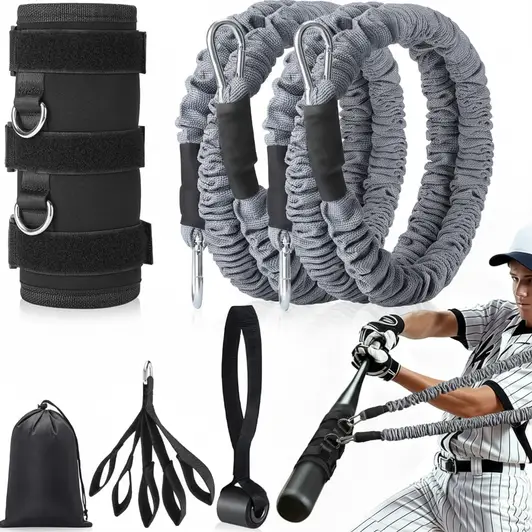
💪 TOBWOLF Premium Baseball Bat Weight with Resistance Bands & Door Anchor & Finger Strengthener
Best For: Hitters who want a complete swing strength and bat speed development package — rotational resistance training, weighted swing work, and grip and finger strength development — in a single purchase that covers multiple components of the athletic foundation every swing requires.
Construction: Multi-tool training package combining a weighted bat attachment, resistance band system with door anchor, and finger strengthening implement — delivering rotational resistance training, overload swing work, and hand strength development through three separate training mechanisms in one complete set.
Material: Durable resistance band and weighted bat attachment construction built for the sustained daily training volume that bat speed and rotational strength development requires — with a door anchor system that provides a reliable band attachment point without permanent wall installation.
Performance Feel: Training with the full package produces three distinctly different physical sensations — the overload resistance of the weighted bat attachment on every practice swing, the rotational pulling resistance of the bands through the hip turn, and the targeted grip load of the finger strengthener isolating the hand and forearm. Together they develop the physical chain that bat speed travels through from the ground up.
Ideal Player Type: Hitters at every competitive level who want to develop the rotational power, bat speed, and grip strength that hard contact requires — particularly players who want a complete strength training toolkit without purchasing separate implements for each component of the swing's physical foundation.
Performance Overview: Premium Baseball Bat Weight with Resistance Bands & Door Anchor & Finger Strengthener is the rare training purchase that addresses multiple physical variables simultaneously — the overload swing resistance that develops bat speed through weighted contrast training, the rotational band resistance that builds the hip and core power that every efficient swing chain starts with, and the finger and grip strengthener that develops the hand strength and forearm endurance that the contact zone demands on every swing. Most hitters who want to develop bat speed buy a donut. Most who want to build rotational power buy bands. Most who want hand strength buy a grip trainer. This package delivers all three in a single purchase — making it the most complete physical swing development investment available at its price point for hitters who want to build the athletic foundation their path correction work needs to produce results.
Why It Stands Out:
- Three-component package covers weighted bat speed training, rotational resistance, and finger strength in one purchase.
- Door anchor system provides a reliable band attachment point without permanent wall installation.
- Develops the complete physical foundation of the swing — rotational power, bat speed, and grip strength — not just one isolated variable.
- Practical for home use with no facility or permanent hardware required.
- The most complete single-purchase swing athleticism development tool for hitters building the physical base their mechanics require.
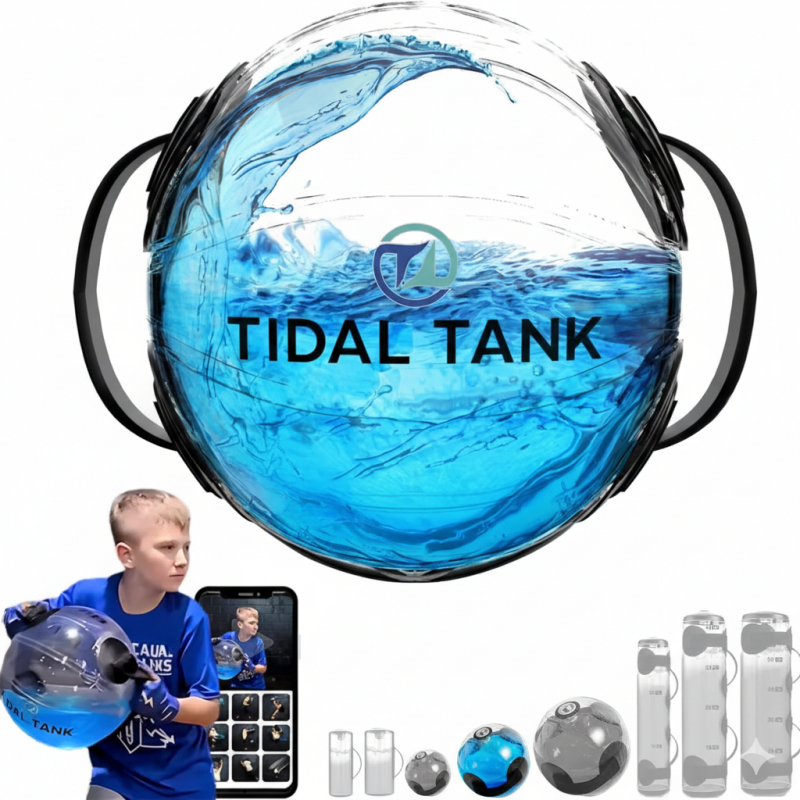
💧 Tidal Tank Sphere Mini
Best For: Hitters who want to develop rotational stability, core engagement, and the dynamic balance that efficient swing mechanics require — through water resistance training that challenges the body to stabilize against a constantly shifting load rather than a fixed one.
Construction: Compact sphere-format water resistance training implement filled to the player's preferred load level — delivering a dynamic, unpredictable resistance stimulus that develops core stability and rotational control through movement patterns directly relevant to the rotational demands of hitting.
Material: Durable flexible sphere construction designed to contain and shift water resistance through the full range of rotational movements that hitting and athletic performance training demands — compact enough for home and travel use, adjustable in resistance by varying the water fill level.
Performance Feel: The Sphere Mini feels fundamentally different from any fixed-weight training implement because the resistance shifts and sloshes as the movement progresses — forcing the core and stabilizing muscles to continuously adjust rather than setting against a predictable load. That instability is the training stimulus, and it develops the dynamic balance that hitting off a live mound against competitive pitching specifically demands.
Ideal Player Type: Hitters who want to develop core stability, rotational balance, and the dynamic athletic foundation that swing mechanics require — particularly players whose swing breaks down under live pitching conditions due to balance and stability limitations rather than path or vision faults.
Performance Overview: Tidal Tank Sphere Mini brings the water resistance training methodology that builds dynamic rotational stability into a compact format designed for hitters who want to develop the core and balance foundation that every efficient swing requires. The fixed-weight training that most swing development tools provide builds strength against a predictable load — which is useful but incomplete. The Sphere Mini's shifting water resistance builds the dynamic stabilization capacity that a hitter's body needs when a 90 mph fastball demands a different rotational commitment than a 78 mph curveball, when a pitch on the inner third requires a different hip engagement than a pitch on the outer edge, and when the competitive pressure of a late-game at-bat adds a destabilizing variable that a controlled cage session never produces. That dynamic quality is what transfers from the Tidal Tank to the batter's box.
Why It Stands Out:
- Dynamic water resistance develops the rotational stability and core control that fixed-weight training cannot replicate.
- Compact sphere format makes water resistance training accessible for home use without a full Tidal Tank setup.
- Adjustable fill level allows resistance to be scaled to the player's current strength and training stage.
- Develops the dynamic balance foundation that swing mechanics require against live, unpredictable pitching stimulus.
- The right core and stability complement to the path correction and physical strength tools in this guide.
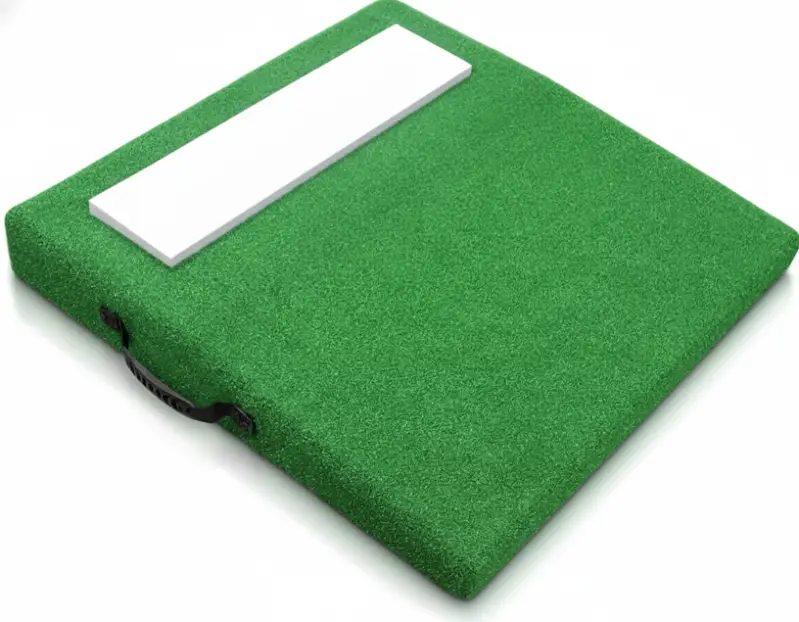
⛰️ Domivans Portable Pitching Mound
Best For: Hitters and pitchers who want to practice with a real mound surface and game-realistic release point angles anywhere — bringing the live pitching stimulus that completes swing path transfer work into a backyard, facility, or indoor training environment without permanent installation.
Construction: Portable pitching mound with regulation-style slope and surface — providing the authentic push-off mechanics for pitchers and the realistic arm angle and release point for hitters that flat-ground throwing and machine pitching consistently fail to replicate.
Material: Durable mound construction built for portable use — designed to hold its slope and surface integrity through sustained pitching volume without the degradation that cheaper portable alternatives develop quickly under real pitching mechanics loads.
Performance Feel: For the pitcher, the Domivans mound restores the downhill momentum and push-off feel that flat-ground work removes from every mechanical rep — producing more authentic pitching mechanics and more realistic ball movement than flat sessions allow. For the hitter facing that pitcher, the mound elevation produces a release point and ball plane that actually matches what competition delivers.
Ideal Player Type: Pitchers who want to maintain authentic mound mechanics in training environments without a permanent mound, and hitters who want to apply their swing path and contact development work against live pitching from a realistic mound angle rather than machine or flat-ground stimulus.
Performance Overview: Domivans Portable Pitching Mound is the training tool that completes the contact development cycle — because every swing path correction, every vision training session, and every rotational resistance rep in this guide produces mechanical and physical improvements that only fully transfer to game performance when they're tested against live pitching from a realistic mound. A pitcher throwing off a portable mound at game-realistic slope and height delivers a ball plane, release angle, and movement profile that no pitching machine setting and no flat-ground session can accurately reproduce. The hitter who applies their Perfect Swings path work, their V-Swing vision training, and their Tidal Tank balance development against that authentic live pitching stimulus closes the transfer gap between practice and competition in the most direct way available — by making practice as close to competition as possible.
Why It Stands Out:
- Regulation-style slope provides authentic pitching mechanics that flat-ground work systematically removes from every rep.
- Delivers the realistic arm angle and ball plane that makes live pitching contact transfer directly to game performance.
- Portable design brings real mound training into backyard, facility, and indoor environments without permanent installation.
- Completes the contact development loop that swing path and vision tools open — making their improvements game-transferable.
- The right final investment for any complete swing path and contact development setup that wants live pitching to finish the work.
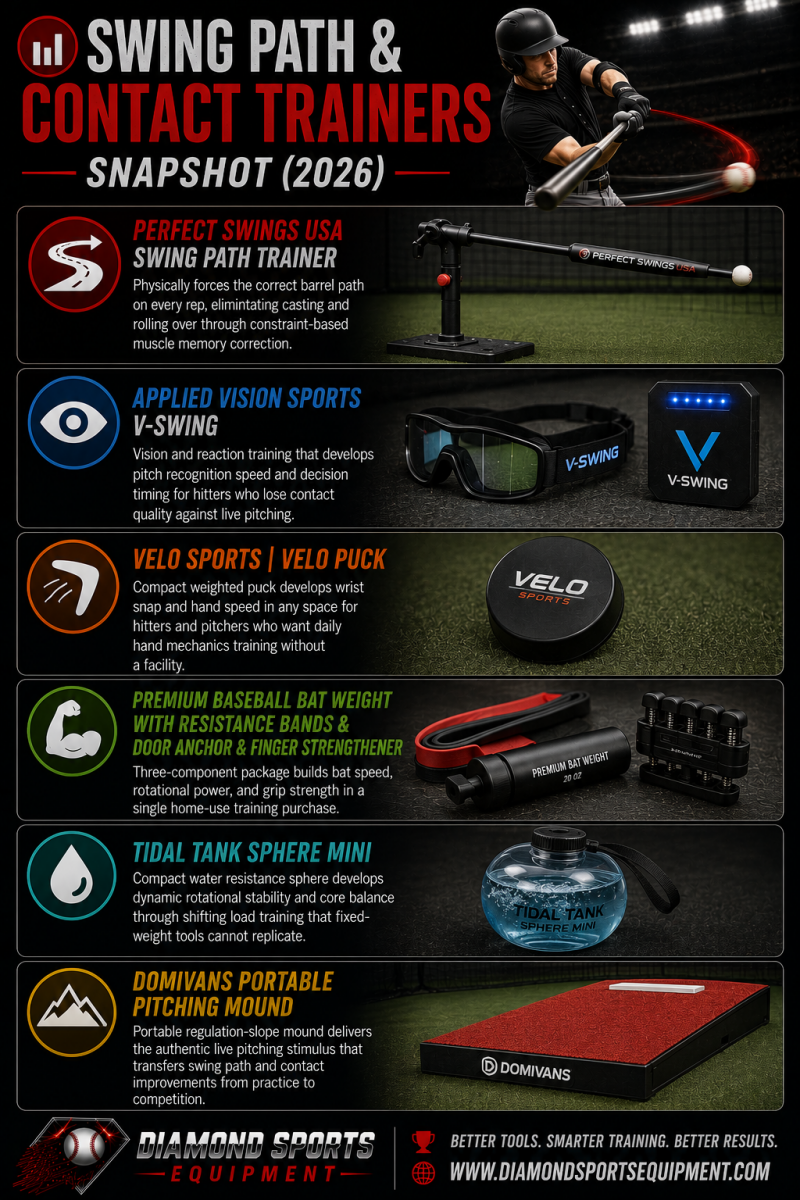
📊 Swing Path & Contact Trainers Snapshot (2026)
- 🛤️ Perfect Swings USA Swing Path Trainer — physically forces the correct barrel path on every rep, eliminating casting and rolling over through constraint-based muscle memory correction.
- 👁️ Applied Vision Sports V-Swing — vision and reaction training that develops pitch recognition speed and decision timing for hitters who lose contact quality against live pitching.
- 🪃 VELO Sports | Velo Puck — compact weighted puck develops wrist snap and hand speed in any space for hitters and pitchers who want daily hand mechanics training without a facility.
- 💪 TOBWOLF Premium Baseball Bat Weight with Resistance Bands & Door Anchor & Finger Strengthener — three-component package builds bat speed, rotational power, and grip strength in a single home-use training purchase.
- 💧 Tidal Tank Sphere Mini — compact water resistance sphere develops dynamic rotational stability and core balance through shifting load training that fixed-weight tools cannot replicate.
- ⛰️ Domivans Portable Pitching Mound — portable regulation-slope mound delivers the authentic live pitching stimulus that transfers swing path and contact improvements from practice to competition.
❓ FAQ
What swing faults does the Perfect Swings USA Swing Path Trainer specifically correct?
- The trainer physically corrects casting, barring the lead arm, rolling over to the pull side, and pulling off the ball — the path faults most responsible for weak contact and pop-ups.
- It is the right tool for hitters whose fault is identified but whose muscle memory continues defaulting to the incorrect path despite verbal instruction and video review.
How is the Applied Vision Sports V-Swing different from standard hitting training?
- The V-Swing targets the visual processing system — pitch recognition speed and decision timing — that physical swing trainers leave completely unaddressed.
- It is specifically designed for hitters who perform well in controlled settings but lose contact quality against live pitching, where visual processing speed is the limiting variable.
Can the Tidal Tank Sphere Mini replace a standard weighted training program?
- No — the Sphere Mini develops dynamic rotational stability and core balance, which complements but does not replace the bat speed and strength development that weighted swing training produces.
- It is most effective when used alongside the resistance band and bat weight tools in this guide rather than as a standalone swing development program.
Does the Domivans Portable Pitching Mound require assembly or permanent installation?
- The Domivans mound is designed for portable use and does not require permanent installation — it can be set up and broken down for transport to different training environments.
- Pitchers should use the mound surface consistently in training to maintain the authentic push-off mechanics that game performance requires.
🧢 Final Thoughts
Swing path and contact development in 2026 is not a single-tool problem — it's a system. The path correction tool fixes the fault. The vision trainer develops the processing speed that delivers accurate information before the path even begins. The rotational resistance and weighted swing work builds the physical capacity that gives the corrected path something to work with. The Tidal Tank develops the dynamic balance that holds the mechanics together under live competitive pressure. And the portable mound is where all of it gets tested against the stimulus that actually matters — a live arm, from a real mound, at game speed. Every tool in this guide was selected to fill a specific gap in that system, and the hitters who use them together will develop faster and more completely than any single-tool approach allows. For players who want to build their baseball IQ alongside their physical development, 📚 Best Baseball Training Books (2026) covers the reading resources that make every training rep more intentional. For the full library of gear guides and equipment reviews across every category, 📝 Diamond Sports Equipment Blog & Gear Reviews has everything in one place.